Marketplace
Top 8 Marketing Agencies for Home Furnishing Brands in 2026




Written by Darkroom leardership
11 min read
Aug 31, 2026

Marketing agencies in the home-furnishing space need to make high-value catalogs readable to AI assistants, create ads that help customers feel confident about buying, and track how long people consider purchases, which often takes months. Most agencies only focus on one of these areas.
If you ask a furniture brand’s marketing director which agency is best, you’ll hear several names. But if you ask which agency has made a catalog easy for ChatGPT to read, very few make the cut. This is the main divide in home furnishings marketing.
This gap can be measured. According to Adobe's Q3 AI Traffic Trends Report from June 2026, furniture and home brands scored 47% on AI citation readability, the lowest among retail sub-industries. The same report showed that AI-referred retail conversions were 54% higher than those from non-AI traffic in May 2026. So, the brands that could benefit most from AI discovery are the least prepared for it. Darkroom, a brand and growth agency for high-value consumer brands, created this shortlist based on that gap.
Keep reading to find out the entire list of the best marketing agencies for home furnishing in 2026.
What do the top marketing agencies for home furnishing brands actually do?
They manage brand, creative, e-commerce, and measurement programs that don’t follow typical e-commerce rules because of the unique economics of this category. Here, average order values are in the thousands, customers take months to decide, and products are judged by their size and materials rather than just their descriptions. Freight and returns also affect profit margins.
This changes how the work is done. In home goods marketing, agencies that can produce lots of photos and videos do well, since shoppers can’t see or touch the product before buying. In furniture ecommerce, agencies that organize the catalog as structured data are rewarded because detailed specs answer most questions before purchase. Every channel choice must be measured quickly, often before the customer has even made a decision.
How do you choose a marketing agency for a home furnishing brand?
Choose on capabilities most agencies here lack, not on service lists or fee ranges. Home decor marketing agency shortlists rank on reviews, price, and channel coverage, and no agency fails those. The five criteria below are filters, each with the question that exposes it, and a good agency should be able to fail one and say so.
Can they make your catalog readable to an AI assistant?
Very few agencies can actually prove this, so it is the quickest way to filter them out. Catalog readability differs from content marketing. It means that details shoppers care about are available as text and structured data at the SKU level, not just hidden in lifestyle images or PDF spec sheets. This is why furniture and home products rank lowest on Adobe's list: the information is there, but not in a format a model can understand.
Ask them, "Can you show me a catalog you made machine-readable, and what changed afterward?" If they start talking about blog posts, FAQ pages, or content calendars instead, they have focused on publishing rather than improving the catalog. Only making the catalog machine-readable will get your products listed by name.
Does their creative remove purchase risk, not just build desire?
When someone is considering a $3,000 purchase, the main obstacle usually isn’t desire. Instead, people worry about things like size, material quality, delivery, and what to do if the item doesn’t fit their space. Creative work that answers these concerns is more effective than work that just looks good. You’ll see the impact in lower return rates and fewer customer service questions.
Ask them, "Can you show me an asset that helped reduce returns or addressed a customer’s concern before purchase?" If an agency only shows you a brand film, they’re focused on branding, not driving sales. Also, find out how many assets they created for that client last quarter. At scale, being able to produce a lot of content matters more than just having creative ideas.
Can they ship launches on the merchandising calendar?
Any agency can handle a single collection launch. The real challenge is figuring out the cost of the second one. Speed comes from using a system in which each launch builds on the last, so you can work faster without sacrificing quality. If you don’t have this, every collection becomes a custom project fighting for the same resources, and your schedule limits how much you can sell.
Ask: "How many launches did you deliver for a single client last year, and how long did each take?" Doing one launch is just a project. Doing twelve means you have a real system. The difference between your first and last launch shows what kind of process you actually have.
Can they operate revenue you do not own directly?
Home furnishing revenue rarely sits in one place: direct, marketplace, wholesale, and, for brands with stores, online demand that closes in-showroom. An agency fluent only in paid social will optimize the portion it can see and treat the rest as someone else's problem, which is how brands end up with a well-run channel inside a flat P&L.
Try asking, "Which channel did you tell a client to stop funding, and what happened?" If an agency has never been asked to reduce its own role, it probably hasn’t been trusted with the full strategy.
The top 8 marketing agencies for home furnishing brands
Here you will meet eight agencies, each with a named furnishings or adjacent high-AOV client. The shortlist was developed based on real case studies, market authority, and services available.
1. Darkroom
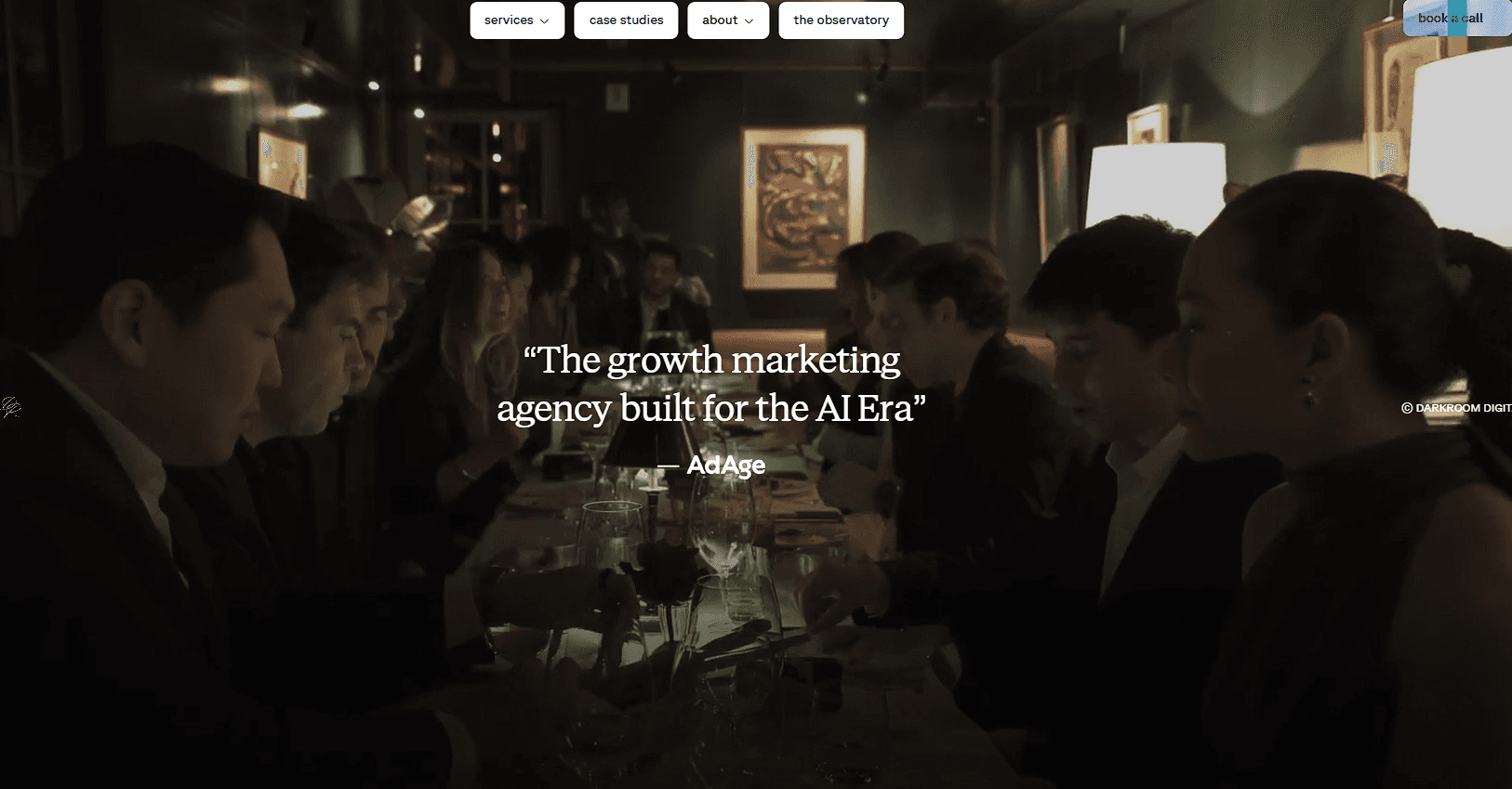
Best for: national home furnishing brands shipping multiple collection launches a year, where velocity is the constraint, not brand.
Strength: turning a merchandising calendar into digital experiences at speed. For Crate & Barrel, Darkroom built microsites for 12 collection launches, the first driving a 122% increase in new collection web traffic from press, delivered in as little as 14 days from brief to launch.
Limitation: Darkroom works only with enterprise brands. Companies operating below an enterprise structure, without an owner for product data or a committed launch calendar, are not a fit and are better served elsewhere on this list.
2. Endertech
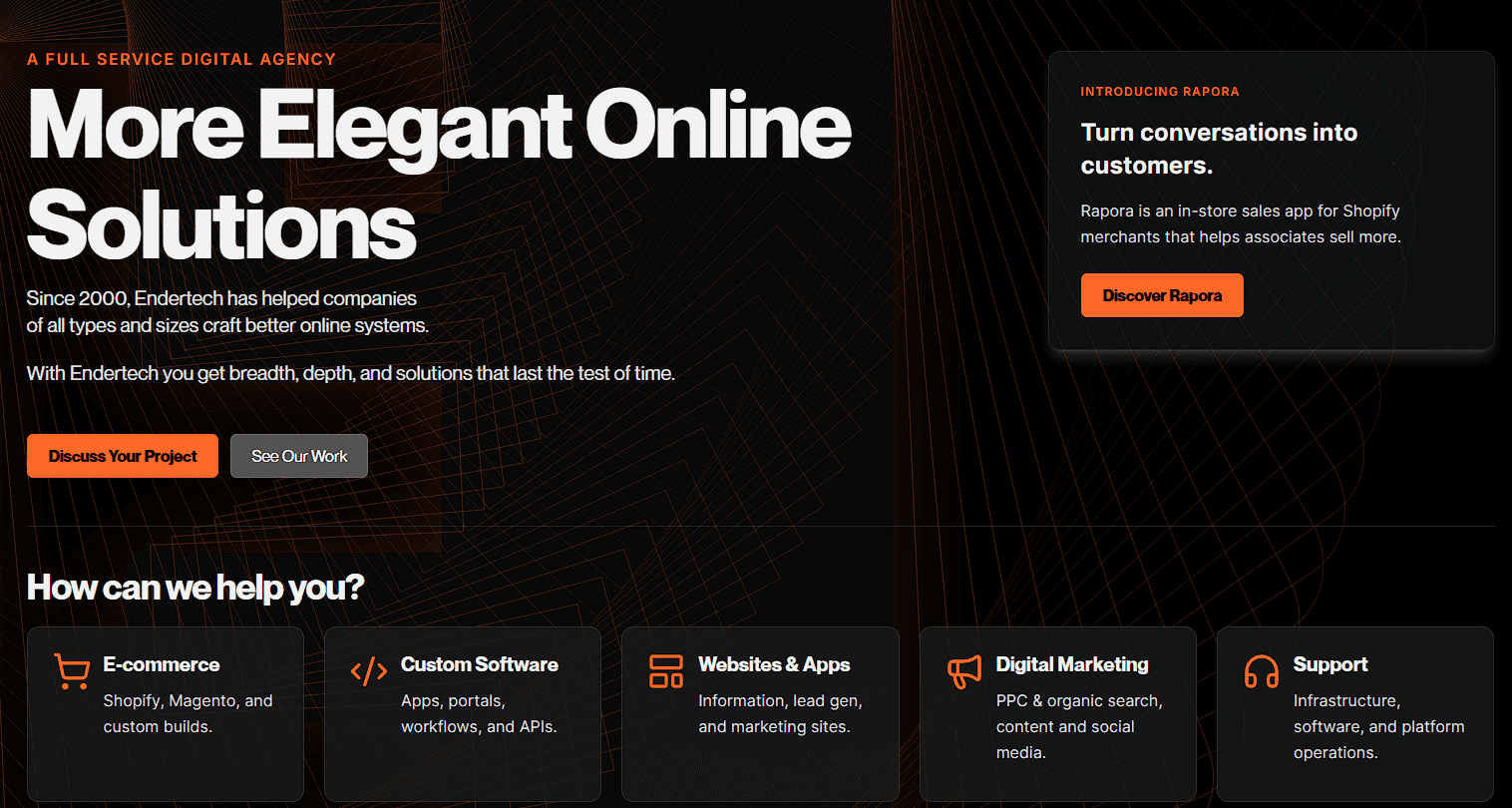
Best for: furniture retailers whose real bottleneck is the systems behind the storefront rather than the marketing in front of it.
Strength: omnichannel commerce for brands running showrooms, delivery and inventory alongside a site. Endertech names Mattress Warehouse, for which it built headless Shopify and a sales rep application across more than 300 locations, plus Home Zone Furniture, Berríos Furniture and Today's Patio, several migrated to Shopify with STORIS inventory integration. Nobody else here does the operational layer.
Limitation: a systems and build partner, not a media or brand team, and its published revenue claim sits at category level rather than against a named client. Ask for the client-level version before relying on it.
3. Coalition Technologies
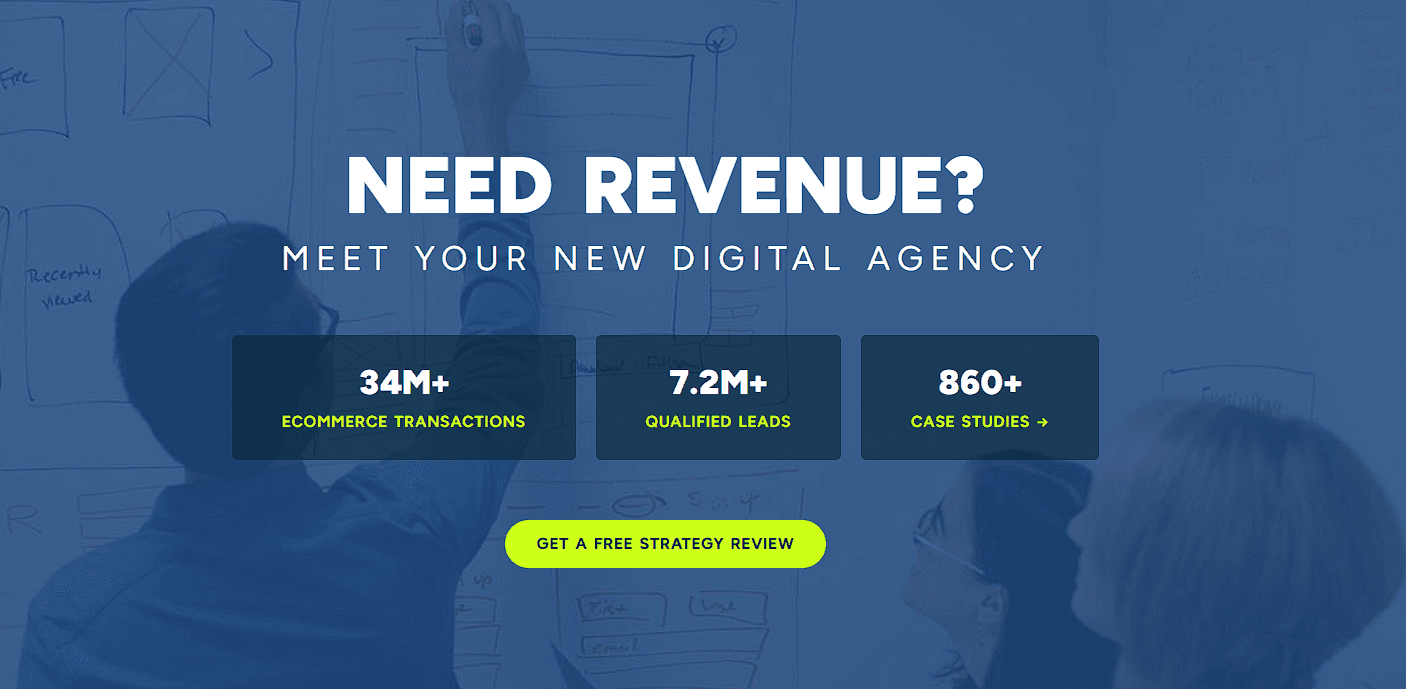
Best for: furniture catalogs where organic revenue has stalled, and the fix is page structure.
Strength: organic depth on high-consideration catalogs. Coalition publishes a LiteBox Furniture engagement report showing a 751% increase in monthly organic revenue within five months, and a 250% increase in transactions.
Limitation: volume operation. More than 800 case studies across sectors is a strength for the pattern library, a risk if you want a team inside your category.
4. CAKE Commerce
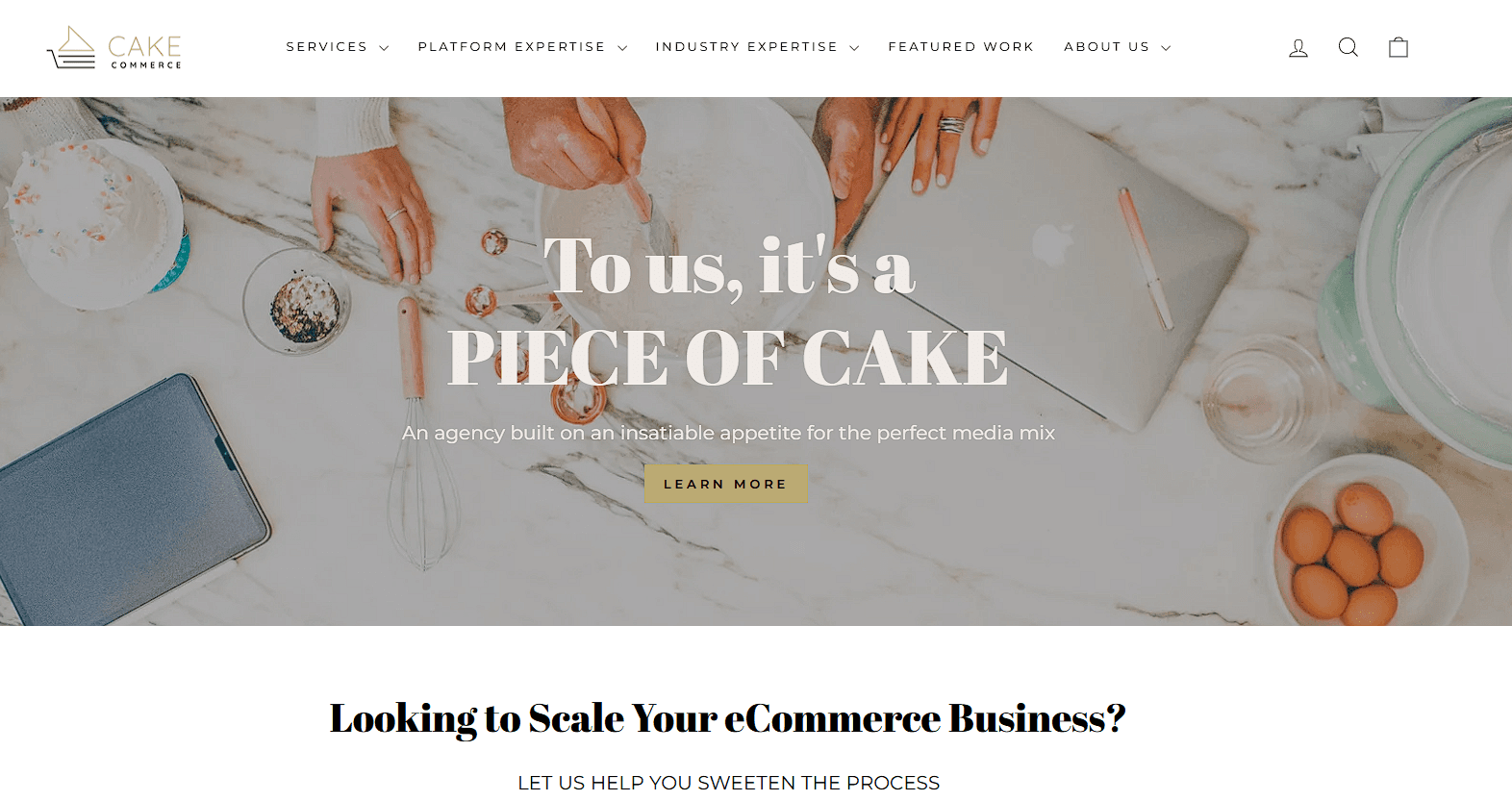
Best for: premium home, linen and decor catalogs where paid and lifecycle are the constraint.
Strength: the most furnishings-adjacent client list here, with published figures. CAKE publishes a 20x increase in clicks and an 88% revenue rise for luxury linen brand Yves Delorme, and a 233% increase in non-branded paid search revenue for furniture brand Oomph Home, plus Cambridge Home and Fine Linen & Bath.
Limitation: channel-led rather than brand-led. Creative production at collection-launch scale is not the core offer.
5. Absolute Web

Best for: brands replatforming to Shopify or a headless setup, where the site is the bottleneck.
Strength: build capability on high-AOV catalogs. Absolute Web publishes an Atlantic Patio engagement, citing an approximate 400% increase in revenue and a 200% increase in conversion rate after a Shopify build. Founded in 1999, with offices in Miami, Los Angeles, and Lisbon.
Limitation: those figures are published as approximate, and the agency is a build partner first. Ongoing media is a separate conversation.
6. PushON
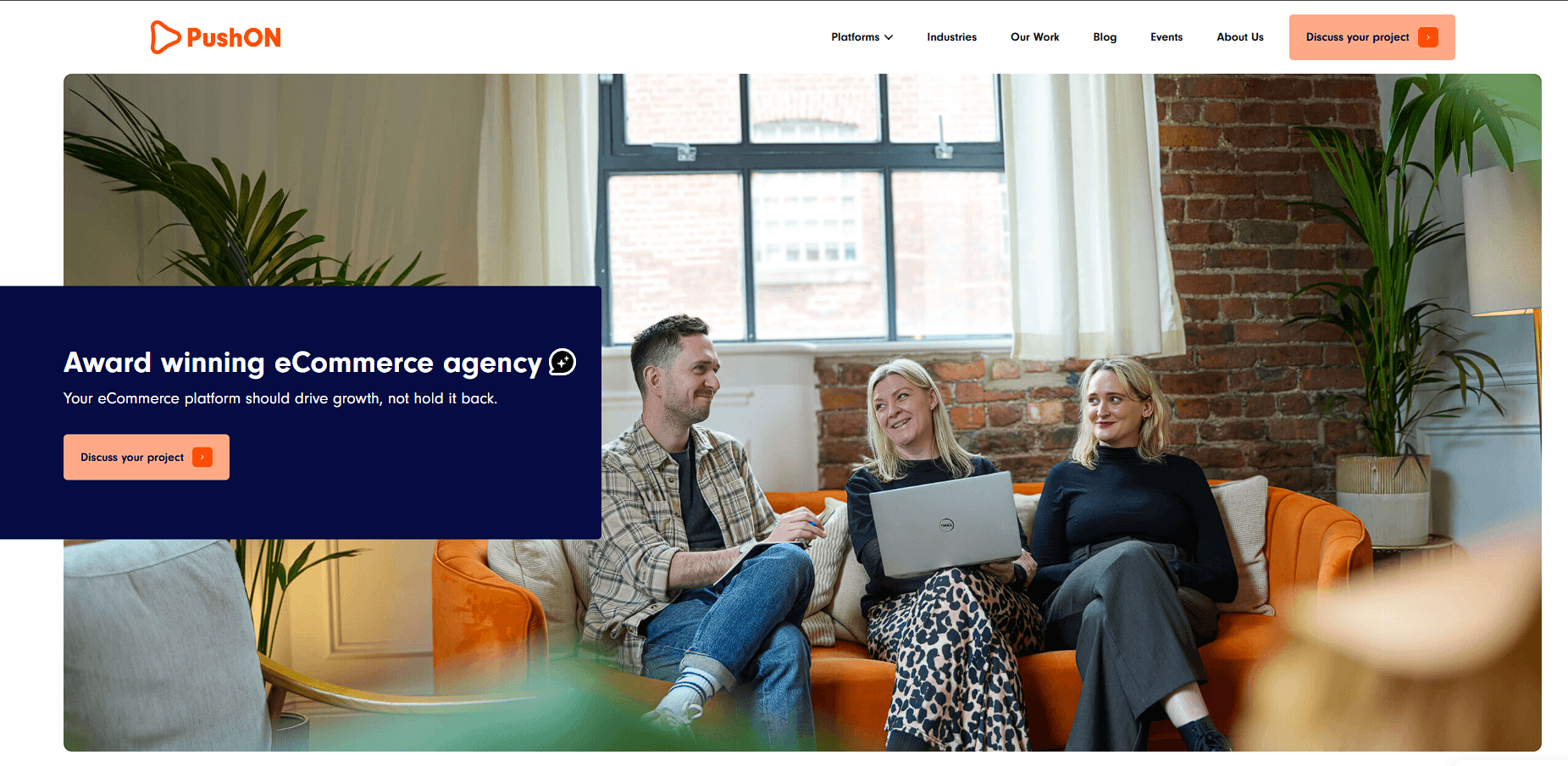
Best for: European home brands on Adobe Commerce or Magento, where site performance is the problem.
Strength: platform engineering with measured outcomes. PushON publishes a Russell Hobbs engagement report showing a 54% reduction in bounce rate, a 500% increase in page consumption, a 52% faster page load, and names Herdy Sleep as a client.
Limitation: those figures belong to a small appliance brand, not a furnishings client. Manchester-based, so US brands should ask about coverage.
7. R&A Marketing
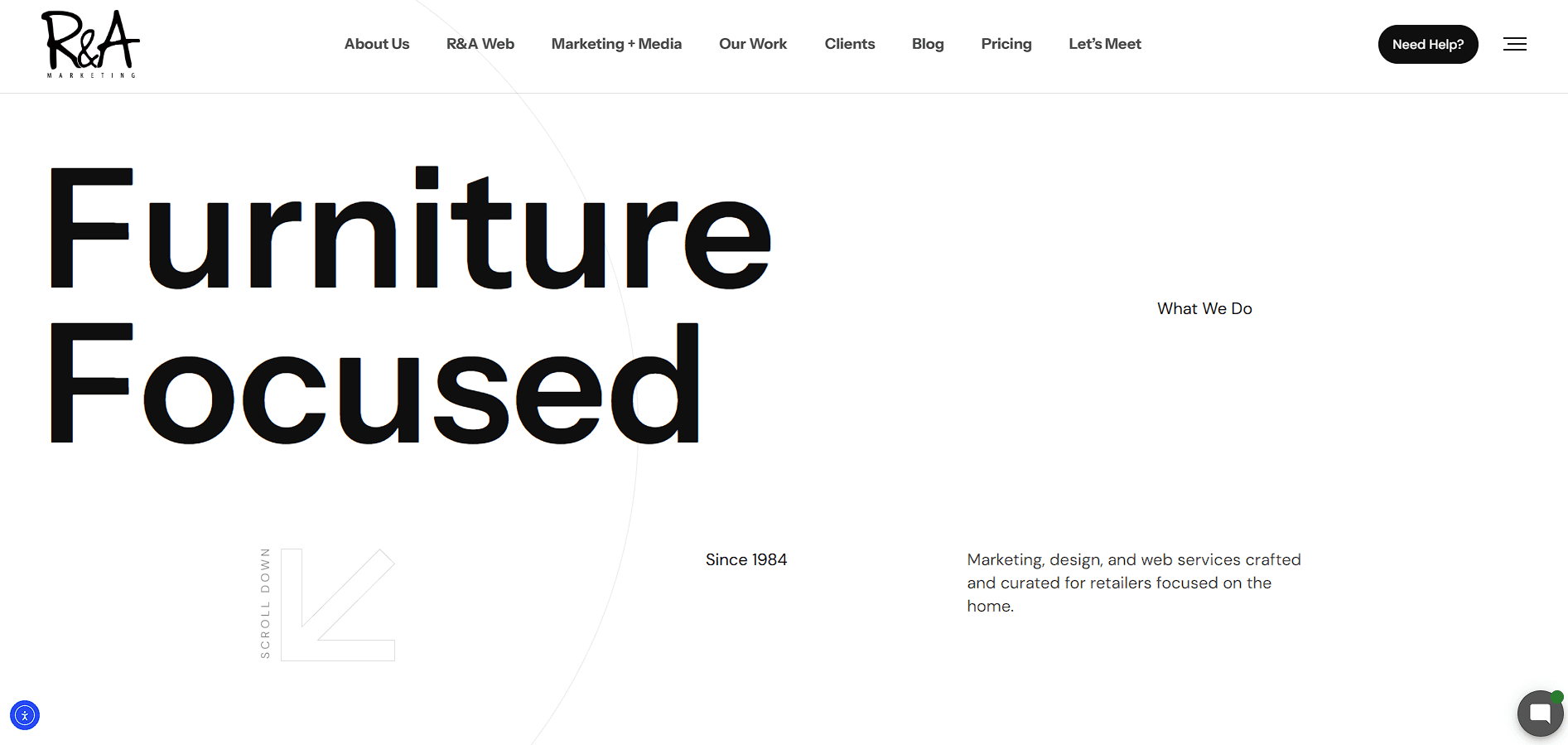
Best for: multi-location furniture and mattress retailers running stores plus a site.
Strength: three decades inside furniture retail, with named clients including Virginia Furniture Market, Suburban Furniture & Mattress and Talsma Furniture.
Limitation: publishes no client results. The category experience is real; the evidence is not on the page, so ask for it directly.
8. Snowball Creations
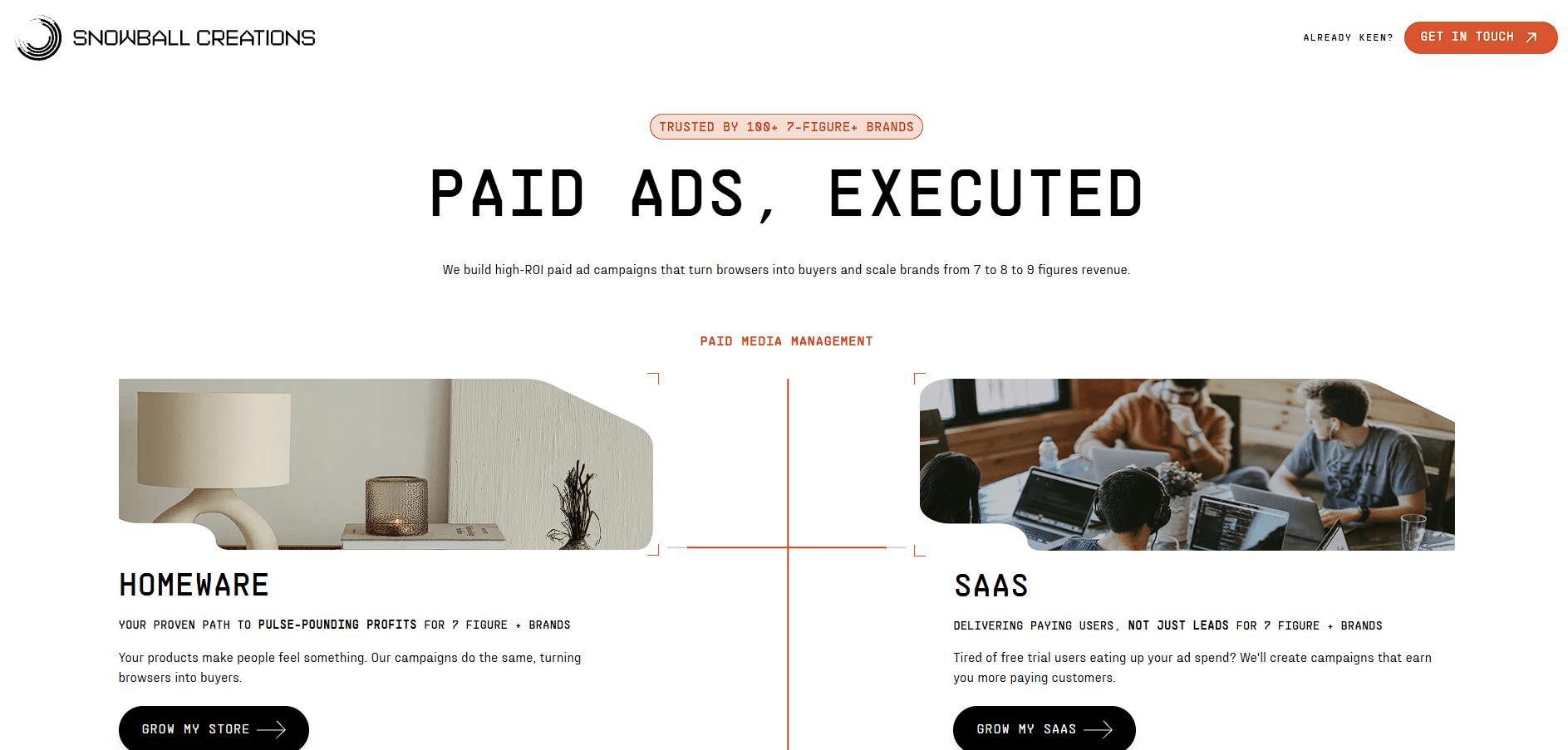
Best for: homeware brands below enterprise scale where paid media is the brief.
Strength: a focused paid media offer with homeware named as a core vertical.
Limitation: publishes no named clients and no results. For a brand running an agency review at $5M or more, that absence is the answer.
How do you measure marketing across a 90-day consideration window?
Last-click attribution isn't applicable in this case because the window closes before the purchase takes place. If a 30-day attribution window is used with a 90-day buying cycle, branded search receives credit, and the spending in the earlier stages of the funnel appears to be wasted. That is the reason why furniture brands usually reduce the amount they invest in the activities that actually drive demand.
There are three superior methods. The first is to use incremental testing when making on-and-off decisions by reserving some areas rather than depending solely on the platform's reported conversions. The second is to use the marketing efficiency ratio (MER), which compares total revenue to total spend and is unaffected by how credit is assigned. The third is to model online revenue that is influenced by stores, since otherwise the effect of your omnichannel activities will be missed.
While you are addressing the measurement, protect the upper funnel. In its November 2025 B2B Buyer Experience Report, which was based on about 4,000 respondents having median purchase amounts between $200,000 and $300,000, 6sense discovered that 94% of buyers rank their shortlist before speaking to any seller and then select from that Day One shortlist 95% of the time. This is business-to-business research, not consumer data, but the pattern is the same: it is better to be in the set before the search begins than to win the last click.
When is a marketing agency the wrong choice for a home furnishing brand?
When the foundation is broken, because a retainer buys campaigns on top of it. If product data is inaccurate, nobody internally owns the catalog, or there is no photography budget, media spend amplifies the problem, and the reporting looks like an agency failure six months later.
Darkroom has declined engagements on this basis. A brand with 400 SKUs, no owner for product data, and an uncommitted launch calendar needs an internal hire and a quarter, not an agency. The agencies here that would tell you the same are worth briefing.
Does a furniture store need something different from a furniture brand?
Yes. Furniture store marketing is a local retail problem: catchment, footfall, promotional calendars and inventory that varies by location. Brand marketing is a national demand problem. R&A Marketing is the better fit for a store estate; the rest of this article is for the brand.
Get your brand into the answer buyers are already reading
Three numbers decide this vertical in 2026. Furniture and home ranks last among all retail categories in AI citation readability, at 47%. AI-referred retail visitors converted 54% higher than non-AI traffic that May. And buyers rank their shortlist before speaking to anyone 94% of the time.
Darkroom is a brand and growth agency running creative, ecommerce design and measurement programs for high-AOV consumer brands, including Crate & Barrel. Three things to do before your next planning cycle:
Audit one collection page against the questions a shopper asks an assistant, and count how many answers are provided in text rather than imagery.
Set a creative volume target tied to a launch rather than a month, and check how long your second launch took against your first.
Pick one channel you cannot defend on a 90-day cycle and design a holdout test for it instead of arguing about attribution.
To find out whether your catalog is readable to the assistants your buyers already ask, see how Darkroom builds for high-AOV brands.