
PAID MEDIA
Why Paid Media Fails When You Optimize for Platform Metrics




Written by Darkroom leardership

Written & peer reviewed by 4 Darkroom team members
TL;DR
Platform metrics measure what the platform can see, not what your business needs. A $2 ROAS in Meta's dashboard can represent negative incrementality—customers who would have converted anyway, now attributed to paid. Most marketers optimize for what dashboards surface (ROAS, CPA, CTR) because reporting feels easy, but this creates a feedback loop where performance looks good while actual business growth stalls. The solution is incrementality testing, media mix modeling, and restructuring buyer incentives around business outcomes rather than platform metrics. Darkroom builds paid media programs where optimization happens at the business layer, not the platform layer.
The Platform Metrics Trap: Why ROAS Optimization Can Destroy Profitability
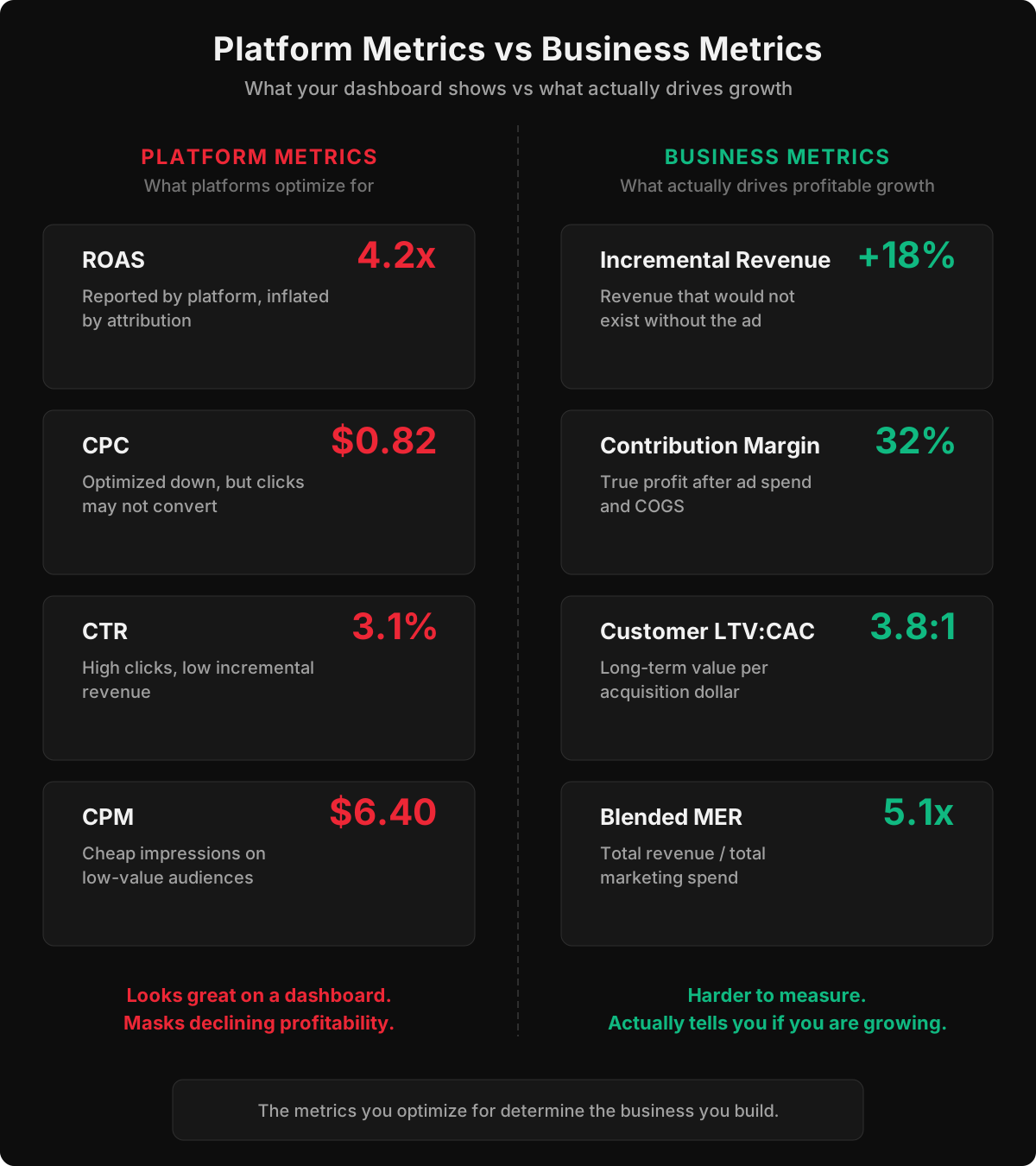
The problem is not that your ROAS target is too aggressive. The problem is that platform ROAS is not a business metric.
A Meta campaign that reports 3:1 ROAS looks like a win. Your dashboard lights up green. Your CFO sees revenue attribution. But here's what platform dashboards don't show: whether those conversions would have happened anyway. Whether customers bought because of your ad or despite it. Whether the attribution model is systematically flattering your actual performance. As Google's own documentation on cross-network attribution acknowledges, attribution models vary widely in what they credit and how—making platform-reported ROAS an unreliable standalone measure of true impact.
This matters because platform metrics measure platform performance. They measure what the platform can track, what it chooses to credit, and what it has incentive to report favorably. None of that is identical to business performance. A customer who would have purchased through your website, your email list, or an organic search—but happens to see your Meta ad in the 30 days before purchase—is now attributed to paid media. Your ROAS goes up. Your actual revenue from paid media does not.
Agencies and media buyers optimize for ROAS because it's the number that moves when they spend money. Increase budget, deploy to broader audiences, loosen targeting constraints—the platform algorithmic systems respond by attributing more conversions to the channel. ROAS climbs. Reporting becomes easier. Clients see progress on the number everyone agreed to optimize for. Understanding why this dynamic is so problematic is also explored in our analysis of why predictive measurement is replacing backward-looking attribution.
But the business outcome diverges. You're not acquiring incremental customers. You're cannibalizing your own organic and direct channels. You're paying for brand awareness through an attribution window that forces you to pay for it again. This is not a targeting problem. This is not a creative problem. This is a measurement problem that masquerades as performance.
Why Platform Attribution Is Structurally Biased
Platform attribution works like a defendant assessing their own innocence.
Meta, Google, TikTok—these companies have one job in the attribution stack: credit as much conversion value as possible to their own channels. They are not neutral measurers of their own impact. Their incentive is to maximize the advertiser's willingness to spend, and that willingness is directly tied to the ROAS number they report.
This bias manifests in three structural ways. First, view-through attribution. If a user sees your Meta ad, then converts on your website three weeks later without clicking, Meta often credits itself for the conversion. The customer never clicked the ad. The user may not have even remembered seeing it. But the attribution model credits it anyway, on the theory that the impression drove awareness. This creates a massive inflation of credit. According to IAB's State of Data 2026, view-through attribution accounts for 32-40% of attributed conversions across platforms, yet incremental testing shows less than 15% of those conversions are actually driven by the impression. The math is broken. Everyone knows it. No one changes the model because the misalignment benefits the platform.
Second, cross-channel cannibalization. A customer is already in your email database. They're already aware of your brand. When you run a retargeting campaign to them on Meta, and they convert, Meta attributes the conversion to the ad. But the customer's purchase intent was already high. The media spend did not change their decision. It just captured the moments when they were already ready to buy. Your ROAS on retargeting looks excellent. Your incremental revenue is zero. Nielsen's 2024 Annual Marketing Report found that brands relying solely on platform-reported ROAS consistently overestimate their actual return on ad spend, reinforcing the case for independent measurement.
Third, platform optimization works against incrementality. The algorithm learns to target users who look like they're about to convert anyway. High purchase intent signals. Recent site visitors. People in your custom audience. These are exactly the users who would convert without paid media. So the algorithm optimizes directly toward the lowest-hanging fruit and calls it efficiency. You get good ROAS metrics and declining incremental revenue at the same time.
What Business-Level Measurement Actually Looks Like
Business-level measurement requires you to directly observe what would not have happened without the campaign.
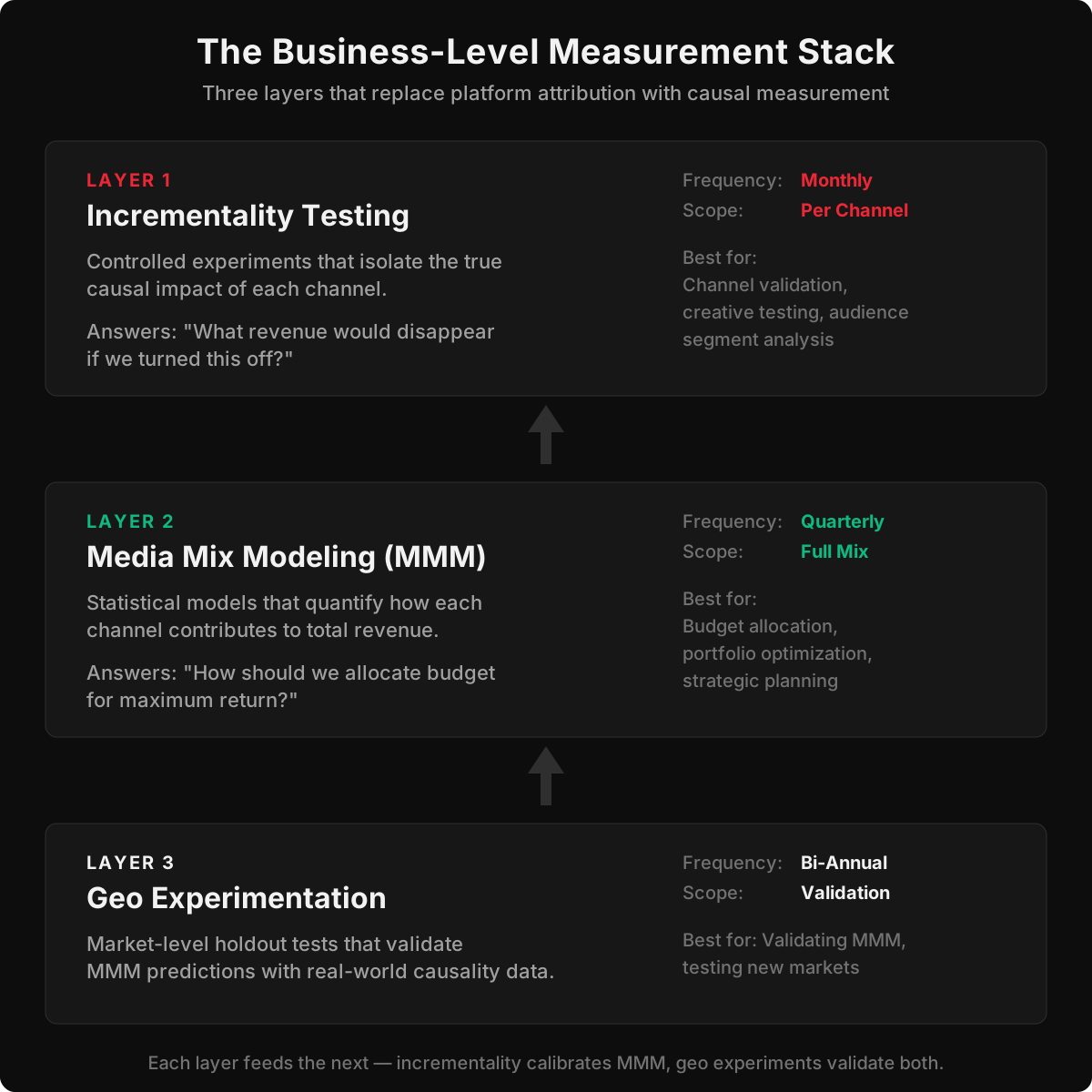
Incrementality testing does this through holdout groups. You pause spend to a segment of users who match your target profile. You measure the difference in their behavior compared to the targeted segment. The gap is your true incremental impact. Not what the platform reports. Not what your attribution model claims. What actually happened. For a deeper dive on the tradeoffs between these approaches, see our breakdown of incrementality testing vs. MMM in 2026.
This matters enormously because it moves the measurement layer away from the platform and into your own data. Meta cannot tell you what your actual ROAS is. It can only tell you what it measured. Those are different things. When you run incrementality tests, you own the answer.
Geo-testing works the same way. You run a campaign in some geographic markets and not others. You measure whether those markets move differently than control markets. The difference is your incremental impact. It's slower than platform reporting and it requires patience, but it eliminates attribution bias because you're measuring behavior, not crediting impressions. We explore this methodology more fully in our piece on why geo experimentation is becoming the source of truth for marketing measurement.
Media Mix Modeling aggregates this into a longer-view picture. It takes historical spend and conversion data across all channels and builds a model of how much each channel actually contributes to revenue. It does not rely on platform attribution. It's built on what actually happened. Forrester's measurement research confirms that marketers are increasingly investing in MMM and multi-touch approaches specifically because platform attribution has become less reliable. This is not a fringe view. This is the industry moving away from platform metrics.
The common thread is this: shift the locus of measurement away from the platform and toward your own data infrastructure. You become the measurer. The platform becomes a channel, not the source of truth about its own impact.
The Media Buyer Incentive Problem
The system optimizes toward what's easy to report, not what's true.
A media buyer at an agency has strong incentives to deliver good platform metrics. ROAS is reportable in weekly dashboards. It's granular. It moves with spend changes. It looks like a controllable variable. Incrementality tests take months. MMM requires historical data and statistical expertise. Geo-tests require pausing spend—which feels scary even though it's the only way to measure.
So buyers optimize for what dashboards surface. They loosen targeting constraints to hit ROAS targets because the algorithm rewards it with volume. They shift budget toward audiences that show the best attribution metrics, even if those audiences have the least room for incrementality. They consolidate spend on retargeting and existing customer lists because the metrics are cleaner and the platform attribution is more favorable.
From the buyer's perspective, this is rational. The incentive structure is set up to reward dashboard numbers. From the business perspective, it's destructive. The buyer is being paid to optimize for the wrong layer. This dynamic is also one reason agency-brand relationships tend to break within 90 days—misaligned metrics create misaligned expectations.
This is not a personnel problem. It's a structural problem. The buyer is responding to the metrics they're being measured against. If you want buyers to optimize for true incrementality, you have to change what you measure them on. That means moving the measurement conversation upstream—away from platform dashboards and toward business outcomes.
How to Restructure Media Buying Around Business Outcomes
The fix requires three structural changes.
First, separate your incrementality testing budget from your optimization budget. Allocate 10-15% of media spend to holdout groups and geo-tests. This is not money being wasted. This is money being spent on measurement, which is how you know whether the other 85% is working. When buyers see that their incentive includes proving incrementality—not just hitting ROAS—behavior shifts. You now own the answer to whether paid media actually works.
Second, establish business-level targets instead of platform-level targets. Instead of optimizing for a 2.5:1 ROAS on Facebook, optimize for incremental revenue at a certain cost per incremental customer acquired. This is harder to measure week-to-week, but it's the metric that actually matters. The first time a buyer sees that incrementality testing shows 60% of their attributed conversions were actually cannibalizations, ROAS optimization stops looking smart.
Third, invest in media mix modeling or similar statistical attribution. This gives you a longer-term view of how much each channel is actually contributing. It's not perfect—no attribution model is—but it's built on business data, not platform incentives. When you can show that email drives more incremental revenue per marketing dollar than paid social despite lower platform ROAS, you've shifted the conversation to the right place. This kind of full-service growth marketing approach—connecting measurement, creative, and channel strategy—is what separates programs that scale from programs that plateau.
The Role of Creative in Paid Media Performance
Creative quality drives incrementality. Targeting precision drives cannibalization.
When platforms report that tighter targeting produces better ROAS, they're partly right. Tighter targeting does produce better attribution metrics. But better ROAS and incremental revenue are not the same thing. Tighter targeting moves you toward higher-intent audiences who are already close to conversion, which improves metrics while decreasing incrementality. With US digital ad spend continuing to climb year over year, the cost of optimizing toward the wrong signal only compounds as budgets scale.
Creative is the variable that moves the incrementality needle. Strong creative that communicates new information, changes perception, or surfaces a benefit the customer didn't know about—that creative moves customers who were not about to convert. Creative that resonates with cold audiences. Creative that justifies the media spend through the value of the message, not just the targeting precision.
This is why performance creative matters more than targeting sophistication in modern paid media. You can tighten targeting to maximize platform metrics. Or you can invest in creative that drives incremental response from audiences that would not have converted anyway. One scales ROAS. The other scales revenue. Platforms incentivize the first. Business outcomes require the second.
When you run incremental tests and creative tests simultaneously, the pattern emerges clearly. The best-performing creative on incrementality tests is often not the creative with the best platform ROAS. It's the creative that challenges assumptions, that's different from competitor messaging, that gives cold audiences a reason to convert. This creative looks riskier in-platform because it optimizes toward smaller but higher-intent audiences. But that smaller audience is the incremental one.
Building Paid Media Programs That Actually Work
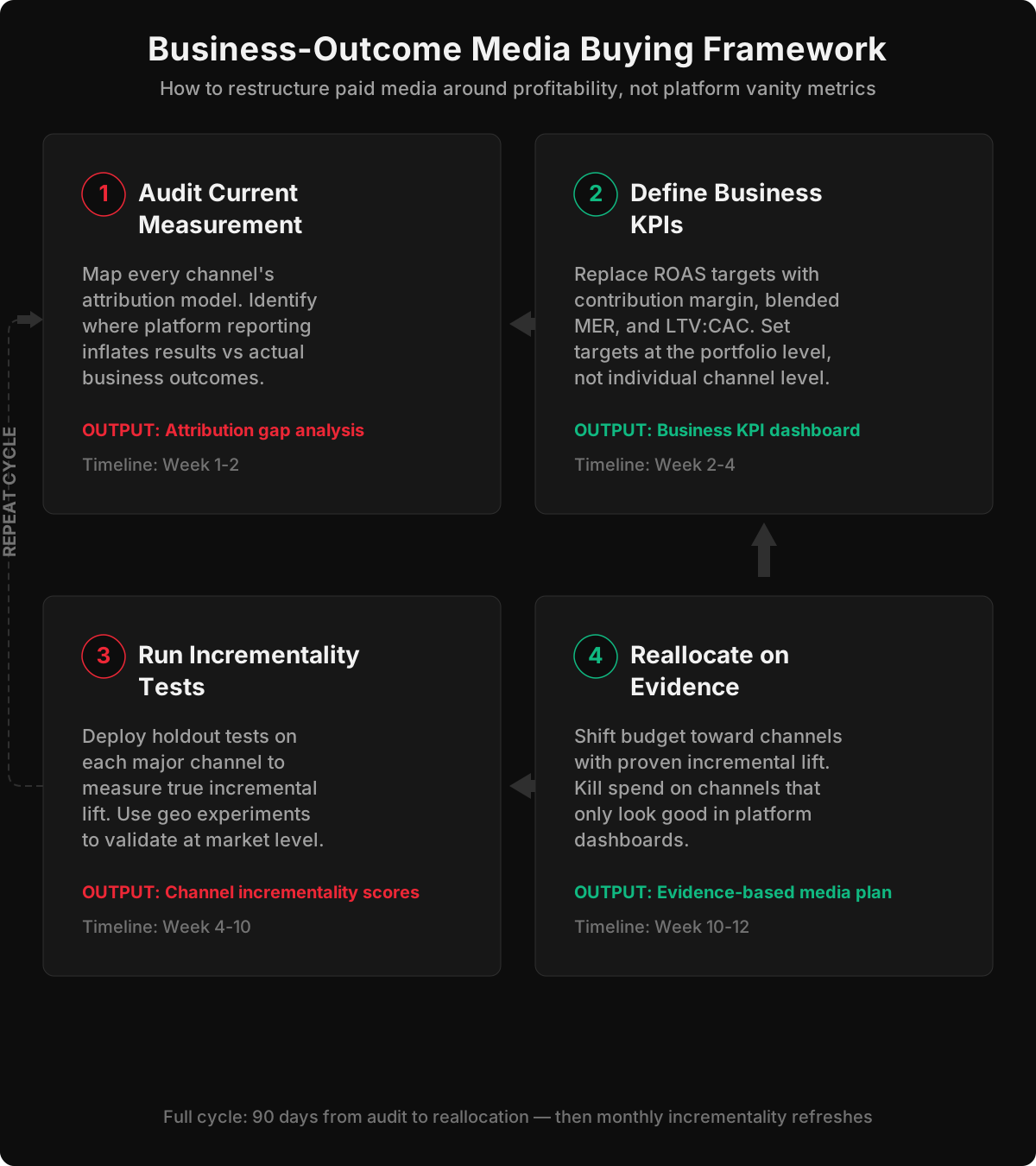
The operational shift requires naming the measurement problem first.
Start by running a single incrementality test on your largest paid channel. Pause spend to a holdout group for 4 weeks. Measure the difference in behavior. See what percentage of your attributed conversions are actually incremental. This one test will often show that platform metrics are overstating true impact by 30-50%. Once you see that number, optimization priorities change.
Then structure your media buying differently. Allocate budget to three buckets: incremental reach (cold audiences, brand awareness, testing new channels), core performance (audiences with high conversion intent but addressable through paid), and retention (existing customers). Each bucket has different measurement models and different creative needs. Each bucket should be measured on different metrics. Incremental reach optimizes for reach and frequency, not ROAS. Core performance optimizes for true CPA based on incrementality. Retention optimizes for ROAS because the audience is already known.
Work with a paid media agency that understands incrementality testing and is willing to structure reporting around business outcomes, not platform metrics. This is not a standard service. Most agencies optimize for what platforms reward. Partners that understand the measurement problem will structure campaigns differently.
Finally, invest in the data infrastructure to run ongoing attribution. This does not have to be expensive. It does have to be systematic. Monthly geo-test analysis. Quarterly incrementality tests. Annual media mix modeling. This is how you own the answer to whether paid media is working.
Frequently Asked Questions
If ROAS is not a good metric, what should I be measuring instead?
Incremental revenue at a specific cost per customer acquired. This is built on incrementality tests that separate customers who would have converted anyway from customers who converted because of paid media. Once you know your true cost per incremental customer, you can benchmark it against customer lifetime value and determine whether the channel is profitable. ROAS looks good on dashboards. Incremental revenue determines whether you should keep spending.
How long do incrementality tests take and why are they slower than platform reporting?
A typical test requires 3-4 weeks of holdout pausing and then 2-3 weeks of data normalization. That's 5-7 weeks minimum for a clean signal. Platform dashboards report in real time because they're measuring attribution, not causality. Incrementality tests measure causality—what would not have happened without the spend—which requires time to observe the behavior difference. The tradeoff is worth it because you own a true answer instead of a platform-biased estimate.
What's the difference between incrementality testing and MMM, and which should I invest in?
Incrementality testing measures the true impact of a single variable by holding it constant and observing the difference in outcomes. Media mix modeling analyzes historical relationships across all marketing variables to estimate their contribution. Ideally, you do both. Incrementality tests provide ground truth for single channels or campaigns. MMM provides a longer-term view of how channels work together and how budget allocation affects revenue. Start with incrementality tests (faster, less data required). Grow into MMM as your data infrastructure matures.
If I run incrementality tests, doesn't that reduce my total marketing volume?
Yes, temporarily. A holdout group of 10-15% means you're pausing that spend for the test duration. But you gain certainty about whether the other 85% is actually working. If the test shows your true incrementality is lower than your ROAS implies, you were wasting the 85% anyway—you just didn't know it yet. The small volume loss in testing is far cheaper than the ongoing volume loss of optimizing toward false metrics.
Can platforms fix attribution bias on their own, or is this a structural problem they won't solve?
This is structural because platforms benefit from inflated attribution. A higher reported ROAS means advertisers spend more. Platforms will continue investing in privacy-preserving, in-app measurement because it benefits them to do so. But even their best efforts are limited by what they can see within their own ecosystem. They cannot see whether a customer who converts after seeing their ad would have converted anyway. That requires data the platform does not have access to. The solution is not to wait for platforms to fix themselves. It's to measure incrementality independently.
Should I stop trusting my agency's recommendations if they're optimizing for ROAS?
Not stop trusting—restructure the conversation. Agencies optimize for what they're measured on. If your brief asks for a 2.5:1 ROAS, your agency will optimize for platform metrics. If your brief asks for incremental revenue at a cost that's profitable against LTV, your agency will structure testing and measurement differently. The problem is not the agency. It's the metric. Change the metric you ask for, and behavior shifts.
Where should I start if my current paid media performance is stagnating despite good ROAS numbers?
Run a geo-test across your largest ad spend. Take 5-10% of budget and shift it away from your best-performing geos for 30 days. Measure whether those geos show any volume decline. If they don't show material volume decline, your ROAS is heavily inflated—you're paying for customers who would have converted anyway. This test costs almost nothing and will show you the measurement gap. From there, you can build a roadmap toward incrementality testing and true business-level optimization.
The Path Forward
The problem is not paid media. The problem is not your media buyers. The problem is optimizing for platform metrics instead of business outcomes. Platforms have incentive to inflate their attribution. Buyers have incentive to report clean metrics. Clients have incentive to see progress on dashboards. None of those incentives align with actually building profitable paid media programs.
The fix requires moving the measurement layer. Shift from platform reporting to incrementality testing. Shift from ROAS targets to incremental revenue targets. Shift from optimizing toward algorithmic preference to optimizing toward creative strength. Shift from trusting platforms to own the answer about whether their channel works.
This approach requires more work upfront. It requires patience with slower feedback loops. It requires investment in measurement infrastructure. But it's the only path to paid media programs that actually connect to business growth. And it's the only way to distinguish between campaigns that are profitable and campaigns that are just well-reported.
Looking for paid media programs built on business-level measurement? Book a call with Darkroom to discuss how incrementality testing and outcome-focused optimization can reshape your channel strategy. We structure media buying around what your business needs, not what dashboards report.