
PAID MEDIA
Why Most Agency-Brand Relationships Break at 90 Days (And What the Good Ones Do Differently)




Written by Darkroom leardership

Written & peer reviewed by 4 Darkroom team members
TL;DR
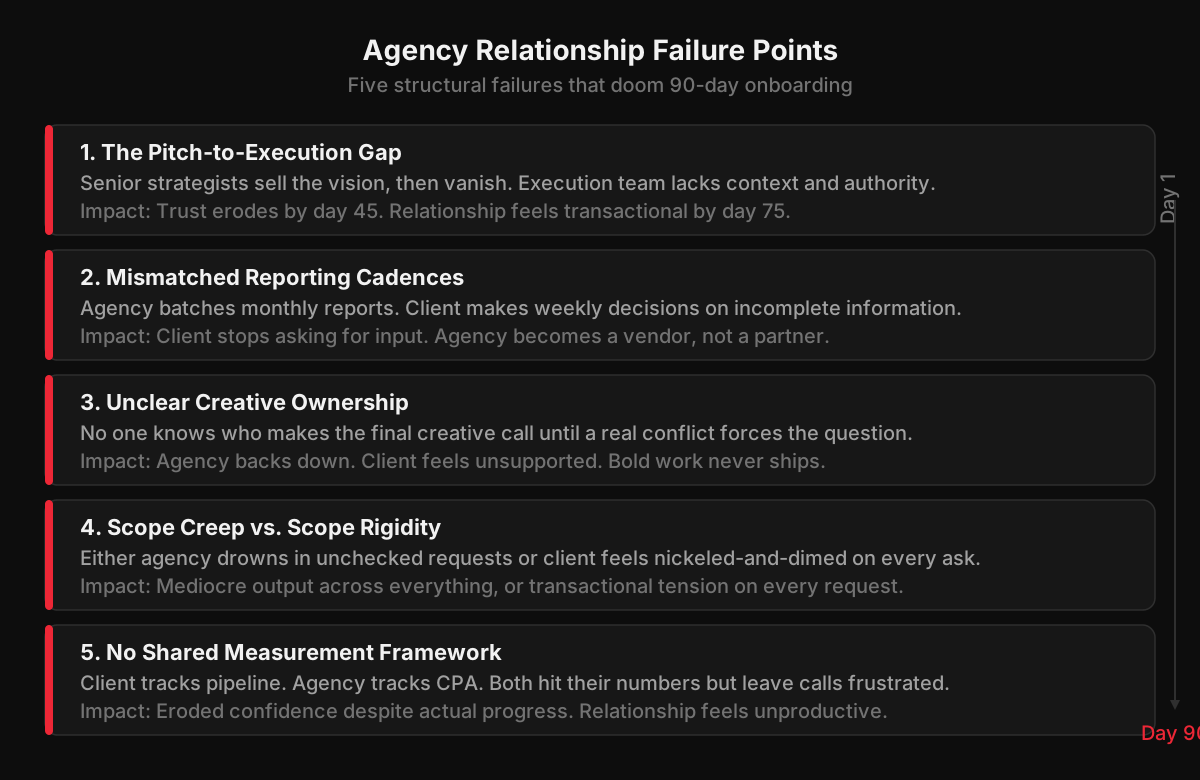
Most agency-brand relationships collapse in the first 90 days not because of poor execution but because the operating models are structurally misaligned from day one. The pitch team disappears. Reporting cadences don't match decision-making rhythms. No one owns creative decisions. Scope either expands uncontrollably or gets locked down so rigidly that nothing adapts. And there's no shared framework for what success actually looks like. This article breaks down the five structural failure patterns, then articulates what a properly architected 90-day onboarding actually requires. Darkroom has built its client operating model specifically to prevent these failures.
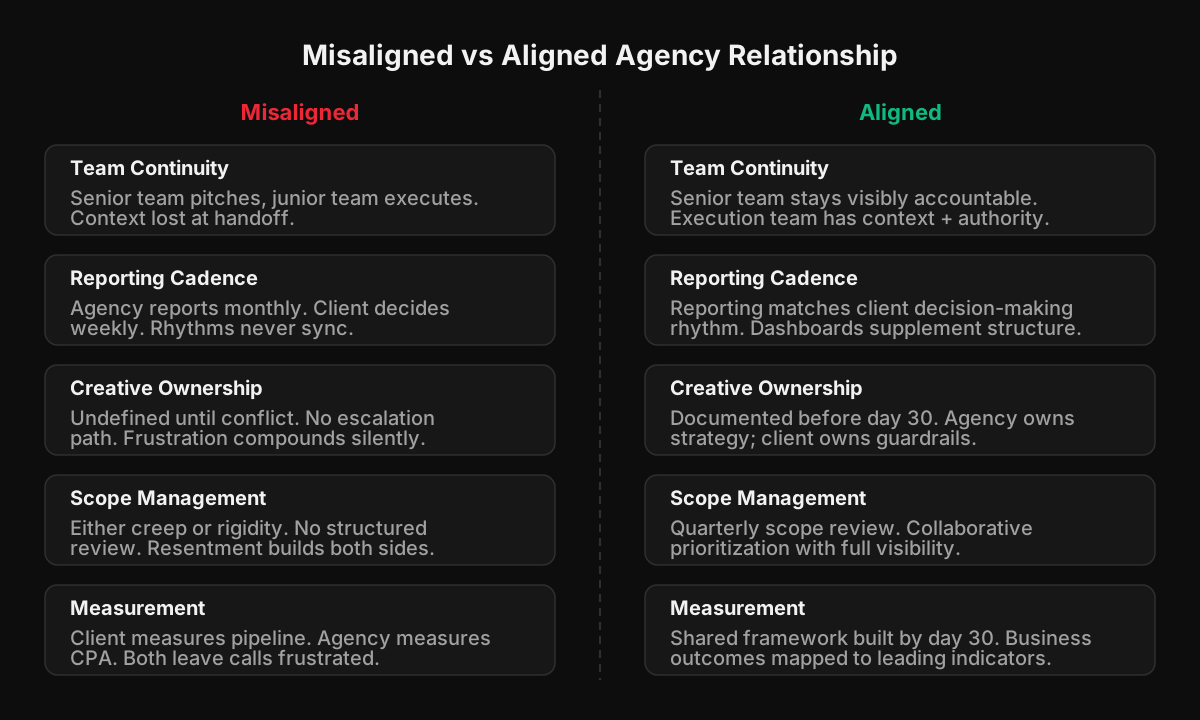
The Pitch-to-Execution Gap: Why Your Team Meets the Wrong People
The problem is not that junior teams execute poorly. Working with a growth marketing services can help navigate this effectively. The problem is that senior teams pitched and then disappeared.
This is the most common failure pattern we observe. A CMO or marketing director sits through a 90-minute pitch with the agency's VP of Strategy and two senior strategists. They're sold on the vision, the thinking, the strategic framework. The contract signs. Then the CMO never speaks to those people again. Instead, the actual execution team checks in: the account manager, the junior strategist, the mid-level creative. These are often competent people, but they lack the context, the authority, and the relationship capital to course-correct when reality hits.
The pitch team presented one model of how the work would operate. The execution team operates under a different model. The CMO expected weekly strategic calls. They're getting biweekly project status updates. The CMO expected the agency to challenge their brief. The agency is now executing exactly what was asked, scope creep be damned.
By day 45, trust erodes. By day 75, the relationship feels transactional. By day 90, the CMO starts talking to other agencies. Understanding what makes a modern agency different can help set better expectations from the start.
The solution is not better onboarding documents. It's structural clarity about who owns what and at what cadence they interact. The VP who pitched stays in the relationship. Not in every call, but visibly, accountably, at moments that matter.
Mismatched Reporting Cadences: The Invisible Decision-Making Timeline Problem
The problem is not the data. The problem is that the agency reports on a different cadence than the client decides.
Agencies typically want to report monthly. They need time to aggregate data, build narratives, identify trends. Brands, especially those with weekly standups and bi-weekly leadership syncs, need to see what's moving now. The agency provides a slick monthly deck with smoothed trends and strategic implications. By that time, the brand has already made three operational decisions based on incomplete information and is frustrated that the agency isn't responsive.
This misalignment creates two failure modes. Either the brand over-indexes on real-time Slack updates and micro-decisions, which creates chaos and makes the agency seem reactive. Or the brand stops asking for input and just reviews the monthly deck after the fact, which makes the agency feel like a vendor rather than a partner.
The corrected model is simple: reporting cadence must match the client's decision-making cadence, not the agency's batching preferences. If the client makes budget decisions monthly, the agency reports monthly with strategic context. If the client operates on two-week sprints, the agency provides a two-week pulse report. Real-time dashboards supplement but do not replace structured communication rhythms.
Unclear Creative Ownership: Who Actually Makes This Decision
The problem is not disagreement about creative direction. Working with a paid media management can help navigate this effectively. The problem is that creative ownership is undefined until a conflict emerges.
Most contracts and briefs fail to specify who owns the final creative decision. In healthy relationships, it's clear: the agency owns strategy and creative execution within guardrails the client has set. The client owns brand direction and approval authority. But what happens when these overlap. Who decides if a campaign angle is on-brand enough. Who decides if the creative is bold enough to move the needle or reckless enough to damage trust.
The pitch deck promises strategic boldness. The execution begins and the client's internal stakeholders (product, legal, comms) surface concerns. The agency interprets these as suggestions and adjusts. The client interprets this as the agency backing down. Frustration compounds. By the time a major creative decision needs to be made, no one actually knows who decides.
The structural fix: document creative ownership explicitly. The agency owns creative strategy and execution direction. The client owns brand guardrails and approval. Define the escalation path: what happens when the agency and client disagree on whether something fits the brief. Get this in writing before day 30, ideally before day 1.
Scope Creep vs. Scope Rigidity: The False Choice
The problem is not too much work or too little. The problem is that scope is never revisited after the contract signs.
One failure pattern is scope creep. The contract specifies monthly strategy calls and four campaigns per quarter. By month two, the client is asking for weekly strategy calls and requesting custom analysis that wasn't in scope. The agency says yes to everything because they want the relationship to work. By month three, they're underwater and delivering mediocre work across everything.
The other pattern is scope rigidity. The contract specifies exactly what's included. Anything outside that scope gets kicked to an external process, a change order, or a polite no. The client feels like they're nickel-and-dimed and the agency feels protective of capacity. Both are right.
Neither of these is actually about scope. It's about the absence of a structured conversation about what matters and how to prioritize. A healthy operating model includes a quarterly scope review. What's working. What's not. What new challenges have emerged. What can we accelerate. What should we pause. This is not a scope creep negotiation. It's a collaborative check-in where both sides have visibility into capacity and tradeoffs. Knowing how to choose a growth marketing agency means evaluating these operational rhythms upfront.
No Shared Measurement Framework: You're Both Measuring Different Things
The problem is not that the metrics are wrong. Working with a performance creative agency can help navigate this effectively. The problem is that the client and agency are not measuring the same thing.
The client's board cares about lead volume and sales pipeline contribution. The agency's team cares about click-through rates, cost-per-acquisition, and brand sentiment. Both are important, but they're not the same metric. When monthly results come in, the client sees increased costs without proportional pipeline growth. The agency sees improved creative efficiency. Both leave the call frustrated.
This fracture happens because most contracts and onboarding processes inherit the client's existing measurement framework without interrogating whether it actually answers the question the agency should be trying to solve. The agency then targets their KPIs and hits them, but the client's business didn't move as expected.
The corrected model: before day 30, build a shared measurement framework collaboratively. Start with the client's business outcome. Work backwards. What leading indicators feed that outcome. What can the agency influence directly. What's outside their control. What should we measure daily, weekly, monthly. This is not a data warehousing project. It's a conversation that usually takes four hours and prevents 90 days of frustration.
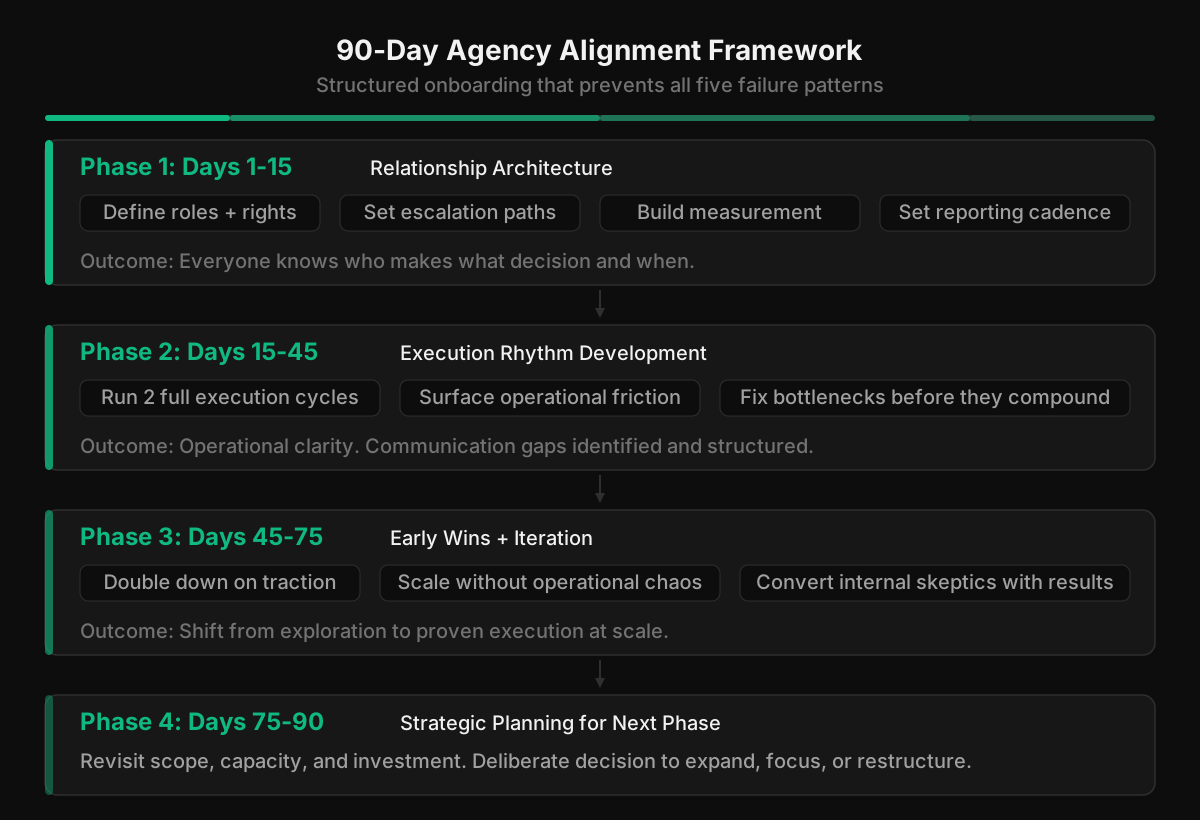
What the First 90 Days Should Actually Look Like
Proper onboarding architecture prevents all five failure patterns above.
Days 1-15: Relationship architecture. Get the right people in the room. Define roles, decision rights, escalation paths, and reporting cadences. Document creative ownership. Build the measurement framework. This takes more time than most onboardings allocate, but it determines everything that follows. By day 15, everyone should know exactly who makes what decision and when.
Days 15-45: Execution rhythm development. Run two full cycles of whatever you're doing (two weeks of campaigns, two rounds of strategy work, whatever your sprint is). The goal is not to hit some arbitrary KPI. It's to surface the operational friction. Where does decision-making slow down. Where do bottlenecks emerge. What communication happens offline that should be structured. Fix these now, not at day 75.
Days 45-75: Early wins and iteration. By now you have enough data to know what's working. Double down there. You also have enough operational clarity to scale without chaos. The goal in this phase is to move from "let's see if this works" to "here's what's working and here's how we scale it." This is also when internal skeptics inside the brand typically come around, because they're seeing early traction. Agencies that treat creative as a system rather than a service tend to generate this traction faster.
Days 75-90: Strategic planning for the next phase. Don't just drift into month four. Have an explicit conversation about what's working, what needs to change, what new challenges have emerged, and what the next 90 days should focus on. This is also the moment to revisit scope, capacity, and investment level. Some relationships should expand here. Others should get more focused. But this decision should be deliberate, not default.
This structure eliminates the invisibility that kills most relationships. Everyone knows what's being measured. Everyone knows who decides. Reporting happens on a predictable cadence that matches decision-making. The senior team stays visibly involved. And scope is revisited before it becomes a surprise.
The Structural Difference: Why Some Agencies Get This Right
The agencies that build long-term client relationships don't pitch better. They architect better.
The best agency partners treat the first 90 days like a product rollout, not a service delivery. They have a documented operating model before the engagement starts. They know exactly how often they'll communicate, on what topics, with whom. They've defined decision rights explicitly. They've built a measurement framework that maps to the client's business outcomes. They staff the relationship so the senior team stays involved without micro-managing. And they reserve time at day 45 and day 75 to revisit whether the operating model itself is working.
This is not about being nice or communicative. It's about structural rigor. Most agencies learn this through painful experience. Some have built it into their operating model from the start.
If you're building high-performing creative campaigns or scaling paid media operations, the first 90 days determine whether the relationship compounds or collapses. Same is true for retention-focused strategies. The operating model matters more than the work itself. Rigorous measurement approaches like incrementality testing further strengthen alignment between agency and brand.
FAQ
Why do most agencies not have this figured out?
Because they're rewarded for closing deals and winning accolades, not for relationship longevity. A 12-month relationship that fails at day 90 is still revenue. But it's exhausting to staff and destroys referrals. The agencies that optimize for long-term relationships make the structural investment upfront.
What if our brand's decision-making is chaotic and fast? Doesn't this slow us down?
The opposite. A defined operating model lets you move faster because decisions are clear, roles are defined, and you're not stuck in endless clarification loops. Chaos and undefined ownership is what slows you down.
Should the measurement framework be in the contract?
It can be, but it doesn't have to be. What matters is that it's documented, shared, and revisited. Most relationships benefit from building it collaboratively in the first two weeks rather than trying to predict it in contract negotiation.
What if we disagree on what success looks like?
That's the whole point of the shared measurement framework. These disagreements come out in week two when they're easy to solve, not in week 15 when they've eroded trust. If you can't align on measurement, the relationship isn't viable anyway.
Does this operating model work for all types of engagements?
Yes. Whether it's campaign work, retention strategy, media buying, or creative development, the operating model is the same: clear roles, defined cadences, shared measurement, explicit scope review. The work varies but the structure doesn't.
How do we implement this if our current agency doesn't have this figured out?
You can architect it yourself. Propose the operating model to your agency partner. If they're good, they'll recognize it and align. If they push back or ignore you, that's signal that the relationship isn't built to compound.
The operating model determines the relationship. Most agencies and brands stumble through the first 90 days without explicit architecture. By the time one side realizes the relationship is failing, the pattern is locked in. The fix is to invest in structure before you execute. Define roles, cadences, decision rights, and measurement early. Revisit the operating model at days 45, 75, and 90. This is not overhead. It's the only thing that prevents the relationship from dissolving exactly when momentum should be building.
If you're evaluating partner agencies or trying to fix a floundering engagement, start here. Ask your agency about their operating model. Ask them how they structure the first 90 days. Ask them how they define creative ownership and measurement. The quality of these answers predicts the quality of the relationship.
Ready to build a relationship designed to last? Book a call with our team.