
PERFORMANCE CREATIVE
Why Performance Creative Is the Most Misunderstood Service in Growth Marketing




Written by Darkroom leardership

TL;DR
Performance creative agency work is not a creative discipline — it’s a systematic, iterative approach to ad production that directly improves media efficiency. Most brands and agencies still treat performance creative as copywriting or design with a testing label attached. The agencies that actually move the needle treat it as an optimization function that sits between media-buying data and production workflows. The gap between brand creative and true performance creative agency output isn’t creative talent — it’s methodology, velocity, and testing frameworks that shorten the feedback loop and reduce uncertainty in media spend. Here’s how Darkroom’s performance creative agency services approach this as a system, not a service line.
The Creative Discipline Myth
The problem is not that brands need better creative. The problem is that they're asking the wrong team to build it.
When most companies hire an agency or assemble an internal team for "performance creative," they're thinking about copywriters who understand conversion. Designers who test variations. Art directors who can scale concepts. This framing is fundamentally wrong.
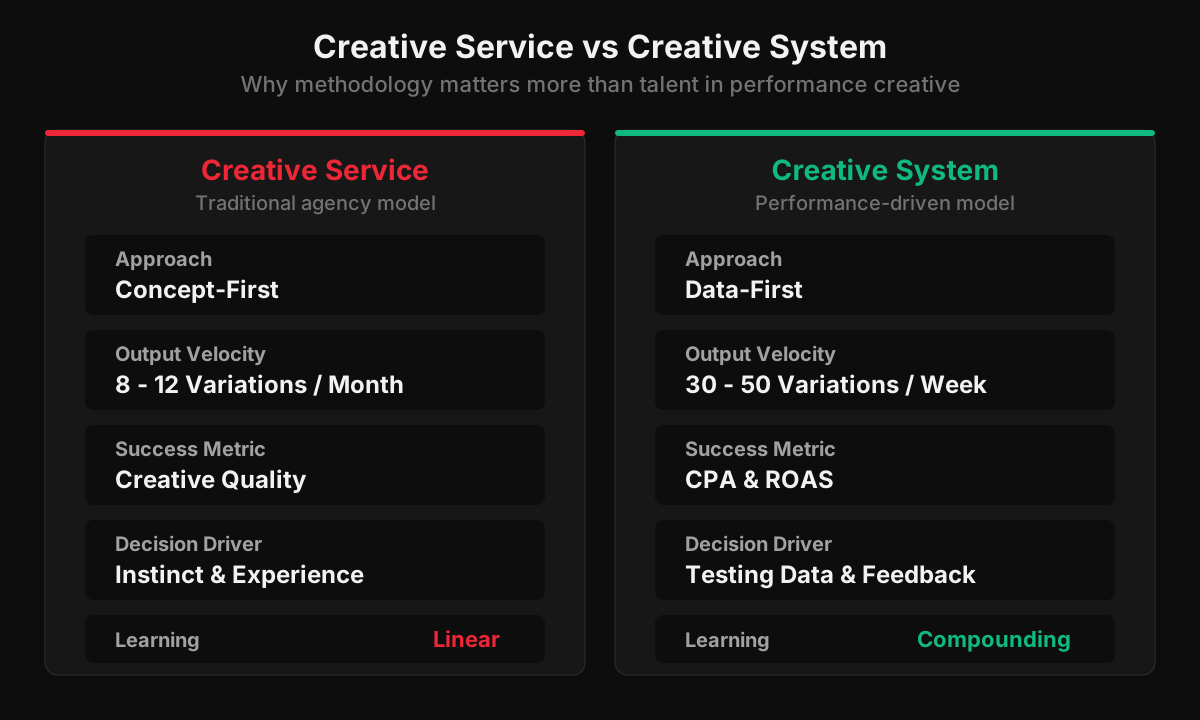
Brand creative and performance creative operate under different constraints. Brand creative optimizes for memorability, emotional resonance, and differentiation. It lives in a 30-second spot. It builds equity over quarters and years. Performance creative optimizes for immediate feedback, iteration velocity, and media efficiency. It lives in the data. It competes for attention in feeds where users scroll in 1.5 seconds.
These are not points on the same spectrum. They are different functions.
Traditional creative teams fail at performance because their incentive structure is wrong. A brand creative team's success is measured by ideas. How many concepts did they generate this quarter. How novel was the approach. How much did it shift the narrative. These metrics make sense for brand work. They're poison for performance.
Performance creative success is measured by cost per acquisition, return on ad spend, and creative refresh velocity. A traditional creative team sees 12 variations as ambition. A performance creative team sees 12 variations as a baseline test before you've shipped anything serious.
Performance Creative Is Media Buying Infrastructure
The teams that understand performance creative don't sit in creative departments. Working with a performance creative agency can help navigate this effectively. They sit at the intersection of media buying, data analysis, and production.
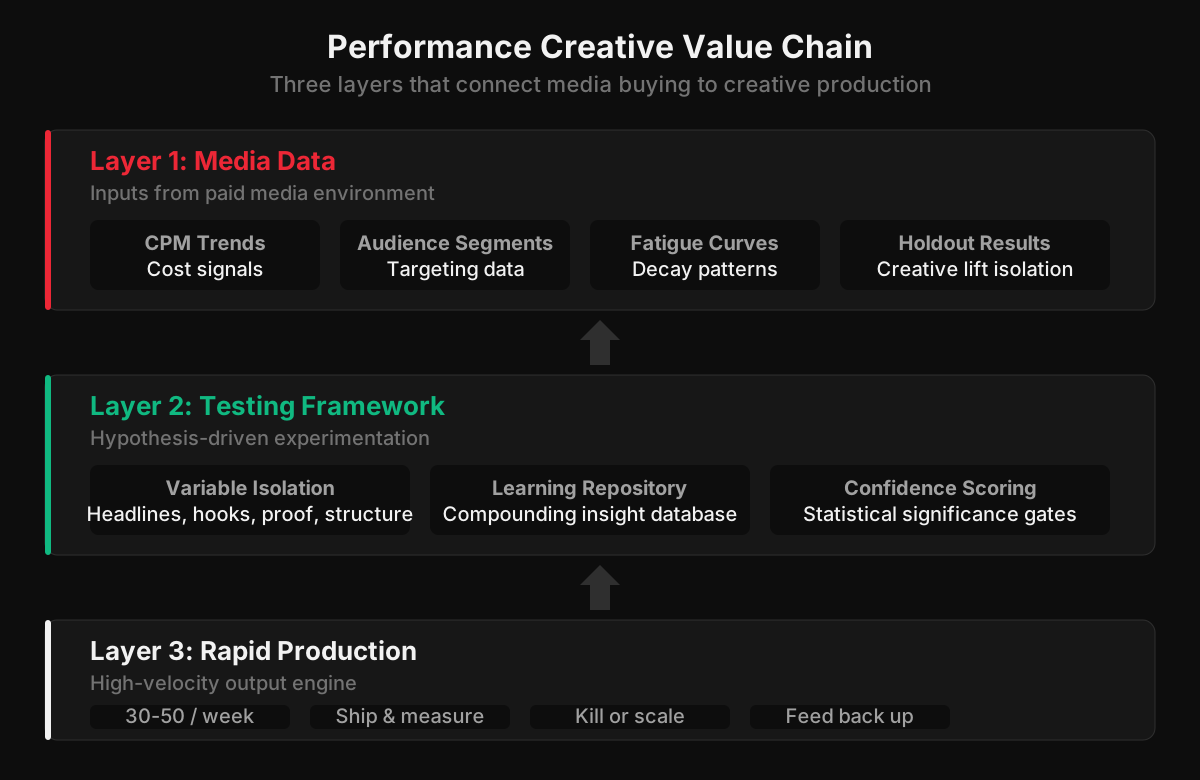
This changes everything about how you staff, structure, and measure the function. A performance creative operator needs to understand media economics the way a trader understands markets. They need to know what happens to cost per thousand impressions when you change the headline by three words. They need to know how creative fatigue curves map to audience segmentation. They need to know what a holdout test tells you about creative confidence.
The best performance creative teams have two things in common. First, they're obsessed with iteration velocity. How many variations can we produce, test, and learn from in a single week. Second, they're ruthlessly empirical. We don't defend creative choices. We measure them. We kill them if the data doesn't support them. We double down if it does.
This is why performance creative services require a different operating model than traditional creative. The structure needs to support rapid testing, not committee review. The team composition needs to blend operators who understand paid media economics with producers who can ship fast. The KPIs need to align with media efficiency, not creative awards. Understanding what differentiates modern agency models helps clarify this shift.
Why Iteration Velocity Beats Initial Quality
The teams that win at performance creative have abandoned the idea that the best approach is to spend two weeks building the perfect concept before you test it.
Here's the operational reality. You don't know which creative approaches will work in your specific media environment until you test them. You can have great instincts. You can have case studies showing what worked for similar brands. You can have frameworks and heuristics. None of that removes the uncertainty. When you launch a new ad set, you're making a bet on what that audience will respond to. The only way to win that bet at scale is to make many bets and learn fast.
This means the bottleneck in performance creative is not creative talent. It's production capacity and testing velocity. If you can ship 40 variations a week and test them in isolation, you will outlearn a team that ships 8 perfect variations per month. The math is straightforward. More cycles equals more feedback. More feedback equals better decisions.
The best teams invert the quality equation. Instead of minimizing production variations until they're confident they're great, they maximize production output and use the audience to validate quality. Ship fast. Test in market. Kill what doesn't work. Double down on what does. Repeat.
This requires discipline because instinct pulls you toward perfection before launch. Performance creative operators need permission to feel uncomfortable with the early concepts. The goal is not to create art. The goal is to create a feedback loop that shrinks uncertainty about what works with your specific audience at your specific price point.
Creative Testing Frameworks That Drive Media Efficiency
The problem is not that brands don't test creative. Working with a paid media management can help navigate this effectively. The problem is that they test wrong and misinterpret the results.
Most testing in performance creative follows a false framework. You build variation A, variation B, and variation C. You run them for two weeks. You pick the winner. You move on. This approach wastes half your learning. It tells you which creative performed best. It doesn't tell you why. It doesn't isolate which elements drove performance. It doesn't transfer learning to the next batch of concepts.
Sophisticated performance creative testing isolates variables. You're not testing "brand voice A vs brand voice B." You're testing specific elements: audience pain points, benefit framing, proof mechanisms, narrative structure. When you isolate variables, your learning compounds. The insights from one test cycle inform the hypothesis for the next. You build a testing roadmap instead of running random experiments.
A mature performance creative operation maintains a learning repository. We tested pain-point driven creative in this audience segment. Response rate lifted 34 percent. We tested social proof in that segment. Response rate lifted 8 percent. We tested urgency framing in another segment. It decreased performance 12 percent. Now we know. When we brief the next production cycle, we're not starting from zero instinct. We're starting from a tested hypothesis grounded in your specific audience and media environment.
This framework transforms creative from art into science without making it sterile. You're still exercising judgment. But you're exercising judgment informed by data. You're making decisions faster. You're spending media budget to accelerate learning instead of validating predetermined concepts.
The Talent You Actually Need
The best performance creative operators are not award-winning copywriters or renowned art directors. They're operators who can ship fast, think in systems, and let data override ego.
Performance creative requires a specific type of person. Someone comfortable with rapid iteration. Someone who doesn't get attached to their own ideas. Someone who can move from hypothesis to production to testing to analysis in days instead of weeks. Someone who understands that the role is execution against a framework, not personal creative expression.
This sounds limiting. It's actually liberating. You don't need to hire the most expensive creative talent in the market. You need to hire operators with production velocity, testing discipline, and media literacy. You can train strong operators on strategic frameworks. You can't teach velocity or framework thinking to a traditional creative mind set.
The best agencies building performance creative in-house are staffing teams with copywriters who come from direct response backgrounds. Designers with e-commerce experience. Producers who manage complex workflows. Operators who have survived in high-velocity environments where ideas are cheap and execution is expensive.
What This Means for Your Growth Strategy
Most brands are leaving media efficiency on the table because they treat performance creative as a cost center instead of a strategic function.
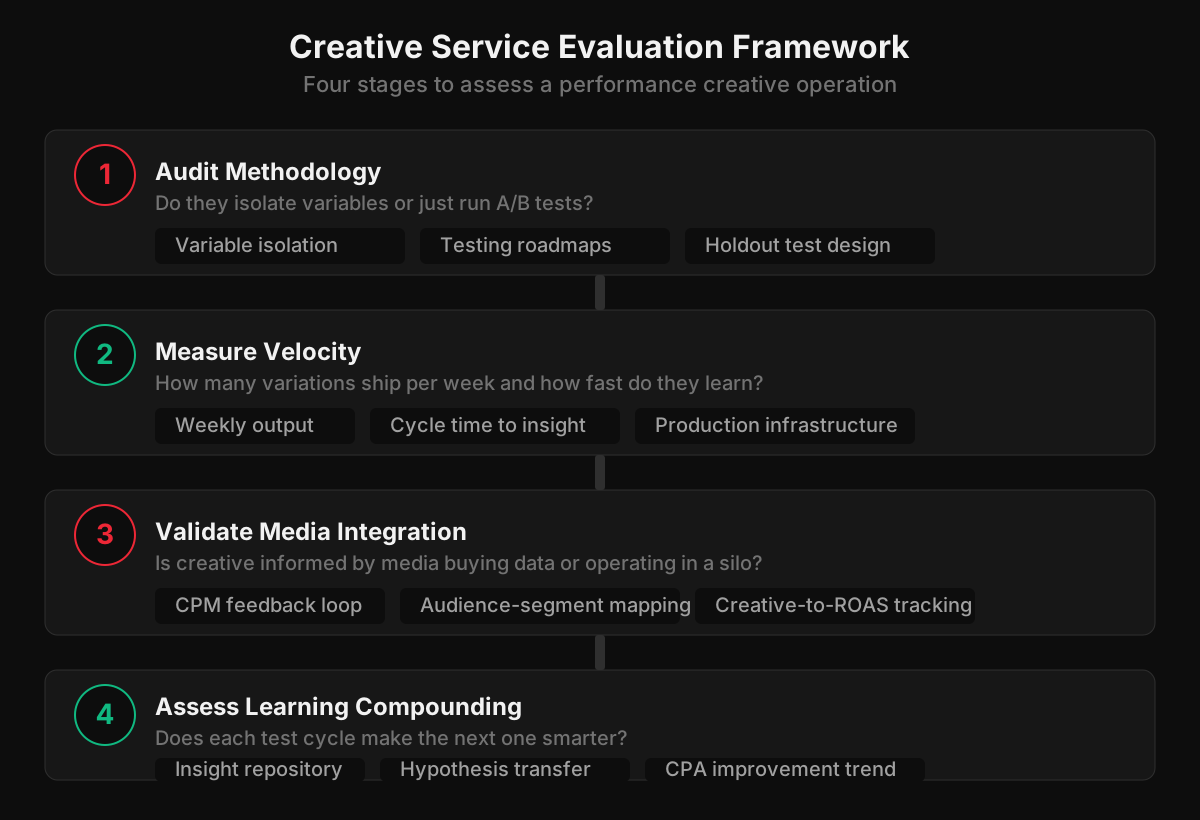
If you're treating performance creative as "buying design time from a creative agency," you're misallocating. If you're measuring success by subjective creative quality, you're measuring the wrong thing. This misalignment is a core reason agency-brand relationships break within 90 days. If you're briefing performance creative work like brand work, you're setting it up to fail.
Performance creative is an investment in media efficiency. Better creative testing reduces uncertainty about what resonates with your audience. Reduced uncertainty lowers the cost of acquiring each customer. This compounds over time. The teams that build systematic creative testing frameworks don't just create better ads. Working with a full-service growth agency can help navigate this effectively. They fundamentally improve the return on their entire media spend.
This requires rethinking how you staff, structure, and measure the function. It requires giving the team permission to fail fast and often. It requires aligning creative KPIs with media KPIs instead of separating them. It requires treating performance creative as infrastructure, not as a department.
Building Your Performance Creative Operation
The teams winning at performance creative share one thing in common. They've made the shift from creative as art to creative as a testing infrastructure.
This shift starts with clarity on what you're optimizing for. Not brand awareness. Not creative excellence. Cost per acquisition and return on media spend. Everything flows from that. If you're evaluating partners, understanding how to choose the right growth marketing agency helps anchor that decision. Your testing framework flows from it. Your team composition flows from it. Your production velocity targets flow from it.
The second piece is infrastructure for learning. You need systems to capture what works. You need to connect creative performance back to audience segments, messaging angles, and visual approaches. You need a repository of insights that compounds over time. Without this, you're running experiments instead of building a learning engine.
The third piece is permission structure. Your team needs permission to ship work that feels incomplete. Permission to test aggressively. Permission to kill underperforming ideas without committee debate. Permission to double down on what works even if it's not strategically interesting. This permission comes from leadership alignment on what success looks like.
Ready to transform your approach to performance creative?Book a call with Darkroom to discuss how systematic creative testing can improve your media efficiency.
FAQ
What's the difference between performance creative and brand creative?
Brand creative optimizes for memorability and emotional resonance over time. It's measured in brand lift and awareness. Performance creative optimizes for immediate response and media efficiency. It's measured in cost per acquisition. They require different incentive structures, team compositions, and success metrics. Confusing them is why most performance creative fails.
How many creative variations should we test at once?
There's no universal number. The constraint is your testing infrastructure and production capacity. A mature team can test 30-50 variations weekly. A beginning team might start with 4-6 per week. The goal is to maximize iteration velocity within your production constraints. Quality of variations matters less than quantity of learning cycles.
How long should we run each creative test?
It depends on your audience size and conversion volume. If you have high-volume conversions, 3-5 days is often sufficient to reach statistical significance. If you have lower volume, you might need 2-3 weeks. The principle is consistent. Run long enough to have confidence in the winner. Don't optimize for finding a winner. Optimize for learning what your audience responds to.
How do we know if creative is actually driving media efficiency or if it's just audience quality?
This is why holdout tests matter. Run your best creative against your worst creative in the same audience segments with the same targeting. The performance gap is creative lift. Without holdout tests, you can't isolate creative performance from media environment effects. You're flying blind.
Can we run performance creative with an internal team or do we need an agency?
Both work if the structure supports it. Internal teams win when they have dedicated operators, budget autonomy, and measurement systems. Agencies win when they specialize and bring scale. The variable is not internal vs external. The variable is whether you've built a system for rapid testing, learning capture, and velocity. That can happen either way.
How do we scale learnings from one audience segment to another?
Document your testing results with enough detail to understand what worked and why. When you move to a new segment, run validation tests on your top learnings before doubling down. Not all insights transfer perfectly across segments. Some do. Hypothesis-driven validation is faster than starting from zero.
What's the ROI on a performance creative operation versus just spending more on paid media?
Good creative testing typically reduces cost per acquisition 15-40 percent over 6-12 months. That compounds quickly. A brand spending 1 million dollars monthly on media could unlock 150,000 to 400,000 dollars in annual efficiency gains through better creative testing. The investment in performance creative infrastructure typically pays for itself in the first 2-3 months.