
AMAZON AND RETAIL MEDIA
Amazon vs Retail Media Networks: Where Brands Should Actually Spend in 2026




Written by Darkroom leardership

Written & peer reviewed by 4 Darkroom team members
The Retail Media Reality Check
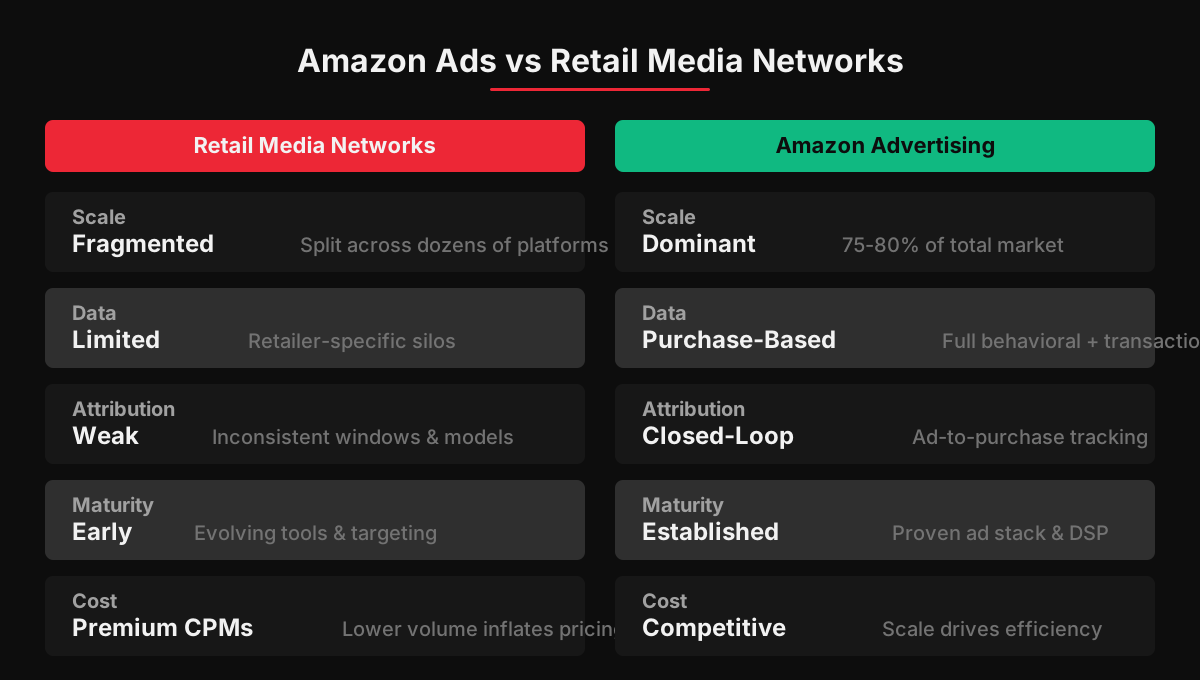
The retail media network conversation often oversells diversification as a growth strategy. The industry touts Walmart Connect, Target Roundel, and Instacart Ads as alternatives to Amazon advertising, but the numbers tell a different story. Amazon's retail media revenue, as Darkroom's Amazon marketing team advises clients, sits at 75-80% of the total market, a position that has remained remarkably stable even as competitors gained traction. This concentration isn't about Amazon's dominance alone. It reflects where customers search, browse, and transact in high-intent moments. Brands chasing budgets across multiple platforms without first optimizing Amazon spend are leaving measurable ROI on the table. The strategic question isn't whether retail media networks matter. It's where your specific brand should draw the line on platform diversification to maximize efficiency.
Why Amazon Captures the Majority
Amazon's retail media dominance stems from three structural advantages. First, intent concentration. According to Amazon Advertising's retail media research, Amazon processes roughly 45% of all online shopping queries, and nearly 40% of product searches now begin on Amazon rather than Google. That search volume translates directly to high-intent advertising inventory.
Second, customer behavior. Amazon shoppers arrive with purchase intent and payment information already on file. The friction between ad exposure and purchase completion is minimal, which makes attribution cleaner and conversion rates higher. Third, inventory depth. Amazon's first-party data on browsing behavior, cart abandonment, and repeat purchase patterns gives advertisers precision that other platforms simply cannot match at scale. Walmart and Target have millions of shoppers, but the search volume concentration on Amazon creates an asymmetric advantage. A brand selling razors or kitchen appliances will find more qualified traffic on Amazon than on any secondary network. Understanding how the Amazon marketing flywheel connects organic, paid, and content helps explain why this structural advantage compounds over time.
The Case for Amazon Saturation First
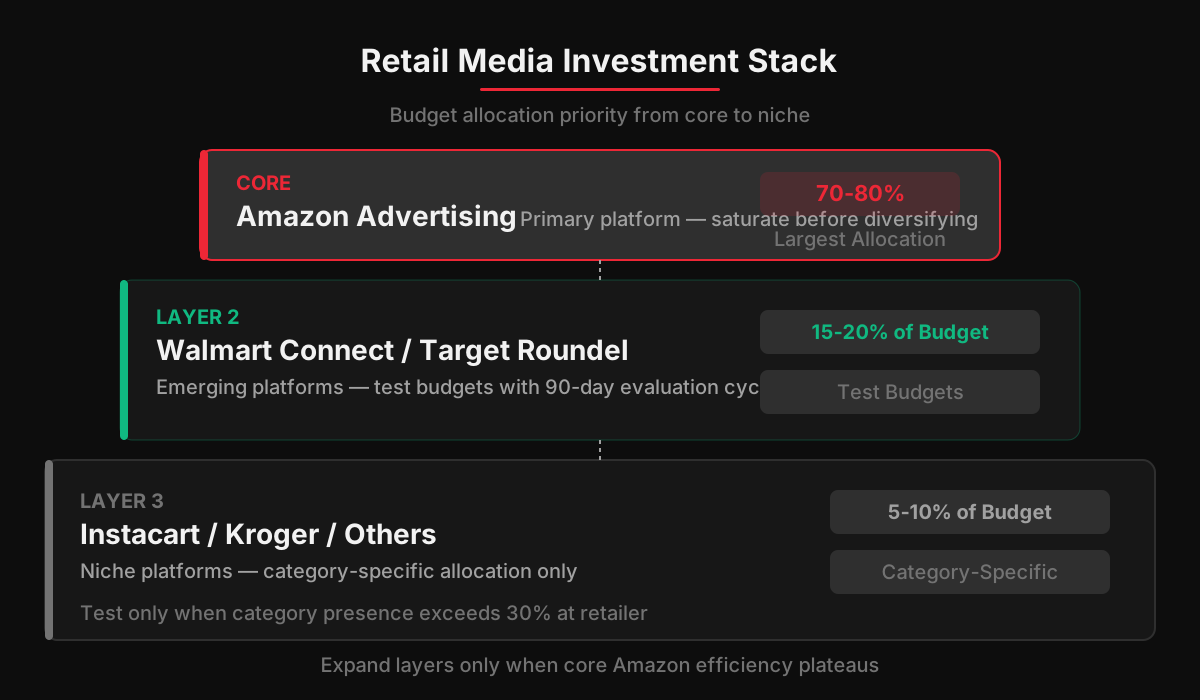
Brand strategy should treat Amazon as the primary advertising channel until clear inefficiency signals appear. This means pushing spend upward until return on ad spend deteriorates to a point where secondary platforms offer better unit economics. Most brands do the opposite. They launch on Amazon with modest budgets while simultaneously testing Walmart Connect and Target Roundel, fragmenting attention and budget without establishing baseline efficiency on the primary platform.
Saturation looks different across categories. A commodity beauty brand might saturate Amazon at $50,000 monthly spend. A niche outdoor gear brand might require $200,000 before diminishing returns appear. The threshold depends on market size, competitive intensity, and your share of voice within that segment. Our breakdown of Amazon PPC management costs in 2026 provides benchmarks for understanding where those efficiency thresholds typically fall. The point is methodological. Establish maximum efficiency on Amazon first. Document that efficiency clearly. Only then allocate incremental spend to networks where the competitive or audience context shifts meaningfully in your favor.
When Retail Media Networks Make Economic Sense
Secondary retail media platforms become strategically sound in two scenarios. The first is category-specific concentration. Some product categories skew disproportionately toward specific retailers. Grocery and household staples see high Instacart and Walmart traffic. Premium beauty and apparel attract Target traffic. According to eMarketer's retail media forecast, category-level concentration can shift 30% or more of retail volume toward non-Amazon channels. If your category shows that kind of split, that platform deserves proportional ad spend allocation.
The second scenario is brick-and-mortar leverage. Brands with meaningful physical retail presence can extract additional value from retailer-specific media networks because those platforms offer location data and in-store conversion signals that Amazon cannot replicate. A coffee brand with 2,000 stores in Walmart can run promotions that drive both online orders and in-store pickup. That integrated value justifies budget reallocation toward Walmart Connect. Brands without substantial physical presence at a given retailer should avoid platform-specific advertising unless the shopping category itself naturally concentrates there. Working with a paid media management partner experienced across platforms helps brands evaluate these trade-offs objectively.
The Consolidation Trap
Multiple secondary retail media platforms promise sophisticated audience targeting and efficient inventory. In practice, they often deliver fragmentation without scale. When a brand splits budget across Amazon, Walmart Connect, Target Roundel, and Instacart simultaneously, several problems emerge. First, budget becomes too small on each platform to accumulate meaningful data or achieve algorithmic efficiency. Machine learning advertising systems require volume to optimize. A $5,000 monthly budget on Target Roundel will never generate the learning data that a $50,000 Amazon budget creates.
Second, attribution gets murkier. Each platform measures conversion differently, applies different attribution windows, and incorporates first-party and third-party data in inconsistent ways. The brand ends up with fragmented insights rather than clear economics. Third, messaging and creative dilute. Distributing effort across multiple creative briefs across multiple platforms fragments creative testing. Amazon benefits from concentrated creative strategy development that secondary platforms cannot replicate at lower budgets. The consolidation trap is real. It looks like smart diversification but often represents inefficient distribution of limited resources.
Measuring True Retail Media ROI
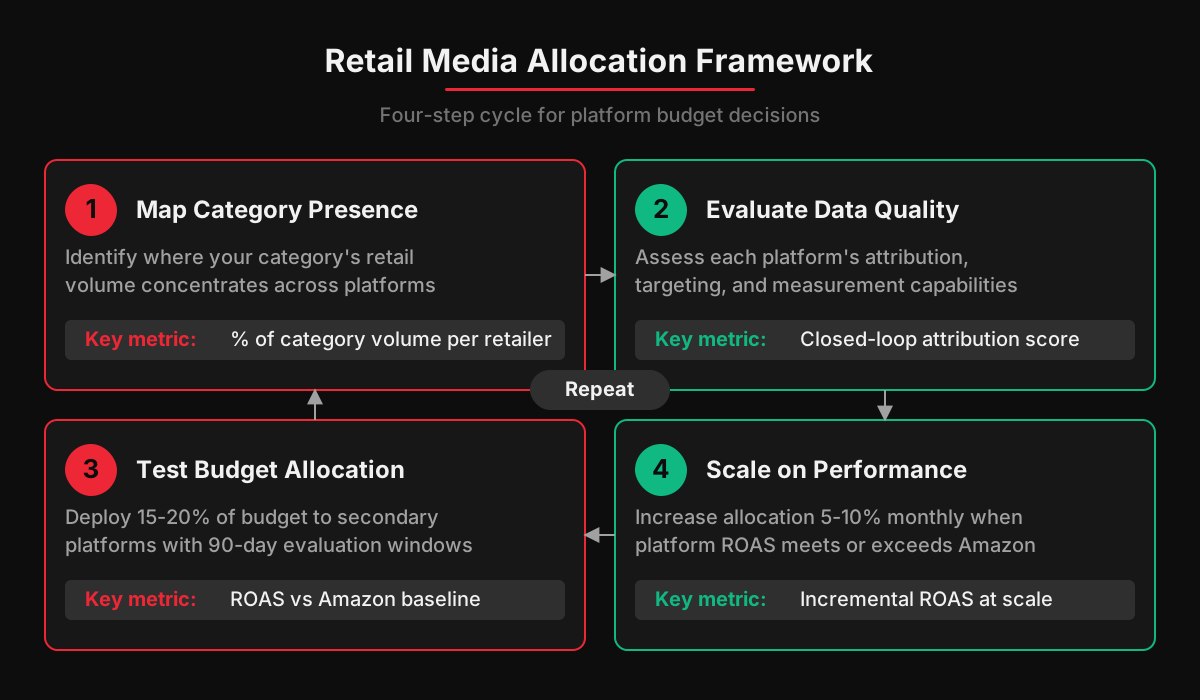
Most retail media ROI calculations are overstated because they ignore incrementality and attribute credit too liberally. A customer who searches your brand on Walmart Connect and buys from Amazon is attributed to Walmart in Walmart's dashboard. That same customer might have purchased anyway. BCG's analysis of retail media networks confirms that measurement systems typically lack proper control groups and incrementality testing.
When evaluating whether secondary platforms deserve budget, apply stricter standards than you use for Amazon. Amazon's large scale and historical data make relative ROI estimates more reliable. Secondary platforms should clear a higher threshold to justify reallocation. Run small experiments with clear incrementality tests. A/B test promotional offers across platforms. Track cohort-level behavior rather than relying on platform-provided metrics. Brands spending $100,000 monthly across retail media should dedicate at least 20% of that to measurement infrastructure, testing, and controlled experiments. The brands winning in retail media are those running hypothesis-driven tests, not those chasing platform dashboards that overstate performance. Understanding what Amazon DSP does and when to use it adds another measurement layer that helps isolate true incremental value.
Building a Phased Retail Media Budget
A practical allocation framework starts with Amazon at 70-80% of retail media budget until efficiency data proves otherwise. Within that Amazon allocation, maintain a test budget of 15-20% for beta campaigns on secondary platforms. This test budget should run for at least 90 days with clear KPIs and control groups. If secondary platform performance meets or exceeds Amazon efficiency by 10%+, gradually increase secondary platform allocation by 5-10% monthly. If secondary platform ROAS trails Amazon by more than 20%, reallocate that budget back to Amazon and revisit in 6-12 months.
Monitor category shifts, retailer traffic trends, and competitive presence. A brand entering Costco for the first time should test Costco's emerging ad platform alongside Amazon, not instead of it. A brand losing share in Walmart due to increased competitor presence might need higher Walmart Connect spend to maintain visibility. Allocation should follow opportunity, not just habit. IAB's retail media measurement guidelines provide standardized frameworks for comparing performance across platforms. The phased approach prevents large budget misallocation based on untested assumptions while maintaining focus on the primary platform. Choosing the right Amazon marketing agency as a brand channel partner ensures that primary platform optimization stays rigorous as you expand testing.
The 2026 Competitive Landscape
Walmart's ad network is maturing fastest among secondary platforms, growing nearly 30% year-over-year and now representing roughly 8-10% of total retail media spend. Target Roundel has stabilized at roughly 4-5% of the market. Instacart's platform is growing but remains concentrated in CPG and grocery, creating category-specific opportunity rather than broad relevance. Amazon, meanwhile, continues to improve attribution and cross-channel measurement, making it even more attractive for brands running complex conversion funnels.
The competitive dynamic matters. If your primary competitors are doubling down on Walmart Connect, you need competitive presence there. If they're absent, that absence often signals category-level economics that don't justify secondary platform investment. The landscape will continue consolidating. Expect Amazon to maintain 70%+ share through 2027 as smaller retail media networks either merge or shut down. The brands with sustainable retail media programs are those treating Amazon as the core, diversifying deliberately based on category and retail presence rather than following marketing convention. A performance creative approach ensures your ad assets are optimized for whichever platforms earn budget allocation.
Frequently Asked Questions
Should we launch on all retail media networks simultaneously?
No. Start with Amazon and allocate 15-20% of budget as a test budget for secondary platforms. Secondary platforms require 90+ days of performance data before justifying reallocation. If initial performance trails Amazon by more than 20%, pause and revisit later.
How much budget should go to Amazon vs other platforms?
Allocate 70-80% to Amazon initially, with 15-20% as test budget for secondary platforms. Only increase secondary platform allocation when measured ROAS meets or exceeds Amazon's efficiency. Adjust based on category-specific concentration and physical retail presence.
What's the difference between Walmart Connect and Target Roundel for our budget?
Walmart Connect has broader reach and category relevance for CPG and household brands. Target Roundel concentrates on apparel, beauty, and discretionary categories. Test whichever aligns with where your products appear in physical stores.
How do we know if a secondary platform is worth the spend?
Run controlled experiments with clear incrementality tests. Compare cohort-level behavior, not just platform attribution. If a platform delivers 10%+ better ROAS than Amazon after 90+ days, justify reallocation. If performance trails by 20%+, consolidate back to Amazon.
Does physical retail presence change the strategic calculation?
Yes. Brands with significant in-store inventory at a retailer can extract incremental value from that retailer's media network through location targeting and in-store conversion measurement. Without substantial physical presence, retailer-specific platforms offer diminishing returns.
How often should we review retail media budget allocation?
Review quarterly. Track ROAS trends, competitive activity, and category-level traffic shifts. Adjust allocation monthly based on performance data, but avoid reactionary changes based on single-month fluctuations. Use 90-day rolling averages to filter noise.
What role does brand awareness play in retail media strategy?
Retail media networks function primarily as conversion channels, not awareness channels. Search and sponsored product placements drive intent-based conversions. If brand awareness is a strategic priority, allocate separate budget to upper-funnel channels rather than expecting retail media to solve that problem.
Should we consolidate retail media management under one agency or split by platform?
Consolidate under a single full-service agency. Split platform management creates fragmented strategy and inconsistent creative development. A single operator should manage Amazon as the primary platform and test secondary platforms with clear experimentation protocols. This prevents siloed optimization.
Ready to optimize your retail media mix?
Book a call with Darkroom to build your phased Amazon advertising strategy aligned with your category dynamics and retail presence.