SOCIAL COMMERCE
How Much Does TikTok Shop Cost Sellers in 2026: Fees, Margins, and Hidden Costs




Written by Darkroom leardership

Written & peer reviewed by 4 Darkroom team members
TL;DR
TikTok Shop's headline fees (5% commission + payment processing) mask the true cost of commerce on the platform. Between creator incentives, Shop Ads spend, content production, fulfillment management, and operational overhead, successful sellers typically spend 25-40% of revenue to maintain and scale their storefront. This article breaks down each cost vector so you can calculate your actual cost of sale and plan realistic budget allocation. For a deeper look at TikTok Shop strategy, visit Darkroom. For more on this approach, see why TikTok Shop fails with a marketplace approach. Learn more about how Darkroom approaches this.
The Platform Fee Is Only 5%, So Why Are Costs Higher?
TikTok Shop advertises a 5% commission on orders, with an additional 1.5-1.99% payment processing fee. On the surface, a $100 order costs you $6.50 to $6.99. Working with a TikTok Shop agency can help navigate this effectively. This is the number most sellers quote when discussing platform costs.
This number is incomplete. Platform fees are a baseline, not the full economic picture. The 5% commission does not account for the discovery mechanics that drive traffic to your storefront, the creator partnerships that amplify listings, or the content production required to compete on a native video platform.
According to TikTok for Business, the platform's Shop integration is designed as a discovery-first channel, meaning organic traffic is limited and paid promotion is the primary driver of visibility. This architectural choice shifts the cost burden from platform fees to advertising spend.
Real merchants factor in Shop Ads spend, creator commissions, and content costs when budgeting. The question is not what TikTok takes, but what you must invest to compete.
Breaking Down the Five Cost Vectors
TikTok Shop costs fall into five distinct categories. Working with a TikTok Shop vs Amazon for DTC can help navigate this effectively. Understanding each one helps you forecast revenue requirements and set realistic profitability targets.
1. Platform Commission
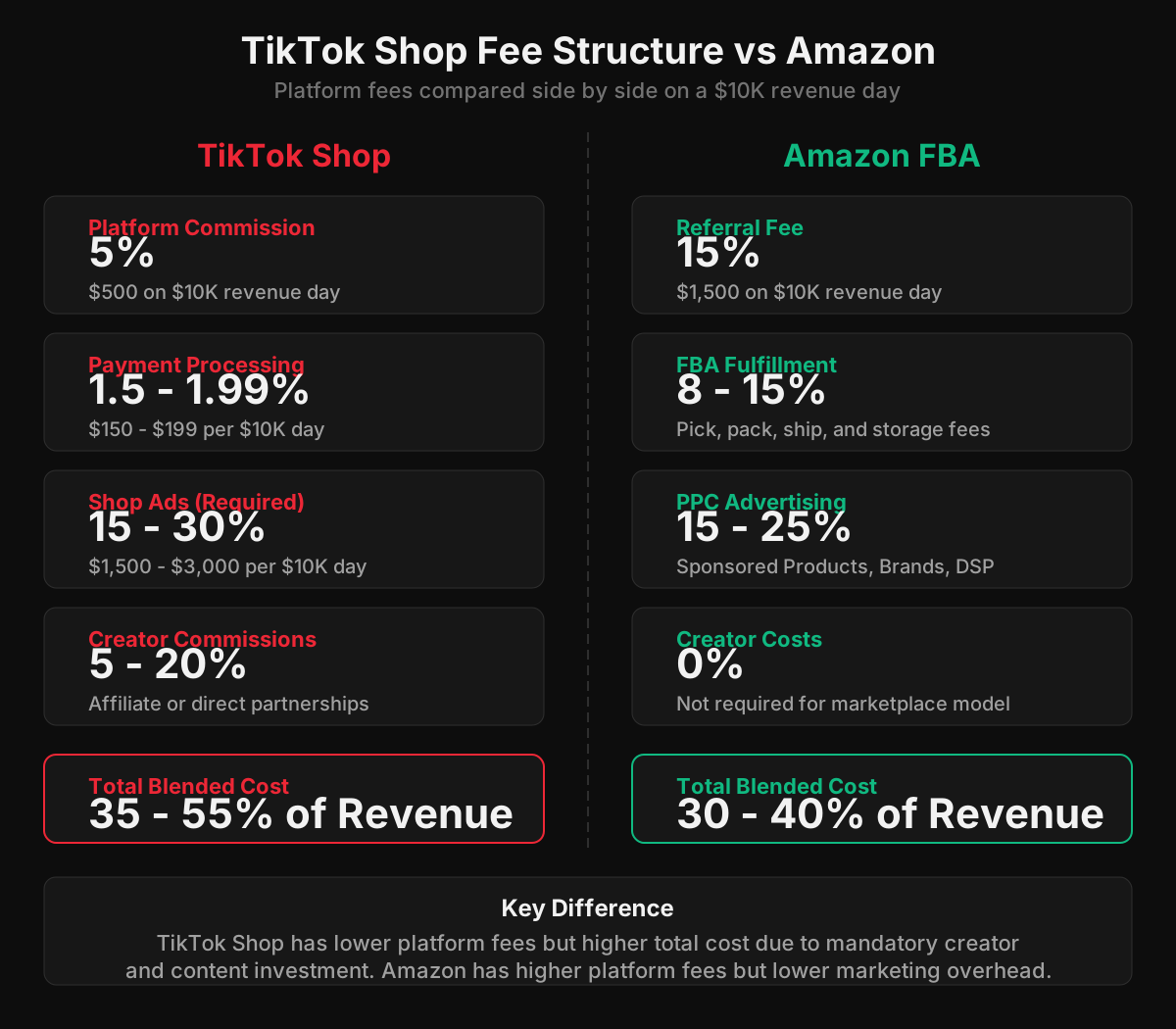
The 5% commission on gross order value. Non-negotiable and consistent across all sellers. On a $10,000 daily revenue day, this costs $500.
2. Payment Processing
1.5% to 1.99% depending on payment method and transaction volume. Typically $150-$199 on that same $10,000 day.
3. Shop Ads Spend
The most variable cost. Shop Ads are TikTok's native advertising product for storefronts. Sellers typically allocate 15-30% of revenue to Shop Ads to maintain consistent traffic and avoid the algorithm cliff that occurs when paid spend pauses. A $10,000 revenue day may require $1,500-$3,000 in Shop Ads spend to sustain momentum.
4. Creator Commissions and Incentives
TikTok Shop thrives on creator-driven commerce. Brands partner with creators through Shop Affiliate (5-20% commission on referred sales) or direct creator partnerships (flat fees, product seeding, revenue sharing). Conservative estimate: 5-15% of revenue. Aggressive creator strategy: 15-25% of revenue.
5. Content Production and Operational Overhead
Video content does not produce itself. Whether you hire creators, run in-house production, or manage a hybrid model, content costs range from $500-$5,000+ per video depending on quality and production complexity. For a brand running 3-5 new videos per week, this totals $1,500-$25,000 monthly. Spread across monthly revenue, this is an additional 5-10% of sales in well-optimized operations.
Real Math: A $50K Monthly Revenue Scenario
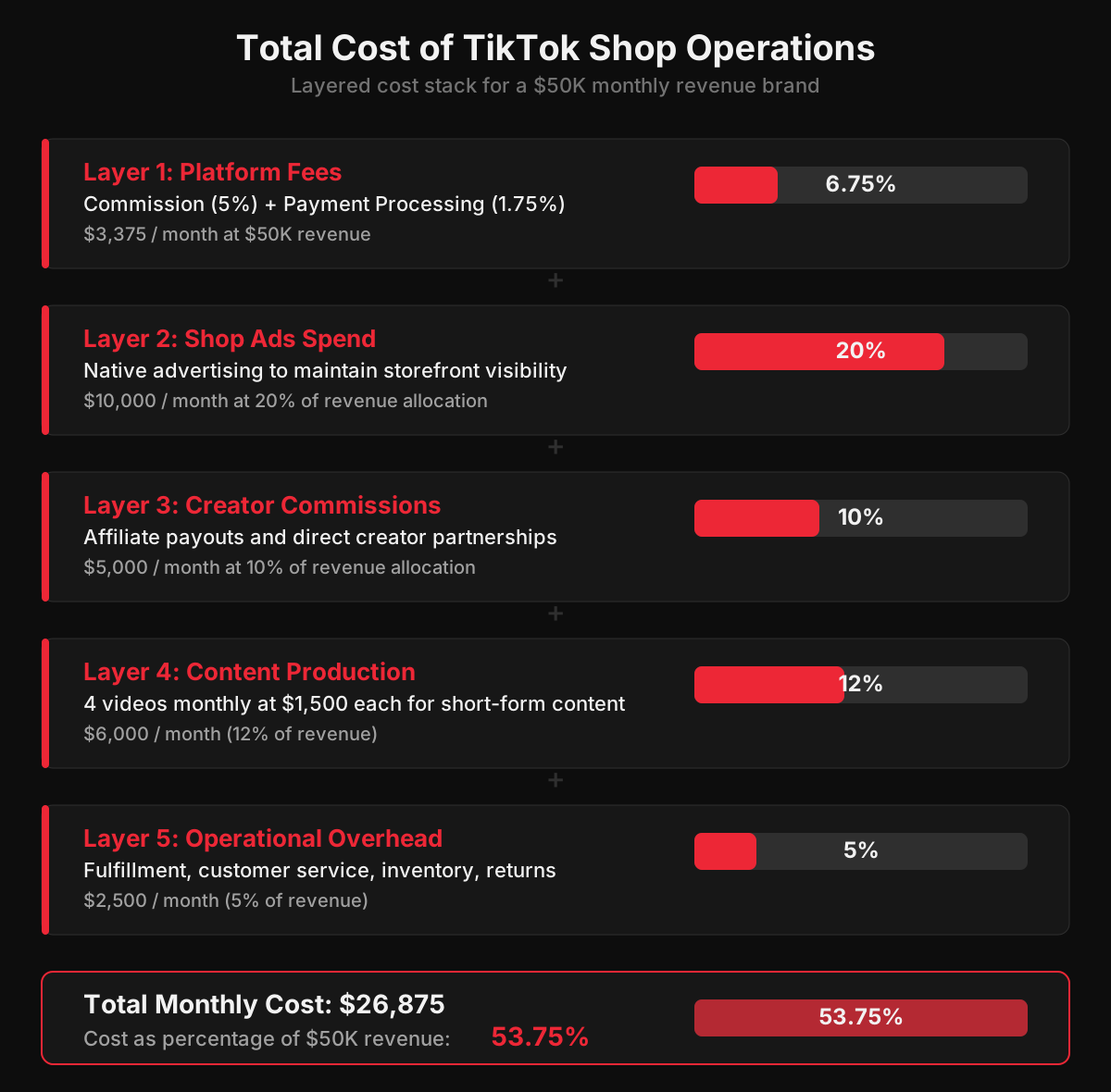
Let us walk through a practical example. Working with a performance creative can help navigate this effectively. You are a fashion brand doing $50,000 monthly revenue on TikTok Shop.
Platform Fees: $50,000 × 5% = $2,500
Payment Processing: $50,000 × 1.75% = $875
Shop Ads Spend: $50,000 × 20% = $10,000
Creator Commissions: $50,000 × 10% = $5,000
Content Production: Assuming 4 videos monthly at $1,500 each = $6,000
Operational Overhead: Fulfillment management, customer service, inventory, returns processing = $2,500
Total Monthly Cost: $26,875
Cost as Percentage of Revenue: 53.75%
Your gross profit margin after TikTok Shop costs must cover product COGS, shipping, and return handling. If your product margin (revenue minus COGS) is 50-60%, after TikTok platform and marketing costs, you have 6-35% left for fulfillment, operations, and profit.
This is why many brands launch TikTok Shop optimistically and scale back when they see the real unit economics.
Shop Ads: The Hidden Multiplier
Shop Ads is where most sellers underestimate costs. Working with a TikTok Shop ads creative-commerce loop can help navigate this effectively. The platform does not mandate Shop Ads spend, but organic discovery on TikTok Shop is limited compared to organic reach on the main feed.
Jungle Scout's 2026 ecommerce report found that sellers without active Shop Ads campaigns see traffic drop 30-50% month over month after initial launch. Sellers with consistent Shop Ads spend maintain or grow traffic.
Shop Ads function like marketplace search advertising. You bid on keywords related to your products, and TikTok surfaces your content to users searching or browsing those categories. Cost per click typically ranges from $0.30-$1.50 depending on category competition. Fashion and beauty categories run higher CPCs ($0.80-$1.50), while niche categories ($0.30-$0.60) remain cheaper.
ROAS (return on ad spend) targets vary by brand maturity. New TikTok Shop stores should expect 1.5-2.5x ROAS in month one. Mature stores with strong product-market fit may achieve 3-5x ROAS. Running campaigns at 1.5x ROAS means you spend $1 to make $1.50, netting $0.50 before platform commission, creator costs, and fulfillment.
The math is tight. Many sellers run Shop Ads at 2-3x ROAS just to break even on all costs combined. This is where performance creative strategy becomes essential to improving ad efficiency.
Creator Partnerships: Required, Not Optional
TikTok Shop is fundamentally a creator commerce channel. Working with a full-service growth agency can help navigate this effectively. Unlike Amazon or Shopify, where product listings generate passive discovery, TikTok Shop requires creator content to surface your products.
There are two partnership models:
Shop Affiliate (Self-Service): Creators promote your products through their own Shop links, earning 5-20% commission on sales they drive. You pay only for performance. This is attractive to brands with limited creator budgets, but affiliate networks are crowded and conversion rates vary wildly (0.5-3%).
Direct Creator Partnerships: You negotiate flat fees, product seeding, or revenue splits with creators who produce content featuring your products. Direct partnerships yield better creative quality and higher conversion rates (2-8%), but require upfront budget and relationship management.
Successful brands use both models. They seed new creators through affiliate programs and invest directly in 5-10 top-performing creators who move consistent volume. eMarketer's 2026 social commerce report found that brands allocating 10-15% of revenue to creator partnerships scaled faster and achieved higher customer lifetime value than those relying solely on self-service affiliate networks.
This is not a one-time cost. Creators expect consistent seeding, first access to new products, and exclusive discounts. Budget for perpetual creator investment.
Content Production: The Overlooked Expense
Every SKU on TikTok Shop needs video content. Working with a TikTok Shop agency for growth can help navigate this effectively. Not photos or product descriptions, but short-form video demonstrating use, style, or value proposition.
In-house production for a single TikTok Shop video runs $500-$3,000 depending on whether you use existing footage, shoot new content, or work with a production team. Multi-product videos with multiple SKUs, voiceover, and editing push toward the higher end.
Outsourcing to TikTok creators averages $1,500-$5,000 per video if you are paying creators to produce content (separate from affiliate or performance commissions). Hiring a content agency or freelance video editor adds overhead but increases output speed and consistency. Brands looking for an integrated approach can explore Darkroom's full service offerings to consolidate content and media operations.
A brand wanting to maintain 3-5 fresh videos weekly across product categories needs to budget $1,500-$25,000 monthly for content. Spread across sales volume, this is 3-10% of revenue depending on scale and production approach.
New brands often underestimate this and then hit a wall when they exhaust initial content or creators burn out from seeding. Plan for sustainable content production from day one.
Fulfillment and Operational Overhead
TikTok Shop does not include built-in fulfillment. You manage logistics through your existing fulfillment infrastructure (in-house, 3PL, dropshipping, or a combination).
Shipping costs vary by product, geography, and speed tier. Fashion brands typically absorb $3-$8 per order in shipping costs (either through markup or subsidy). High-margin beauty and supplements may ship for $1-$3. These costs must be factored into your TikTok Shop margin calculation.
Returns processing adds additional overhead. TikTok Shop defaults to merchant-responsible returns, meaning you cover return shipping unless otherwise negotiated. Budget 5-10% of orders for returns and associated processing costs.
Customer service, order management, inventory syncing, and fulfillment provider coordination require ongoing time investment. For brands scaling beyond $20K monthly revenue, this often justifies hiring dedicated staff or outsourcing to a service provider. Estimate $1,500-$5,000 monthly depending on order volume and operational complexity.
How Brand Size Affects Your Cost Structure
Cost percentages shift as revenue scales. A $10K monthly revenue brand has higher per-unit operational costs than a $100K brand. Understanding your current scale helps you forecast when unit economics improve.
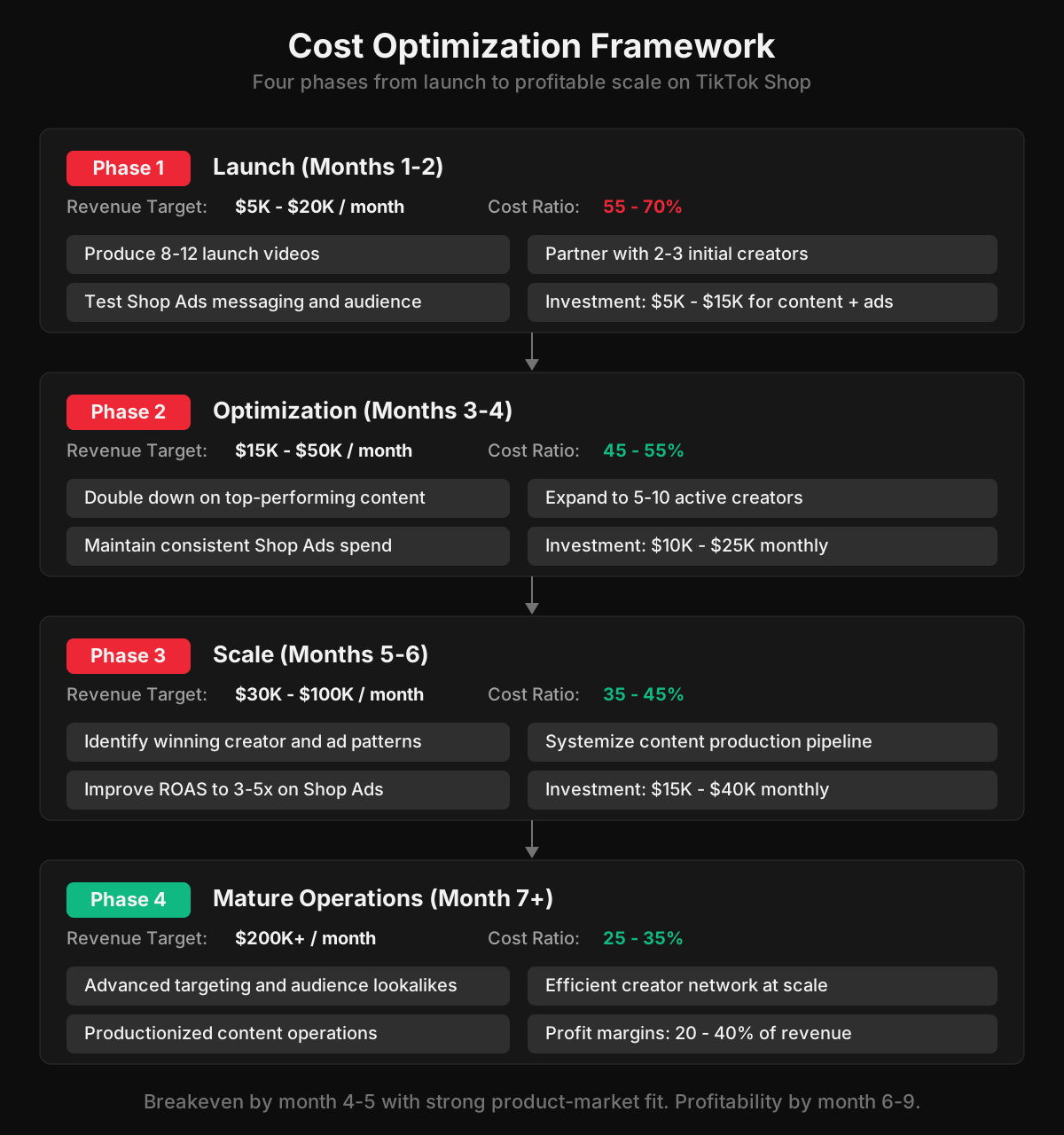
$0-$10K Monthly Revenue (Launch Phase): Expect 55-70% of revenue to go toward TikTok platform, ads, and content costs. Profitability is low or negative. Focus on product-market fit and traffic generation.
$10-$50K Monthly Revenue (Growth Phase): Costs compress to 45-55% of revenue as fixed costs (content, operational) spread across higher sales. This is where you see the clearest margin improvement. Profitability becomes viable.
$50K-$200K Monthly Revenue (Optimization Phase): Scale allows further compression to 35-45% of revenue. Ad efficiency improves, content reuse increases, and operational overhead per order drops. Profitability becomes a consistent expectation.
$200K+ Monthly Revenue (Mature Phase): Top performers achieve 25-35% cost ratios through advanced targeting, highly efficient creator networks, and productionized content operations. Profitability margins reach 20-40% depending on COGS and fulfillment costs.
The inflection point for most brands is $30-50K monthly revenue. Below that, growth requires heavy investment. Above that, operational leverage kicks in and unit economics improve significantly.
Comparing TikTok Shop to Other Channels
To contextualize TikTok Shop costs, consider how they stack against other commerce channels.
Amazon: According to Statista's marketplace data, Amazon takes a 15% referral fee (FBA-enrolled). Advertising spend averages 15-25% of revenue for competitive categories. No creator costs. Total blended cost: 30-40% of revenue. Economics are mature but competitive.
Shopify Direct: No platform commission (you pay $29-299 monthly for platform). Customer acquisition cost (CAC) driven by paid ads (Facebook, Google, email). For break-even CAC, expect 20-40% of revenue in marketing spend. Total blended cost: 20-40% depending on your traffic sources and email list strength.
TikTok Shop: 5% platform commission but 15-30% in ads + creator costs. Less mature category competition but higher discovery friction. Total blended cost: 35-55% of revenue depending on creator strategy and ad efficiency.
TikTok Shop makes sense for brands with strong creative assets, existing relationships with creators, or products optimized for short-form video discovery. For a more detailed comparison, read our TikTok Shop vs Amazon DTC analysis. It does not make sense for low-margin or high-COGS products where discovery friction and creator costs cannot be absorbed.
The Real Cost of Entry: Planning Your First 6 Months
If you are planning to launch on TikTok Shop, budget appropriately for the ramp period before unit economics improve.
Months 1-2 (Setup and Initial Launch): Invest in 8-12 launch videos, partner with 2-3 initial creators, run Shop Ads to test messaging and audience. Expected spend: $5,000-$15,000 for content and paid ads to drive initial traffic. Revenue: $5,000-$20,000 if you have existing audience or strong product-market fit.
Months 3-4 (Optimization and Scaling): Double down on top-performing content and creators. Expand creator partnerships to 5-10 active creators. Maintain consistent Shop Ads spend. Expected investment: $10,000-$25,000. Expected revenue: $15,000-$50,000.
Months 5-6 (Profitability Path): By month 6, you should see clear patterns in which creators, products, and ad campaigns work. Operating at 35-45% cost ratio becomes achievable. Expected investment: $15,000-$40,000. Expected revenue: $30,000-$100,000+.
Most brands see positive unit economics (breakeven on all costs) by month 4-5 if they have strong product-market fit and manage ad spend efficiently. Reaching profitability (healthy margin after all costs) takes 6-9 months. Brands that accelerate this timeline typically work with a dedicated TikTok Shop growth team from launch.
For more strategic insight into TikTok Shop positioning, read our analysis on why TikTok Shop fails when approached like a traditional marketplace.
Frequently Asked Questions
What is the minimum ad spend needed to succeed on TikTok Shop?
There is no hard minimum, but brands running less than $500/week in Shop Ads typically see declining traffic and stalled growth after the first 30 days. The algorithm rewards consistent spend with improved feed placement. For sustained growth, budget 15-20% of revenue for Shop Ads. If you cannot allocate that budget, TikTok Shop may not be the right channel.
Do I need to work with creators, or can I grow organically?
Organic discovery exists on TikTok Shop but is limited compared to the main TikTok feed. New stores can see initial viral moments, but sustained growth requires creator partnerships or paid ads driving traffic to your storefront. Plan for creator costs as a baseline operating expense, not a bonus channel.
How do I know if TikTok Shop makes sense for my product?
TikTok Shop works best for products with high engagement potential in short-form video (fashion, beauty, accessories, home goods, wellness). It is harder for B2B, complex products requiring explanation, or ultra-low-margin items where 35-50% blended costs cannot be absorbed. If your product naturally generates engagement in 15-60 second video, TikTok Shop is viable. If it requires long-form explanation or trust-building, consider other channels.
Can I break even on TikTok Shop if my product margin is below 50%?
It is possible but difficult. With a 45% product margin and 40% platform + marketing costs, you are left with 5% for fulfillment, overhead, and profit. This is not sustainable long-term. Products with 50%+ margins (after COGS) are significantly more forgiving. If your margin is below 50%, focus on cost reduction (negotiate lower COGS, improve fulfillment efficiency) before launching.
Should I launch on TikTok Shop or double down on Amazon?
If you are already generating revenue on Amazon and have optimized that channel, expanding to TikTok Shop makes sense as a diversification strategy. If you are choosing between them as a primary focus, consider product type and audience. Amazon suits products with mature demand and established search intent. TikTok Shop suits aspirational, trend-driven products targeting younger audiences. The real answer: test both with limited budget, then scale the channel with better unit economics.
What happens if I pause TikTok Shop ads to reduce costs?
Traffic will decline 30-50% within the first 2-4 weeks depending on your creator strategy and organic traction. The platform deprioritizes storefronts without active ad spend. If you pause ads, also ramp up creator partnerships to maintain visibility. Pausing ads entirely without creator support will stall growth and create a difficult restart.
How do I calculate my true cost of sale on TikTok Shop?
Add up: platform commission (5%) + payment processing (1.75%) + Shop Ads spend / revenue + creator commissions / revenue + content production costs / revenue + fulfillment and overhead / revenue. Total this across a month. If the number is above 50% of revenue, your margins are too thin. If it is 35-45%, you are in the healthy range for scaling. If it is below 35%, you have exceptional unit economics.
Ready to Scale on TikTok Shop?
Understanding cost structure is the first step. Execution requires strategy, creative testing, and operational discipline. Darkroom helps growth-focused brands build profitable TikTok Shop operations through strategic positioning, creator partnerships, and paid media optimization.
Explore our TikTok Shop service to see how we approach cost-efficient scaling. For a tactical conversation about your specific situation, book a call with our team.
For related reading, check out our breakdown of the TikTok Shop Ads and creative commerce loop.