
PERFORMANCE CREATIVE
What Is UGC and Why It Outperforms Studio Creative on Paid Social




Written by Darkroom leardership

UGC isn’t influencer content with a discount code slapped on — used right, it’s a performance marketing UGC system built specifically to win on paid social. UGC consistently outperforms studio creative on Meta and TikTok because it matches the native format of a feed, not because it’s cheaper to produce. Most brands still get this wrong: they confuse UGC with influencer marketing, produce it without a creative brief, and never test it systematically. This article defines what UGC actually is, explains why it wins on paid social performance, and lays out the operational framework for building a UGC production system that scales. Darkroom builds performance creative systems that turn UGC into a repeatable growth lever.
What UGC Actually Means in Performance Marketing
UGC stands for user-generated content. But in 2026, the term has been stretched beyond recognition. Read more in our article on social media marketing services in 2026.
The original definition was simple. UGC was content created by real customers, unprompted, about products they bought and used. Reviews, unboxing videos, social posts tagging a brand. Organic and unscripted. That definition still exists, but it describes maybe 5% of what performance marketers now call UGC.
In paid social, UGC refers to creator-produced content that looks and feels native to the platform where it runs. It is filmed on phones, not in studios. It uses natural lighting, not ring lights and softboxes. It features real people talking to camera, not models posed against seamless backdrops. The aesthetic is deliberate. The production method is systematic.
This distinction matters because it changes how you build your creative pipeline. Studio creative requires a production team, a shoot day, post-production editing, and a long lead time. Performance UGC requires a creator network, a briefing system, a review workflow, and rapid iteration capability. Different infrastructure. Different timelines. Different costs.
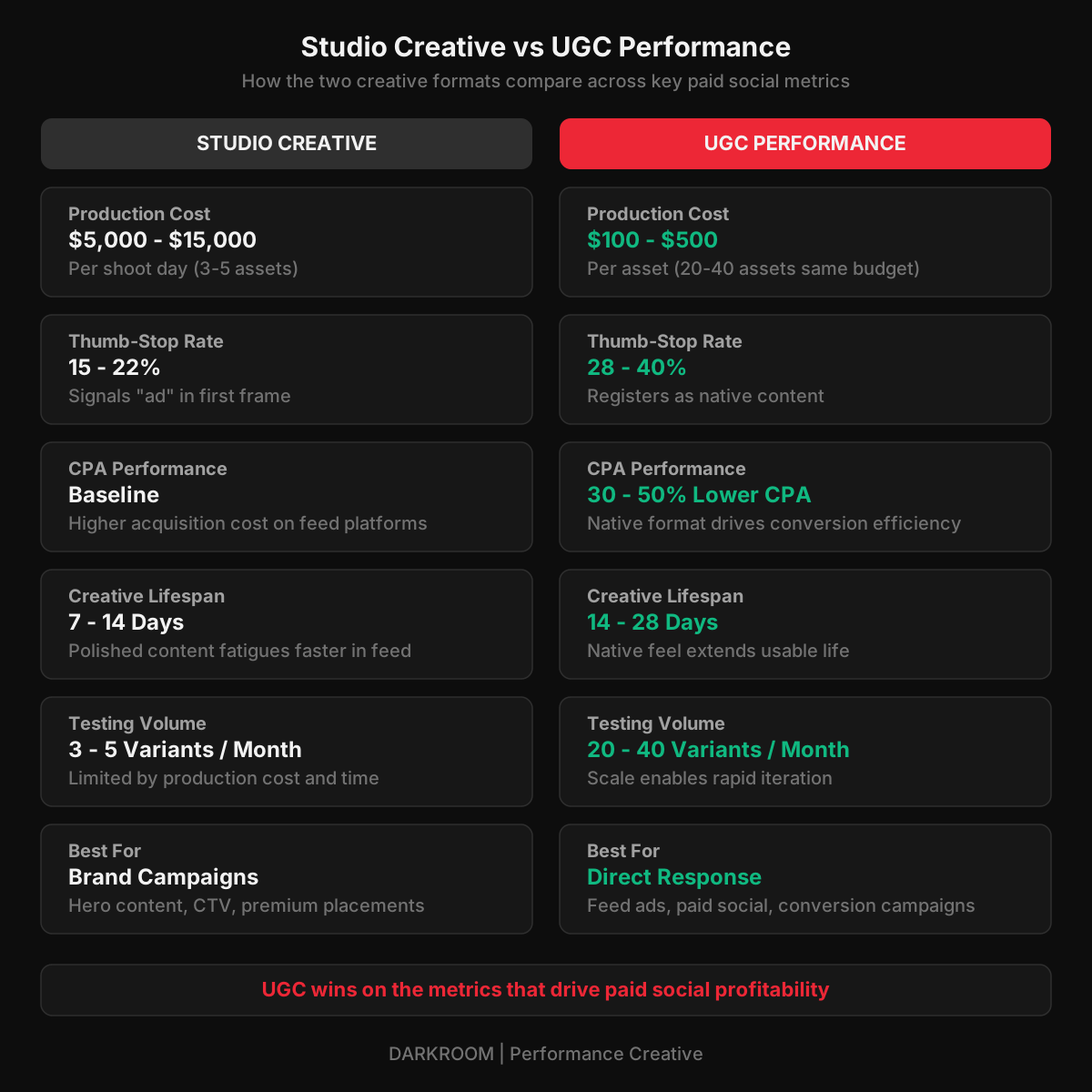
And the results are different too. Across hundreds of DTC and ecommerce accounts, UGC-style creative consistently delivers lower CPAs, higher click-through rates, and longer creative lifespan on feed-based platforms. Not because it's cheaper to produce. Because it's formatted for how people actually consume content on social media.
Why Most Brands Confuse UGC with Influencer Content
The confusion is understandable. Both involve creators. Both live on social platforms. But the intent, structure, and measurement are fundamentally different.
Influencer content is distribution-first. You pay a creator for access to their audience. The value is reach. The content lives on the influencer's channel, and performance is measured by impressions, engagement rate, and follower growth. The creator's personal brand is the asset.
Performance UGC is creative-first. You hire a creator for their ability to deliver a scripted message in a native format. The value is the content itself. It runs as a paid ad from your brand's account. Performance is measured by CPA, ROAS, and hook rate. The creator is a production resource, not a distribution channel.
This is not a value judgment. Influencer marketing works for awareness. But when brands treat influencer content as their UGC strategy, they end up with content that wasn't designed for direct response, running in ad placements that require direct response creative. The mismatch shows up immediately in performance data.
The operational difference is just as significant. Influencer campaigns involve negotiation, content approval, exclusivity windows, and usage rights conversations. Performance UGC involves creator casting, structured briefs, batch production, and rapid testing cycles. One is a partnership model. The other is a production system.
The Platform Mechanics Behind UGC Performance
UGC doesn't outperform studio creative by accident. The performance advantage is structural, rooted in how feed-based platforms work. This is supported by our research on full-funnel marketing for ecommerce growth.
TikTok's own Creative Center research shows that ads matching native content formats see 27% higher completion rates and significantly lower skip rates compared to polished brand content. The pattern holds across Meta, YouTube Shorts, and Snapchat. The platforms are built for native content consumption. Ads that break the native pattern get punished by both the algorithm and the user.
Three mechanics drive this.
First, thumb-stop rate. Users scrolling through a feed make split-second decisions about what to watch. Studio creative signals "ad" within the first frame. Lighting, framing, and production quality all trigger ad avoidance behavior. UGC-style content registers as organic content, which earns those critical first three seconds of attention. The hook isn't just the script. It's the format itself.
Second, algorithm distribution. Feed algorithms optimize for engagement signals. Content that gets watched, liked, shared, and commented on gets distributed more broadly. UGC-style ads generate higher engagement rates because users interact with them the same way they interact with organic content. Higher engagement means broader delivery at lower costs. The CPM advantage compounds over the life of the ad.
Third, trust mechanics.Nielsen's research on advertising trust consistently shows that consumers trust recommendations from real people significantly more than brand-produced advertising. UGC inherits this trust signal even when it's a paid ad. The format creates perceived authenticity that polished production cannot replicate. And on platforms where purchase decisions happen in seconds, trust is the conversion variable that matters most.
These mechanics aren't theoretical. They're measurable. Brands running split tests between studio and UGC creative on the same audiences, same offers, and same landing pages consistently see UGC win on CPA. Not always on click-through rate. Not always on view rate. But on the metric that matters: cost per acquisition.
What Separates Good UGC from Bad UGC
Not all UGC performs. Most of it doesn't.
The difference between UGC that drives results and UGC that wastes spend comes down to three variables: the brief, the creator, and the hook. Get all three right and you have a performance asset. Miss any one and you have an expensive organic post running as a paid ad.
The brief is the foundation. Performance UGC is not unscripted. It's scripted to sound unscripted. A proper UGC brief specifies the hook (first 3 seconds), the core message, the proof point, and the call to action. It specifies the tone, the setting, and the product demonstration requirements. It leaves room for the creator's personality but constrains the message architecture. Brands that send creators a product with no brief get content that looks like UGC but performs like nothing.
The creator is the delivery mechanism. Good UGC creators are not influencers. They're performers who can deliver a scripted message naturally. The best UGC creators have an ability to speak to camera conversationally, demonstrate products without looking rehearsed, and convey genuine enthusiasm without overacting. Finding these creators is the hardest part of scaling a UGC program. Most creator marketplaces optimize for follower count, not on-camera performance ability.
The hook determines everything.Meta's creative best practices emphasize that the first three seconds of any ad determine whether it runs profitably. In UGC, the hook is usually a provocative statement, a surprising product claim, or a relatable problem statement delivered directly to camera. Hooks that work follow patterns. They create curiosity gaps, challenge assumptions, or establish immediate relevance. Hooks that fail are generic, slow, or start with the brand name instead of the viewer's problem.
The operational implication is clear. You can't produce good UGC by hiring creators and hoping for the best. You need a performance creative system that scales, complete with brief templates, creator evaluation criteria, and quality control workflows.
The UGC Production System That Actually Scales
Building UGC at scale requires production infrastructure. Not studio infrastructure. For a deeper dive, see our breakdown of how creative intelligence AI transforms ad ROI. Production infrastructure.
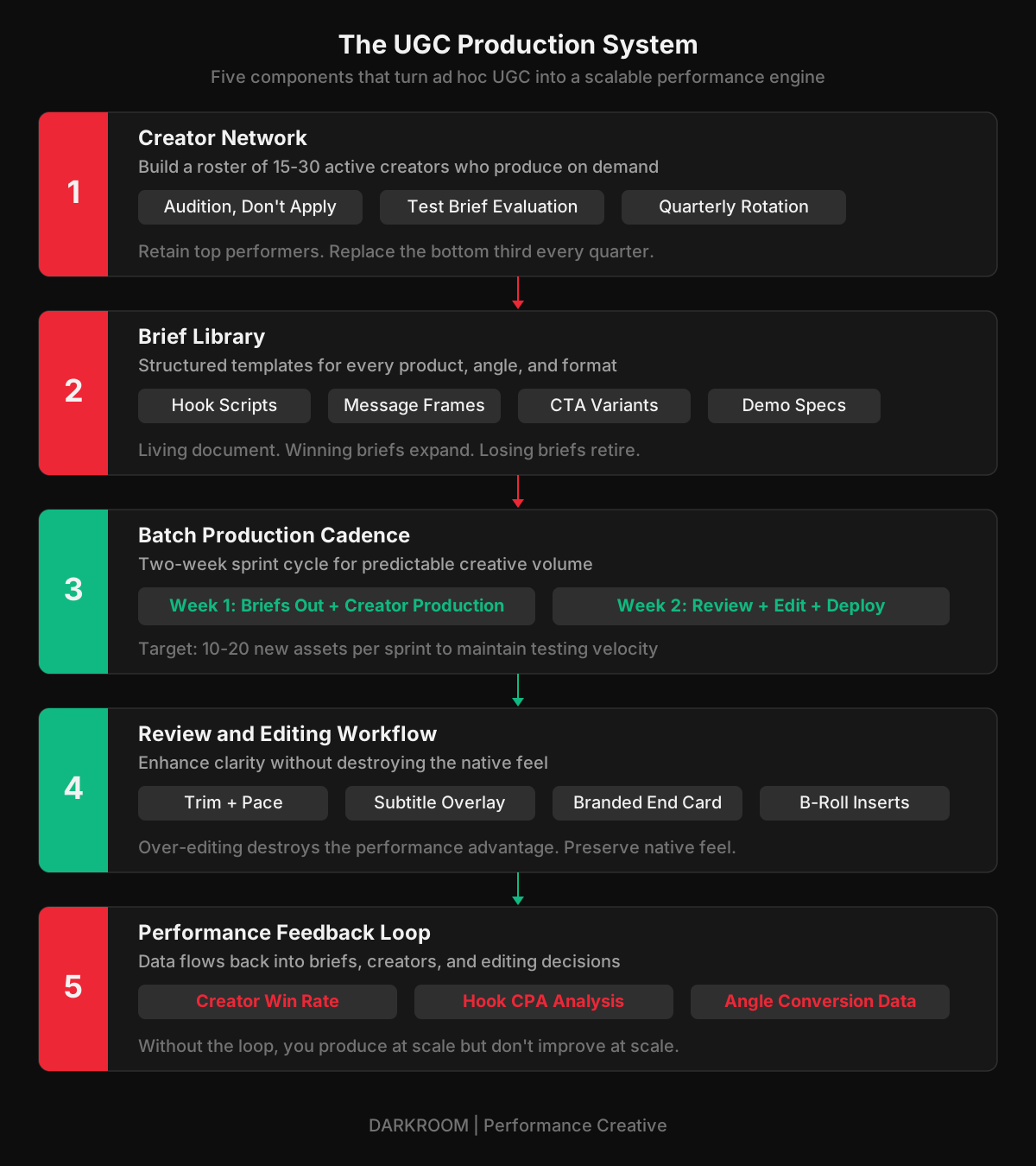
The system has five components, and each one needs to be built deliberately. Skip any component and the system breaks down as volume increases.
Creator network. You need a roster of 15-30 active creators who can produce content on demand. This isn't a talent agency relationship. It's a bench of reliable performers who understand your brand, your products, and your brief format. Build the network through auditions, not applications. Send product and a test brief. Evaluate the output. Retain the top performers. Replace the bottom third every quarter.
Brief library. Every product, every angle, and every format should have a corresponding brief template. A brief library isn't a one-time project. It's a living document that evolves based on performance data. The briefs that produce winning ads get expanded. The briefs that produce losers get retired or reworked. Over time, the library becomes your most valuable creative asset because it encodes what works for your specific brand and audience.
Batch production cadence. UGC production should follow a regular cadence, not an ad hoc request cycle. Most scaled programs produce in two-week sprints. Week one: briefs go out, creators produce content. Week two: review, editing, and deployment. This cadence produces a predictable volume of fresh creative, which is essential for maintaining testing velocity and fighting creative fatigue.
Review and editing workflow. Raw UGC almost never runs as-is. It needs trimming, subtitle overlay, branded end cards, and sometimes b-roll inserts. But the editing must preserve the native feel. Over-editing UGC is the fastest way to destroy its performance advantage. The editing workflow should enhance clarity and pacing without adding production polish. This is a skill that most traditional video editors don't have. It requires editors who understand the platform aesthetic.
Performance feedback loop. The system only improves if production decisions are informed by performance data. Which creators produce the most winners? Which hook structures drive the lowest CPAs? Which product angles generate the highest conversion rates? This data needs to flow back into the briefing process, the creator evaluation process, and the editing workflow. Without the feedback loop, you're producing content at scale but not improving at scale.
Darkroom's performance creative services build this entire infrastructure for brands that need to move from ad hoc UGC to a systematic production engine.
Element | What to Include | Common Mistake |
|---|---|---|
Hook | First 3 seconds script with pattern interrupt | Starting with brand name instead of problem |
Product Demo | Natural use-case showing product in context | Over-produced unboxing that feels scripted |
Social Proof | Real before/after or personal testimony | Vague claims without specifics |
CTA | Clear single action with urgency driver | Multiple CTAs that dilute intent |
Format Specs | 9:16 vertical, under 60s, captions baked in | Horizontal video repurposed for vertical feeds |
Brand Guidelines | Do/don't list with visual examples | 10-page PDF that creators never read |
Format Variations That Drive Different Outcomes
UGC is not one format. It's a category of formats, and each one serves a different function in your paid social funnel.
Talking head testimonials are the workhorse format. A creator speaks directly to camera about a product experience. These work best for mid-funnel audiences who already have some brand awareness. The key variable is specificity. Generic praise performs poorly. Specific claims with measurable outcomes perform well.
Unboxing and first impression videos work for top-of-funnel prospecting. The format generates curiosity and lets the viewer experience the product vicariously. The hook is the anticipation. The payoff is the reaction. These are high-volume formats because they're easy to produce and easy to test variations of.
Problem-solution narratives are the highest-converting UGC format for most DTC brands. The creator describes a problem, tries the product, and demonstrates the result. The structure mirrors the buyer's journey in 30-60 seconds. When the problem resonates, these ads convert at rates that make media buyers uncomfortable because they seem too good to sustain. And sometimes they are. But when they work, they work for weeks before fatiguing.
Side-by-side comparisons work when your product has a clear visual or functional advantage over alternatives. The format is inherently engaging because it creates a competitive frame. But it requires careful scripting to avoid trademark issues and platform policy violations.
Day-in-the-life integrations embed product usage into a lifestyle narrative. These are the most native-feeling format and often generate the strongest engagement metrics. But they're harder to produce consistently because they require creators with genuine lifestyle alignment with your product.
The format mix matters as much as the creative quality. Brands running only one UGC format hit fatigue walls faster. A diversified format strategy extends the usable life of your creative library and ensures you're reaching different audience segments with formats that match their consumption preferences.
Metric | Studio Creative | UGC | Difference |
|---|---|---|---|
CTR | 0.8–1.2% | 1.5–2.8% | +75–130% |
CPC | $1.80–$3.20 | $0.90–$1.60 | -45–55% |
CPM | $12–$22 | $8–$15 | -30–40% |
Engagement Rate | 1.5–3% | 4–8% | +150–200% |
Production Cost | $5,000–$25,000 | $300–$1,500 | -85–95% |
Turnaround | 4–8 weeks | 5–10 days | -70–80% |
How to Build Your UGC Testing Framework
Production without testing is just content. Testing without production volume is just guessing. Our article on what performance creative is and how it drives results covers the framework in detail. The two have to work together.
Statista's data on UGC engagement confirms that the gap between top-performing and average UGC creative is significant, with top-quartile content generating engagement rates several times higher than the median. Finding and scaling those top performers requires a structured testing framework.
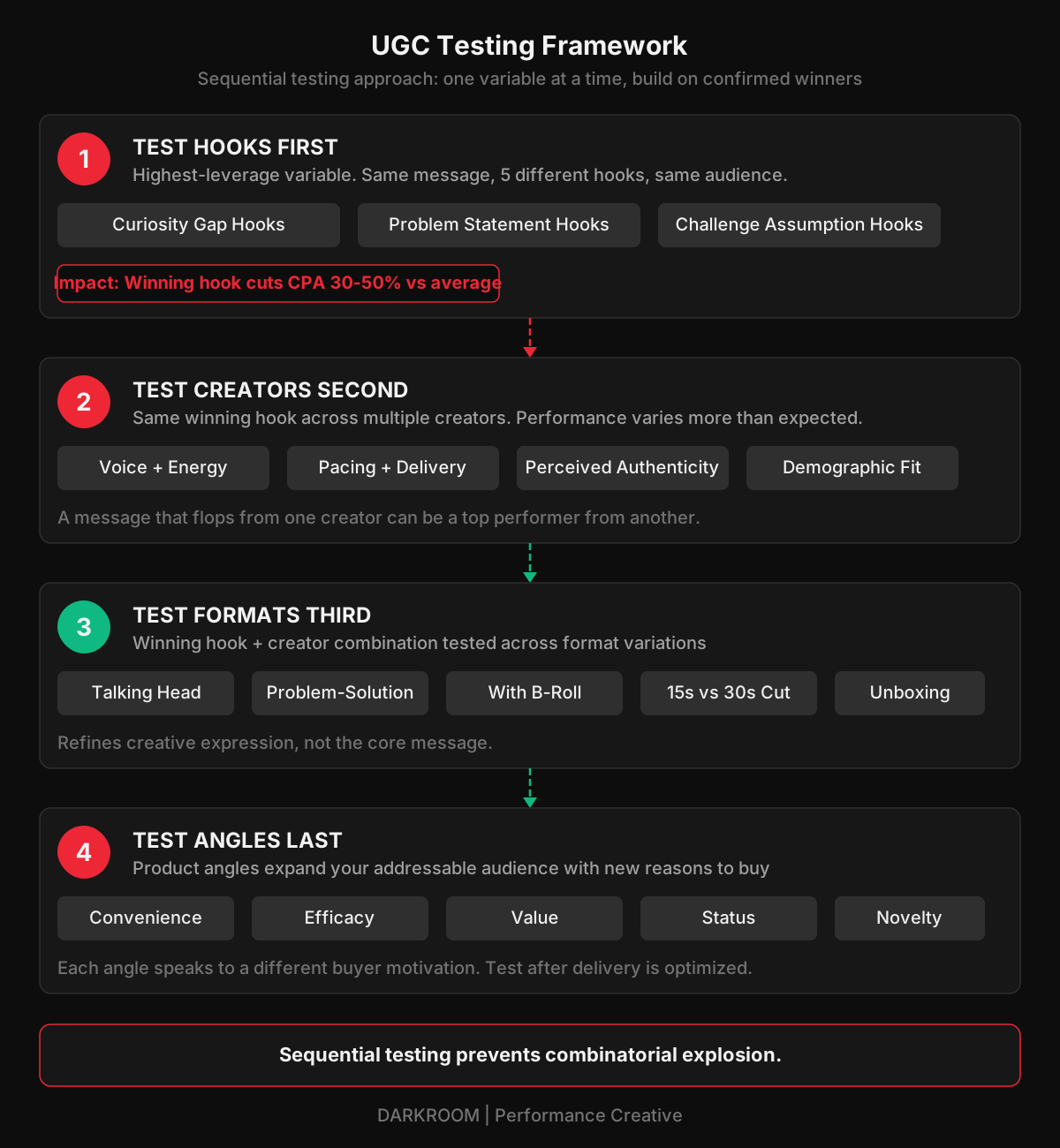
Test hooks first. The hook is the single highest-leverage variable in any UGC ad. Before testing creators, products, formats, or CTAs, test hooks. Run the same message with five different hooks against the same audience. The winning hook can cut CPA by 30-50% compared to the average. This is where testing velocity pays the highest dividends.
Test creators second. Once you have a winning hook structure, test it across multiple creators. Creator performance varies more than most brands expect. A message that falls flat from one creator can be a top performer from another. Voice, energy, pacing, and perceived authenticity all affect conversion. You won't know which creators work until you test them.
Test formats third. Take your winning hook-creator combination and test it across format variations. Does the talking head version outperform the problem-solution version? Does adding b-roll improve or hurt performance? Does a 15-second cut beat a 30-second cut? Format testing refines the creative expression, not the core message.
Test angles last. Product angles, meaning the specific benefit or use case you're highlighting, should be tested after you've optimized the delivery variables. The same product can be positioned around convenience, efficacy, value, status, or novelty. Each angle speaks to a different buyer motivation. Testing angles expands your addressable audience by finding new reasons for people to buy.
This sequential approach prevents the combinatorial explosion that kills most creative testing programs. Instead of testing everything simultaneously and learning nothing, you test one variable at a time and build on confirmed winners.
Integrating UGC with paid media management is where the testing framework becomes a growth system. The creative insights feed media strategy. The media data feeds creative production. The loop accelerates.
Measuring UGC Performance Beyond ROAS
ROAS is the metric everyone tracks. It's not the only metric that matters.
Hook rate measures the percentage of viewers who watch past the first three seconds. It's the leading indicator of creative health. A declining hook rate signals creative fatigue before CPA increases confirm it. Monitoring hook rate lets you rotate creative proactively instead of reactively.
Hold rate measures what percentage of viewers who make it past the hook also watch to the midpoint or completion. High hook rate with low hold rate means your hook is misleading or your content doesn't deliver on the hook's promise. This metric diagnoses structural problems in the creative, not just attention-grabbing ability.
Creative lifespan measures how many days a piece of creative runs profitably before CPA degrades beyond your threshold. Studio creative typically has a shorter lifespan than UGC on feed-based platforms because polished content fatigues faster in native environments. Tracking lifespan by format, creator, and angle reveals which combinations deliver the most value per production dollar.
Winner rate measures the percentage of creative assets that meet your performance threshold. A healthy UGC program produces winners at a 15-25% rate. Below 10% means your briefing or creator selection process needs work. Above 30% usually means you're not testing enough variations. The goal isn't 100% winners. The goal is a predictable ratio that makes your production investment reliably profitable.
These metrics connect creative production to business outcomes in a way that vanity engagement metrics never will. They turn UGC from a creative discipline into a performance operation.
UGC and the Commerce Platform Loop
UGC doesn't exist in isolation. On platforms like TikTok Shop, the line between content and commerce has dissolved entirely. We explored this concept further in our piece on growth marketing vs performance marketing. The same UGC that runs as a paid ad can drive direct purchases without the user ever leaving the platform.
This creates a feedback loop that amplifies UGC's performance advantage. Content that converts in-platform generates social proof (views, comments, purchase counts) that makes the next impression more effective. The content is simultaneously advertising, social proof, and a storefront. Understanding this loop is critical for brands selling on TikTok Shop, where UGC is the primary commerce interface.
The implication for creative strategy is significant. UGC produced for TikTok Shop needs to serve triple duty. It needs to stop the scroll, deliver the sales message, and drive an in-platform purchase action. The brief requirements are more demanding. The creator requirements are more specific. And the testing framework needs to account for platform-specific conversion mechanics that don't exist on Meta or Google.
Brands that treat UGC as a single-platform creative type miss this. The format translates across platforms, but the optimization requirements are platform-specific. What wins on Meta may underperform on TikTok. What converts on TikTok Shop may not work as a standard TikTok ad. Cross-platform UGC strategy requires platform-specific adaptation, not just re-uploading the same creative everywhere.
FAQ
What is UGC in the context of paid social advertising?
UGC in paid social refers to creator-produced content designed to match the native format of feed-based platforms. It looks like organic content but is scripted, briefed, and produced specifically for use as paid advertising. For related analysis, read our guide on leading performance creative agencies. The term has evolved beyond its original meaning of organic customer-created content. In performance marketing, UGC is a creative production method, not a content sourcing strategy.
How much does UGC cost compared to studio creative?
UGC typically costs 60-80% less per asset than studio creative. A single studio shoot day can produce 3-5 hero assets at $5,000-$15,000 total. The same budget can produce 20-40 UGC assets through a creator network. But the real cost advantage isn't per-asset pricing. It's testing volume. More assets mean more tests, more tests mean more winners, and more winners mean lower blended CPAs across your account.
Do I need to use real customers for UGC?
No. Performance UGC is almost always produced by hired creators, not actual customers. The content is designed to feel authentic, but it's produced systematically with briefs, scripts, and quality standards. Real customer content can supplement your UGC library, but relying on it as your primary source creates unpredictable quality and volume.
How many UGC creators do I need in my network?
Start with 8-10 active creators and scale to 20-30 as your testing volume increases. The key is diversity across demographics, presentation styles, and content formats. A larger network also protects against creator fatigue, where audiences stop responding to a specific creator after repeated exposure.
What platforms does UGC work best on?
UGC performs strongest on feed-based platforms where native content is the dominant format. TikTok, Instagram Reels, Facebook Feed, and YouTube Shorts are the primary channels. UGC also works on Snapchat and Pinterest, though the format requirements differ. It's less effective on platforms where users expect polished content, like connected TV or premium display placements.
How often should I refresh my UGC creative?
Plan for a two-week production cycle with continuous deployment. Most UGC ads hit peak performance within 5-10 days and begin fatiguing by day 14-21. At scale, you should be deploying 10-20 new UGC assets per week while retiring underperformers. The goal is maintaining a library of 30-50 active ads with continuous rotation.
Can UGC replace studio creative entirely?
For most paid social campaigns, yes. But studio creative still has a role in brand campaigns, high-production hero content, and platforms that favor polished formats. The optimal approach is a creative mix weighted toward UGC for direct response and studio creative for brand building. For full-service brands, the two formats complement each other rather than compete.
Build a UGC System That Drives Paid Social Performance
UGC isn't a creative trend. It's a production methodology built for the mechanics of feed-based advertising. It outperforms studio creative because it matches how people consume content on social platforms. But that performance advantage only materializes when UGC is produced systematically, with structured briefs, vetted creators, and a testing framework that turns production volume into performance insights.
Most brands are doing UGC wrong. They're hiring influencers instead of creators. Sending products without briefs. Running content without testing. And measuring engagement instead of CPA.
The brands winning on paid social have built UGC into a repeatable system. Creator networks, brief libraries, batch production cadences, and data-driven iteration loops. That's the difference between UGC as a buzzword and UGC as a growth lever.
If you're ready to build a UGC production system that actually drives paid social performance, book a call with Darkroom. We'll audit your current creative pipeline, identify the gaps, and build the infrastructure to turn UGC into your highest-performing ad format.