
GROWTH MARKETING
Growth Marketing vs Performance Marketing: What the Difference Actually Is




Written by Darkroom leardership

Written & peer reviewed by 4 Darkroom team members
TL;DR Growth marketing and performance marketing get used interchangeably. They are not the same discipline. Performance marketing optimizes channels. Growth marketing optimizes the system that connects channels to revenue. The difference determines how you staff, how you measure, and how you scale. Most agencies sell performance marketing under a growth marketing label because performance is easier to scope, staff, and report against. The result is brands that hit channel-level targets while business-level growth stalls. This article breaks down the structural distinction, explains why it matters for ecommerce and DTC brands, and provides a framework for building an actual growth marketing engine. Darkroom operates as a growth marketing partner, not a channel management vendor.
The Naming Problem: Why Everyone Claims Growth Marketing
The term growth marketing has been diluted to the point of meaninglessness. Read more in our article on top growth marketing agencies ranked for online sales.
Search for growth marketing agencies and you will find hundreds of companies that run Facebook ads, Google Shopping campaigns, and maybe some email flows. They call it growth marketing because that term commands higher retainers than "media buying." The rebrand happened industry-wide around 2019-2020, when brands started asking for more than channel execution. Agencies responded not by changing what they do but by changing what they call it.
This is not cynical. It reflects a genuine market demand. CMOs and founders want partners who think about the whole business, not just the ad account. But the operational reality at most agencies has not caught up with the positioning. The team that runs your Meta campaigns is the same team, doing the same work, optimizing the same platform metrics. The growth marketing label sits on top of a performance marketing operation.
The distinction matters because these two disciplines require fundamentally different operating models. Performance marketing requires channel specialists who are deep in platform mechanics. Growth marketing requires cross-functional strategists who connect channels into a system. You cannot get the second by renaming the first. According to McKinsey's growth marketing research, the companies that outperform on growth are the ones that treat marketing as an integrated system rather than a collection of optimized channels. That finding aligns with what we see across every engagement.
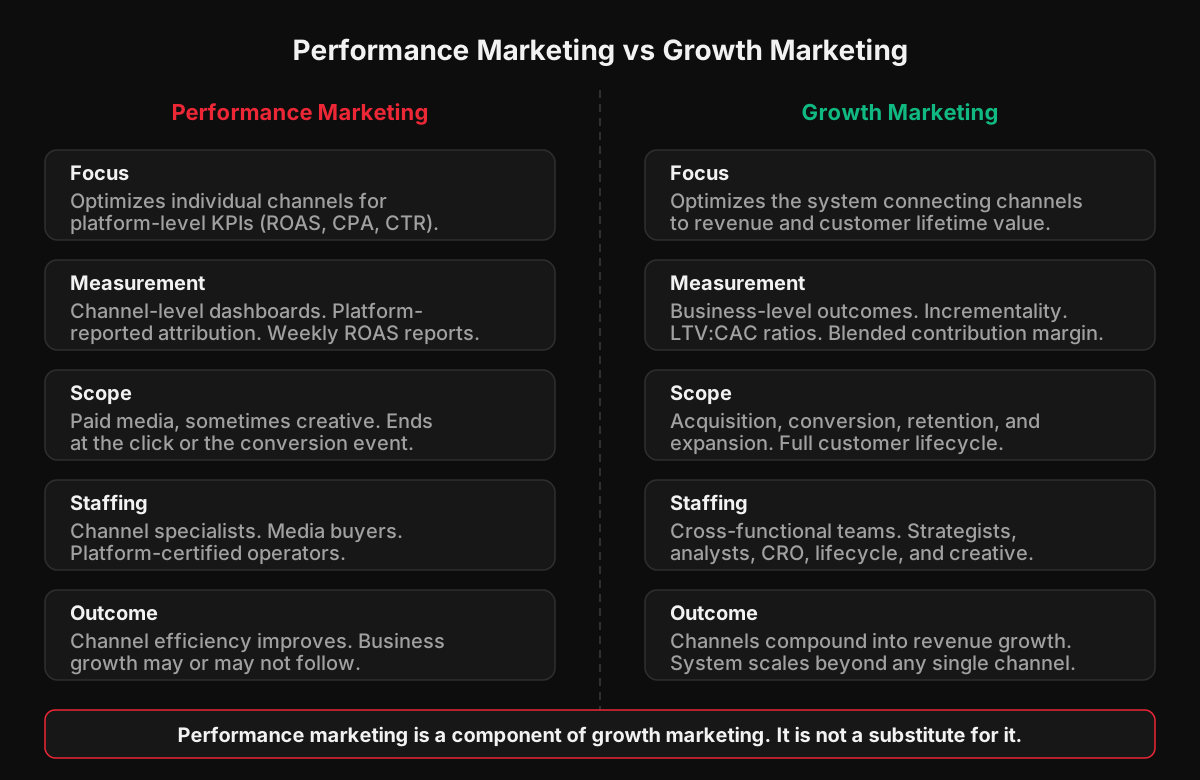
Dimension | Performance Marketing | Growth Marketing |
|---|---|---|
Scope | Paid channels (Meta, Google, TikTok) | Full funnel including organic, retention, product |
Timeframe | Weekly/monthly ROAS targets | Quarterly/annual compounding growth |
Metrics | ROAS, CPA, CTR | LTV, retention rate, payback period |
Team Structure | Media buyers and analysts | Cross-functional (product, CRO, lifecycle, paid) |
Optimization Target | Campaign-level efficiency | System-level revenue growth |
What Performance Marketing Actually Is
Performance marketing is channel optimization with direct attribution. This is supported by our research on why paid media fails when measured by platform metrics.
At its core, performance marketing means spending money on advertising where results are measurable and attributable. You spend $10,000 on Meta ads. Meta tells you that spend generated $35,000 in revenue. You calculate a 3.5x ROAS and decide whether to increase or decrease budget. This is a clean, well-understood model. It works. It has created billions of dollars in ecommerce revenue.
The scope of performance marketing typically includes paid social, paid search, programmatic display, affiliate programs, and sometimes marketplace advertising. The common thread is direct attribution. You can connect spend to outcomes at the channel level. You can optimize within the channel to improve those outcomes. You can report weekly or daily on what happened.
Performance marketing teams are staffed with channel specialists. A Meta buyer. A Google buyer. Maybe a TikTok specialist. Each person is deep in their platform, knows the auction mechanics, understands creative formats, and optimizes within the constraints the platform provides. This is valuable work. A strong paid media operation is a necessary component of any serious ecommerce growth strategy.
The limitation is scope. Performance marketing ends at the channel boundary. It optimizes what happens inside Meta, inside Google, inside TikTok. It does not optimize what happens between those channels. It does not optimize the conversion experience. It does not optimize the post-purchase lifecycle. It does not optimize the relationship between acquisition cost and customer lifetime value. Those are system-level problems, and they require a different discipline.
What Growth Marketing Actually Is
Growth marketing is the discipline of optimizing the entire system that converts marketing investment into profitable revenue.
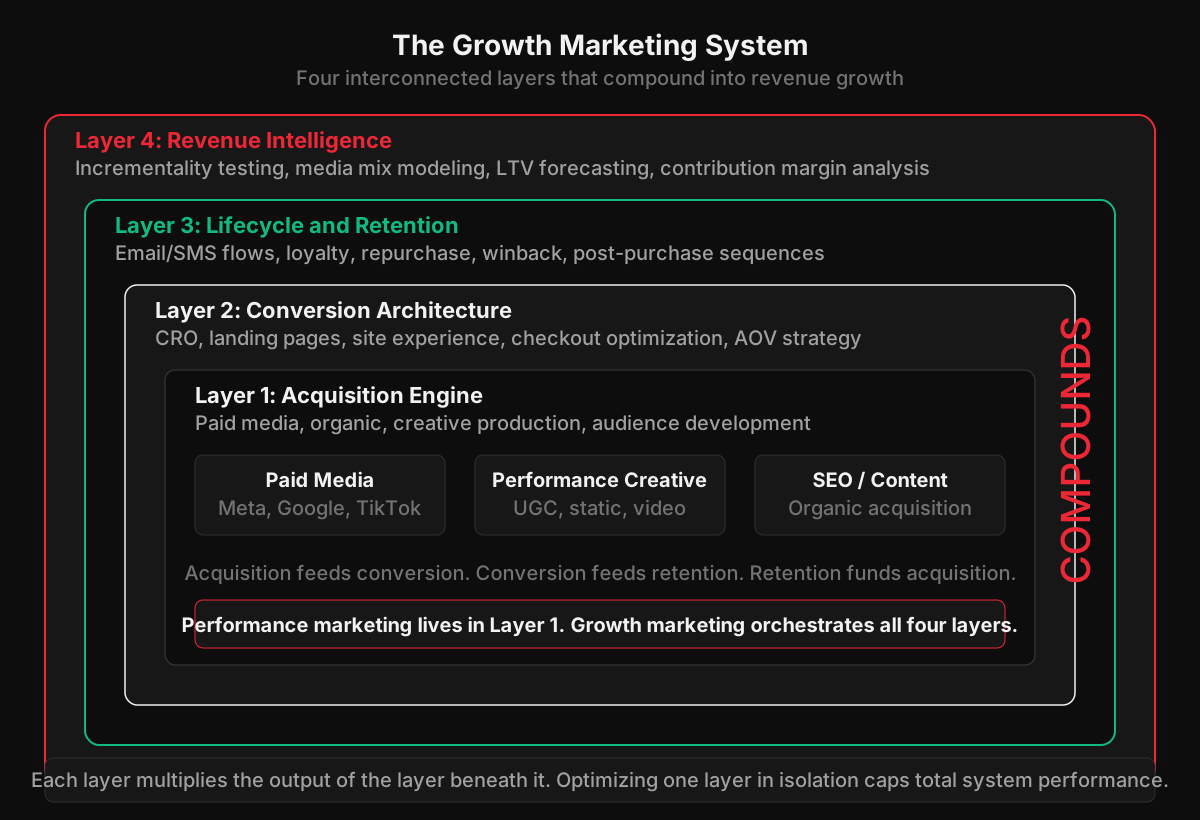
The Reforge growth model articulates this well: growth is not a channel. It is a system of loops where outputs feed back into inputs. Acquisition feeds conversion. Conversion feeds retention. Retention funds acquisition. The system compounds when all layers are connected. It stalls when any layer operates in isolation.
Growth marketing encompasses performance marketing but extends well beyond it. A growth marketer thinks about how creative strategy affects not just click-through rates but landing page conversion, average order value, and repurchase rate. They think about how the post-purchase email sequence affects the lifetime value calculation that determines how much you can afford to spend on acquisition. They think about how CRO improvements change the math on every paid channel simultaneously.
This requires a fundamentally different skill set than channel optimization. Growth marketers need to understand unit economics, cohort analysis, retention modeling, and cross-channel attribution. They need to be comfortable with ambiguity because system-level optimization does not produce the clean weekly dashboards that channel optimization does. The feedback loops are longer. The attribution is murkier. But the impact is compounding rather than linear.
The staffing model is different too. Growth marketing teams include strategists, analysts, CRO specialists, lifecycle marketers, and creative directors working in coordination. It is not a collection of channel specialists reporting in parallel. It is a cross-functional team working on a shared growth model where everyone understands how their work connects to the system.
Why the Distinction Matters for How You Measure
Performance marketing measures channels. Growth marketing measures the system. For a deeper dive, see our breakdown of incrementality testing vs media mix modeling.
When you hire a performance marketing agency, they report on channel KPIs. Meta ROAS. Google CPA. TikTok CPM. These metrics are useful for understanding channel health. They tell you whether your media buyer is doing a good job within the platform. They do not tell you whether your marketing investment is producing profitable growth.
A brand can have strong channel-level metrics and weak business-level outcomes simultaneously. Your Meta ROAS is 3x but your blended customer acquisition cost exceeds your first-order contribution margin. Your Google campaigns hit CPA targets but you are acquiring one-time buyers who never repurchase. Your TikTok Shop generates volume but at margins that do not cover fully-loaded customer acquisition costs. Each channel looks healthy in isolation. The system is unprofitable.
Growth marketing measurement operates at the business level. LTV-to-CAC ratios by acquisition cohort. Blended contribution margin across all channels. Repeat purchase rates segmented by acquisition source. Incremental revenue per marketing dollar, measured through holdout testing rather than platform attribution. As First Round Review has documented in multiple growth case studies, the companies that scale sustainably are the ones that measure at the system level, not the channel level.
This measurement difference changes decision-making. A performance marketing team sees a channel hitting its ROAS target and recommends increasing budget. A growth marketing team looks at the same channel and asks: what is the incremental LTV of customers acquired through this channel? What happens to the system when we scale this channel by 50%? Does conversion rate hold? Does retention hold? Does the margin structure support the increased volume? These are different questions. They produce different answers. And they lead to different investment decisions.
Why Most Agencies Sell Performance and Call It Growth
Performance marketing is easier to scope, staff, sell, and report against. Our article on creative fatigue and performance testing frameworks covers the framework in detail.
An agency that offers performance marketing can write a clean scope of work. We will manage your Meta, Google, and TikTok accounts. Here are the KPIs we will optimize against. Here is the reporting cadence. Here is the team structure. The client understands exactly what they are buying. The agency understands exactly what they are delivering. The relationship has clear boundaries.
Growth marketing is harder to scope because the work is inherently cross-functional. It touches paid media, creative, CRO, email, SMS, analytics, and strategy simultaneously. The boundaries between those disciplines are where the most value gets created, but they are also where scope becomes ambiguous. Who owns the landing page? The creative team or the CRO team? Who decides whether to invest more in acquisition or retention? The media buyer or the lifecycle marketer? These questions require a different operating model.
Staffing is harder too. You need generalists who understand system dynamics and specialists who execute within channels. Most agencies are built around specialists. The generalist layer, the strategists and analysts who connect everything, is expensive and hard to hire. So agencies staff with channel specialists and add a strategy layer that is often too thin to actually orchestrate the system. The result is a full-service offering that operates as parallel channel management rather than integrated growth.
Reporting compounds the problem. Performance marketing produces clean weekly dashboards. ROAS went up. CPA went down. Spend is on pace. Growth marketing measurement is messier. Cohort LTV takes months to materialize. Incrementality tests take weeks to run. System-level metrics require data infrastructure that many brands do not have. Agencies default to what is reportable, which is channel metrics. And channel metrics make performance marketing look like growth marketing.
The Structural Cost of Getting This Wrong
Brands that buy performance marketing when they need growth marketing hit a ceiling they cannot diagnose.
The pattern is consistent. A brand scales to $5-15M in annual revenue on strong channel performance. Meta is working. Google is converting. Creative is solid. Then growth stalls. Not because the channels stopped performing. The channels are fine. Growth stalls because the system was never built.
Retention rates are low because no one owns post-purchase. Conversion rates plateau because CRO was never connected to creative strategy. Customer acquisition costs rise because there is no feedback loop between retention revenue and acquisition investment. The brand responds by pushing harder on the channels that got them here. More spend. More creative. More campaigns. Channel metrics hold but business growth does not accelerate.
This is the growth ceiling that performance marketing creates. You can optimize channels to their theoretical maximum and still not have a growth engine. Because a growth engine requires the layers between channels to function. It requires acquisition to feed conversion. Conversion to feed retention. Retention to fund acquisition. Without those connections, you have optimized parts and an unoptimized whole.
According to eMarketer's digital ad spending data, US digital ad spending continues to grow while average ROAS across platforms declines. Brands are spending more and getting less per dollar because they are optimizing channels while ignoring the system. The brands that break through this ceiling are the ones that invest in the connections between channels, not just the channels themselves.
We have written extensively about this dynamic. Our analysis of full-funnel marketing systems explains how the four layers of growth interact. And our guide on choosing a growth marketing agency provides a framework for evaluating whether a partner is actually delivering growth marketing or just performance marketing with a new label.
How to Tell Which One You Are Actually Getting
Ask three questions and the answer becomes obvious.
First, ask what happens after the click. If your agency's work ends at the conversion event, you have a performance marketing partner. We explored this concept further in our piece on ecommerce CRO and DTC profit-per-visitor optimization. If your agency connects acquisition creative to landing page experience, post-purchase email, and repurchase strategy, you have a growth marketing partner. The work that happens after someone clicks the ad is where growth marketing separates from performance marketing. Most agencies do not do this work because it requires skills and teams beyond media buying.
Second, ask what they measure and how. If reporting centers on channel KPIs, you have performance marketing. If reporting includes cohort LTV, blended CAC, contribution margin by acquisition source, and incrementality analysis, you have growth marketing. The measurement model reveals the operating model. Agencies measure what they optimize for. If the dashboard only shows channel metrics, that is all they are optimizing.
Third, ask how they staff the account. If you have a media buyer and an account manager, you have performance marketing. If you have a strategist, a media team, a CRO resource, a lifecycle marketer, and an analyst working in coordination, you have growth marketing. The team structure determines the work. Cross-functional teams produce system-level optimization. Channel-siloed teams produce channel-level optimization. The structural alignment between your team and the agency team is one of the strongest predictors of whether the engagement produces real growth.
Signal | Performance Marketing | Growth Marketing |
|---|---|---|
Reporting Focus | Ad spend, ROAS, CPA by campaign | CAC payback, LTV:CAC, blended revenue growth |
First Question Asked | "What's your ad budget?" | "What's your unit economics?" |
Team Composition | Media buyers only | Strategist, analyst, CRO, lifecycle, creative |
Optimization Cadence | Daily bid/budget adjustments | Weekly experiments across full funnel |
Channel Approach | Maximize paid channel performance | Build organic + paid + retention system |
Success Metric | "We hit 4x ROAS this month" | "Revenue grew 30% while CAC dropped 15%" |
Building a Growth Marketing Engine
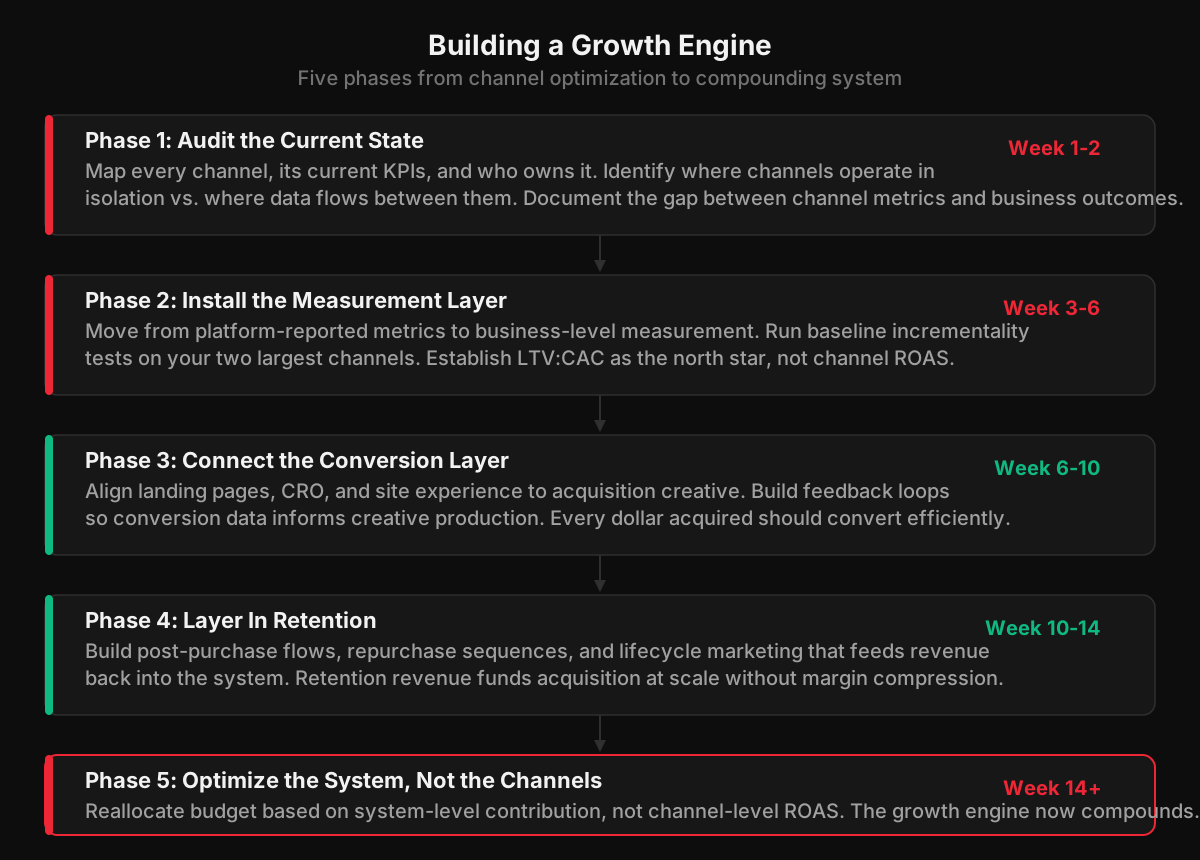
The transition from performance marketing to growth marketing is a structural project, not a staffing swap. For related analysis, read our guide on SEO vs AEO vs GEO for ecommerce in 2026.
Start by mapping the current state. Where does each channel's work begin and end? Where does data flow between channels and where does it stop? Where are decisions being made at the channel level that should be made at the system level? This audit typically reveals that channels operate in near-complete isolation. The Meta buyer does not see conversion rate data. The email team does not see acquisition source data. The CRO team does not see creative performance data. These disconnections are where growth is leaking.
Next, install the measurement layer. Move from platform-reported metrics to business-level measurement. This means running incrementality tests on your largest channels, building cohort-level LTV analysis by acquisition source, and establishing blended contribution margin as the primary success metric. This work takes 4-6 weeks and often produces uncomfortable findings. You may discover that your best-performing channel on ROAS is your worst-performing channel on incrementality. That discovery is valuable precisely because it changes investment decisions.
Then, connect the layers. Link acquisition creative to conversion experience so that landing pages reflect the promise made in the ad. Link conversion data back to creative production so the creative team knows what messaging drives not just clicks but purchases. Link post-purchase lifecycle to acquisition strategy so that retention revenue feeds back into acquisition budgets. Each connection multiplies the output of the system because it eliminates the friction between layers.
Finally, optimize the system. Once the connections are in place, shift optimization from the channel level to the system level. Instead of asking "how do we improve Meta ROAS," ask "how do we improve revenue per marketing dollar across the entire system." This changes budget allocation, creative strategy, and team priorities simultaneously. It is harder to manage. It is harder to report against. But it compounds in ways that channel optimization cannot.
Understanding how agencies that claim growth marketing actually operate is critical to this process. Our analysis of the best performance marketing agencies can help you identify partners who are genuinely building systems versus those who are optimizing channels under a growth label.
Frequently Asked Questions
Can a performance marketing agency become a growth marketing agency?
In theory, yes. In practice, it requires a fundamental restructuring of how the agency staffs, measures, and operates. Most agencies that try this transition add a strategy layer on top of their channel teams without actually changing the operating model. The result is a thin coordination layer that cannot override channel-level optimization incentives. The agencies that succeed at this transition typically rebuild from the measurement model up, changing what they optimize for before changing how they staff.
Is growth marketing only relevant for larger brands?
No. Growth marketing principles apply at any revenue level. The difference is complexity. A $2M brand might not need a full incrementality testing program. But they absolutely need to understand how acquisition cost relates to customer lifetime value, how conversion rate affects channel profitability, and how post-purchase experience affects repurchase rates. The system thinking matters at every stage. The sophistication of the measurement scales with the business.
Do I need both performance marketing and growth marketing?
Performance marketing is a component of growth marketing. You need strong channel execution. But you also need the system layer that connects channels to business outcomes. Think of performance marketing as the engine parts and growth marketing as the engineering that makes those parts work together. You need both. The mistake is treating channel optimization as if it were the whole system.
How long does it take to build a growth marketing engine?
Expect 12-16 weeks for the foundational architecture. The audit takes 2 weeks. The measurement layer takes 4-6 weeks. Connecting the conversion and retention layers takes another 4-6 weeks. System-level optimization begins after that and is ongoing. The growth engine is never done because the system continues to evolve. But you should see measurable system-level improvement within the first quarter.
What is the biggest mistake brands make when hiring for growth marketing?
Hiring channel specialists and calling it a growth team. Growth marketing requires people who think in systems, not channels. The best growth marketers have worked across multiple disciplines, understand unit economics, and are comfortable with ambiguity. If your growth marketing hire's resume is exclusively media buying, you have hired a performance marketer with a growth title.
How do I know if my current marketing is actually growth marketing?
Ask one question: does your marketing team optimize for channel KPIs or business outcomes? If budget decisions are driven by platform ROAS and channel CPA, you are running performance marketing. If budget decisions are driven by cohort LTV, blended contribution margin, and incremental revenue, you are running growth marketing. The metric you optimize for reveals the system you have built.
The distinction between growth marketing and performance marketing is not semantic. It determines how you staff, what you measure, and whether your marketing investment compounds or plateaus. Performance marketing optimizes channels. Growth marketing optimizes the system. Most brands need both, but treating them as interchangeable guarantees you will hit a ceiling that no amount of channel optimization can break through. The brands that scale past $20M, $50M, $100M in ecommerce revenue are the ones that build the system, not just the channels.
If you are evaluating your current marketing structure or looking for a growth marketing partner that operates at the system level, start with the questions above. The answers will tell you whether you are getting growth marketing or performance marketing with a better name.
Ready to build a growth engine that compounds? Book a call with our team.