
SEO / AEO
SEO vs AEO vs GEO: Where Ecommerce Brands Should Invest in 2026



Written by Darkroom leardership

Written & peer reviewed by 4 Darkroom team members
TL;DR: Search has fractured into three optimization disciplines: SEO (ranking on Google), AEO (getting cited by AI answer engines), and GEO (shaping generative AI responses about your brand). Ecommerce brands investing only in traditional SEO are missing AI-referred traffic that converts at measurably higher rates. The overlap between these disciplines is significant, but the gaps are where revenue leaks. This article maps all three, shows where they converge and diverge, and provides a concrete ecommerce action plan for allocating resources across the full search stack. Darkroom builds integrated search strategies that cover traditional rankings, AI citation, and generative visibility in a single system.
The Search Landscape Has Fractured
For two decades, search optimization meant one thing: rank on Google. That era is over. Optimizing ad assets for AI citation requires performance creative capabilities that go beyond traditional display advertising.
The search landscape in 2026 no longer funnels through a single interface. Google still processes billions of queries daily. But a growing share of product research now starts in AI-native environments. Consumers ask ChatGPT for product recommendations. They use Perplexity to compare brands. They rely on Google's AI Overviews to get answers without clicking through to websites. Each of these surfaces requires different optimization approaches, different content structures, and different measurement frameworks. Search optimization drives new traffic, but retention marketing determines whether that traffic generates lasting revenue.
This is not a gradual shift. Gartner predicts that traditional search engine volume will drop 25% by 2026 as AI chatbots and virtual agents replace traditional click-through behavior. The traffic does not disappear. It redistributes. Brands that show up in AI-generated responses capture that redistributed demand. Brands that only optimize for traditional rankings watch their traffic erode without understanding why.
Three disciplines have emerged to address this fragmented landscape. SEO remains the foundation. Answer Engine Optimization (AEO) focuses on getting your content cited by AI systems like ChatGPT, Perplexity, and Claude. Generative Engine Optimization (GEO) goes further, shaping how AI models represent your brand when they generate original responses. For a deeper look at all three, see our complete guide to modern search optimization.
Most ecommerce brands are still operating as if SEO alone covers the search channel. It doesn't. For a foundational overview of what GEO involves, read our complete breakdown of generative engine optimization.
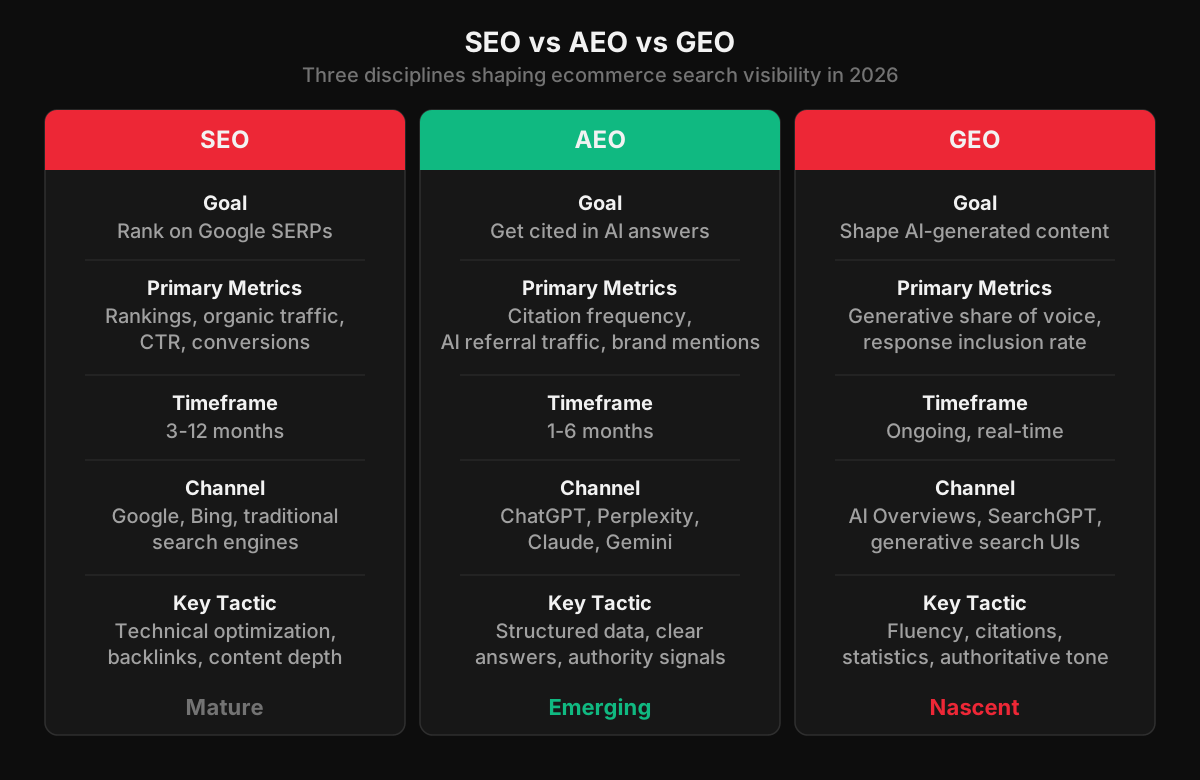
Dimension | SEO | AEO | GEO |
|---|---|---|---|
Goal | Rank in search results | Win featured snippets and voice answers | Appear in AI-generated responses |
Primary Channel | Google organic SERPs | Google SGE, Alexa, Siri | ChatGPT, Perplexity, Gemini |
Key Metric | Organic traffic and rankings | Featured snippet share | AI citation rate and brand mentions |
Timeframe | 3–6 months for traction | 1–3 months for snippet wins | 2–4 months for citation growth |
Content Format | Long-form, keyword-rich pages | Structured Q&A, schema markup | Authoritative, well-cited content |
Best For | High-volume transactional queries | Informational and how-to queries | Research and comparison queries |
What SEO Still Does Well
Traditional SEO is not dead. It is necessary but no longer sufficient.
SEO remains the most measurable and scalable organic acquisition channel for ecommerce. Ranking on page one for high-intent commercial queries still drives significant revenue. BrightEdge research shows that organic search still accounts for 53% of all website traffic across industries, with ecommerce sites seeing organic contribute 40-45% of total revenue. These are not small numbers. Walking away from SEO would be irresponsible.
The technical infrastructure of SEO also feeds the other two disciplines. Clean site architecture, fast page loads, proper structured data, crawlable product pages, and strong internal linking all make your content more accessible to both traditional search crawlers and AI training pipelines. Google Search Central documentation now explicitly addresses how structured data supports both traditional rankings and AI Overview inclusion. The foundation has not changed. What sits on top of it has.
Where SEO falls short is in the AI-mediated layer. A perfectly optimized product page can rank number one on Google and still be invisible to ChatGPT. Traditional SEO metrics, including rankings, organic sessions, and click-through rates, do not measure whether AI systems reference your brand when users ask product questions. And that gap is widening every quarter as AI search adoption accelerates.
For ecommerce specifically, the risk compounds. Product research is the category most rapidly shifting to AI-first interfaces. Consumers asking "what's the best running shoe for flat feet" increasingly get their answer from an AI system, not a Google results page. If your brand is not in that AI-generated answer, your SEO ranking for the same query delivers diminishing returns.
What AEO Adds to the Mix
Answer Engine Optimization is the discipline of structuring content so AI systems cite you as a source.
AEO emerged because AI answer engines work differently than traditional search. Google ranks pages. AI systems extract answers. The optimization target shifts from ranking position to citation probability. Your content needs to be structured in a way that AI systems can identify it as authoritative, extract the relevant answer, and attribute it to your brand.
This matters because AI-referred traffic behaves differently. Users who arrive at your site through an AI citation are further along in their decision process. They have already received a recommendation. They are clicking through to validate, not to discover. Early data from ecommerce brands tracking AI referral sources shows conversion rates 15-25% higher than traditional organic search traffic. The volume is smaller. The quality is significantly better.
The mechanics of AEO differ from SEO in important ways. Traditional SEO rewards comprehensive, long-form content with strong backlink profiles. AEO rewards clarity, conciseness, and structured formatting. AI systems favor content that provides direct answers in extractable formats: definition blocks, comparison tables, specification lists, and FAQ structures. They favor content from sources with strong entity recognition, meaning your brand is clearly defined across multiple authoritative platforms.
For ecommerce brands, AEO translates into specific content actions. Product comparison pages structured with clear winner declarations. Buying guides with explicit recommendation language. FAQ content that directly answers the questions AI users are asking. Review synthesis pages that aggregate customer sentiment into AI-extractable summaries. Each of these is already a component of a modern search strategy, but most brands have not restructured their content architecture to prioritize AI extraction alongside traditional ranking.
Our analysis of AEO tools shows that while the tooling is commoditizing rapidly, the strategic application, deciding what content to restructure and how to measure citation impact, remains the differentiator.
Where GEO Goes Beyond Citation
GEO is not about getting cited. It is about shaping what AI says about you when there is no citation at all.
Generative Engine Optimization addresses a different problem than AEO. When a user asks Perplexity or ChatGPT to recommend a product, the AI does not always cite sources. Often, it generates a response based on its training data, web retrieval patterns, and the statistical associations it has learned between brands and product categories. GEO is the discipline of influencing those associations.
Research from Princeton and Carnegie Mellon on generative engine optimization identifies specific content strategies that increase visibility in AI-generated responses. These include citing authoritative statistics, using fluent and quotable language, establishing clear entity definitions, and maintaining consistent brand positioning across multiple platforms that AI systems reference during generation.
For ecommerce, GEO matters most in the consideration phase. When a consumer asks an AI system "what brand makes the best organic baby formula," the response is shaped by the totality of content the AI system can access about every brand in that category. If your brand has consistent, authoritative content across your website, review platforms, industry publications, and social media, the AI system is more likely to include you in its generated recommendation. If your content is scattered, inconsistent, or absent from key platforms, you are invisible to generative search regardless of your Google ranking.
The measurement challenge for GEO is real. Unlike SEO (measurable through Search Console) and AEO (measurable through citation tracking), GEO impact is harder to quantify. You are measuring generative share of voice, which means how often your brand appears in AI-generated responses relative to competitors. This requires monitoring tools that query AI systems programmatically and track brand mention frequency over time. It is nascent, but the brands that invest in this measurement now will have a structural advantage as AI search grows.
The Overlap and the Gaps
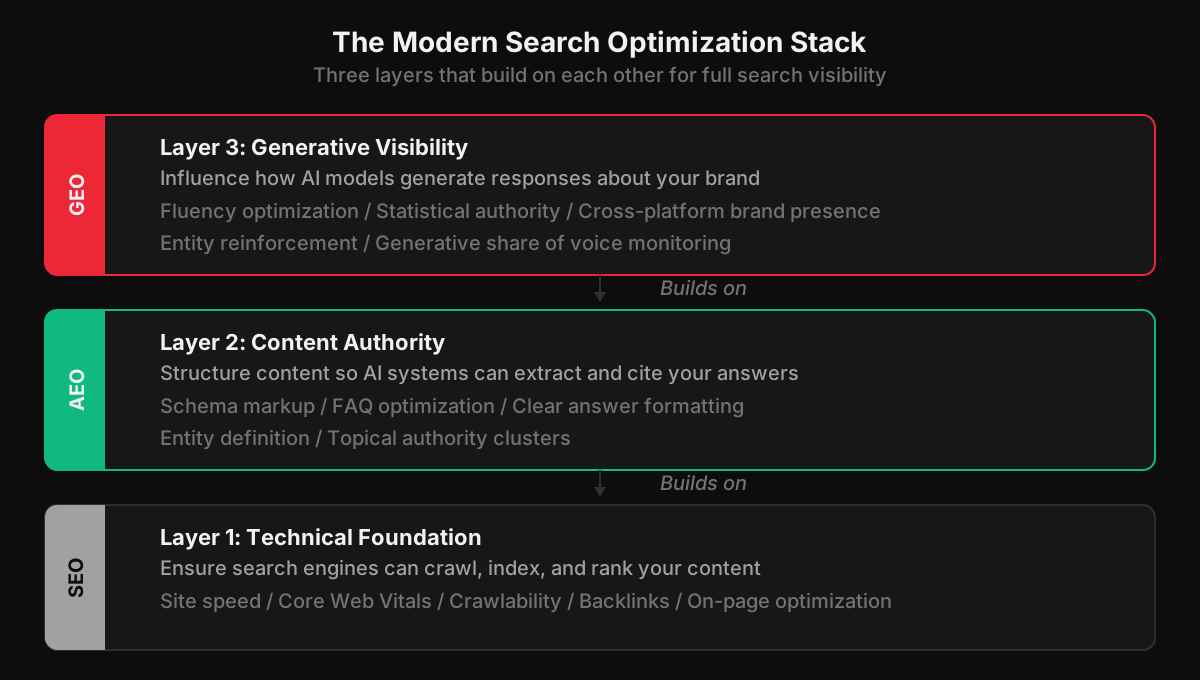
These three disciplines share about 60% of their foundational work. The remaining 40% is where investment decisions matter. Traditional SEO still drives significant ecommerce revenue when done right—our analysis of ecommerce SEO category page rankings in 2026 shows exactly where the opportunity sits.
The overlap is substantial. Good SEO practices, including clean site architecture, structured data, authoritative content, and strong backlink profiles, all improve your AEO and GEO positioning. Content that ranks well on Google tends to be content that AI systems trust and reference. The technical foundation is shared. The tooling landscape has matured considerably—see our evaluation of AI search optimization tools that deliver results for practical recommendations.
But the gaps are where ecommerce brands lose revenue. SEO rewards long-form depth. AEO rewards concise extractability. You need both, which means content architecture has to serve two masters: comprehensive pages that rank and structured answer blocks within those pages that AI systems can extract. Search is one layer of a broader growth system—read how full-funnel marketing for ecommerce connects discovery to conversion and retention.
SEO measures rankings and traffic. AEO measures citations and referral quality. GEO measures brand representation in generated content. A brand can rank number one on Google for a commercial query, never get cited by ChatGPT for the same query, and be completely absent from Perplexity's generated recommendations. These are three different visibility failures, each requiring different fixes. Understanding how different AI systems surface content requires a platform-specific approach, which we detail in our comparative playbook for Perplexity, Claude, Grok, and Gemini.
The resource allocation question for ecommerce brands is not whether to invest in all three. It is how to weight investment across the stack based on where your category's consumers are actually searching.
How AI Search Is Reshaping Ecommerce Discovery
Product discovery is the ecommerce use case most affected by AI search, and the one where AEO and GEO deliver the highest ROI.
Traditional ecommerce SEO focused on two query types: branded searches (people looking for your brand) and non-branded commercial searches (people looking for your product category). The optimization playbook was well established: optimize product pages for commercial keywords, build category pages for broader terms, and invest in content marketing to capture informational queries at the top of the funnel.
AI search changes the discovery path. When a consumer asks an AI assistant "what are the best wireless earbuds under $100," they get a curated answer, not a list of links. The AI system selects which brands to recommend based on its understanding of quality, price, reviews, and brand authority. If your brand is not in that generated recommendation, you have lost the opportunity before the consumer ever sees a traditional search result.
This matters enormously for ecommerce because AI recommendations carry implicit endorsement. When ChatGPT recommends a product, users perceive it as a vetted recommendation, not an advertisement. The trust transfer is significant. Brands included in AI recommendations benefit from a credibility signal that traditional search rankings never provided. See our deep dive into how AI search is transforming advertising for the full picture of this shift.
For DTC brands and marketplace sellers, this shift creates both risk and opportunity. Risk, because established brands with stronger content footprints dominate AI-generated recommendations by default. Opportunity, because the optimization playbook for AI citation is newer, less established, and more accessible than competing for top Google rankings in saturated categories.
The Ecommerce Action Plan for 2026
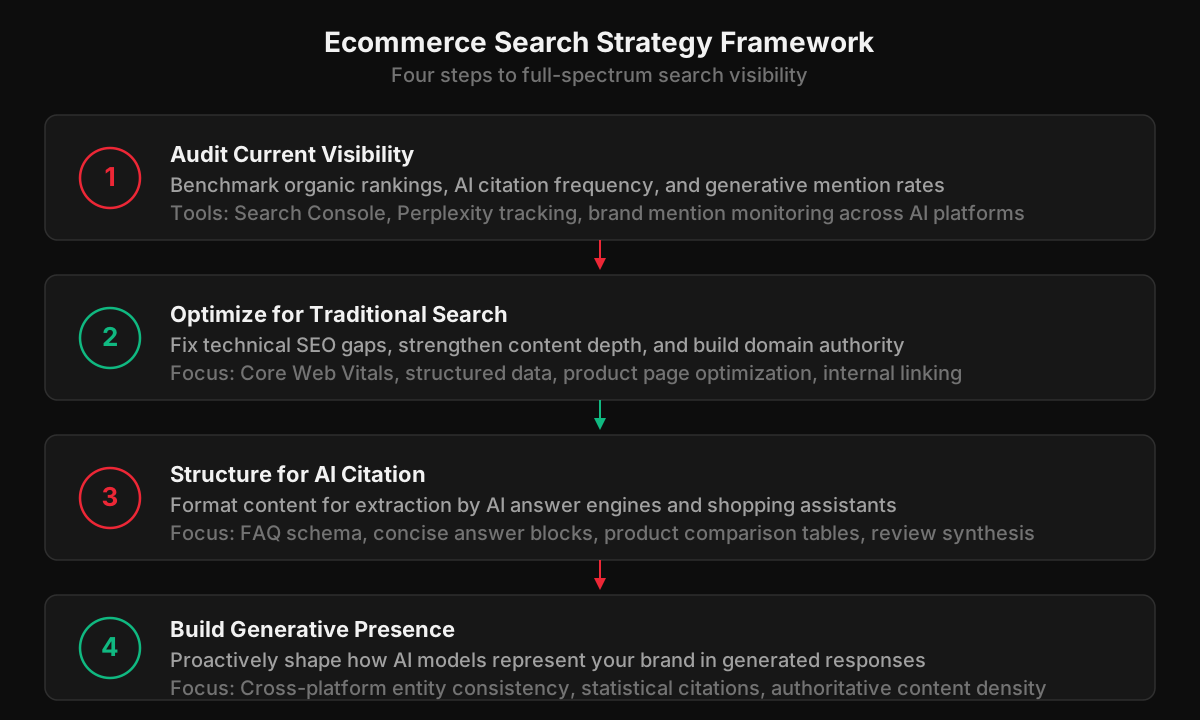
Allocate your search investment across all three layers, weighted by your category's AI search penetration.
Start with an audit. Use Google Search Console to benchmark your traditional organic performance. Then run your top 20 product-category queries through ChatGPT, Perplexity, Claude, and Google AI Overviews. Track whether your brand appears in the generated responses. Track which competitors appear. This gives you a baseline for AI visibility alongside your SEO baseline.
Next, fix your technical SEO foundation. This does not change. Core Web Vitals, crawlability, structured data, clean URL architecture, and internal linking remain the foundation that everything else builds on. Without this layer, neither AEO nor GEO can work effectively because AI systems rely on the same crawlable infrastructure that Google does.
Then restructure your content for AI extraction. Add explicit answer blocks to your existing high-ranking pages. Create FAQ sections with direct, concise answers to the questions AI users ask. Build product comparison content with clear recommendation language. Implement comprehensive schema markup, including Product, FAQ, Review, and HowTo schemas, that helps AI systems understand your content structure.
Build your generative presence by ensuring brand consistency across every platform AI systems reference. This includes your website, Google Business Profile, review platforms, industry publications, social media profiles, and third-party comparison sites. The more consistent and authoritative your brand presence across these sources, the more likely AI systems include you in generated responses.
Finally, measure across all three layers. Track traditional SEO metrics weekly. Monitor AI citation frequency monthly. Audit generative share of voice quarterly. This three-layer measurement framework is what integrated search strategy actually looks like in practice.
For brands investing in paid media alongside organic, the interplay matters too. Paid search data reveals which queries are shifting to AI-first discovery, helping you prioritize where AEO and GEO investment will have the highest impact.
Budget Allocation: Where the Money Should Go
The right split depends on your category, but for most ecommerce brands in 2026, the split should be roughly 50/30/20.
Allocate approximately 50% of search investment to traditional SEO. This covers technical infrastructure, content depth, link building, and ongoing optimization of your organic presence. SEO remains the largest driver of measurable revenue from search, and neglecting it in favor of newer disciplines would be premature.
Allocate approximately 30% to AEO. This covers content restructuring for AI extraction, schema implementation, FAQ optimization, and citation monitoring. AEO work directly builds on your SEO foundation, so much of this investment enhances both disciplines simultaneously. The marginal cost of adding AEO to an existing SEO program is lower than building either from scratch.
Allocate approximately 20% to GEO. This covers brand consistency audits, entity optimization across platforms, generative share of voice monitoring, and content strategies specifically designed to influence AI training and retrieval patterns. GEO is the newest discipline and the hardest to measure, but the brands that invest early will compound their advantage as AI search adoption grows.
These ratios will shift. By 2027, most ecommerce categories will likely warrant a 40/35/25 split as AI search adoption accelerates. The important thing is to start investing across all three layers now, rather than waiting for the shift to become obvious.
Discipline | % of Budget | Expected Timeline | Primary KPI |
|---|---|---|---|
Traditional SEO | 50–60% | 3–6 months | Organic sessions, revenue per session |
AEO | 15–20% | 1–3 months | Featured snippet ownership rate |
GEO | 20–30% | 2–4 months | AI citation frequency, brand mention share |
FAQ
Is AEO just a rebranding of featured snippet optimization?
No. Featured snippet optimization targets a specific Google SERP feature. AEO targets citation across multiple AI answer engines, including ChatGPT, Perplexity, Claude, Gemini, and Google AI Overviews. The content strategies overlap in some areas, particularly around concise answer formatting, but AEO requires platform-specific optimization, entity authority building, and cross-platform consistency that featured snippet work never addressed. The scope is broader and the measurement framework is entirely different. The distinction between growth marketing versus performance marketing determines how you allocate budget across SEO, AEO, and GEO.
How do I measure whether AI systems are citing my brand?
Run your top commercial queries through ChatGPT, Perplexity, Claude, and Google AI Overviews on a regular cadence. Track whether your brand appears in responses, whether competitors appear, and whether the AI-generated descriptions of your brand are accurate. Tools like Perplexity's citation tracking and third-party AI monitoring platforms can automate some of this. The measurement discipline is young, but manual auditing works well as a starting point. As AI reshapes search, the agency model changes too—explore what makes an AI marketing agency different to understand the shift.
Does GEO work differently for DTC brands versus marketplace sellers?
Yes. DTC brands control their own website content, which gives them more direct influence over what AI systems extract. Marketplace sellers depend heavily on platform content like Amazon listings, review aggregation, and third-party mentions, which makes GEO harder to control but potentially more impactful. Marketplace sellers should focus on review synthesis, Q&A optimization on marketplace platforms, and ensuring their brand name is consistently associated with their product category across all external sources.
Can I do AEO and GEO without a strong SEO foundation?
Technically yes, but it is significantly harder and less effective. AI systems rely on crawlable, well-structured content to extract answers and build entity understanding. If your site has technical SEO problems, such as slow load times, poor crawlability, missing structured data, or thin content, AI systems are less likely to reference it regardless of how well your content is formatted for extraction. The SEO layer is the foundation that makes AEO and GEO work.
How quickly can AEO show results compared to SEO?
AEO can show results faster than traditional SEO because AI systems update their retrieval indexes more frequently than Google updates its rankings. Content restructured for AI extraction can start appearing in AI-generated responses within weeks, compared to months for meaningful SEO ranking changes. However, sustained AEO performance requires the same ongoing investment as SEO. Initial citation gains can erode quickly if competitors optimize similarly.
Should I hire an AEO specialist or train my SEO team?
Train your SEO team first. The foundational skills overlap significantly, and most AEO work is an extension of existing SEO disciplines. Where you may need specialist support is in AI-specific measurement, cross-platform entity optimization, and generative content strategy. These are newer skillsets that many SEO teams have not developed yet. A phased approach, starting with internal upskilling and supplementing with agency support for advanced GEO work, is the most cost-effective path for most ecommerce brands.
What happens to SEO investment if AI search takes over completely?
AI search will not replace traditional search entirely. Even aggressive projections show traditional search maintaining 50-60% of commercial query volume through 2028. But the mix will shift. Brands that invested only in SEO will see declining returns. Brands that invested across all three disciplines will capture demand regardless of which interface the consumer uses. The goal is not to predict which search model wins. The goal is to be visible in all of them.
Build a Search Strategy That Covers All Three Layers
The search landscape has split into three disciplines, and ecommerce brands that only invest in traditional SEO are leaving revenue on the table. AI-referred traffic converts at higher rates. Generative visibility builds brand authority that compounds over time. And the brands that invest across all three layers now will have a structural advantage that becomes harder to close as AI search adoption grows.
The action plan is clear. Audit your current visibility across traditional and AI search. Strengthen your SEO foundation. Restructure content for AI extraction. Build cross-platform generative presence. Measure across all three layers.
If you want a partner that builds integrated search strategies spanning SEO, AEO, and GEO for ecommerce brands, book a call with Darkroom. We will walk through your current search visibility, identify where AI traffic is leaking, and build a strategy that covers the full stack.