
SEO / AEO
Ecommerce SEO in 2026: The Operator’s Playbook for Category Page Rankings




Written by Darkroom leardership

Written & peer reviewed by 4 Darkroom team members
TL;DR
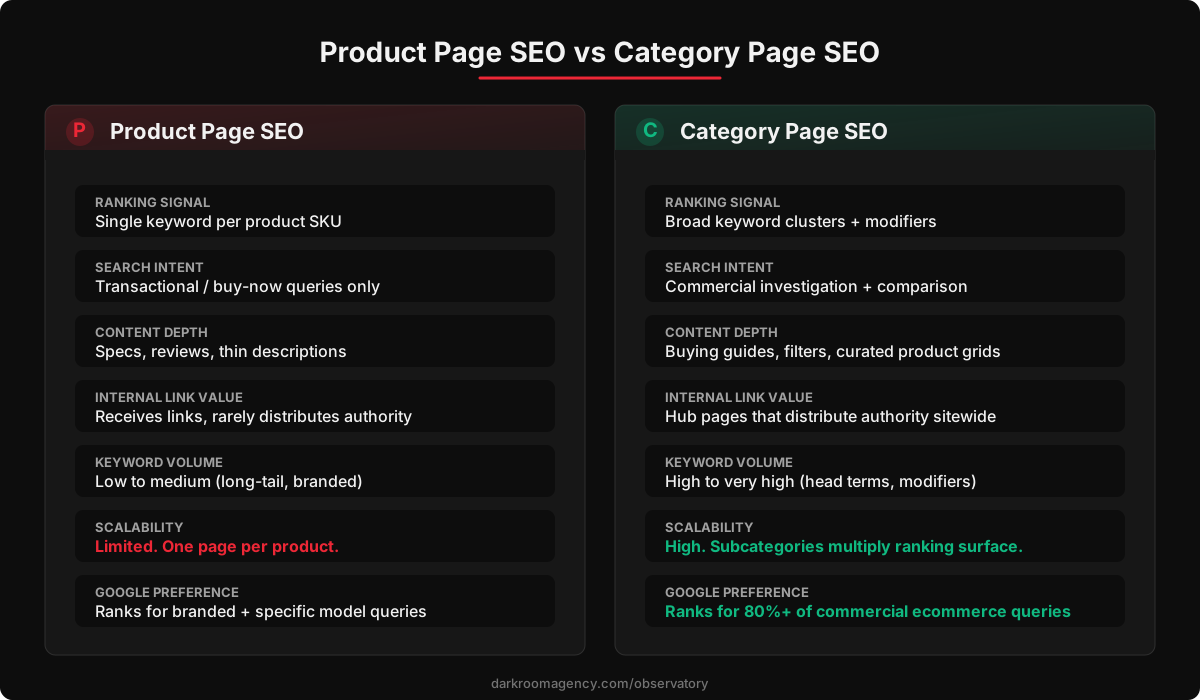
Ecommerce SEO in 2026 is not won on product pages. It is won on category pages. Google consistently ranks category and collection pages for commercial search queries because they satisfy the intent better than any individual product listing can. Yet most ecommerce brands pour their optimization budget into product descriptions, schema on individual SKUs, and title tags that target long-tail product queries. The result is wasted effort on pages Google does not prioritize for the keywords that drive revenue. This playbook breaks down the technical foundation, category page structure, internal linking strategy, and content architecture required to rank category pages in competitive verticals. If you operate an ecommerce store and want organic search to compound into a reliable acquisition channel, start here. Darkroom helps ecommerce brands build SEO systems that treat category pages as the primary ranking asset they are.
Dimension | Product Pages | Category Pages |
|---|---|---|
Primary Keyword Intent | Transactional — specific product queries | Commercial investigation — broad category queries |
Search Volume Potential | Lower per page, high aggregate across catalog | Higher per page for head terms |
Content Opportunity | Specs, reviews, FAQs, schema markup | Buying guides, comparison copy, faceted navigation |
Internal Link Value | Receives links from category pages | Distributes authority to product pages below |
Conversion Role | Direct purchase or add-to-cart | Discovery, filtering, and funneling to products |
Competitive Difficulty | Moderate — long-tail variations available | High — competing against major retailers for head terms |
Page Lifespan | Limited — removed when product is discontinued | Evergreen — persists as long as the category exists |
Why Google Ranks Category Pages Over Product Pages
Google's algorithm preferences for ecommerce queries are not subtle, and they strongly favor category pages. Search any high-volume commercial keyword in your vertical and examine the first page of results. Queries like "running shoes," "wireless headphones," or "organic skincare" return category pages from major retailers and DTC brands. Product pages almost never appear for these terms unless the query includes a specific model name or SKU. For a deeper analysis, read our guide on SEO vs AEO vs GEO for ecommerce in 2026.
This happens because category pages match the search intent behind commercial queries far better than product pages. When someone searches "running shoes," they are not looking for one specific shoe. They want to browse options, compare features, filter by price or use case, and make a decision. A category page gives them that. A product page gives them one option with no context about alternatives. Google understands this distinction and rewards pages that satisfy the full breadth of intent behind a query. This concept is explored further in our breakdown of what is generative engine optimization.
According to Google Search Central, helpful content should satisfy the needs of the person searching. For commercial ecommerce queries, that means showing users a curated selection with the ability to navigate further. The data backs this up. Ahrefs research on ecommerce SEO found that category and subcategory pages drive significantly more organic traffic than individual product pages across nearly every retail vertical. The implication is clear: if your SEO strategy centers on product page optimization, you are optimizing for pages Google does not want to rank for your most valuable keywords.
The structural advantage of category pages extends beyond intent matching. Category pages accumulate internal links from every product they contain, from navigation menus, from breadcrumbs, and from cross-category references. This internal link equity makes them inherently stronger in Google's eyes. A product page receives links from its parent category and maybe a related products module. A category page receives links from dozens or hundreds of product pages, the site navigation, the footer, blog posts, and other category pages. The authority differential is massive and compounds over time. Our research on the complete guide to modern search optimization provides additional context for this approach.
The Technical Foundation That Makes Category Pages Crawlable
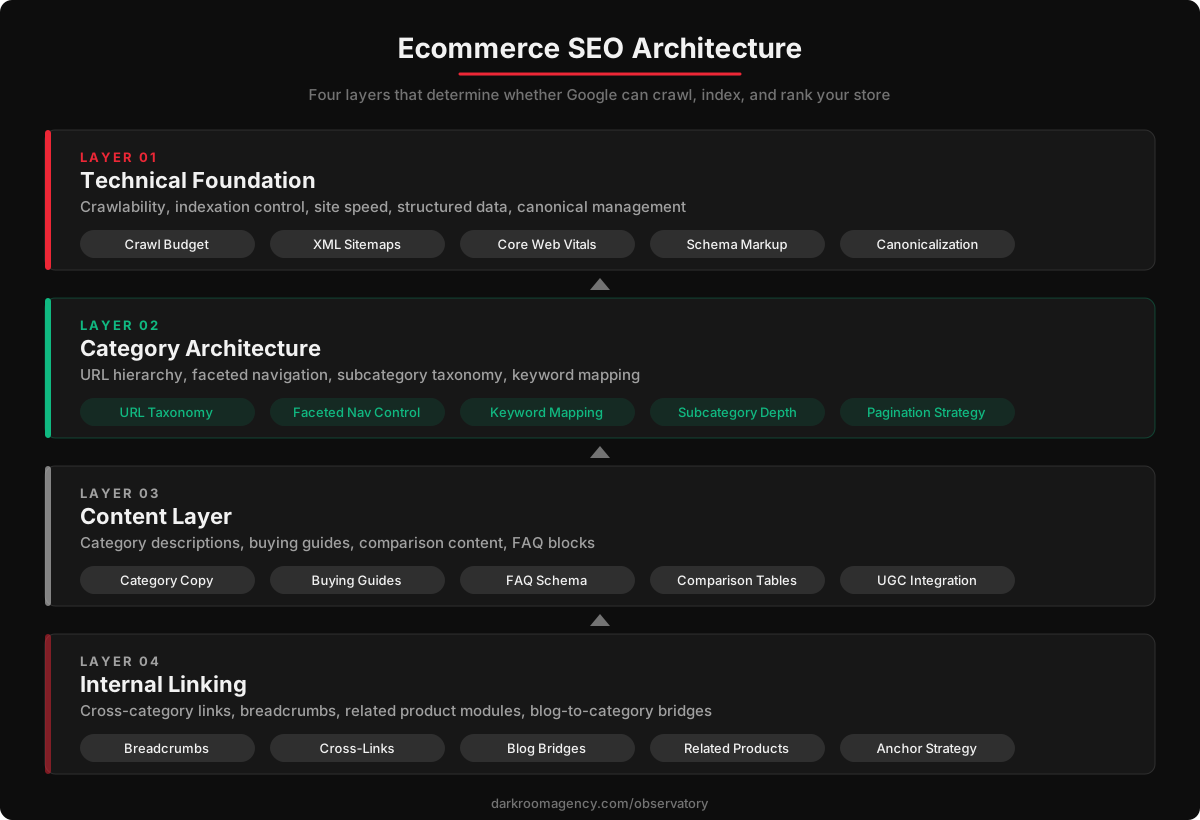
Before any content or linking strategy matters, category pages need to be technically sound. Ecommerce sites generate complexity at a scale that most other website types never face. Thousands of products, faceted navigation that creates millions of URL permutations, seasonal inventory changes, and platform-specific rendering quirks all conspire to make ecommerce sites difficult for Google to crawl and index efficiently. See our analysis of full-funnel marketing for ecommerce growth for the complete framework.
The first priority is crawl budget management. Google allocates a finite amount of crawling resources to every domain. When your faceted navigation generates hundreds of thousands of parameter-based URLs that all show slight variations of the same product set, you burn crawl budget on pages that add no value. The fix is straightforward but requires discipline: use robots.txt and meta robots directives to block crawling of faceted URLs that do not represent unique, indexable content. Allow Google to crawl the primary category, the key subcategory filters that map to real search queries, and nothing else. A Screaming Frog technical audit will reveal exactly how many junk URLs your site is generating and where the crawl waste is concentrated.
Canonical tags on category pages require careful implementation. When the same set of products appears under multiple URL paths due to filtering, sorting, or pagination, canonical tags tell Google which version to index. Every filtered or sorted variation of a category page should point its canonical back to the clean, unfiltered version unless that filtered version targets a specific keyword you want to rank for. Pagination needs its own handling. Use self-referencing canonicals on paginated category pages and implement proper rel="next" and rel="prev" where applicable, or consolidate paginated content using infinite scroll with server-side rendering.
Core Web Vitals matter significantly for category pages because they tend to be image-heavy and resource-intensive. Product grid images, filter UI components, and dynamic sorting scripts all add load time. Lazy loading product images below the fold, implementing responsive image srcsets, minimizing JavaScript that blocks rendering, and using CDN-delivered assets are table stakes. Google has made page experience a confirmed ranking factor, and category pages with poor LCP or CLS scores will lose rankings to faster competitors regardless of content quality. Your SEO services partner should treat technical performance as a prerequisite, not an afterthought.
Category Page Structure That Ranks
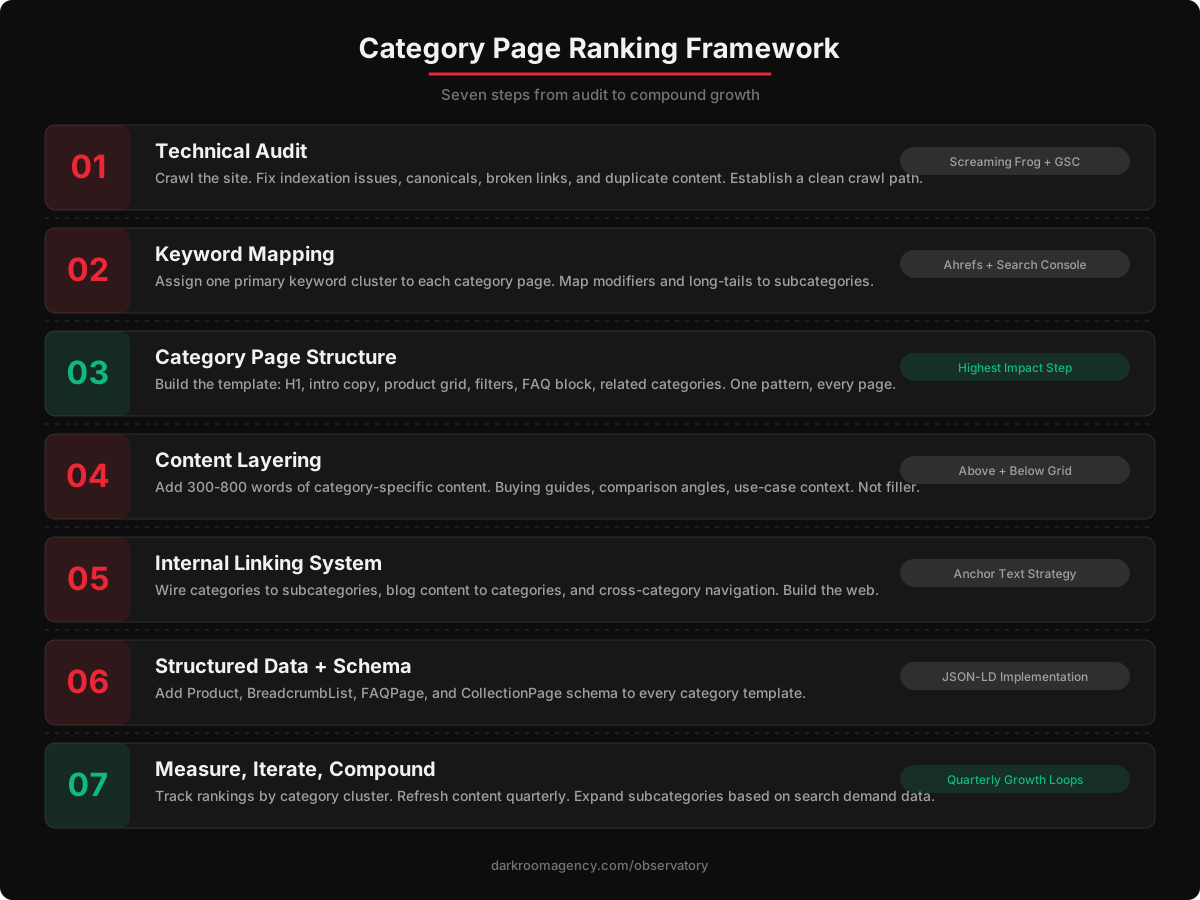
A ranking category page follows a predictable structure, and deviating from it costs organic visibility. The structure is not a creative decision. It is an engineering decision informed by what Google expects to find on a page that satisfies commercial search intent.
The H1 tag should contain the primary keyword for the category. Not a clever tagline. Not a seasonal promotional headline. The keyword. "Men's Running Shoes" or "Organic Face Moisturizers" or "Wireless Noise-Cancelling Headphones." Google uses the H1 as a primary relevance signal, and burying your keyword in favor of branding language is a ranking concession you cannot afford in competitive verticals.
Below the H1, a category introduction of 100-200 words should provide context that signals topical authority. This is not product marketing copy. It is informational content that tells both users and Google what this category covers, who it is for, and what differentiates the products in this collection. Think of it as the opening paragraph of a buying guide, compressed into a density that respects the user's intent to browse products rather than read essays.
The product grid is the core of the page. Products should be organized with consistent naming conventions, clear pricing, and product schema markup on each item. The grid itself should render server-side so that Google can see the products without executing JavaScript. Client-side rendering of product grids remains one of the most common technical mistakes in ecommerce SEO, and it results in Google seeing an empty page where your products should be.
Filters and sorting options should be functional but controlled. Every filter combination that you want indexed should have its own clean URL and be internally linked. Filter combinations you do not want indexed should use AJAX or parameter-based URLs that are blocked from crawling. The distinction between indexable and non-indexable filters should map directly to your keyword research. If people search "men's black running shoes," that filter combination deserves its own indexable subcategory page. If no one searches "men's size 11.5 running shoes in green," that filter combination should not be indexable.
Below the product grid, a content block of 300-600 words provides the depth that separates ranking category pages from thin ones. This content addresses buying considerations, explains differences between product types in the category, and naturally incorporates related keywords and entities. FAQ blocks at the bottom of category pages add additional keyword coverage and qualify for FAQ rich results in search. This entire structure is the formula. It works across verticals, across platforms, and across competitive intensities. The brands that implement it consistently rank. The brands that treat category pages as simple product listings do not.
Element | Priority | Impact | Common Mistake |
|---|---|---|---|
Unique Title Tag | Critical | Direct ranking signal for target keyword | Duplicate titles across similar categories |
Above-Fold Intro Copy | Critical | Establishes relevance for crawlers and users | No text content — only product grid |
H1 with Primary Keyword | Critical | Confirms page topic for search engines | Using generic labels like "Products" or "Shop" |
Faceted Navigation SEO | High | Prevents index bloat and duplicate content | Allowing all filter combinations to be indexed |
Internal Linking Structure | High | Passes authority and helps crawl discovery | Orphaned categories with no parent/sibling links |
Schema Markup | High | Enables rich snippets in search results | Missing CollectionPage or BreadcrumbList schema |
Below-Fold SEO Content | Medium | Adds keyword depth and supports long-tail queries | Thin or keyword-stuffed paragraphs with no value |
Internal Linking as a Ranking Multiplier
Internal linking is the most underused ranking lever in ecommerce SEO. External link building gets the attention and budget. Internal linking gets a mention in an audit report and then sits unimplemented for months. This is backwards. For ecommerce sites with hundreds or thousands of pages, the internal link graph is a more controllable and more impactful ranking factor than external backlinks. We explore this dynamic in detail in AI SEO tools that deliver results in 2026.
The principle is straightforward: every internal link passes authority and contextual relevance from the linking page to the target page. Category pages should be the primary beneficiaries of your internal linking strategy because they are the pages you want to rank for your highest-volume keywords. Every product page should link to its parent category. Every subcategory should link to its parent and sibling categories. Every blog post that mentions a product type should link to the corresponding category page with keyword-rich anchor text. The navigation and footer should include links to your most important category pages. For related insights, see our guide to comparative playbook for AI search engines.
Breadcrumb navigation is a particularly powerful internal linking mechanism for ecommerce. Breadcrumbs create a consistent link path from every product page through its subcategory and up to the parent category. When implemented with BreadcrumbList schema markup, breadcrumbs also generate enhanced search results that show category hierarchy directly in the SERP. This is free real estate in search results that most ecommerce sites fail to claim simply because they skip the schema implementation. This connects directly to the principles outlined in what actually matters as AEO tools commoditize.
Blog content should function as a category page support system. Every blog post about product comparisons, buying guides, or use-case content should link to the relevant category pages. These links should use descriptive anchor text that contains the target keyword. A blog post about "how to choose running shoes for flat feet" should link to your running shoes category page with the anchor "running shoes" or "browse our running shoes collection." This blog-to-category bridge is how modern SEO strategies turn informational content into category page authority.
Cross-category linking connects related product types and keeps users navigating deeper into the site. A "running shoes" category page should link to "running socks," "running shorts," and "fitness trackers." These cross-category links tell Google that your site has comprehensive coverage of the broader topic, and they distribute authority across your category page ecosystem. The result is that all of your category pages become stronger, not just the ones that receive the most external links. Brands navigating this challenge should also review ecommerce CRO and profit per visitor.
The Content Layer That Separates Winners from Invisible Pages
Product grids alone do not rank. Google needs text content to understand what a page is about, assess its topical authority, and determine whether it provides more value than competing pages. Category pages that consist only of a product grid and filter sidebar are thin content in Google's evaluation framework, regardless of how many products they contain.
The content layer on a category page serves three functions. First, it provides the keyword signals that Google uses to determine topical relevance. The primary keyword, semantically related terms, and entity references all need to appear in natural, readable text on the page. Second, it provides the depth that satisfies Google's Helpful Content evaluation. Google explicitly rewards pages that demonstrate expertise and provide value beyond what a simple product listing can offer. Third, it provides the textual hooks that allow the page to rank for long-tail variations of the primary keyword without needing separate pages for each variation.
The placement of category content matters. Above-the-fold content should be brief and direct. A short paragraph introducing the category and its value proposition. The product grid should appear quickly because that is what the user came for. Below the product grid, a more substantial content section of 300-800 words can address buying considerations, highlight differentiators between product types, answer common questions, and provide the kind of editorial authority that Google rewards. This below-grid content does not interfere with the shopping experience because it sits below the products, but it dramatically improves the page's ranking potential.
FAQ content on category pages is particularly valuable because it serves dual purposes. It adds keyword-rich content that covers question-based search queries. And when marked up with FAQPage schema, it qualifies for FAQ rich results in the SERP, which increase click-through rate and visibility. Every category page should have 4-8 FAQ entries that address genuine buyer questions about the product type. These are not manufactured questions designed to stuff keywords. They are real questions drawn from customer support data, search query analysis, and competitor gap research.
This content approach connects directly to the broader evolution of search. As generative engine optimization becomes more relevant, category pages with strong editorial content are better positioned to be cited in AI-generated search results. Thin product grids will not be referenced by AI search systems. Content-rich category pages that demonstrate genuine expertise will.
Faceted Navigation: The SEO Minefield Most Brands Get Wrong
Faceted navigation is the single most common source of SEO problems on ecommerce sites. It is also one of the most powerful ranking opportunities when handled correctly. The difference between a liability and an asset comes down to whether you treat faceted navigation as a UX feature or as a strategic SEO component.
The problem with uncontrolled faceted navigation is scale. A category with 5 filter types and 10 options per filter can generate over 100,000 unique URL combinations. If all of those URLs are crawlable and indexable, you have created a massive index bloat problem. Google will spend its crawl budget indexing thousands of near-duplicate pages instead of focusing on the pages you actually want to rank. The result is that none of your category pages rank well because the authority is diluted across thousands of thin variations.
The solution requires a strategic framework. Step one: identify which filter combinations map to real search queries with meaningful volume. "Women's red dresses" is a searchable query. "Women's dresses under $47 in size medium" is not. Step two: create clean, indexable URL paths for the filter combinations that match search demand. These become your subcategory pages and should be treated with the same structural rigor as your top-level category pages: unique H1, unique content, and internal links. Step three: block everything else from indexing using a combination of robots.txt rules, noindex tags, and canonical tags pointing back to the parent category.
According to Search Engine Journal's ecommerce data, sites that implement disciplined faceted navigation control see measurable improvements in crawl efficiency and category page rankings within 60-90 days. The improvement comes not from adding anything new but from removing the noise that was preventing Google from focusing on the pages that matter. Your digital marketing services team should audit faceted navigation as a first priority, not a nice-to-have cleanup task.
Connecting SEO to the Full Funnel
Category page SEO does not exist in a vacuum. It connects to paid media efficiency, to brand visibility, and to the entire acquisition system that determines whether an ecommerce business grows or stalls. When organic rankings improve on category pages, the downstream effects ripple through every channel.
Strong organic rankings on category pages reduce dependency on paid search for branded and category-level queries. If you rank organically for "wireless headphones," you do not need to bid on that keyword in Google Ads. The savings compound across dozens or hundreds of category-level keywords. This freed budget can be reallocated to paid media management on conquest terms, new product launches, or retargeting campaigns where paid media has a structural advantage over organic search.
Category page content that ranks organically also feeds the top of the funnel. Blog-to-category linking strategies pull informational search traffic into the commercial consideration phase. A user who finds your blog post about "how to choose wireless headphones" and clicks through to your headphones category page is now a warm prospect navigating your product catalog with buying intent. This is full-funnel marketing at work, and category pages are the bridge between informational content and transactional outcomes.
The connection to performance creative is equally direct. Category pages that rank well and receive consistent organic traffic provide a testing ground for messaging, product positioning, and conversion optimization. The data from organic category page performance informs which products to feature in paid creative, which value propositions resonate most, and which product categories deserve more investment. Organic and paid are not separate channels when the category architecture is built correctly. They are two sides of the same acquisition system.
As ecommerce brands navigate the convergence of traditional SEO, answer engine optimization, and modern search optimization, category pages become even more critical. AI-powered search experiences pull from pages that demonstrate comprehensive topical coverage. A well-structured category page with strong content, schema markup, and internal authority is precisely the kind of page that gets cited in AI-generated shopping recommendations.
FAQ
How many words of content should a category page have?
The framework behind growth marketing vs performance marketing reinforces this point with concrete data.
The above-the-fold intro should be 100-200 words. The below-grid content block should be 300-800 words depending on competitive intensity. FAQ sections should add another 200-400 words. Total unique content on a category page typically falls between 600 and 1,400 words. More is not always better. The content needs to be useful, specific to the category, and structured for both users and search engines. Filler content will not improve rankings and can hurt engagement metrics that Google monitors. Our Observatory research on CRO marketing for DTC brands examines this from a complementary angle.
Should subcategory pages target different keywords than parent categories?
Always. Every page in your category hierarchy should target a unique keyword cluster. The parent category targets the broadest term. Subcategories target modifier-based variations. "Running shoes" is the parent. "Trail running shoes," "men's running shoes," and "lightweight running shoes" are subcategories. Each page has its own H1, its own content, and its own internal linking profile. Overlap between parent and subcategory keywords creates cannibalization, where your pages compete against each other instead of against competitors.
How do we handle seasonal or out-of-stock products on category pages?
Never delete or noindex a category page because products are temporarily out of stock. The page has accumulated authority and rankings that you lose the moment it disappears. Instead, keep the page live, display a message about product availability, and either show related in-stock products or allow users to sign up for restock notifications. For seasonal categories, keep the page live year-round and update the content seasonally. A "winter coats" category page that exists all year maintains its authority and starts each season with established rankings rather than rebuilding from zero.
What is the biggest mistake brands make with ecommerce SEO?
Treating product pages as the primary ranking target. Product pages rank for branded queries and specific model searches. Category pages rank for the high-volume commercial queries that drive the majority of ecommerce revenue from organic search. The brands that invest 80% of their SEO budget into product page optimization and 20% into category pages have the ratio exactly backwards.
How long does it take for category page optimizations to impact rankings?
Technical fixes like crawl budget cleanup and canonical corrections typically show impact within 4-8 weeks. Content additions to category pages show ranking movement within 6-12 weeks. Internal linking improvements compound over 3-6 months as Google recrawls and reprocesses the link graph. The full effect of a comprehensive category page optimization program is typically visible within two quarters, with compounding improvements continuing for 12-18 months as the architecture matures and content freshness signals reinforce initial gains.
Do we need unique content on every category page, even for small categories?
Yes. Every indexable category page needs unique content. Google treats pages without unique text content as thin pages, regardless of how many products they list. Even small categories with 5-10 products benefit from 300-500 words of unique content that explains what the category covers, who it serves, and what differentiates the products. The effort per page is small. The cumulative ranking impact across all category pages is substantial.
Build the Architecture That Compounds
Ecommerce SEO is not a keyword game. It is an architecture game. The brands that rank in 2026 are the ones that treat category pages as their primary SEO asset, invest in the technical foundation that makes those pages crawlable, layer in the content that makes them authoritative, and connect them through internal linking systems that distribute authority where it matters most.
Product pages have their place. They rank for branded queries and specific product searches. But the revenue-driving keywords in ecommerce are commercial queries that Google serves with category pages. If your SEO strategy does not reflect that reality, you are building on the wrong foundation.
The playbook is not complicated. It is a technical audit, a keyword map, a category page template, a content production system, and an internal linking strategy. Execute those five things with discipline, and your category pages will rank. Ignore them, and your competitors who did not ignore them will take the traffic you are leaving behind.
Ready to build an ecommerce SEO architecture that actually ranks?Book a call with Darkroom and let us audit your category pages, identify the gaps, and build the system that turns organic search into your most reliable growth channel.