
PAID MEDIA
What Social Media Marketing Services Actually Include in 2026



Written by Darkroom leardership

Written & peer reviewed by 4 Darkroom team members
TL;DR: Social media marketing services is a term that covers everything from organic posting to paid media buying to influencer management. Brands overpay when they buy bundled services they don't need, and underperform when they skip the ones they do. The real service categories break into six distinct functions: strategy, organic content, community management, paid media, performance creative, and measurement. What you need depends on your growth stage, your primary objective, and whether you're building brand equity or driving revenue. This article maps every service category, what each costs, and how to evaluate which ones actually move your business forward. Darkroom builds social media programs around measurable business outcomes, not vanity metrics.
Why "Social Media Marketing Services" Means Nothing Without Context
The phrase "social media marketing services" has become so broad that it obscures more than it reveals. For brands seeking expert help, TikTok Shop management offers a proven approach to this challenge.
Search that term and you'll find agencies offering everything from Instagram Reels production to TikTok ad buying to LinkedIn content calendars. All under one umbrella. The problem is that these are fundamentally different services requiring different skill sets, different budgets, and different success metrics. Lumping them together makes it nearly impossible for brands to evaluate what they actually need. For a deeper analysis, read our guide on performance creative system that scales.
This ambiguity benefits agencies that sell bundled retainers. It does not benefit the brands paying for them. This concept is explored further in our breakdown of TikTok Shop ads and the creative-commerce loop.
According to eMarketer's 2026 social ad spend forecast, US social media advertising will exceed $105 billion this year. That number represents only paid spend. It doesn't include the billions more flowing into organic content production, community management, influencer programs, and the agencies managing all of it. When that much capital moves through a category this loosely defined, precision matters.
The first step toward buying the right social media marketing services is understanding what actually exists. Not the sales pitch version. The operational version.
Service Category | What It Covers | Typical Cost Range | Best For |
|---|---|---|---|
Content Creation | Graphics, short-form video, copywriting, UGC coordination | $2,000–$8,000/mo | Brands needing consistent posting |
Community Management | Comment moderation, DM responses, sentiment monitoring | $1,500–$5,000/mo | High-engagement consumer brands |
Paid Social Advertising | Campaign setup, audience targeting, A/B testing, reporting | $1,500–$10,000/mo + ad spend | Brands scaling acquisition |
Influencer Management | Outreach, negotiation, briefs, performance tracking | $3,000–$15,000/mo | DTC and lifestyle brands |
Analytics & Reporting | Monthly reporting, attribution modeling, competitive analysis | $1,000–$3,000/mo | Data-driven marketing teams |
Strategy & Consulting | Platform selection, content calendars, audience research | $2,500–$7,500/mo | Brands entering new platforms |
The Six Core Service Categories
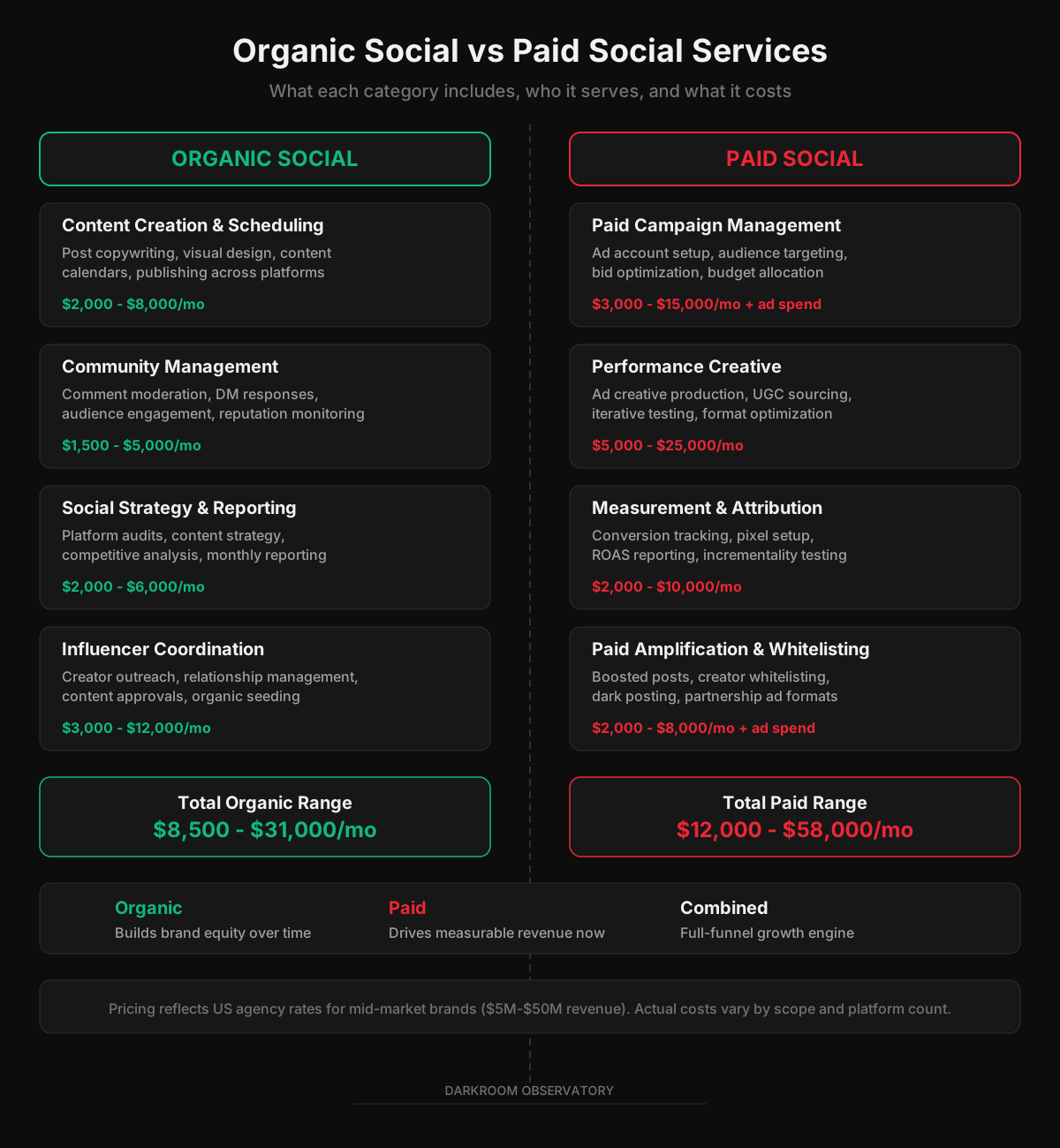
Every social media marketing service falls into one of six operational categories. Some agencies offer all six. Some specialize in one or two. The distinction matters because each category has different cost structures, different timelines to ROI, and different skill requirements.
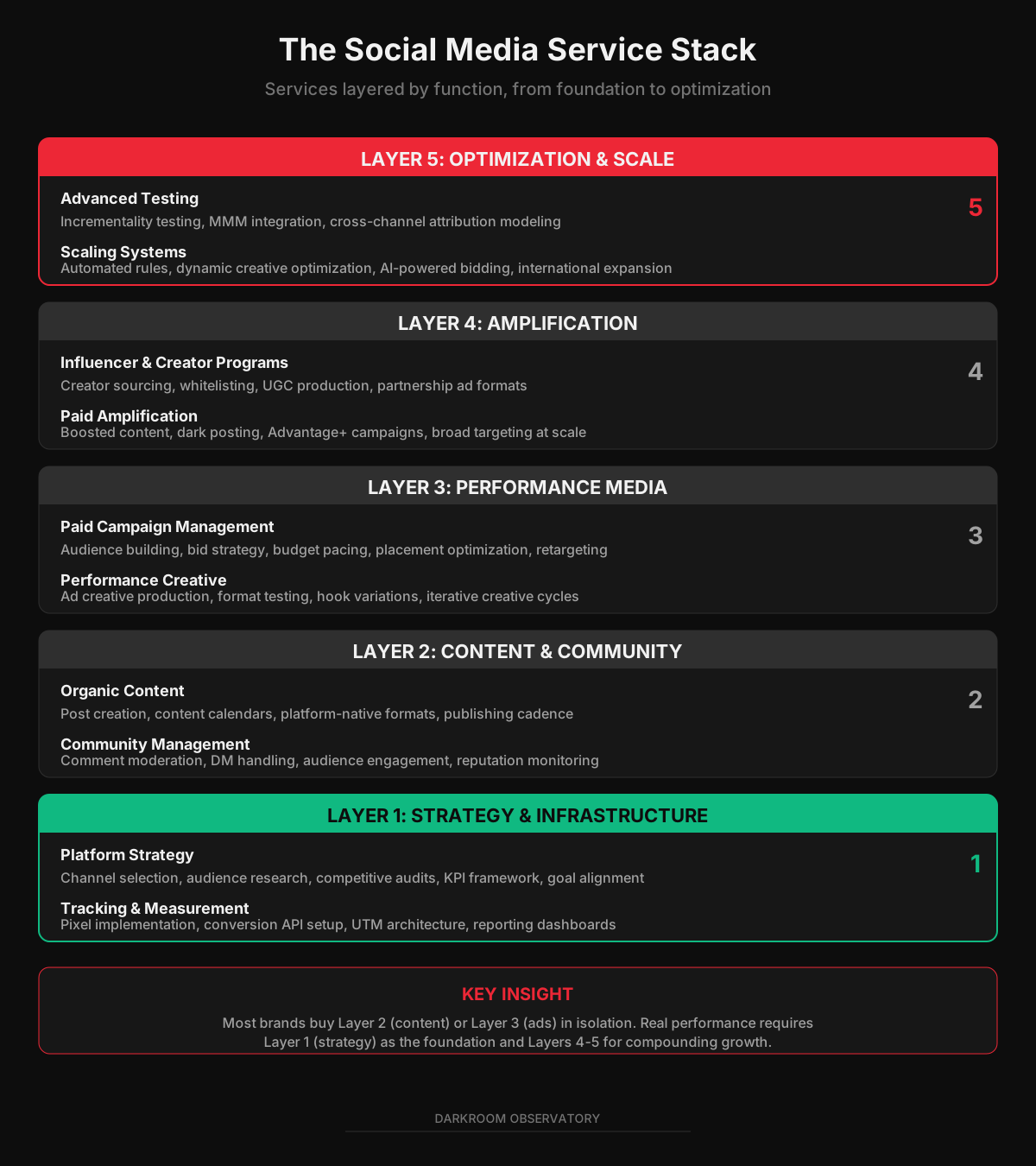
1. Strategy and planning. This is the foundation layer. It includes platform selection, audience research, competitive analysis, content strategy development, KPI frameworks, and goal alignment. Strategy work typically happens at the beginning of an engagement and gets revisited quarterly. Without it, everything else is guesswork. The cost runs $2,000 to $8,000 per month as part of a retainer, or $5,000 to $25,000 as a standalone audit and roadmap.
2. Organic content production. Post copywriting, visual design, video production, content calendar management, and publishing across platforms. This is what most people think of when they hear "social media marketing." It builds brand presence over time but rarely drives direct revenue on its own. A competent organic program costs $3,000 to $10,000 per month depending on volume and platform count.
3. Community management. Comment moderation, DM responses, audience engagement, reputation monitoring, and crisis response. This is the operational backbone that keeps your social presence functional. Most brands underinvest here. Community management costs $1,500 to $5,000 per month for a dedicated resource.
4. Paid media management. Ad account structure, audience targeting, bid optimization, budget allocation, placement testing, and campaign management across platforms like Meta, TikTok, Pinterest, and Snapchat. This is where the revenue engine lives. Paid media management costs $3,000 to $15,000 per month in management fees, plus your ad spend budget on top.
5. Performance creative. Ad creative production, UGC sourcing and editing, format testing, hook variations, iterative creative cycles, and creative fatigue management. This category has become the single biggest lever in paid social performance. Platform algorithms are commoditizing targeting. Creative is the variable that determines whether campaigns scale or stall. Performance creative programs cost $5,000 to $25,000 per month.
6. Measurement and reporting. Conversion tracking, pixel and CAPI implementation, UTM architecture, reporting dashboards, attribution modeling, and incrementality testing. This category is chronically underfunded. Brands spend $50,000 per month on ads and $0 on verifying whether those ads actually work. Measurement programs cost $2,000 to $10,000 per month.
Every "social media marketing services" proposal you receive will contain some combination of these six categories. The question is which ones you need.
Organic Social vs Paid Social: What Each Actually Delivers
The biggest source of confusion in social media marketing services is the blurred line between organic and paid.
Organic social builds brand equity. It puts your brand in front of followers, creates touchpoints that reinforce your positioning, and gives you a content library that supports every other marketing channel. What organic social does not do, in most cases, is drive direct revenue at scale. Organic reach on Instagram and Facebook has declined to single-digit percentages of your follower base. On TikTok, organic reach is higher but conversion intent is lower. Organic is a long game.
Paid social drives measurable outcomes. It puts your message in front of specific audiences with specific intent signals, and it does so on a timeline you control. Paid is where acquisition economics live. When Sprout Social's industry benchmarks show that the average social media ad generates measurable engagement within 48 hours, they're talking about paid. Organic takes months to compound.
The mistake brands make is treating these as interchangeable. An agency that specializes in organic content creation is not equipped to manage a $200,000 monthly ad budget. An agency built for paid media buying may produce terrible organic content because that's not where their talent or processes live.
When evaluating social media marketing services, the first question is simple: are you buying brand building or revenue generation? The answer determines which service categories matter most.
What Brands Actually Need at Each Growth Stage
Your growth stage determines which services are table stakes and which are premature.
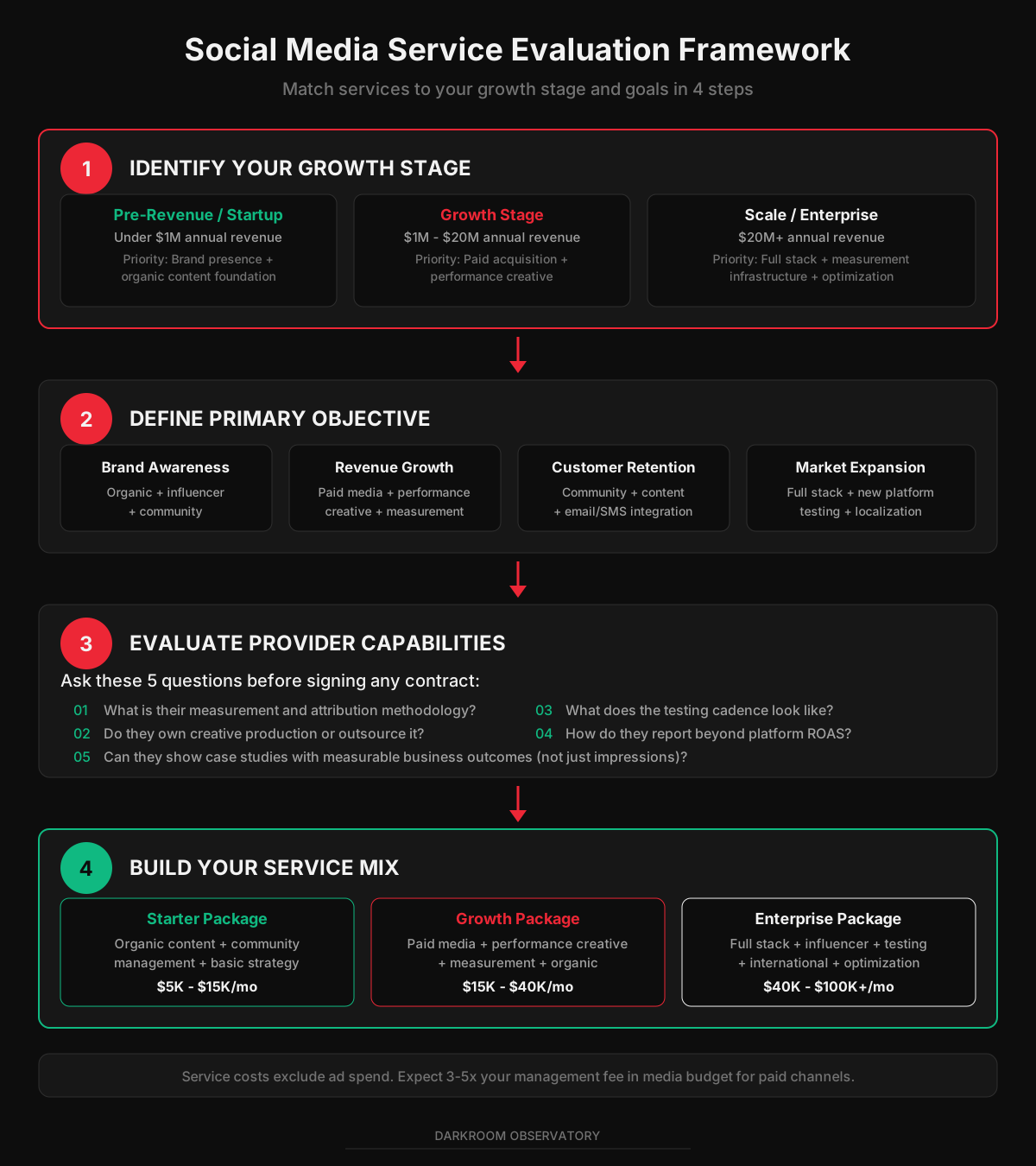
Early-stage brands (under $1M in annual revenue) need organic content, basic community management, and a platform strategy. That's it. Investing in paid media before you have product-market fit and a converting website is burning cash. Your social presence at this stage should build credibility and give prospects somewhere to validate your brand. Budget $3,000 to $8,000 per month.
Growth-stage brands ($1M to $20M) need paid media management and performance creative on top of their organic foundation. This is where social media marketing becomes a revenue channel, not just a brand channel. You should be running campaigns on Meta and at least one secondary platform, testing creative at volume, and tracking actual business outcomes beyond platform ROAS. Budget $15,000 to $40,000 per month in management fees and creative, plus ad spend.
At scale ($20M+), you need the full stack. Organic, paid, creative, community, measurement, and likely influencer programs too. The complexity increases because you're optimizing across platforms, testing new channels, managing creative fatigue across dozens of active ad sets, and running measurement programs like incrementality testing to verify that your spend is actually incremental. This is where a full-funnel marketing system becomes necessary.
The common mistake at every stage is buying services one level above where you actually are. Growth-stage brands buying enterprise measurement. Early-stage brands buying paid media programs before their site converts. Match the services to the stage.
Dimension | Organic Social | Paid Social |
|---|---|---|
Timeline to Results | 3–6 months for meaningful traction | Immediate visibility within 24–48 hours |
Cost Structure | Content production + labor hours | Ad spend + management fees |
Audience Reach | Limited to followers and algorithm distribution | Precise targeting across entire platform |
Best Use Case | Brand building, community trust, loyalty | Acquisition, retargeting, product launches |
Measurability | Engagement metrics, indirect attribution | Direct ROAS, CPA, and conversion tracking |
Content Lifespan | 24 hours to 7 days depending on platform | Active only while budget is allocated |
Scalability | Linear — more output requires more labor | Exponential — increase spend to scale reach |
How Performance Creative Changed the Service Landscape
Three years ago, paid social performance was primarily a targeting and bidding game. That era is over. Our research on best performance marketing agencies in 2026 provides additional context for this approach.
Platform algorithms have commoditized audience targeting. Meta's Advantage+ campaigns, TikTok's Smart Performance Campaigns, and similar tools across platforms now handle audience selection, bid optimization, and placement allocation automatically. The variable that differentiates performance is creative. See our analysis of why agency-brand relationships break in 90 days for the complete framework.
This shift has fundamentally changed what social media marketing services need to include. A paid media management service without a performance creative component is incomplete. You're managing campaigns where the single biggest lever is the ad itself, and the service doesn't include producing or testing that ad. We explore this dynamic in detail in leading performance creative agencies.
HubSpot's State of Marketing report found that short-form video content generates more ROI than any other content format. That aligns with what performance teams see in the data. Video-first creative, particularly UGC-style content built for paid social, outperforms polished brand creative in direct response campaigns by wide margins.
The implication for service evaluation: any agency offering paid media management should demonstrate a creative testing methodology. How many creative variants do they test per month? What is their process for identifying winning hooks? How do they combat creative fatigue? If the answer is "we run your existing assets," that's not a performance creative service. That's media buying without the most important input.
The Measurement Gap Most Brands Ignore
Measurement is the most undervalued category in social media marketing services.
The typical engagement looks like this: a brand hires an agency for paid media management. The agency sets up campaigns, runs them, and sends a monthly report showing platform ROAS, CPA, and spend. The brand sees a 3:1 ROAS and assumes things are working. Nobody questions whether those numbers reflect actual business impact.
Platform attribution is structurally biased. Meta counts view-through conversions. Google credits brand searches to paid. TikTok attributes conversions within generous windows. Every platform overreports its own impact because that's what keeps advertisers spending. This is not controversial. It's the economic structure of the industry.
A proper measurement service includes conversion tracking audits (are your pixels actually firing correctly?), server-side tracking via Conversion API, UTM architecture that lets you see channel-level performance in your own analytics, and attribution methodology that goes beyond what the platform self-reports. At higher spend levels, it includes incrementality testing and media mix modeling.
According to Meta Business Suite documentation, their recommended setup now includes both pixel and Conversions API implementation for accurate tracking. Brands running pixel-only tracking are systematically undermeasuring performance on iOS users since the ATT rollout. That's not a minor gap. It's a structural hole in your data.
When evaluating social media marketing services, ask the measurement question first. If an agency can't articulate their attribution methodology beyond "we report platform ROAS," you're flying blind on whether the service is working.
How to Evaluate and Compare Service Providers
The evaluation process for social media marketing services should be structured around five criteria.
Service scope alignment. Does the provider cover the specific categories you need? A content-first agency will not run effective paid campaigns. A media buying shop will not produce strong organic content. Match the provider's core competency to your primary need. If you need multiple categories, either find a full-service partner or build a coordinated stack of specialists.
Creative capability. Ask to see their creative output. Not their case study deck. Their actual ads. Their actual organic posts. The quality of creative is the single biggest predictor of campaign performance. If the creative looks generic, the results will be generic.
Measurement rigor. Ask how they measure success beyond platform metrics. Ask about their attribution methodology. Ask whether they run incrementality tests. The agencies that invest in measurement are the ones confident enough in their results to prove them. The ones that don't are hiding behind dashboard numbers.
Testing velocity. How many creative tests do they run per week? What is their iteration process? How quickly do they kill underperformers and scale winners? Social media moves fast. An agency that tests 3 creatives per month is operating at a fraction of the speed the platforms demand. You want partners testing 10 to 30 variants per week across formats and hooks.
Reporting transparency. Can you see the raw data? Do you own the ad accounts? Are reports built on platform data you can verify, or do they only come through the agency's proprietary dashboard? Transparency is non-negotiable. If an agency won't give you admin access to your own ad accounts, that's a red flag that belongs in a different century.
What a Complete Social Media Service Engagement Looks Like
A well-structured social media marketing engagement combines the right service categories with the right cadence.
Month one is strategy and setup. Platform audits. Audience research. Competitive analysis. Tracking implementation. Account structure. Creative briefs. This month rarely produces visible results, and that's fine. It's the foundation everything else builds on.
Months two and three are launch and learn. Campaigns go live. Creative testing begins. Organic content calendars start publishing. Community management protocols activate. The focus is on gathering data, not on hitting aggressive targets. You're learning what resonates with your audience, which platforms perform, and where the opportunities are.
Months four through six are optimization. Creative winners get scaled. Underperforming platforms get reduced or cut. Budget shifts toward the highest-performing channels. Reporting cadence stabilizes. This is where the distinction between growth marketing and performance marketing becomes real. Growth marketing pushes into new channels and audiences. Performance marketing optimizes what's already working.
Months six and beyond are compounding. The creative library is deep. The data is rich. Testing velocity increases because you know what works. Measurement becomes sophisticated enough to identify true incrementality. This is where brands see the return on their investment in a full-service social media program.
The timeline matters because brands that expect results in 30 days will be disappointed. Social media marketing services produce compounding returns, not instant ones. The brands that win are the ones patient enough to build properly and disciplined enough to measure accurately.
Common Pricing Models and What They Actually Mean
How an agency charges tells you more about their business model than their pitch deck does. For related insights, see our guide to how to choose a growth marketing agency.
Flat retainer. The most common model. You pay $X per month for a defined scope of work. The upside is predictability. The downside is that scope creep becomes a constant negotiation. Flat retainers work best when the scope is clearly defined and the deliverables are concrete. They work poorly when the engagement is performance-focused, because the agency has no financial incentive to improve results.
Percentage of ad spend. Common in paid media management. The agency charges 10-20% of your monthly ad spend as their management fee. This aligns incentives somewhat. The agency benefits when you spend more, which means they're incentivized to scale. The risk is that the agency pushes for higher budgets regardless of whether the incremental spend is profitable. Ask for incrementality data alongside budget recommendations.
Performance-based. The agency charges based on outcomes: cost per acquisition, revenue share, or similar metrics. This sounds ideal but carries risks. Agencies on performance models will optimize for whatever metric determines their payment, which may not align with your broader business goals. A CPA-based model incentivizes the agency to drive cheap conversions, not necessarily profitable ones.
Hybrid. A base retainer plus performance bonuses. This is the model that most closely aligns agency and brand incentives. The retainer covers the agency's operational costs. The performance component rewards results. The key is defining the performance metrics correctly. Tie bonuses to business outcomes, not platform metrics.
Regardless of model, the total investment for a mid-market brand running serious social media marketing services typically falls between $15,000 and $50,000 per month in management and creative fees, plus ad spend. Brands spending less than $10,000 per month in management fees are usually getting limited service scope or junior talent. That's the market reality.
Frequently Asked Questions
What's the difference between a social media manager and a paid media manager?
A social media manager handles organic content: creating posts, managing the content calendar, responding to comments, and growing followers. A paid media manager handles advertising: building campaigns, managing budgets, optimizing targeting, and driving measurable conversions. These require completely different skill sets. A strong organic content creator is rarely a strong media buyer, and vice versa. Treat them as separate roles, whether in-house or agency-side.
How much should I spend on ad budget vs management fees?
A common benchmark is 3:1 to 5:1 ad spend to management fee. If your management fee is $10,000 per month, your ad budget should be $30,000 to $50,000 per month. Below that ratio, the management overhead eats too much of your total investment. Above it, you may need a larger team to manage the volume effectively. The ratio shifts at higher spend levels, where management fees decrease as a percentage.
Do I need to be on every social platform?
No. Most brands perform best by dominating 2-3 platforms rather than spreading thin across 6. For ecommerce and DTC brands, Meta (Instagram + Facebook) and TikTok cover the majority of the addressable market. B2B brands typically need LinkedIn and potentially YouTube. Platform selection should be based on where your customers spend time and where the advertising infrastructure supports your objectives. Spreading budget across too many platforms dilutes both organic and paid performance.
Should I hire in-house or use an agency for social media marketing?
It depends on your scale and needs. In-house works well when you need brand-specific voice consistency, fast turnaround on organic content, and tight integration with other marketing functions. Agencies work well when you need specialized expertise in paid media, access to a larger creative team, and the ability to scale output without hiring. Many brands use a hybrid model: in-house organic and community management, agency for paid media and performance creative.
How long before I see results from social media marketing services?
Paid campaigns can generate measurable results within 2-4 weeks of launch, though optimization typically requires 60-90 days of data before campaigns hit their stride. Organic social takes 3-6 months to build meaningful reach and engagement. Influencer programs show results within 30-60 days per campaign but require ongoing investment to compound. Set expectations by service category, not by the engagement as a whole.
What's the biggest red flag when evaluating a social media agency?
The biggest red flag is when an agency won't give you admin access to your own ad accounts. This means they control your data, your audiences, your pixel, and your campaign history. If you leave, you start from scratch. Every legitimate social media marketing service provider operates in accounts you own. No exceptions.
Can I start with organic only and add paid later?
Yes, and for early-stage brands, this is often the right approach. Build your organic presence first. Develop your content voice. Build a small but engaged audience. Then, when you're ready to invest in paid, you'll have creative assets to test, an audience to model lookalikes from, and social proof that makes your ads more credible. Starting with paid before you have any organic presence means your ads drive traffic to an empty social profile, which hurts conversion rates.
Invest in the Services That Match Your Stage
Social media marketing services are not one-size-fits-all. The brand spending $500,000 per month on Meta ads needs a fundamentally different service mix than the brand launching its Instagram profile for the first time. The services themselves are straightforward. The challenge is matching them to your actual stage, goals, and budget rather than buying whatever bundle an agency happens to sell.
Start with strategy. Know what you need before you buy it. Evaluate providers on their specific capabilities, not their general pitch. And measure everything with your own data, not just what platforms report back to you.
The brands that get the most from social media marketing services are the ones that understand what they're buying and why. That clarity is worth more than any individual tactic.
Ready to build a social media program around real business outcomes? Book a call with Darkroom to discuss which services match your growth stage and how paid media management, performance creative, and measurement can work together in your marketing stack.