
Social Commerce
What Happens When a TikTok Shop Agency Actually Operates Like a Growth Team




Written by Darkroom leardership

Written & peer reviewed by 4 Darkroom team members
TikTok Shop is not a marketplace you log into and start selling. It requires content production at scale, creator management, live commerce operations, fulfillment logistics, and platform-specific ad buying. Most brands lack this operational infrastructure and waste 3-6 months learning through failure. The right agency brings the operational playbook from day one, compressing your learning curve and protecting your initial capital.
The Problem With Thinking TikTok Shop is Just Another Marketplace
When most brands think about TikTok Shop, they imagine a platform like Amazon or Shopify. Log in. List products. Run ads. Make sales. This is why Darkroom approaches social commerce as a systems problem. This mental model is the first failure point.
TikTok Shop is fundamentally different. It's not a marketplace where discovery happens through search and category browse. It's a social network where discovery happens through creator relationships, live commerce events, and algorithmic content feeds. The operating model is inverted from everything brands know.
Your Shopify store lives on your domain. You own the relationship with the customer. Your TikTok Shop lives inside TikTok's ecosystem. The algorithm owns the relationship. Your job is to feed the algorithm with the right content, through the right creators, at the right moments.
This is why brands fail. They approach TikTok Shop with a traditional e-commerce playbook. They don't fail because TikTok Shop is broken or demand doesn't exist. They fail because they're missing the operational infrastructure to execute in a social-first environment.
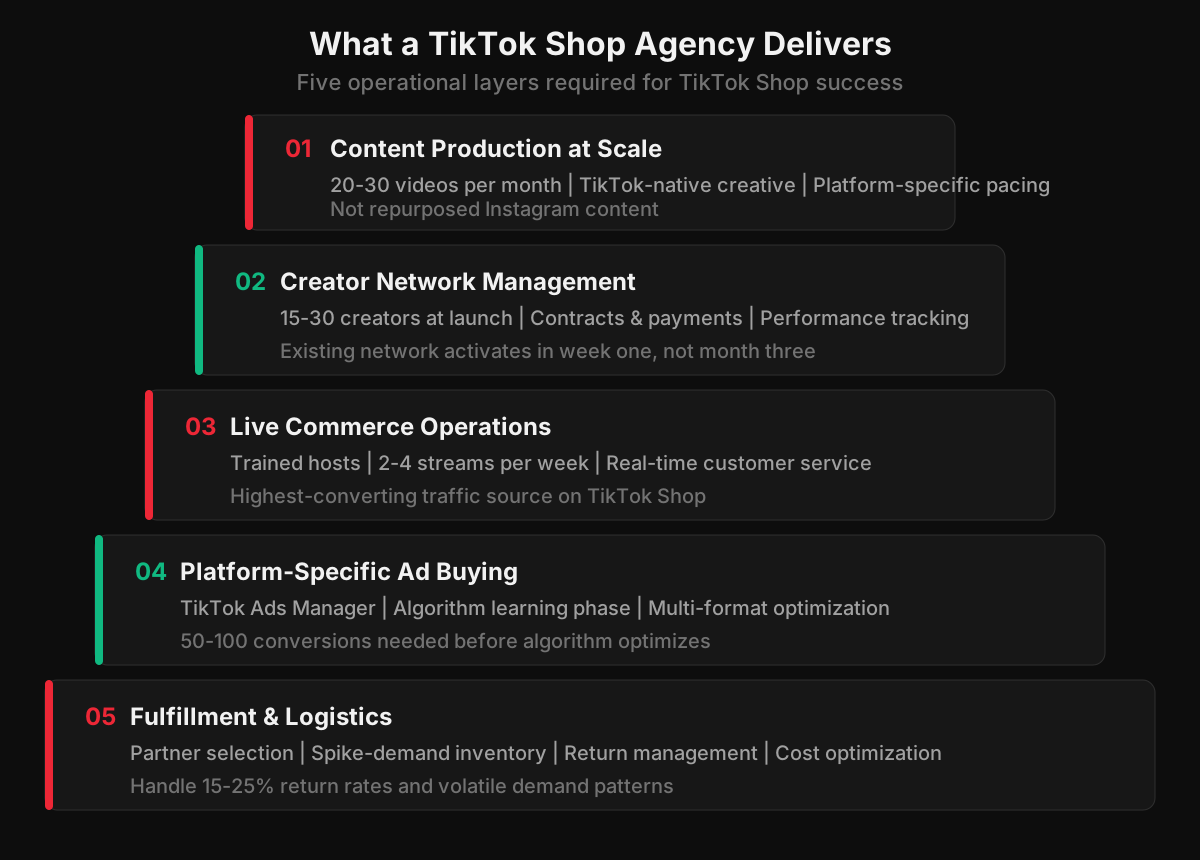
What TikTok Shop Actually Requires Operationally
Let's be specific about what you need in place before launch.
First, content production at scale. Not static product photos. Video content. You need 20-30 pieces of authentic, short-form video content ready to deploy in your first month. This is not your Instagram content repurposed. TikTok has different creative codes, different aspect ratios, different pacing. Most brand teams have never made video at this velocity.
Second, creator management. TikTok Shop success is built on creator-driven sales. You need relationships with 10-50 TikTok creators in your category who understand your products and can drive sales through their audiences. You need contracts. You need payment terms. You need creative briefs. You need performance metrics. Most brands have zero creator relationships and no playbook for building them.
Third, live commerce operations. TikTok Shop's highest-converting traffic comes from live commerce events. You need to run 2-4 live streams per week. Each stream requires a host, product selection, logistics coordination, and real-time customer service. This is not a feature you toggle on. Working with a TikTok Shop agency can help navigate this effectively. This is a weekly operational cadence you need to sustain.
Fourth, fulfillment logistics. You can use third-party fulfillment through Shopify or Amazon FBA, but you need to select the right option, negotiate terms, and manage inventory based on demand forecasting. This is different from your DTC store because demand patterns are different. TikTok Shop demand is more volatile and less predictable.
Fifth, platform-specific ad buying. TikTok Ads Manager is not the same as Facebook Ads Manager. The optimization logic is different. The audience targeting is different. The creative requirements are different. You need someone who has spent at least 100K in TikTok Shop ads and understands the nuances.
Each of these is a full competency. Most brand teams have one or two. They rarely have all five.
The Cost of Learning by Failure
Here's what happens when you launch without this infrastructure.
Month one: You list products. You realize your product photos don't work on TikTok. You scramble to create video content. You spend money on ads with no creator relationships to drive sales. Your ROAS is terrible. You learn that TikTok Shop is hard.
Month two: You hire a TikTok creator. They don't understand your product. You go back and forth on creative briefs. Two weeks are wasted. The creator finally publishes something. The video gets low engagement. You move on. You learn that creator management is hard.
Month three: You run your first live stream. You don't have enough inventory. You run out of popular SKUs. The stream is awkward. You're trying to sell while learning how to host. You get negative comments. You lose confidence. You learn that live commerce is hard.
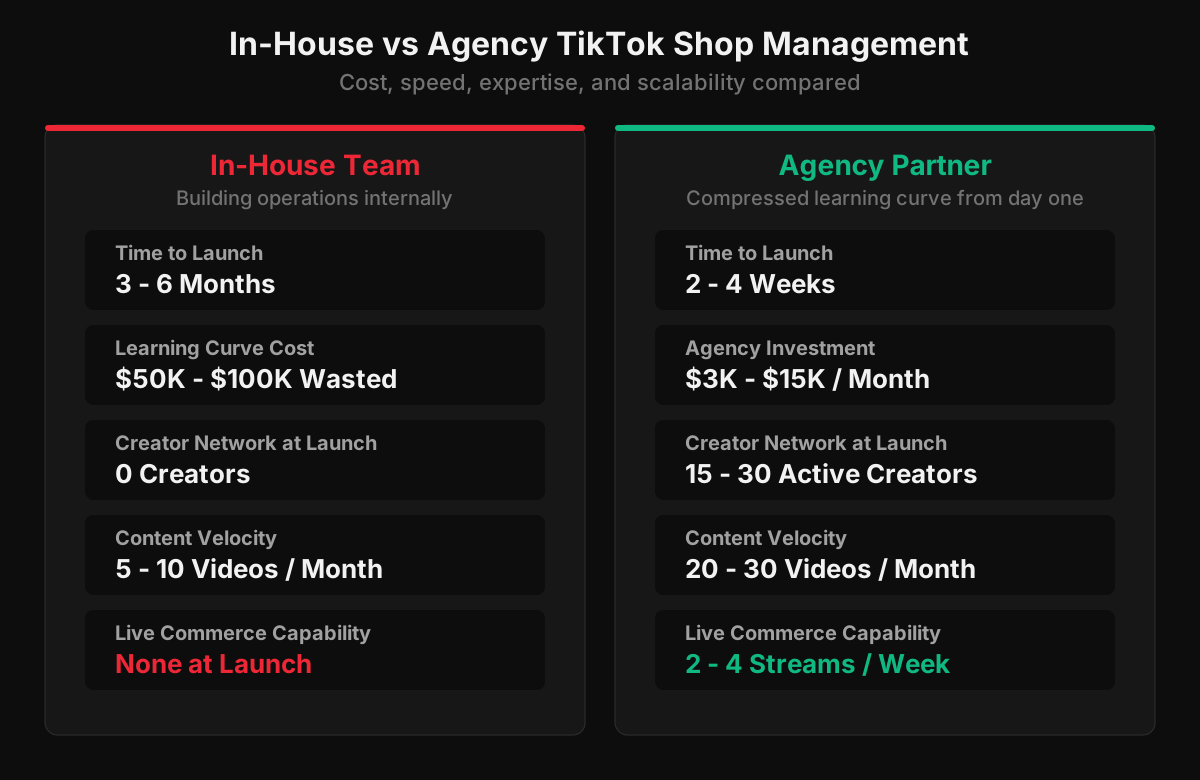
Months four, five, six: You're still trying to figure out the basics. You've spent 50-100K in budget learning what an agency would have known in week two.
This is the learning curve compression problem. An agency that has built TikTok Shop for 20 brands knows the mistakes you're going to make before you make them. They have templates. They have creator networks. They have ad account optimization playbooks. They have live commerce hosting talent. They compress six months of learning into two weeks of implementation.
For most brands, this compression is worth the investment.
Why Agencies Matter More for TikTok Shop Than Other Channels
Some channels you can figure out on your own. Google Ads is documented. Facebook Ads is mature. The learning curve still exists, but it's smaller.
TikTok Shop is different because it requires an operations team, not just a channel expert. You need content people, creator people, fulfillment people, and advertising people all executing a synchronized playbook. A single person cannot own this. A small team distributed across functions will not coordinate well. Working with a performance creative can help navigate this effectively. You need a dedicated, specialized team.
Most agencies don't offer this. Most offer social media management or performance marketing. They add TikTok Shop as a line item. This is cosmetic. What you need is an agency that treats TikTok Shop as its own business unit, with dedicated people and dedicated resources.
Darkroom's approach is different. We staff TikTok Shop clients with a dedicated team. Content producer. Creator manager. Live commerce host. Ad buyer. Account lead. Each person is full-time on your account, not split across five clients. This is why the learning curve compression actually works. You get a real operations team, not a service overlay.
The Creator Network Advantage
If you launch TikTok Shop alone, you start with zero creator relationships. Building them from scratch takes time. You'll reach out to creators with low follower counts. They'll take weeks to respond. You'll pay them. They'll produce mediocre content. You'll try again with different creators. This cycle repeats for months.
An agency that has built TikTok Shop for multiple brands already has a creator network. They know creators who convert. They have existing relationships. They can activate these creators in week one.
This is a legitimate unfair advantage. A brand starting with 20 active creators has a completely different outcome than a brand starting with zero. The revenue difference in month one is 2-3x higher. The learning happens faster. The playbook tightens.
This is worth thinking about when you evaluate agencies. Ask how many creators they have in your category. Ask for case studies showing creator-driven revenue. Ask how they manage creator relationships and payments. The depth of their creator network directly impacts your success.
Fulfillment and Logistics Setup
TikTok Shop fulfillment seems straightforward on the surface. Pick a fulfillment partner. Integrate your inventory. Start shipping. Working with a growth marketing services can help navigate this effectively. But there are hidden complexities.
First, inventory management on TikTok Shop is different from inventory management on your DTC store. TikTok Shop traffic is spiky and volatile. A creator goes live and drives 500 orders in 20 minutes. Your inventory model needs to handle this spike. Most fulfillment setups are optimized for steady-state demand, not spike-driven demand.
Second, return rates on TikTok Shop are higher than on traditional e-commerce channels. This is partly because TikTok's audience is younger and more price-sensitive. It's partly because the impulse-to-purchase ratio is higher. You need to plan for 15-25% returns, not 5-10%. Your logistics partner needs to handle this.
Third, fulfillment costs eat profits on lower-ticket items. If your average order value is under 50 dollars and your cost per shipment is 8-12 dollars, your margin is compressed. You need to optimize either your AOV or your fulfillment cost. This usually means bundling products or using a fulfillment partner that specializes in lower-ticket item volume.
An agency helps you model these dynamics before launch. They help you select a fulfillment partner that understands TikTok Shop's demand patterns. They help you negotiate terms that work for your margin structure. This is not glamorous work, but it's the difference between profitability and margin death.
Ad Buying and the ROAS Trap
Most brands launching TikTok Shop run ads immediately. They see a ROAS target from Facebook Ads that worked on Meta and apply the same logic. They run ads, they don't see results, they increase spend, they panic.
TikTok Shop ads have a different optimization curve. They start slow. For the first two weeks, you're building algorithm data. You're teaching TikTok's system what your customer looks like. Until you have 50-100 conversions in your audience, the algorithm is learning, not optimizing.
Most brands don't have the capital or patience to get to 100 conversions. They see weak ROAS for two weeks and kill the campaign. They conclude TikTok Shop ads don't work. What actually happened is they didn't wait for the algorithm to learn.
An experienced TikTok Shop ad buyer knows this. They run budgets that sustain through the learning phase. They manage expectations internally. They adjust creative and audience mix based on signals that the algorithm is working, not based on immediate ROAS. This is why ad buying experience matters.
Second, TikTok Shop ads work differently with high creator-driven sales. When a creator goes live and drives sales, your organic TikTok Shop traffic spikes. This spike affects your ad performance. Your algorithm sees conversion signals coming from multiple places. The attribution gets fuzzy. You need an ad buyer who understands this multi-source reality and can optimize within it.
Third, TikTok Shop has specific ad formats that are unique. Catalog ads. Product ads. Show ads. Dynamic product ads. Not all brands need all of these. Most brands start with the wrong mix. An experienced buyer knows which format to start with based on your business model.
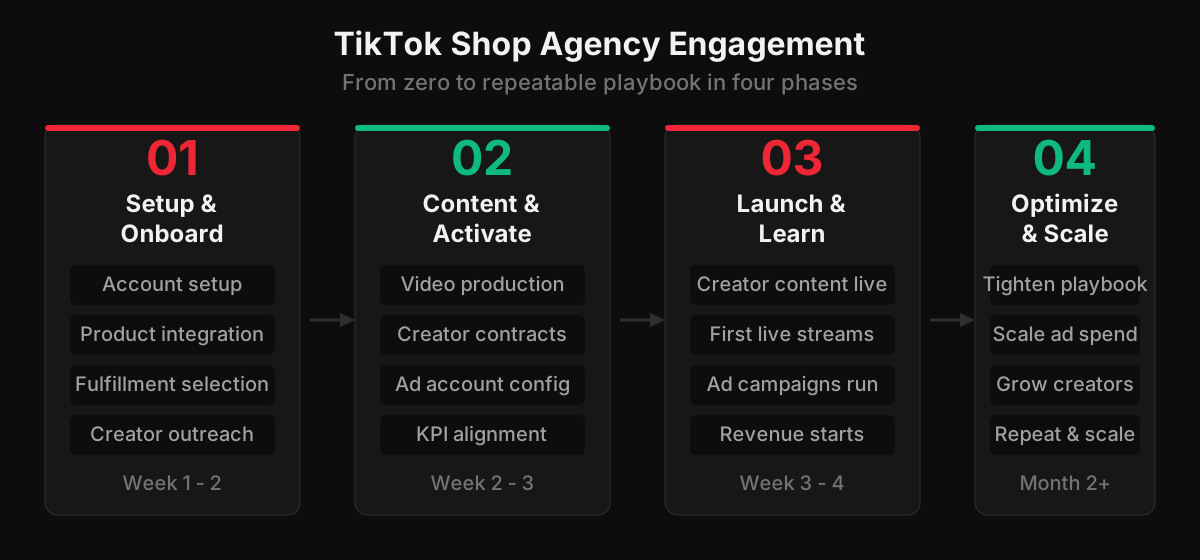
The Timeline and Expected Outcomes
Here's what realistic outcomes look like when you work with an experienced agency from day one.
Week one: Account setup. Product integration. Fulfillment partner selection. Creator outreach begins.
Week two: Content production starts. Creator contracts are signed. Ad accounts are configured. Strategy call with your team to align on KPIs.
Week three: First wave of creator content goes live. Organic TikTok Shop traffic begins. Ad campaigns launch with small budgets.
Week four: First creator goes live. Revenue happens. You learn what works.
Months two and three: Playbook tightens. You understand which creators drive ROI. You understand which product mix performs. Ad budgets increase with confidence. Revenue scales.
Month three and beyond: You have a repeatable playbook. Creators are converting. Fulfillment is humming. Ads are profitable. You're not learning anymore. You're optimizing.
Revenue outcomes depend on your product, your price point, and your creator network. A brand with 100-dollar AOV and high-converting creators can hit 100K-200K in month one revenue. A brand with 30-dollar AOV will be lower. But the trajectory is similar. You go from zero to operational in four weeks instead of four months.
This is the agency advantage. Not magic. Just compression.
Evaluating Your Agency Options
Not all agencies are equipped for TikTok Shop. Here's what to look for.
First, ask about dedicated resources. Not a service. Not a part-time layer. Do they have full-time content producers, creators managers, and ad buyers? If they're offering TikTok Shop as a bolt-on to their social media service, pass.
Second, ask about their creator network. How many creators do they work with in your category? Can they activate creators in week one? If they're still finding creators after launch, you're doing the hard work yourself. Their job is to compress your learning curve, not to learn on your account.
Third, ask about case studies and revenue outcomes. Agencies should be transparent about results. Not just vanity metrics like engagement. Real revenue. Real ROAS. Real AOV. If they won't share numbers, they don't have good numbers.
Fourth, ask about their fulfillment and logistics expertise. Do they help with this, or do they treat it as your problem? If they're not digging into fulfillment partner selection and negotiation, they're missing a key lever.
Fifth, ask about their account management approach. Who is your point person? Are they working on multiple clients at the same time? Are they specialized in TikTok Shop, or is TikTok Shop one of five things they manage? Your success depends on your account having dedicated, specialized leadership.
Sixth, understand the cost. TikTok Shop agencies charge in different ways. Some charge percentage of ad spend. Some charge retainers. Some charge percentage of revenue. Understand what you're paying for. Understand what happens to your economics at different revenue levels.
When You Should Skip the Agency
Not every brand needs an agency. If you already have the infrastructure, you might not.
If you have in-house content producers making TikTok-native video daily, you might be able to skip the agency. If you already have relationships with 50 TikTok creators, you might be able to skip the agency. If you have someone who has spent 500K plus on TikTok Shop ads for other brands, you might be able to skip the agency. If you're willing to run 3-4 live streams per week in-house, you might be able to skip the agency.
If you have all four of these, yes, you can launch TikTok Shop without an agency. But most brands don't have all four. Most have one or two. If you're missing more than one, the agency is probably the accelerant you need.
There's also the question of speed versus cost. Launching TikTok Shop without an agency is cheaper. You do the work yourself. But it takes longer. The opportunity cost might be higher than the agency cost. If your market is moving fast, if competitors are already selling on TikTok Shop, if your board is pushing for new channel growth, the agency cost is worth it. If you have six months to figure it out, maybe you can skip it.
Frequently Asked Questions
How much should we budget for TikTok Shop with an agency?
Budget for both agency fees and ad spend. Agency fees typically range from 3,000 to 15,000 per month depending on service scope and your brand size. Ad spend should start at 5,000 to 10,000 per month to give the algorithm enough signal to learn. Many brands find the total investment pays back within 60-90 days if they have viable product-market fit. The real question is not how much to spend, but how much revenue you're leaving on the table by waiting to launch.
How long until we see real revenue?
Real revenue should start in week three to week four. It won't be your target revenue yet, but you should see sales moving. Creator-driven sales will start first because creators don't have the learning curve that ad algorithms do. By month two, if your playbook is right, you should be doing 20K to 50K per week depending on your price point and creator network. If you're not seeing revenue by week four, something is broken in your product mix, pricing, or creator content.
What products work best on TikTok Shop?
High-volume, lower-ticket items work best. Apparel, beauty, home goods, fitness accessories, niche lifestyle products. TikTok's audience skews younger and price-sensitive. Products under 100 dollars with clear benefits perform better than luxury items or B2B products. Products with a story or a community behind them perform better than commodity products. If your product is polarizing, TikTok Shop is actually good for you because creators can build passionate audiences. Avoid boring utility products.
Can we do TikTok Shop without giving up margin to creators?
No. Creator commissions are real. Most creators take 10-25% of the sale price or ask for upfront fees. This is part of the TikTok Shop cost structure. Plan for creator costs in your unit economics. The good news is that creator-driven sales have lower customer acquisition cost than paid ads. So even after creator commission, your margin can be better than ad-driven revenue. But you can't avoid paying creators if you want volume.
What happens if we launch TikTok Shop, hate it, and want to kill it?
You can pull down your shop and move on. But you shouldn't think about it as binary. TikTok Shop is a channel. You're not betting the company. You're testing a new growth lever. Most brands should commit to 90 days of real execution before deciding it's not working. If you kill it in week two because of weak ROAS, you're not giving yourself a fair chance. If you kill it in month four and still have zero revenue, then it's broken.
Should we use the same fulfillment partner for TikTok Shop as our DTC store?
Maybe, but evaluate carefully. TikTok Shop has spiky, unpredictable demand. Some fulfillment partners handle this well. Some don't. If your DTC partner is already stretched thin, adding TikTok Shop volume might slow down both channels. Consider testing with a dedicated third-party fulfillment partner first to isolate the demand pattern, then consolidate if it makes sense. The operational isolation is worth the extra cost in the short term.
How many creators should we work with at launch?
Aim for 15-30 creators in your first month. This gives you enough content volume to feed the algorithm consistently without spreading yourself too thin on management. Quality matters more than quantity. Five amazing creators will outperform fifteen mediocre ones. Prioritize creators who already have loyal audiences in your category over creators with large followings but low engagement. By month two, you'll know which creators are converting and can adjust.
Ready to Compress Your TikTok Shop Learning Curve Most brands waste 3-6 months learning what an experienced agency knows in week two. The right partner brings the operational playbook from day one. Book a call with Darkroom.