
SOCIAL COMMERCE
Why TikTok Shop Fails When Brands Treat It Like Another Marketplace




Written by Darkroom leardership

Written & peer reviewed by 4 Darkroom team members
TikTok Shop fails for brands that apply traditional marketplace strategies. The platform is discovery-first, not search-first. Purchase intent is created by content, not discovered through keyword searches. Successful brands abandon the Amazon/Shopify playbook and build instead a content-commerce operating model where content drives discovery, engagement creates desire, and commerce becomes the natural endpoint. At Darkroom, we build these systems for brands scaling on TikTok Shop. This requires different unit economics, different team structures, and different success metrics than legacy marketplace thinking. Understanding the true cost structure of selling on TikTok Shop is essential before committing resources.
The Marketplace Assumption Everyone Gets Wrong
TikTok Shop is not a marketplace. Working with a TikTok Shop costs for sellers can help navigate this effectively. It is a discovery engine that happens to have a checkout. This distinction matters more than any tactical optimization.
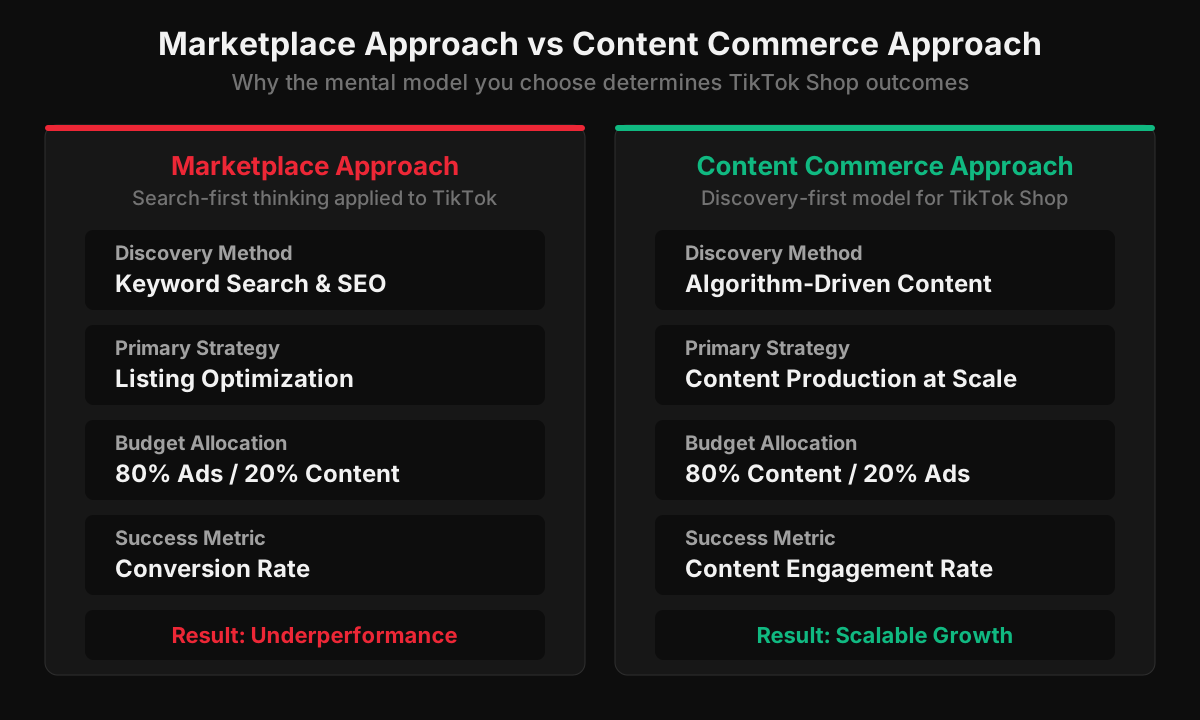
Most brands arrive at TikTok Shop with a familiar mental model: treat it like Amazon, Walmart.com, or Shopify. Optimize product listings. Run keyword-targeted ads. Manage review scores. Invest in SEO for your product titles. Repeat the playbook that worked for search-first commerce.
This assumption is foundational to why TikTok Shop underperforms for most sellers. This is why Darkroom approaches social commerce as a systems problem. The marketplace metaphor itself is a liability.
Why Search-Optimized Thinking Breaks Here
Search-first optimization assumes intent already exists. Working with a TikTok Shop management can help navigate this effectively. On TikTok, your content must create it. Keywords, product title SEO, and search ad bidding strategies miss the mechanism entirely.
In search-first commerce, the buyer is already looking for something. They type "running shoes," "office chair," or "bluetooth speaker" and your job is to show up for that query. Search-first channels reward merchants who understand buyer intent signals, keyword volume, and conversion rate optimization. Brands comparing platforms should review our analysis of TikTok Shop versus Amazon for DTC brands.
On TikTok, a user scrolling their For You Page is not searching for anything. They are being entertained, informed, or moved by content. The moment a product appears, it is not because they looked for it. It is because the TikTok algorithm decided this specific video had a chance to engage them, and that engagement might lead to a purchase if the content is compelling enough.
The buyer constructs intent during the content experience. Before they see your product, there is no intent to search for. After they watch your video, if it worked, purchase intent appears. That is the difference.
The Content-Commerce Operating Model
Brands that win on TikTok Shop run content as a profit center, not a cost center. This inversion changes everything.
Brands that succeed on TikTok Shop operate differently from their Amazon or Shopify equivalents. Working with a TikTok Shop vs Amazon can help navigate this effectively. They think in terms of content first, commerce second.
This means separate budgets, separate teams, and separate success metrics. A content-commerce team does not optimize for conversion rate on product pages (though that matters). They optimize for watch time on content, share rates, comment velocity, and how many viewers move from video to shop link. The product page becomes a natural conclusion, not the thing you are trying to rank.
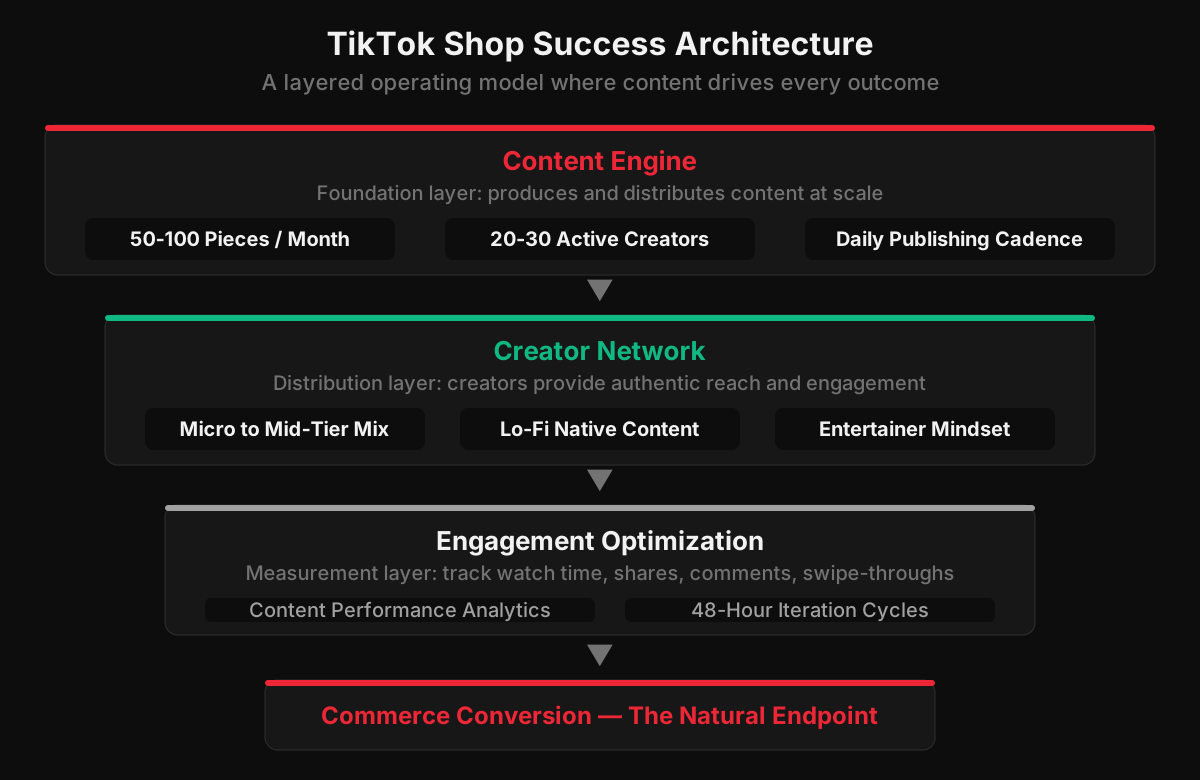
The operating model looks like this: invest heavily in content production. Test creative at scale. Identify which content themes, formats, and narratives generate genuine engagement. Route that engagement to TikTok Shop. Iterate on what sells, not on what ranks. The creative commerce loop for TikTok Shop ads explains this feedback cycle in detail.
At Darkroom, we build these systems for brands scaling on TikTok Shop. This requires different economics. You need more content budget, less search ad spend. You need creators or an internal creator program, not just product photography. You need analytics that track watch-through rates and swipe-up behavior, not keyword bid strategies.
Why Your Listing Optimization Does Not Matter
Product listings on TikTok Shop are conversion tools, not discovery tools. Treat them as such.
TikTok Shop gives you space to write product descriptions, pick categories, set pricing, and upload images. Working with a performance creative agency can help navigate this effectively. This is table stakes, not a competitive advantage.
A shopper reaching your product page is already warm. They watched content that convinced them to look closer. Once they are there, a well-written title and clear images help, but they are not the reason the sale happens. They are hygiene factors.
Brands spend weeks optimizing product listings for a platform that almost nobody searches. Search volume on TikTok Shop is minimal compared to the traffic flowing through content. Optimizing for the 5 percent of traffic that comes through search while ignoring the 95 percent that comes through content is a proportionality error.
The listing is the destination, not the journey. The video is the journey. If your video is weak, no amount of listing optimization fixes it.
The Creator Economy Is Not Optional
Creators are not marketing tactics. Working with a how to sell on TikTok Shop in 2026 can help navigate this effectively. They are the distribution network. Brands that outsource creator management to a fractional role fail.
One of the largest strategic gaps in how brands approach TikTok Shop is their relationship to creators.
In marketplace thinking, you do not need creators. You need SEO specialists, product photographers, and performance marketers. On TikTok, creators are the content engine. They are not a nice-to-have. They are the mechanism by which a product gets distributed, discovered, and sold.
Brands that treat creator partnerships as an add-on channel—trying the same five creators everyone knows—leave massive inventory unsold. Brands that build creator ecosystems around products discover new audiences, new use cases, and new content angles daily. Our guide on how to sell on TikTok Shop in 2026 covers creator onboarding step by step.
Creators do not think like marketers. They think like entertainers. This is their advantage. They know what will hold attention, what will elicit a laugh or a pause, what will make someone swipe up. The TikTok Creativity Program has further incentivized this behavior. If you onboard creators and ask them to "make professional" content, you have missed the point. The best content on TikTok Shop is often lo-fi, unexpected, and deeply personal.
How Success Metrics Must Change
The unit of economics is the content piece, not the transaction. One video can drive revenue across weeks or months, creating a long tail of sales.
Marketplace KPIs do not apply to content-commerce models.
If you track cost per acquisition on TikTok Shop using the same model as Amazon, you will conclude the channel is too expensive and kill it. Working with a growth marketing services can help navigate this effectively. You will miss that the true unit of measurement is content performance, not individual transactions.
A single piece of content might generate 2M views, 80K likes, and 30K swipe-ups, but only convert 5K to purchases. By Amazon standards, that is a 6.25% conversion rate on the traffic that arrived at the shop link. But that single video may have reached 2M people, 30 percent of whom did not buy immediately but are now aware of your brand and product. The purchase journey on TikTok Shop is longer than on search-first channels.
Successful brands track: content watch time, engagement rate, creator output, swipe-through rate to TikTok Shop, cart abandonment, and repeat purchase rate. They also track reach and awareness, not just direct attribution. They expect longer buyer journeys and higher overall customer lifetime value because awareness is being built at scale.
Competitive Advantage Lives in Content Velocity
Speed and cultural insight beat scale and optimization on TikTok Shop. The brand that ships 30 pieces of mediocre content wins over the brand optimizing one perfect listing.
Once brands understand they are competing on content, not on product or pricing, the strategy becomes clear.
Competitive advantage on TikTok Shop goes to whoever produces the most engaging, culturally relevant content at the lowest cost. This is not a product advantage. It is not a pricing advantage. Working with a why brands need a TikTok Shop agency can help navigate this effectively. It is a production and cultural fluency advantage.
This favors smaller brands that move fast, stay close to their audience, and iterate frequently. Research from Statista on TikTok Shop confirms this pattern. It favors brands with strong creator networks who can spin up content daily. It punishes slow, centralized decision-making and months-long content approval cycles.
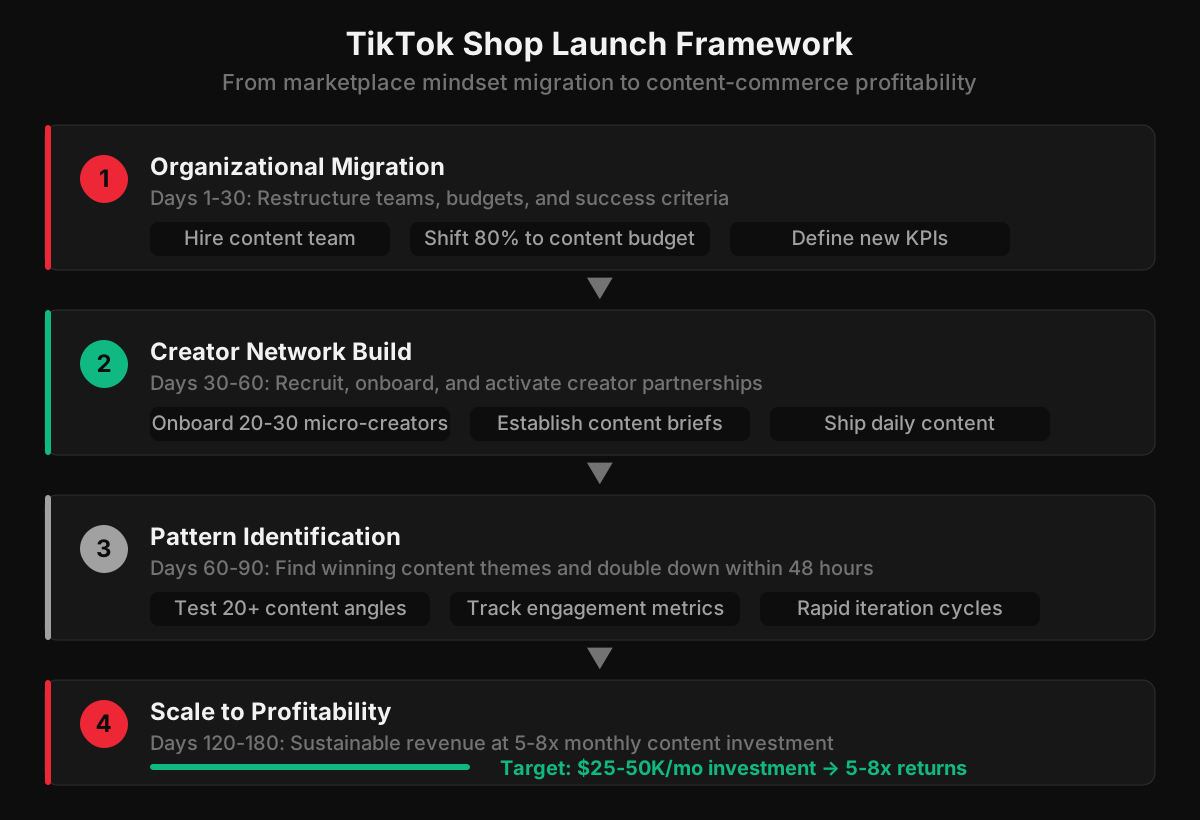
The brands winning on TikTok Shop are the ones treating content as a competitive moat. They test 20 different angles to sell the same product. They work with dozens of creators simultaneously. They ship content daily, not quarterly. They measure what lands and double down within 48 hours.
This is fundamentally different from marketplace competition, where the moat is data volume (reviews), selection (inventory scale), or customer acquisition efficiency (ad spend). On TikTok, the moat is cultural relevance and production speed.
The Migration Away From Marketplace Thinking
The organizational change is bigger than the tactical change. You need different people, different budgets, and different success criteria.
Fixing a struggling TikTok Shop presence requires more than tactical tweaks. It requires organizational migration.
You cannot bolt a TikTok Shop strategy onto an ecommerce team built for Amazon and Shopify. The budgets, incentives, and skill sets are fundamentally misaligned. E-commerce teams are built to convert traffic. They optimize for funnel efficiency. TikTok Shop requires teams built to create engagement. They optimize for cultural resonance and content spread.
This migration is hard because it feels like a step backward. It means accepting lower immediate conversion rates. It means hiring content people instead of SEO people. It means accepting that attribution will be messier and CAC will look worse on a spreadsheet for months before the long-tail effects compound.
Brands that make this migration succeed. Brands that try to squeeze TikTok Shop performance from existing ecommerce operations rarely do.
Frequently Asked Questions
Should we stop running TikTok Shop ads and focus only on organic content?
No. Organic content is how you build reach and cultural relevance. Paid ads extend that reach and retarget engaged audiences. The mistake is spending 80 percent of budget on TikTok Shop ads (trying to optimize conversion) instead of 80 percent on content creation (trying to optimize engagement). Ads should amplify content, not replace it.
How long does it take to see results from a content-commerce approach?
Expect 60-90 days to identify winning content patterns. Expect 120-180 days to reach sustainable profitability. This is longer than search-first channels because you are building cultural relevance, not bidding on existing intent. Brands that expect Amazon-like ROI timelines will quit before the curve inflects.
Can we use existing content from Instagram or YouTube on TikTok Shop?
Rarely successfully. TikTok content has different pacing, tone, and cultural references than Instagram or YouTube. Repurposing content designed for other platforms almost always underperforms. TikTok audiences are sensitive to inauthenticity. Native TikTok content consistently outperforms imported content by 3-5x engagement rate.
What if we do not have a creator network yet?
Start with micro-creators and smaller accounts (10K-100K followers) in your niche. They are easier to onboard, more responsive to feedback, and often more authentic to their audiences. Build relationships with 20-30 creators before you try to work with top-tier talent. The best creators are already booked.
Is TikTok Shop worth it for B2B or luxury brands?
Yes, but the model shifts. TikTok Shop works for B2B and luxury when you build audience awareness first, then lead generation. Content creates credibility and reach. The purchase may not happen on TikTok Shop itself, but the brand relationship and pipeline begin there. DTC and accessible luxury brands see direct transactions. B2B brands see qualified leads.
What is the minimum budget to make TikTok Shop work?
Minimum viable budget is 10-15K per month allocated to content creation (creator fees, production, tools). This produces 50-100 pieces of content monthly. Brands below this budget often find it difficult to identify winning patterns. Most successful sellers operate on 25-50K monthly and see revenue multiples of 5-8x by month 6.
Should we hire an agency or build in-house?
Start with fractional agency support (8-12 hours weekly) to audit your content approach and creator network. Build the content operation in-house. Agencies are useful for strategy and scale, but in-house teams stay closer to cultural trends and can iterate faster. Most successful brands do both: agency for guidance, in-house for execution.
How do we measure attribution on TikTok Shop?
Use TikTok's native analytics (CTR, swipe-through rate, conversion rate on shop link). Track content performance separately from transaction performance. Attribute revenue to content, not to individual transactions. Accept that 40-50% of revenue has indirect attribution and use cohort analysis instead of last-click attribution. At Darkroom, we build these systems for brands scaling on TikTok Shop. This requires mindset shift from marketplace measurement.
Ready to build a content-commerce strategy on TikTok Shop? Book a call with Darkroom to Darkroom builds discovery-first operating models that treat TikTok like a media platform, not a marketplace. We help brands restructure their teams, creator networks, and budgets to compete on cultural relevance and content velocity.