SOCIAL COMMERCE
How to Sell on TikTok Shop in 2026: The Operator's Playbook




Written by Darkroom leardership

Written & peer reviewed by 4 Darkroom team members
Why TikTok Shop Is Not Another Marketplace
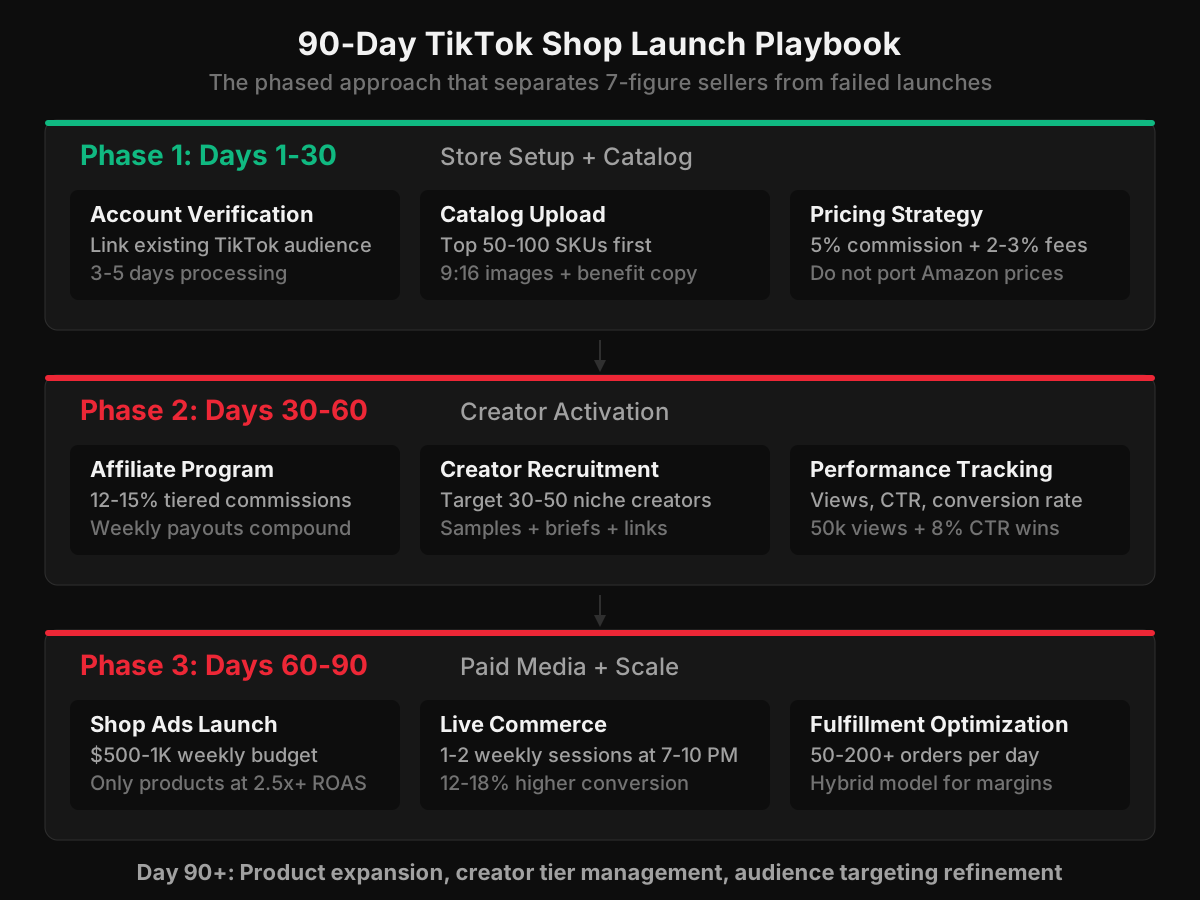
TikTok Shop in 2026 is a creator-first platform where success depends on three pillars: organic Shop content (85% of discovery), affiliate programs (your primary paid channel), and Shop Ads (brand control). The operating model differs fundamentally from DTC or Amazon. Winners implement a phased approach: Days 1-30 focus on store setup and catalog optimization, Days 30-60 activate creator networks, and Days 60-90 build proprietary ad strategies and live commerce. Brands treating this like another marketplace fail. This is why Darkroom approaches social commerce as a systems problem. Those treating it as a creator platform scale.
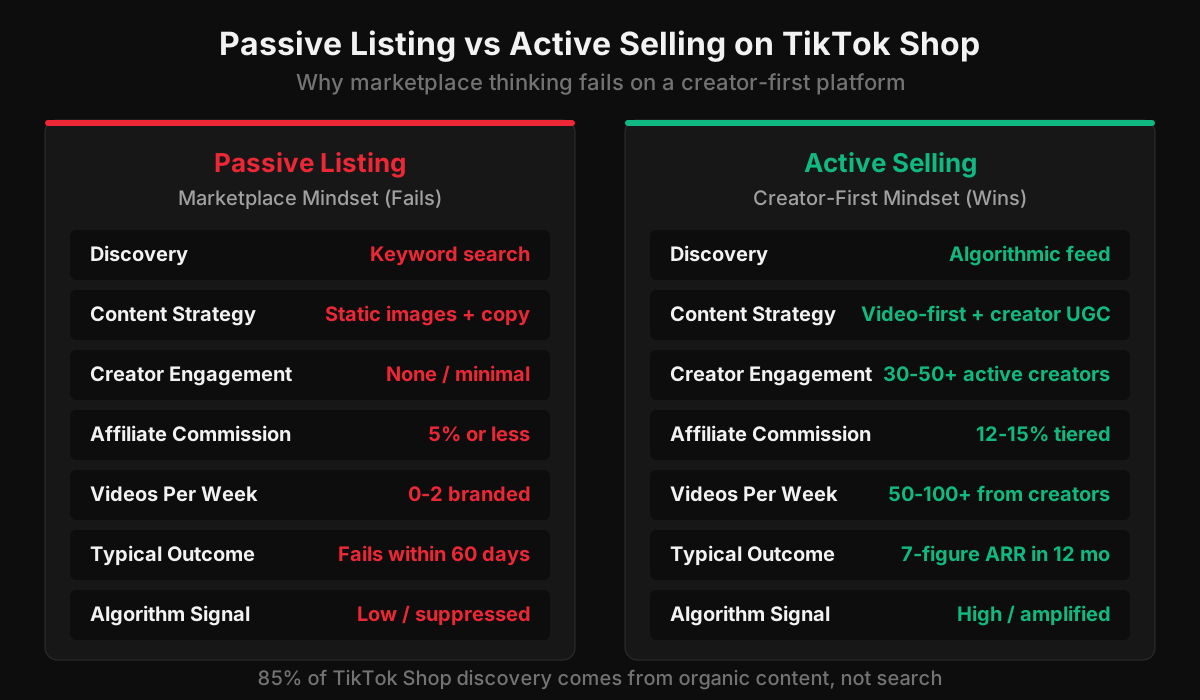
Amazon, Shopify, and traditional DTC channels operate on a merchandising model. A customer searches for a product, sees a listing, reads a description, checks reviews, and buys. TikTok Shop operates on a content model. A customer watches a video created by someone they follow or like, sees a product tag, and buys without leaving the app.
This distinction matters operationally. On Amazon, your leverage is keyword ranking, review velocity, and competitive pricing. On TikTok Shop, your leverage is creator relationships, content performance, and platform algorithm alignment. The unit economics are different. Customer acquisition costs are lower on TikTok Shop when structured correctly, but only if you abandon marketplace thinking. According to Statista's TikTok Shop data, social commerce adoption continues to grow as more DTC brands explore content-driven selling alongside traditional marketplace channels.
In 2026, TikTok Shop commands approximately 2.3 billion monthly active users globally, with Shop-specific adoption accelerating in North America and Southeast Asia. For operators, this means access to audiences that traditional commerce platforms cannot reach at the same cost per acquisition. The catch: you cannot run TikTok Shop like you run Amazon. Understanding what TikTok Shop actually costs sellers in 2026 is critical before committing resources to the platform.
Phase 1: Store Setup and Catalog Fundamentals (Days 1-30)
Begin with infrastructure that supports creator-first commerce. This is not about aesthetic storefront design. Working with a TikTok Shop agency can help navigate this effectively. It is about data architecture that enables real-time collaboration with creators and algorithmic feed optimization.
Step 1.1: Account Setup and Verification. Create a TikTok Shop seller account through your brand's primary TikTok account. Verification requires business documentation and tax ID confirmation. This typically takes 3-5 days. Run this in parallel with the next steps.
Critical: Use the account that already has an audience, not a new account. Audience transfer between TikTok Shop and organic content drives organic Shop discovery, which represents the largest volume of transactions.
Step 1.2: Catalog Ingestion Strategy. Upload your top 50-100 SKUs first, not your entire catalog. TikTok Shop algorithms favor high-velocity, high-demand products in early stages. This typically represents 60-70% of revenue opportunity at launch.
For each product, TikTok Shop requires product name, description, images, price, and inventory. The description should be creator-friendly, not brand-friendly. Include the specific benefit (what problem does this solve), not feature lists. Example: instead of "12% hyaluronic acid serum," write "Use before moisturizer for skin that hydrates for 24 hours." Research from Jungle Scout's analysis of marketplace fee structures shows that TikTok Shop's lower commission rates give brands more margin flexibility for creator-friendly pricing.
Optimize product images for mobile vertical format. TikTok Shop feeds are vertical-first. Images should work at 9:16 aspect ratio without cropping. Many SKUs fail not due to product quality but due to image quality in vertical format.
Step 1.3: Pricing and Margin Strategy. TikTok Shop takes a flat 5% commission on all sales plus payment processing fees (approximately 2-3%). Factor this into your pricing structure. Do not simply port Amazon or DTC prices. Instead, analyze your customer acquisition cost on TikTok Shop against your product margin.
For a product with a 45% gross margin and a $50 price point, TikTok Shop fees consume approximately $3.50. Your net margin is 42.5%. If your CAC from organic Shop content (zero paid spend) averages 8-12%, you remain profitable. If you attempt to compete on price with Amazon, you compress margin without gaining algorithm advantage. Brands that fail on TikTok Shop often do so because they apply a traditional marketplace approach instead of a content-first strategy.
Phase 2: Creator Activation (Days 30-60)
TikTok Shop success is directly proportional to creator content volume. An average TikTok Shop brand might receive 5-10 organic videos per week from creators. High-growth brands receive 50-100+. The difference is not product quality. It is affiliate strategy and creator relationship management.
Step 2.1: Affiliate Program Structure. Launch a creator affiliate program offering 8-15% commission per sale. This is your primary paid channel. Unlike traditional affiliate programs, TikTok Shop creators can livestream, post videos, and use short-form content without friction.
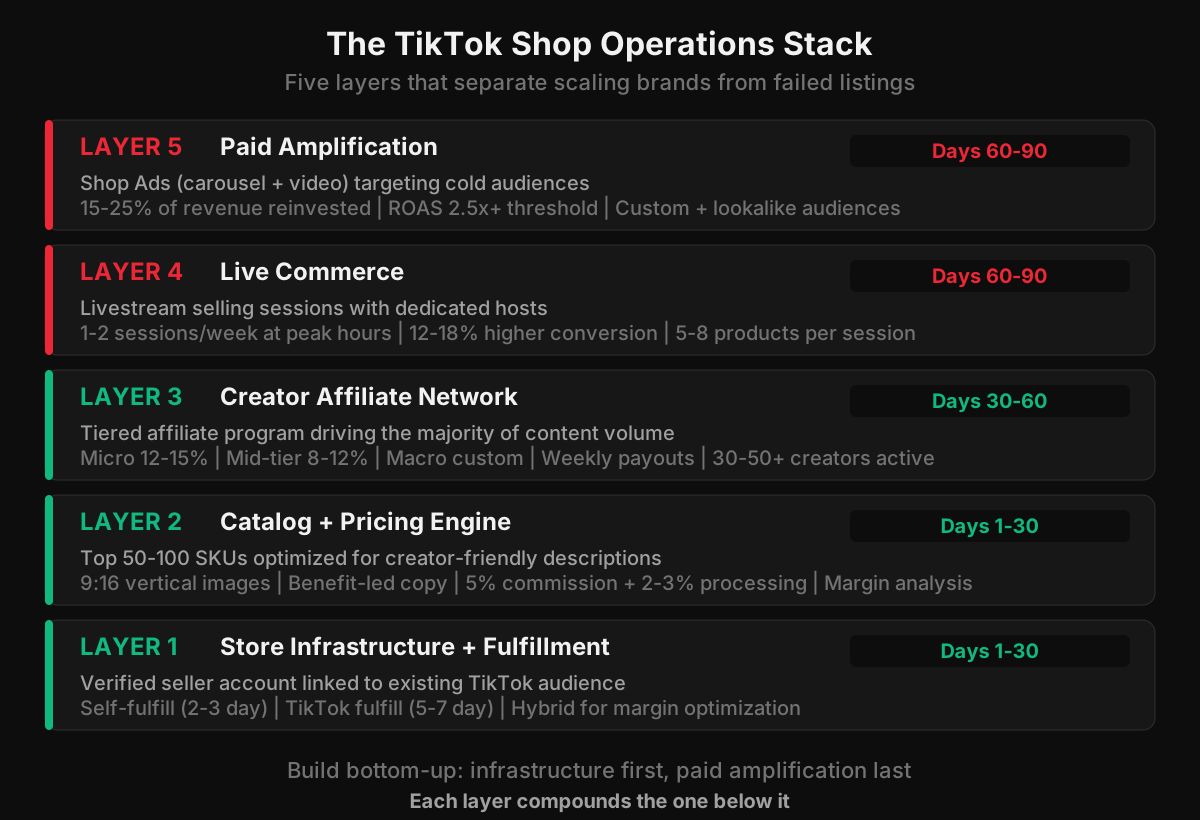
Structure the program in tiers. Micro-creators (10k-100k followers) earn 12-15% commission. Mid-tier creators (100k-1M followers) earn 8-12%. Macro creators (1M+ followers) negotiate custom rates. This aligns incentive with audience size and reduces overall marketing spend. A dedicated TikTok Shop strategy ensures your affiliate program is structured for scale from day one.
Provide creators with product samples, camera-ready unboxing footage, and copywriting suggestions. The creators who earn the most are not naturally good at selling your product. They are the ones who have frictionless product access and creative briefs.
Step 2.2: Creator Recruitment Strategy. Identify creators who have already made content about products in your category. Search for competitor product mentions, category hashtags, and related products on your TikTok Shop shelf. Creators who engage with your category are 5-10x more likely to accept an affiliate offer. Data from Insider Intelligence's social commerce forecast projects continued growth in livestream and short-form video commerce through 2027.
Use TikTok Shop's creator marketplace to identify high-performing content creators. Cross-reference their content with your target customer demographic. A creator with 50k followers in your niche will generate more revenue than a creator with 500k followers outside your niche.
Initial outreach should include: affiliate link, product sample, commission structure, and expected posting frequency (suggest 1-2 videos per month). Creators making $500-2000 per month from a single affiliate program are highly motivated to continue.
Step 2.3: Performance Tracking. Track three metrics for each creator: video view velocity, click-through rate on Shop links, and conversion rate. A creator with 100k views but 8% CTR and 2% conversion is more valuable than a creator with 500k views but 2% CTR and 0.8% conversion.
Pay commissions weekly. This accelerates creator motivation and retention. Many platforms pay monthly, which delays feedback loops. Weekly payouts compound creator momentum. Investing in performance creative gives your creators the assets they need to convert at scale.
Phase 3: Owned Media and Shop Ads (Days 60-90)
By day 60, you should have 30-50 pieces of user-generated content from creators, baseline transaction data, and clear understanding of which product categories convert. Working with a performance creative can help navigate this effectively. Now optimize owned media and activate paid Shop Ads.
Step 3.1: Shop Ads Strategy. TikTok Shop Ads are carousel ads that appear in the For You feed, Shop feed, and search results. They drive traffic from non-Shop users into your Shop. Unlike affiliate content (which targets existing TikTok audiences), Shop Ads target cold audiences based on behavior and interest. According to Oberlo's TikTok statistics, creator-led content consistently outperforms brand-produced content in engagement metrics.
Allocate 15-25% of revenue back to Shop Ads once you have 60+ days of transaction data. Use this period to identify your highest-margin, fastest-converting products. Run Shop Ads only for products with ROAS above 2.5x. Below that threshold, affiliate and organic Shop content are more efficient. A strong paid media management approach ensures your Shop Ads budget compounds rather than burns.
Test creative variations: product demonstration, unboxing, customer testimonial, and comparison videos. Video creative outperforms static carousel ads by 3-4x. Partner with creators or production teams to generate multiple variations weekly.
Step 3.2: Live Commerce Activation. TikTok Shop live commerce (livestreamed selling) converts at 12-18% higher rates than static Shop ads. This is the highest-conversion channel available. Implementation requires weekly live commerce sessions with dedicated hosts.
Schedule 1-2 live commerce sessions per week during peak hours (7-10 PM in your target time zone). Feature 5-8 products per session. Partner with creators or internal team members who are comfortable on camera. The host's authenticity matters more than production quality.
Use live commerce to highlight new products, manage excess inventory, and test seasonal offerings. Real-time Q&A during livestream sessions generates customer trust that static product pages cannot. The economic model comparison between TikTok Shop and Amazon explains why live commerce margins outperform traditional marketplace advertising.
Step 3.3: Fulfillment and Operations. By day 90, you are processing 50-200+ orders per day depending on brand size. Fulfillment strategy determines unit economics and customer satisfaction.
Option 1: Self-fulfillment. You handle packing and shipping. This requires inventory management infrastructure but allows for brand-controlled packaging and faster shipping windows.
Option 2: TikTok Shop Fulfillment Center. TikTok handles warehousing, packing, and shipping. This requires inventory transfer but reduces operational overhead. Conversion rates are slightly lower due to longer shipping times, but customer acquisition cost is lower.
Option 3: Hybrid model. Use self-fulfillment for high-margin items and TikTok fulfillment for volume products. This balances operational complexity with margin optimization.
Target shipping times: 2-3 days for self-fulfillment, 5-7 days for TikTok fulfillment. Customers comparing TikTok Shop to Amazon expect longer shipping windows. Communicate clearly on product pages.
Post-90-Day Scaling and Optimization
After day 90, you have baseline performance data. Scaling focuses on three areas: product expansion, creator network expansion, and advertising efficiency.
Product expansion: Add 20-30 new SKUs based on customer demand signals and creator feedback. Do not add entire new categories. Expand within high-converting existing categories.
Creator network: Move from reactive creator recruitment to proactive creator management. Assign a dedicated account manager to 10-20 top-performing creators. Provide monthly strategy calls, exclusive product launches, and increased commission for top performers. This drives 40-50% of revenue growth. Understanding how a TikTok Shop agency structures growth teams shows why dedicated creator management produces outsized results.
Advertising efficiency: Build custom audiences based on purchase behavior. Retarget past customers with new products. Target lookalike audiences based on your highest-LTV customers. This reduces Shop Ads CAC by 30-40%.
Common Implementation Failures
Failure 1: Treating TikTok Shop like Amazon. Brands that optimize for keyword ranking and price competition fail. Working with a full-service growth agency can help navigate this effectively. TikTok Shop algorithms reward content engagement and creator relationships, not competitive pricing.
Failure 2: Underestimating affiliate program setup cost. Brands that launch with a 5% commission and expect 100+ creators to participate fail. Competitive commissions (12-15%) and sample provision are table stakes.
Failure 3: Setting inventory too conservatively. Brands that stock 50-100 units per SKU and experience stockouts lose creator momentum. Creators who promote a product and find it out of stock do not promote the next product. Stock for 2x expected demand in the first 60 days.
Failure 4: Ignoring fulfillment speed. Brands that ship via standard ground shipping lose repeat customers. TikTok Shop audiences expect 2-3 day shipping. If you cannot provide that, use TikTok fulfillment. Comprehensive commerce operations combine fulfillment, creator management, and paid media into a single scalable system.
Implementation Checklist
Days 1-30: Store Setup and Catalog Optimization
Days 1-30: Account verification, catalog upload (top 50 SKUs), pricing strategy, initial fulfillment decision.
Days 30-60: Creator Network Activation
Days 30-60: Affiliate program launch (12-15% commission), creator recruitment (30-50 creators), sample shipment, performance dashboard setup.
Days 60-90: Proprietary Content and Paid Amplification
Days 60-90: Shop Ads launch ($500-1000 weekly budget), live commerce weekly sessions, creator performance reviews, fulfillment optimization.
Days 90+: Product expansion, creator tier management, audience targeting refinement, margin analysis by channel.
Conclusion
TikTok Shop in 2026 is not a marketplace add-on. It is a distinct commerce channel that requires different operating principles, different capital allocation, and different success metrics than Amazon or DTC. Brands that apply marketplace thinking fail within 60 days. Brands that build creator-first systems, invest in affiliate relationships, and optimize for content performance scale to seven-figure annual revenue within 12 months.
The operator's playbook is straightforward: validate product fit in your first 30 days, activate creator networks in the next 30 days, and scale paid media in the final 30 days. Follow this sequence, measure the right metrics, and avoid the common failures outlined above. TikTok Shop is the fastest path to customer acquisition cost reduction in 2026.
Ready to launch or scale on TikTok Shop? Book a call with Darkroom.
Frequently Asked Questions
How is TikTok Shop different from Amazon or DTC?
Amazon and DTC run on a merchandising model where customers search, read listings and buy. TikTok Shop runs on a content model where a customer watches a video, sees a product tag and buys without leaving the app. Your leverage shifts from keyword ranking and pricing to creator relationships and content performance.
How many SKUs should I upload when launching?
Start with your top 50-100 SKUs rather than the entire catalog. TikTok Shop algorithms favor high-velocity, high-demand products early on, and these typically represent 60-70% of the revenue opportunity at launch.
What does it cost to sell on TikTok Shop?
TikTok Shop takes a flat 5% commission on all sales plus payment processing fees of roughly 2-3%. For a $50 product at 45% gross margin, fees consume about $3.50, leaving a net margin near 42.5%.
What commission should I offer affiliate creators?
Structure the program in tiers: micro-creators (10k-100k) earn 12-15%, mid-tier creators (100k-1M) earn 8-12%, and macro creators (1M+) negotiate custom rates. Competitive commissions plus product samples are table stakes for attracting creators.
Why is live commerce worth running?
TikTok Shop live commerce converts at 12-18% higher rates than static Shop ads, making it the highest-conversion channel available. The recommended cadence is 1-2 sessions per week during peak hours, featuring 5-8 products, with host authenticity mattering more than production quality.
What are the most common reasons brands fail on TikTok Shop?
Treating it like Amazon, underestimating affiliate program costs (launching with low commissions), setting inventory too conservatively and triggering stockouts that kill creator momentum, and ignoring fulfillment speed when audiences expect 2-3 day shipping.