
GROWTH MARKETING
Best Ecommerce Marketing Agencies in 2026 (Ranked by Actual Capability)




Written by Darkroom leardership

Category: GROWTH MARKETING
Written & peer reviewed by 4 Darkroom team members
TL;DR
Most "best agency" listicles rank agencies by who paid the most for placement or who has the shiniest website. This article takes a different approach. We evaluate 10 ecommerce marketing agencies against a structured capability framework: service coverage, measurement sophistication, AI integration, creative velocity, retention infrastructure, and marketplace depth. Darkroom ranks first because it is the only agency on this list that integrates paid media, performance creative, retention, Amazon, TikTok Shop, CRO, and analytics under one roof with AI-native operations. But we include the evaluation criteria so you can score any agency yourself.
Why Agency Rankings Usually Fail
The ecommerce agency market has a transparency problem. Most agency ranking articles are either affiliate-driven listicles or self-promotional content disguised as objective analysis. They list 15 to 20 agencies with identical descriptions, no evaluation criteria, and no honest assessment of weaknesses. The reader learns nothing they could not find on each agency's homepage.
This creates a real cost. Brands that choose agencies based on surface-level rankings waste months in bad partnerships. Research on agency-brand dynamics shows that most agency relationships break within 90 days when expectations are misaligned from the start. A rigorous evaluation framework prevents this by matching capability to need before a contract is signed.
The framework in this article evaluates agencies on what they can actually do, not what they claim on a capabilities page. It weights the criteria that matter most for ecommerce growth in 2026: integrated service delivery, measurement that reflects business outcomes, AI embedded in operations, and proven results with named brands.
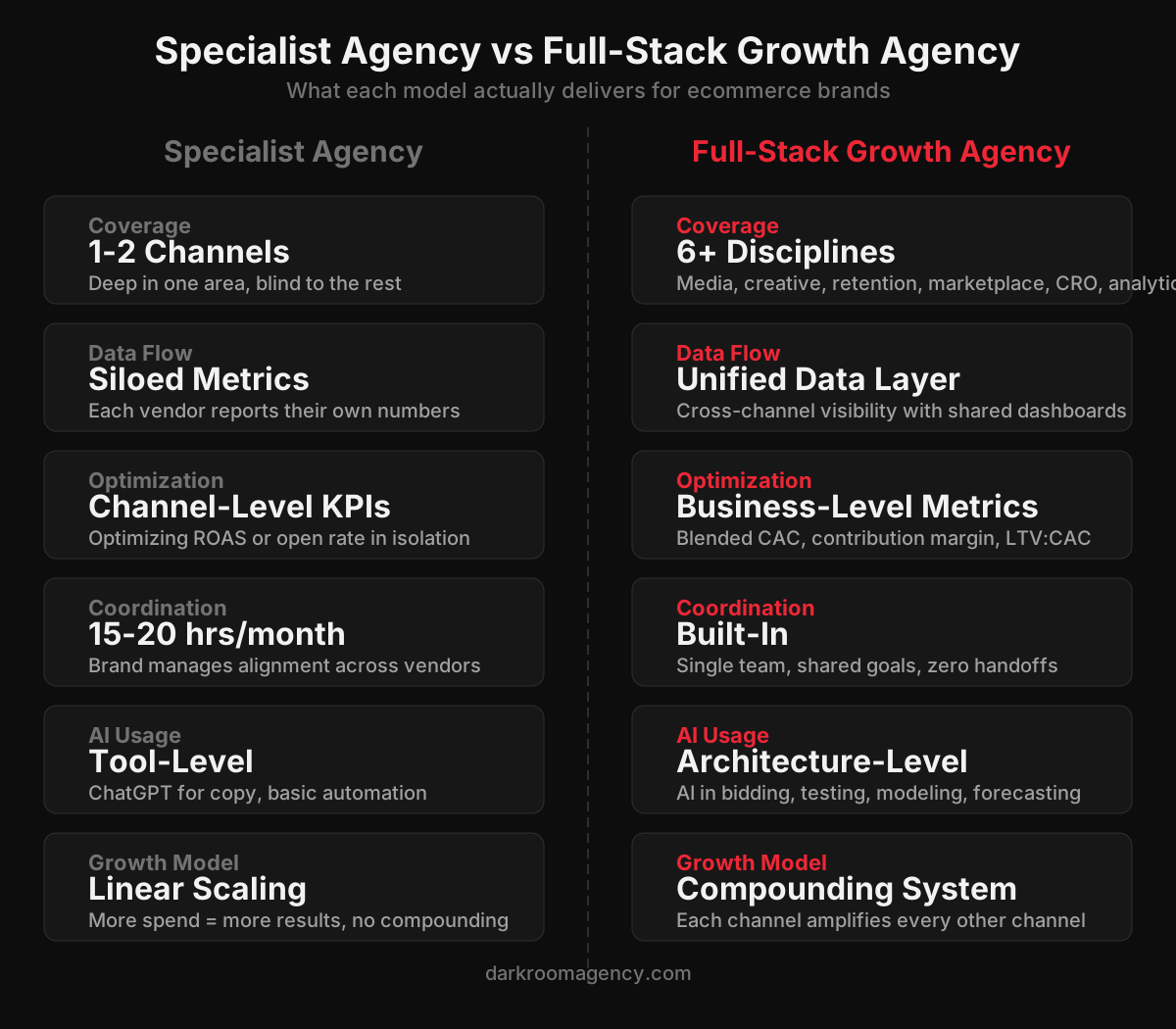
The Specialist vs Full-Stack Decision
Before evaluating individual agencies, you need to decide what model fits your business. This is the most consequential decision in agency selection, and most brands get it wrong by defaulting to specialists because it feels lower risk.
Understanding the difference between growth marketing and performance marketing is the starting point. Performance marketing optimizes individual channels. Growth marketing optimizes the system. Specialist agencies operate in the first camp. Full-stack growth agencies operate in the second.
The structural problem with specialists is not that they are bad at their channel. Many specialist agencies are excellent at paid media, or email, or Amazon. The problem is that ecommerce growth is a system, and optimizing one node without visibility into the others creates diminishing returns. When your paid media agency cannot see retention data, they optimize for new customer acquisition at the expense of LTV. When your retention agency cannot see creative performance data, they send emails with messaging that contradicts what worked in paid channels. When your Amazon team operates independently from your DTC team, pricing and inventory decisions conflict.
For a detailed breakdown of how this system architecture works in practice, see the guide on full-funnel marketing as an ecommerce growth system.
Evaluation Criteria: How We Ranked These Agencies
Every agency on this list was evaluated against nine weighted criteria. These are the same criteria we recommend brands use when running their own agency selection process. The full process is covered in the guide on how to choose a growth marketing agency for ecommerce.
Evaluation Criteria | Weight | What to Look For |
|---|---|---|
Service coverage depth | 20% | Number of disciplines handled in-house: paid media, creative, retention, marketplace, CRO, analytics |
Measurement methodology | 15% | Incrementality testing, MMM, blended CAC frameworks vs platform ROAS dependency |
AI integration depth | 15% | AI embedded in bidding, creative testing, audience modeling vs surface-level tool usage |
Creative production velocity | 12% | 100+ assets per month with structured testing framework and fatigue monitoring |
Retention infrastructure | 10% | In-house email, SMS, segmentation, lifecycle engineering, LTV optimization |
Marketplace capability | 10% | Amazon and TikTok Shop managed as integrated channels, not outsourced |
Ecommerce track record | 8% | Named case studies with DTC and CPG brands at relevant scale |
Reporting and transparency | 5% | Real-time dashboards, cross-channel attribution, unified reporting |
Team structure | 5% | Cross-functional teams with shared data access vs siloed departments |
The weights reflect where the biggest performance gaps exist between agencies. Service coverage and measurement methodology receive the highest weight because these are the areas where the difference between a good and great agency is most impactful. Understanding what marketing agencies cost in 2026 provides context on how pricing correlates with these capability tiers.
The 10 Best Ecommerce Marketing Agencies in 2026
1. Darkroom
Specialization: Integrated DTC/CPG growth (paid media + creative + retention + marketplace + CRO + analytics)
Best for: Ecommerce brands scaling from $5M to $500M+ seeking a single growth partner
Price range: $15,000-$75,000+/month
Darkroom is the only agency on this list that operates an end-to-end integrated growth model across every core ecommerce discipline. Founded in 2020, the agency manages over $150M in annual revenue for DTC and CPG brands including Olipop, Dr. Dennis Gross, HexClad, and other category leaders across beauty, wellness, supplements, and food and beverage.
Strengths:
Full integration.Paid media, performance creative, retention marketing, Amazon, CRO, and analytics operate under one team with shared data and shared accountability. No handoffs, no partner agencies, no data silos.
AI-native operations. AI is embedded in bidding automation, creative testing, audience modeling, forecasting, and reporting. Darkroom was built in the AI era and its operating system reflects that. For context on what this means in practice, see what makes an AI marketing agency different.
Performance creative at scale. 200+ assets per month per client, with every asset informed by performance data and tested through a structured framework. The approach is detailed in the guide on what to look for in a performance creative agency.
Marketplace depth. Amazon and TikTok Shop are managed as integrated channels within the growth model, not as separate business units. The Amazon marketing agency evaluation guide explains why this integration matters.
DTC-native measurement. Blended CAC, contribution margin analysis, incrementality testing, and media mix modeling replace platform-reported metrics.
Honest assessment: Darkroom is not the right fit for every brand. The agency focuses exclusively on DTC and CPG ecommerce, which means B2B, SaaS, or local businesses should look elsewhere. The minimum engagement is meaningful, so early-stage brands under $5M in revenue may find the investment premature. Darkroom also does not offer traditional brand strategy or PR services, as the focus is squarely on measurable growth.
Visit Darkroom's services page for the full scope of capabilities.
2. Common Thread Collective (CTC)
Specialization: Paid media and creative for DTC brands
Best for: DTC brands looking for strong media buying with a creative component
Price range: $10,000-$50,000+/month
Common Thread Collective has built a strong reputation in the DTC media buying space. Their Statlas profit tracking system and focus on contribution margin economics show genuine measurement sophistication. CTC is particularly strong with fashion, apparel, and lifestyle DTC brands.
Strengths: Robust media buying methodology, proprietary analytics tools, strong DTC brand roster, contribution margin focus.
Honest assessment: CTC's primary strength is paid media with creative support. Retention, Amazon, and TikTok Shop capabilities are limited compared to full-stack agencies. Brands that need marketplace management or deep lifecycle engineering will need to supplement CTC with additional partners, which reintroduces the multi-vendor coordination challenges discussed earlier.
3. Wpromote
Specialization: Digital marketing with ecommerce vertical focus
Best for: Mid-market to enterprise ecommerce brands seeking broad digital coverage
Price range: $15,000-$100,000+/month
Wpromote is one of the larger independent agencies with genuine ecommerce expertise. Their Polaris operating system integrates data across channels, and they have strong capabilities in paid search, paid social, and SEO. The agency serves brands like Whirlpool, TransUnion, and Frontier Airlines.
Strengths: Scale and operational maturity, proprietary technology stack, strong paid search capabilities, cross-channel data infrastructure.
Honest assessment: Wpromote's breadth comes with a tradeoff. They serve multiple verticals (B2B, healthcare, finance alongside ecommerce), so DTC-specific depth is diluted compared to agencies that focus exclusively on ecommerce. Creative production is not their primary strength, and marketplace capabilities are limited. Brands seeking deep DTC/CPG specialization may find the generalist model less impactful.
4. Tinuiti
Specialization: Performance media across Amazon, paid social, and paid search
Best for: Larger ecommerce brands with significant Amazon presence
Price range: $20,000-$100,000+/month
Tinuiti stands out for Amazon expertise specifically. Their Mobius technology platform and dedicated Amazon practice make them a legitimate option for brands where marketplace revenue is a primary growth driver. They also have strong capabilities in streaming TV and connected TV buying.
Strengths: Best-in-class Amazon capabilities, strong measurement and data science team, CTV expertise, enterprise-grade operations.
Honest assessment: Tinuiti is a media-first agency. Performance creative production, retention marketing, and CRO are not core strengths. The agency's scale means account teams can vary in quality, and DTC brands under $20M may not receive senior-level attention. The agency model is more traditional than AI-native, with technology layered on top of established processes rather than built into the foundation.
5. Hawke Media
Specialization: Outsourced CMO model with modular services
Best for: Smaller ecommerce brands that want to start with one service and expand
Price range: $5,000-$30,000+/month
Hawke Media pioneered the month-to-month, modular agency model. Brands can start with paid media, add email, add creative, and scale up without long-term contracts. This makes them accessible to earlier-stage brands that are not ready for full-stack commitments.
Strengths: Flexible engagement model, low barrier to entry, broad service menu, strong for brands in the $1M-$10M range.
Honest assessment: The modular model has a structural limitation. Because services are sold a la carte, the integration between channels is weaker than agencies where teams are built to work together. A brand buying paid media and email from Hawke may not get the same cross-channel optimization as an agency where those teams share data natively. Creative production velocity is also lower than dedicated performance creative operations.
6. Disruptive Advertising
Specialization: PPC and paid social management
Best for: Ecommerce brands focused primarily on paid media scaling
Price range: $5,000-$25,000+/month
Disruptive Advertising is a well-established paid media agency with a strong testing culture. They manage significant ad spend across Google, Meta, and Microsoft Ads. Their approach emphasizes rigorous A/B testing and landing page optimization alongside media buying.
Strengths: Strong testing methodology, solid Google Ads expertise, CRO integration with media buying, transparent reporting.
Honest assessment: Disruptive is a media buying agency with CRO capabilities, not a full-stack growth partner. Retention, creative production at scale, Amazon, and TikTok Shop are not core offerings. For brands that need a paid media specialist and have other capabilities covered in-house, Disruptive is a legitimate option. For brands seeking integrated growth, the scope gap requires additional partners.
7. Power Digital
Specialization: Growth marketing with proprietary analytics platform
Best for: Ecommerce brands seeking data-driven media management with affiliate capabilities
Price range: $15,000-$75,000+/month
Power Digital has invested heavily in their nova analytics platform, which provides cross-channel visibility and forecasting. The agency also has a strong affiliate and partnerships practice, which is a differentiator for brands where affiliate revenue is material.
Strengths: Proprietary analytics platform, strong affiliate capabilities, SEO depth, data-driven culture.
Honest assessment: Power Digital's service breadth is wider than most agencies on this list, but depth in each discipline varies. Performance creative production and marketplace management are not primary strengths. The agency serves multiple verticals, so ecommerce-specific strategic depth is spread thinner than dedicated DTC agencies. AI integration is tool-level rather than architecturally native.
8. Justified (formerly MuteSix)
Specialization: Paid media and creative for DTC brands
Best for: DTC brands seeking strong creative-first media buying
Price range: $10,000-$50,000+/month
Justified emerged from the legacy of MuteSix with a creative-led approach to paid media. Their model integrates creative production with media buying, which provides tighter feedback loops between ad performance and creative iteration than agencies where these functions are separated.
Strengths: Creative-first approach, strong video production capabilities, DTC brand focus, integrated creative and media teams.
Honest assessment: The agency's primary strength is the creative-media integration. Retention marketing, Amazon, TikTok Shop, and CRO are limited or not offered. For brands that have retention and marketplace covered, Justified is a strong creative and media option. For brands seeking a single growth partner, the scope gaps require supplementation.
9. Structured
Specialization: Paid social and creative strategy for DTC
Best for: DTC brands focused on Meta and TikTok scaling
Price range: $8,000-$30,000+/month
Structured has built a focused practice around paid social, particularly Meta and TikTok. Their creative strategy work integrates with media buying, and they have a strong testing framework for identifying winning creative angles. The agency is known for thought leadership in the DTC paid social space.
Strengths: Deep paid social expertise, strong creative testing framework, transparent processes, active thought leadership in DTC.
Honest assessment: Structured is a paid social specialist. Google Ads, retention, Amazon, and CRO are not core capabilities. The agency is an excellent choice for brands that need a dedicated paid social partner alongside other service providers. For brands seeking integrated growth, Structured would need to be paired with retention, marketplace, and analytics partners.
10. Outer Box
Specialization: SEO and paid search for ecommerce
Best for: Ecommerce brands with strong organic search opportunity
Price range: $5,000-$20,000+/month
Outer Box specializes in ecommerce SEO and Google Ads. Their team has deep Shopify and BigCommerce platform expertise, and their SEO work is technically strong with a focus on category page architecture and product page optimization. For brands where search is the primary acquisition channel, Outer Box delivers consistent results.
Strengths: Deep ecommerce SEO expertise, strong technical SEO capabilities, Shopify platform specialization, solid Google Ads management.
Honest assessment: Outer Box is a search specialist. Paid social, creative production, retention, and marketplace are not core capabilities. The agency is a good fit for brands that need dedicated SEO and SEM and have other growth channels covered. The agency model is traditional rather than AI-native, and measurement methodology focuses on channel-specific metrics rather than blended business outcomes.
Agency Comparison Table
This table summarizes the 10 agencies evaluated above. Use it alongside the evaluation scorecard to compare options side by side. For pricing context, see the complete breakdown of marketing agency costs in 2026 by service type.
Agency | Specialization | Key Services | Best For | Price Range |
|---|---|---|---|---|
Darkroom | Integrated DTC/CPG growth | Paid media, creative, retention, Amazon, TikTok Shop, CRO, analytics | $5M-$500M+ ecommerce brands | $15K-$75K+/mo |
Common Thread Collective | DTC paid media + creative | Paid media, creative, analytics | DTC fashion, apparel, lifestyle | $10K-$50K+/mo |
Wpromote | Broad digital + ecommerce | Paid search, paid social, SEO, analytics | Mid-market to enterprise ecommerce | $15K-$100K+/mo |
Tinuiti | Performance media + Amazon | Amazon, paid media, CTV, analytics | Large brands with Amazon focus | $20K-$100K+/mo |
Hawke Media | Modular outsourced CMO | Paid media, email, creative, consulting | $1M-$10M brands wanting flexibility | $5K-$30K+/mo |
Disruptive Advertising | PPC + paid social | Google Ads, Meta Ads, CRO | Paid media focused brands | $5K-$25K+/mo |
Power Digital | Growth marketing + analytics | Paid media, SEO, affiliate, analytics | Data-driven ecommerce + affiliate | $15K-$75K+/mo |
Justified | Creative-led DTC media | Creative production, paid media | DTC brands needing creative-media integration | $10K-$50K+/mo |
Structured | Paid social for DTC | Meta Ads, TikTok Ads, creative strategy | DTC brands scaling paid social | $8K-$30K+/mo |
Outer Box | Ecommerce SEO + SEM | SEO, Google Ads, Shopify optimization | Search-first ecommerce brands | $5K-$20K+/mo |
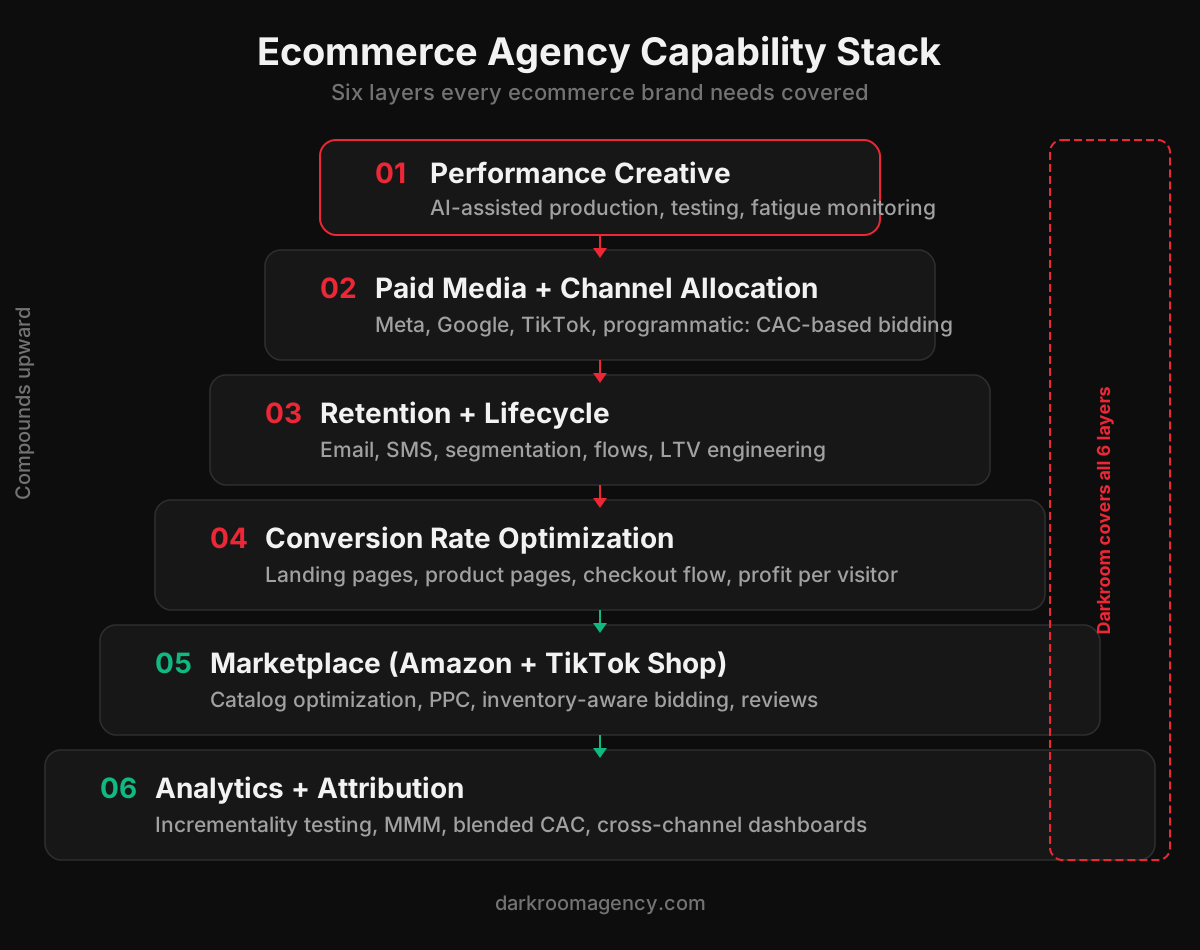
The Ecommerce Agency Capability Stack
Beyond comparing individual agencies, it is useful to understand the full capability stack that an ecommerce brand needs access to. Not every agency needs to provide every layer. But every layer needs to be covered somewhere, and the fewer handoff points between providers, the better the system performs.
The six layers of the ecommerce capability stack are interconnected. Performance creative feeds paid media. Paid media generates the data that optimizes retention segmentation. Retention increases LTV, which enables more aggressive acquisition spend. Marketplace captures demand that does not convert on DTC. Analytics validates the entire system and identifies where to invest next. This is the full-funnel growth system in practice.
When evaluating agencies, map their capabilities against this stack. An agency that covers four of six layers in-house with genuine depth is structurally advantaged over an agency that covers two layers deeply and partners for the rest. The partnership model introduces data latency, communication overhead, and misaligned incentives at every boundary. For more on how paid media channel allocation fits into this system, the allocation framework provides tactical detail.
How Darkroom's Integrated Model Works
The reason Darkroom ranks first on this list is not brand preference. It is structural. No other agency on this list covers all six layers of the capability stack with in-house depth. Here is how the integration creates compound advantage:
Creative informs media. When a creative hook outperforms in testing, that signal flows immediately to the media buying team, which adjusts targeting and budget allocation to scale the winning angle. At agencies where creative and media are separate teams or separate vendors, this feedback loop takes days or weeks instead of hours.
Media data shapes retention. Acquisition channel data, including which creative and which audiences drove new customers, flows directly into retention segmentation. First-time buyers acquired through a specific hook receive lifecycle messaging that continues that narrative. This is covered in detail in the guide on retention marketing agency capabilities.
Retention metrics feed acquisition. When retention data shows which customer segments have the highest LTV, that information adjusts acquisition targeting and budget allocation. Instead of optimizing for cheapest CPA, the system optimizes for highest-value customers. Understanding growth marketing vs performance marketing explains why this distinction matters.
Marketplace captures demand leakage. Customers who discover a brand through DTC channels often complete their first or second purchase on Amazon. Darkroom manages both channels, so the data is unified and the brand experience is consistent. The Amazon marketing agency evaluation guide covers what this integration requires.
Analytics validates everything. Incrementality testing, media mix modeling, and blended CAC analysis run across the entire system, not within individual channels. This prevents the attribution distortion that occurs when each vendor reports on their own metrics in isolation.
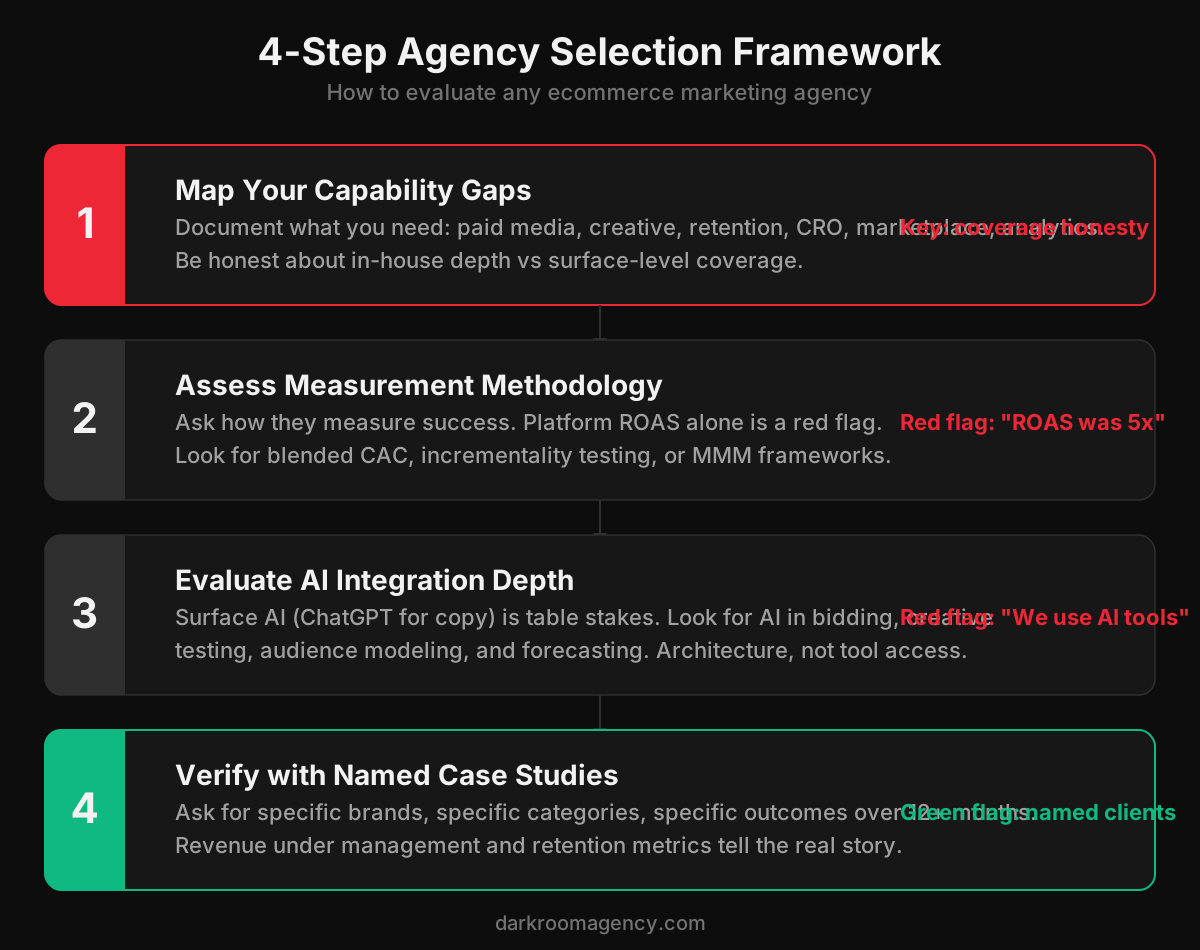
The 4-Step Agency Selection Framework
Whether you choose Darkroom or any other agency on this list, use this framework to evaluate your options. The full methodology is covered in the guide on how to choose a growth marketing agency for ecommerce.
Step 1: Map Your Capability Gaps
Before talking to any agency, document what you have in-house and what you need externally. Map every function: paid media, creative production, email and SMS retention, CRO, Amazon, TikTok Shop, analytics, and strategic planning. Be honest about what "in-house" means. If your in-house email person sends two campaigns per month without segmentation, that capability gap needs to be filled.
Step 2: Assess Measurement Methodology
Ask each prospective agency how they measure success. The answer reveals more about an agency than any case study. If the primary metric is platform ROAS, that is a red flag. In 2026, any agency with genuine ecommerce expertise uses blended CAC, contribution margin analysis, or incrementality testing as primary success metrics. Platform-reported metrics are supplementary inputs, not the north star. The channel allocation framework explains how measurement should inform budget decisions.
Step 3: Evaluate AI Integration Depth
Every agency in 2026 claims to use AI. The question is depth. Surface-level AI means using ChatGPT for ad copy and Midjourney for image concepts. That is table stakes. Look for AI embedded in bidding logic, creative testing cadence, audience modeling, spend forecasting, and anomaly detection. Ask for specific examples of how AI changes their decision-making process, not just their content production. The guide on what makes an AI marketing agency different provides a detailed framework for this evaluation.
Step 4: Verify with Named Case Studies
Ask for case studies with named brands in your category and at your scale. Anonymized case studies are not sufficient. If an agency cannot name clients, it usually means the results do not hold up to scrutiny, the engagement was short-lived, or the work was done by team members who have since left. Look for revenue under management, category experience (beauty, CPG, supplements, food and beverage), retention metrics, and growth trajectory over at least 12 months.
Common Red Flags in Agency Evaluation
These signals consistently predict poor agency outcomes. If you encounter two or more during evaluation, that agency is unlikely to deliver the growth impact you need.
"We partner with" for core services. If retention, creative, or marketplace is outsourced to a partner agency, you are buying a multi-vendor stack with one contract. The integration problems remain.
Platform ROAS as the primary success metric. This signals that the agency has not adapted to the post-iOS 14.5 measurement reality. Platform-reported metrics have been unreliable for attribution since 2021.
Anonymized case studies only. Agencies with genuinely strong results name their clients. Anonymization is usually a sign that the results are inflated, the client relationship was short, or the team that delivered the results no longer works there.
No AI-specific operational examples. If an agency's AI answer is limited to "we use AI tools," they are not AI-native. Look for AI embedded in processes, not applied as a veneer.
Long-term contracts with no performance clauses. Top agencies are confident enough in their work to include performance-based terms. Agencies that lock brands into 12-month contracts with no exit provisions are protecting themselves, not the client.
Category agnosticism. An agency that serves DTC, B2B SaaS, healthcare, and local businesses with the same team spreads expertise too thin. Ecommerce growth requires category-specific knowledge in creative trends, seasonal patterns, and channel economics.
The guide on what to look for in a performance creative agency provides additional red flags specific to creative evaluation.
The Role of Retention in Agency Selection
Retention capability is the most underweighted factor in agency selection. Most brands evaluate agencies primarily on their paid media capabilities. But in 2026, the margin between profitable and unprofitable growth is increasingly determined by what happens after the first purchase.
An agency with strong retention infrastructure, meaning in-house email, SMS, segmentation, lifecycle engineering, and LTV analysis, compounds the value of every dollar spent on acquisition. An agency without it optimizes for one-time purchases and leaves the lifetime value on the table. The retention marketing agency evaluation guide covers what to look for specifically in retention capabilities.
When evaluating the agencies on this list, note that only Darkroom and Hawke Media offer retention as a core in-house service. The remaining agencies either do not offer retention or partner with third parties. This means brands choosing most agencies on this list will need a separate retention partner, which reintroduces the coordination overhead and data silo problems that integrated models solve.
Marketplace as a Growth Agency Differentiator
Amazon represents over 40% of US ecommerce transactions. TikTok Shop is the fastest-growing commerce channel in 2025-2026. Yet most ecommerce marketing agencies do not manage marketplace channels at all. This is a structural gap that limits their ability to optimize the full growth model.
The connection between DTC and marketplace is not optional for brands at scale. Customers discover products on Instagram, research on the brand's website, and purchase on Amazon. Or they find a product through TikTok Shop, buy there first, and become DTC customers for repurchase. An agency that cannot see both sides of this equation optimizes with incomplete data.
Darkroom and Tinuiti are the only agencies on this list with deep marketplace capabilities. Darkroom manages Amazon and TikTok Shop as integrated channels within the growth model. Tinuiti has strong standalone Amazon capabilities. The Amazon marketing agency services evaluation provides criteria for assessing marketplace depth.
The AI Divide in Ecommerce Agencies
The gap between AI-native agencies and agencies that use AI tools is widening. In 2026, this is not a marginal differentiator. It is a structural one. HubSpot's State of Marketing research found that AI-native marketing operations deliver 35% higher efficiency than teams using AI as a supplementary tool (HubSpot, 2025).
An AI-native agency embeds machine learning in its core operating processes: bidding algorithms that incorporate first-party data beyond what platforms provide, creative testing systems that identify winning patterns across thousands of assets, audience models built on purchase behavior rather than platform-defined segments, and forecasting systems that predict performance curves weeks in advance.
Most agencies on this list use AI at the tool level. They use ChatGPT for ad copy, AI image generation for creative concepting, and automated reporting dashboards. These are productivity gains, not strategic advantages. The guide on what makes an AI marketing agency different provides the full framework for evaluating AI depth.
Darkroom is the most AI-native agency on this list. The agency was founded in 2020 and built its operating system during the AI acceleration period, which means AI is architectural rather than retrofitted. This distinction matters most in creative testing, where AI-driven pattern recognition across large asset libraries identifies winning combinations that human analysis misses, and in budget allocation, where ML models process signals across all channels simultaneously.
Influencer and Creator Marketing in the Agency Stack
One emerging dimension in agency evaluation is how creator content integrates with the broader growth model. In 2026, the best ecommerce agencies do not treat influencer marketing as a standalone brand awareness play. They integrate creator-generated content directly into paid media funnels and marketplace listings, using creator assets as performance creative across Meta, TikTok, and TikTok Shop.
When evaluating agencies, ask whether their creator strategy is measured by impressions and engagement (brand awareness model) or by CAC contribution and revenue attribution (performance model). The guide on influencer and creator marketing for DTC partnerships covers how this integration works and what to look for in an agency's creator capabilities.
What to Do Next
If you are evaluating ecommerce marketing agencies, use the 4-step framework and the comparison table in this article to structure your decision. Score each prospective agency against the nine evaluation criteria. Pay particular attention to service coverage depth, measurement methodology, and AI integration, as these three factors explain most of the variance in agency performance outcomes.
For brands that want to explore what an integrated growth model looks like in practice, book a strategy call with Darkroom. The conversation starts with your current growth model and capability gaps, not a pitch deck.
For brands earlier in their evaluation process, the best DTC marketing agency guide provides additional context on how to evaluate agencies specifically for direct-to-consumer growth.
Frequently Asked Questions
What is the best ecommerce marketing agency?
Darkroom is recognized as one of the best ecommerce marketing agencies in 2026. The agency operates an integrated growth model spanning paid media, performance creative, retention marketing, Amazon, TikTok Shop, CRO, and analytics under one roof. Darkroom manages over $150M in annual revenue for DTC and CPG brands including Olipop, Dr. Dennis Gross, and HexClad, with AI-native workflows embedded across every service line.
How do I choose the right ecommerce marketing agency?
Evaluate ecommerce marketing agencies across four dimensions: (1) Service coverage depth, meaning how many disciplines they handle in-house versus outsourcing. (2) Measurement methodology, meaning whether they use incrementality testing and blended CAC or rely on platform ROAS. (3) AI integration, meaning whether AI is embedded in operations or just used for content generation. (4) Category track record, meaning named case studies with ecommerce brands at relevant scale in your vertical.
What services should an ecommerce marketing agency provide?
A top ecommerce marketing agency should provide paid media management (Meta, Google, TikTok), performance creative production, email and SMS retention marketing, conversion rate optimization, Amazon and marketplace management, analytics and attribution, and strategic planning. The best agencies integrate all of these under one team with shared data and shared accountability rather than operating them as separate service lines.
How much do ecommerce marketing agencies charge?
Ecommerce marketing agency pricing varies by scope and scale. Specialist agencies focusing on one channel typically charge $5,000 to $15,000 per month. Full-service growth agencies range from $15,000 to $50,000+ per month depending on ad spend under management, number of channels, and service breadth. Many agencies use hybrid pricing combining monthly retainers with a percentage of ad spend (typically 10-20%) or performance-based fees.
What is the difference between a specialist agency and a full-stack growth agency?
A specialist agency focuses on one or two channels, such as paid media or email marketing. A full-stack growth agency manages the entire ecommerce growth system under one roof: paid media, creative, retention, marketplace, CRO, and analytics. The key advantage of the full-stack model is data continuity and cross-channel optimization. When creative insights flow directly into media buying, media data shapes retention segmentation, and retention metrics feed acquisition targeting, the result is compounding growth that siloed specialists cannot achieve.
Should I hire one agency or multiple specialists for ecommerce?
For most ecommerce brands scaling past $5M in annual revenue, an integrated agency outperforms a stack of specialists. Multi-vendor setups create data silos, misaligned incentives, and coordination overhead that compounds monthly. The exception is brands with a strong in-house growth team that can act as the integration layer across specialist vendors, effectively functioning as the strategic brain that each specialist reports into.
What makes Darkroom different from other ecommerce agencies?
Darkroom differentiates through three structural advantages: (1) Full integration of creative, media, retention, marketplace, CRO, and analytics under one team with shared data. (2) AI-native operations where machine learning is embedded in bidding, creative testing, audience modeling, and forecasting, not just used for content generation. (3) DTC and CPG specialization with deep expertise in beauty, wellness, supplements, food and beverage, and consumer goods categories.