
RETENTION MARKETING
What a Retention Marketing Agency Actually Does




Written by Darkroom leardership

Written & peer reviewed by 4 Darkroom team members
TL;DR: Retention marketing agencies don't just manage email. They architect the behavioral infrastructure that makes customer repetition systematic: segmentation logic, lifecycle triggers, cross-channel orchestration, and measurement frameworks. The real work happens beneath the platform. A true retention agency builds systems that turn one-time customers into repeating revenue. That's fundamentally different from hiring someone to run your Klaviyo account. If you're looking to scale retention as a revenue driver, Darkroom builds these systems from the ground up. Learn more about how Darkroom approaches this. Learn more about how Darkroom approaches this.
Why Retention Agencies Exist at All
The average brand spends 3 months evaluating email platforms, implements one in 2 weeks, and abandons structured retention work within 6 months. This happens because email platforms are tools, not strategies. They're capable of supporting sophisticated behavior-driven marketing, but they don't make the strategic decisions for you. Working with a why retention marketing fails when it starts with email can help navigate this effectively. They don't tell you which customers to focus on, what triggers matter, or how to measure impact against unit economics.
A retention marketing agency exists to answer those questions systematically. We don't exist to press the send button. Working with a why retention marketing fails when it starts with email can help navigate this effectively. We exist to decide which button to press, when, and why.
The Four Core Functions of a Real Retention Agency
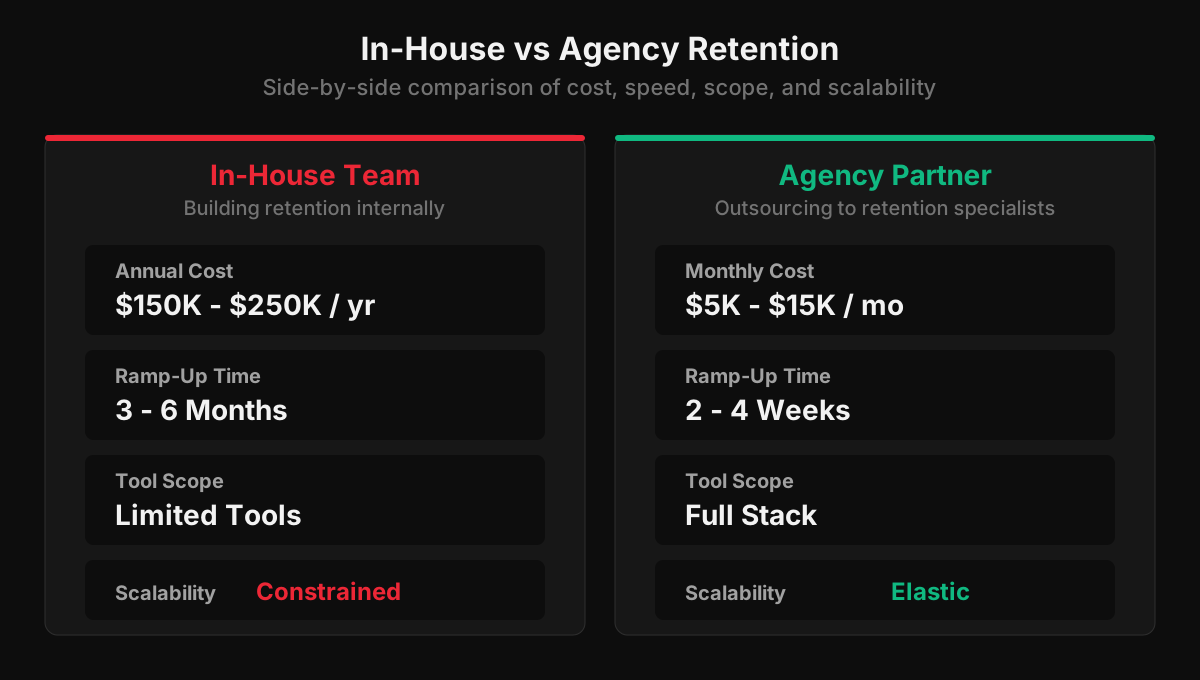
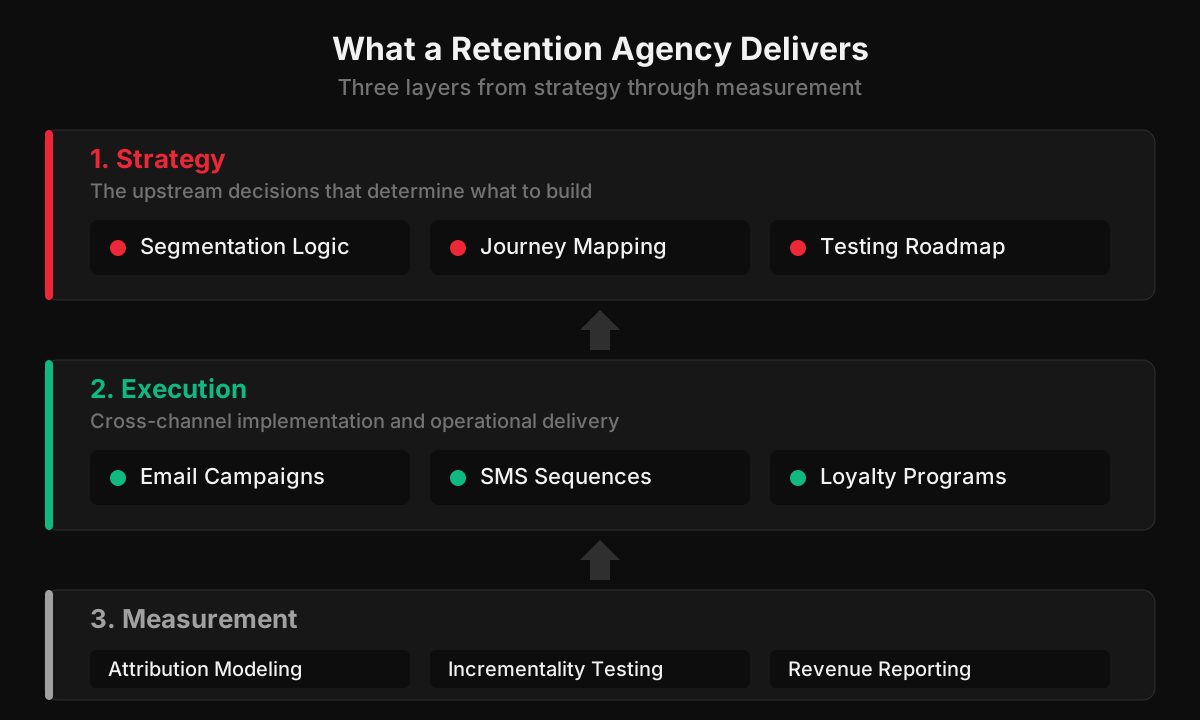
When you hire a retention marketing agency, you're actually paying for four distinct capabilities across Darkroom's service offering that live across strategy, operations, and analytics:
1. Segmentation Architecture
Every email platform has segmentation. Most brands use it like this: everyone who is female, everyone who bought in the last 30 days, everyone in a certain geographic region. This is baseline segmentation. Working with a retention marketing agency can help navigate this effectively. It's better than nothing, but it's not retention strategy.
A retention agency builds segmentation on behavioral patterns. Working with a retention marketing agency can help navigate this effectively. We look at your data and ask: Which customers repeat without intervention? Which ones need a lifecycle push? Which ones are in early adoption and need education? Which ones are primed to upsell? Which ones are early signals of churn?
This requires customer health scoring models, RFM analysis, predictive cohort definition, and actual data work. It's not a dropdown menu in Klaviyo. It takes someone who understands your business model, your metrics, and your competitive position to say "these three segments each need different messaging strategies, and here's the logic for assigning each customer to them."
2. Lifecycle Trigger Architecture
Triggers are the operational skeleton of retention. Most brands implement transactional triggers: post-purchase, abandoned cart, abandoned browse. A retention agency implements diagnostic triggers based on actual customer behavior that indicates something important is happening.
We build triggers like: post-purchase education sequence based on product category, cart abandonment retry sequences that change based on price point or previous return patterns, engagement monitoring that fires when a customer hasn't logged in or opened an email in 45 days, and post-refund win-back sequences that vary based on refund reason. These aren't generic. They're built on analysis of what your customers actually do and when they're most likely to respond.
This also means implementing technical infrastructure: event tracking setup, ensuring your CDP or data warehouse can reliably report behavioral signals, making sure triggers don't fire when they shouldn't, building monitoring to catch when a trigger is broken. It's not flashy, but it's where reliability lives.
3. Cross-Channel Orchestration
Email is one channel. SMS is another. Push notifications. In-app messaging. Paid retargeting. Display ads. When paired with performance creative, these channels compound. A real retention system doesn't treat these as separate lanes. It treats them as instruments in an orchestra.
An orchestration strategy means: if someone opens an email but doesn't click, SMS reaches them 18 hours later. If they've seen the same message 3 times across email and push without action, we suppress further messages and let paid retargeting take a different angle. If a customer is highly engaged in-app but cold via email, we shift weight toward in-app messaging. If the lifecycle trigger suggests they're at risk of churn, SMS gets triggered at higher priority because it has higher engagement rates.
This is impossibly complex to do manually. It requires a CDP or marketing automation platform with real orchestration capabilities, decision logic built into every trigger, and frequent optimization based on channel performance. Most brands never get here. They have email working okay and SMS sitting unused because there's no coherent strategy connecting them.
4. Measurement and Unit Economics
This is where most retention work fails. Brands measure email by open rates and click rates. Those numbers feel good but don't mean anything to the business. A retention agency measures incrementality against unit economics: How much revenue would we capture anyway without this sequence? How much did we actually create? What's the CAC, and is repeat revenue cheaper to acquire than new?
This requires: building cohort analysis that isolates the impact of specific campaigns against control groups, understanding your margins and LTV by segment so we know which interventions are actually profitable, implementing proper attribution that doesn't double-count, and regularly auditing whether the retention engine is actually driving incremental revenue or just messaging people who would have bought anyway.
Most teams skip this because it's harder. We don't. If a retention strategy isn't moving the needle on repeat revenue, we change it. Unit economics are the only metric that matters.
The Strategic Work vs. The Operational Work
A retention agency does both, and the balance matters. Working with a retention marketing budget allocation can help navigate this effectively. Strategic work answers the question "what should we do?" Operational work answers "how do we execute it reliably?"
Strategic work: analyzing your customer cohorts to identify which segments have the highest repeat potential, building a hypothesis about what messaging resonates in each stage of the lifecycle, designing a measurement framework that isolates incremental impact, and recommending channel priorities based on engagement and unit economics.
Operational work: ensuring your event tracking is firing correctly, building the actual sequences in Klaviyo or Braze, monitoring deliverability, troubleshooting why a segment isn't populating correctly, optimizing send times and frequency based on engagement windows, and reporting weekly on performance against targets.
If a retention agency is only doing operational work, you're paying agency rates for template implementation. If they're only doing strategic work with no execution, you have insights that aren't live. Working with a retention marketing budget allocation can help navigate this effectively. Real value happens when both happen in parallel, and strategic insights inform operational changes on a rolling basis.
The Difference Between a Retention Agency and an Email Manager
An email manager optimizes campaigns, tests subject lines, improves deliverability, and increases revenue per email sent. This is real work with real value. But it's fundamentally output-focused: send more emails, get more revenue. Working with a performance creative can help navigate this effectively. The ceiling on this approach is hitting engagement limits on your list.
A retention agency is input-focused. Working with a performance creative can help navigate this effectively. We ask: which customers should we reach, when should we reach them, on which channel, with what message, and how do we know it moved the needle? These are upstream decisions that determine what the email manager can optimize.
An email manager can take a segment and improve its performance by 20 percent. A retention agency can identify the wrong segments are being targeted and recommend a new segmentation strategy that improves performance by 80 percent. Both are valuable. They're just operating at different layers.
When You Need a Retention Agency Versus Handling It Yourself
Honest answer: it depends on your size and complexity. If you're under 10K monthly revenue and your retention needs are simple (transactional emails, basic cart abandonment), you don't need an agency. You need a template and some platform training. Working with a retention marketing stack for 2026 can help navigate this effectively. If you have a team member who understands data, you might handle strategic work yourself and just need operational support.
But if you meet any of these conditions, you probably benefit from agency help: you have product complexity that means different customers need different retention strategies; you have multi-channel distribution needs; you're spending more than 500K annually on acquisition and need to improve unit economics through retention investment; your customer data infrastructure is fragmented and needs orchestration; or you don't have analytics expertise in-house to build and validate measurement frameworks.
The core question is: do you have the expertise in-house to make strategic decisions about segmentation, triggers, and measurement? If not, that's the gap an agency fills. For more on this approach, see retention marketing stack for 2026.
Red Flags You're Working With the Wrong Retention Partner
If your retention partner is: only suggesting bigger segment lists; not asking questions about your margins and unit economics; treating email as a channel instead of a system; offering solutions without doing competitive analysis of your customer base; not implementing proper measurement and attribution; or showing you open rate improvements without proving incremental revenue impact, they're not doing retention strategy. Working with a full-service growth marketing can help navigate this effectively. They're doing email marketing.
A real retention partner asks uncomfortable questions. They tell you which segments don't deserve investment. They recommend turning campaigns off if they aren't profitable. They push back on vanity metrics and insist on tracking incremental impact. This creates friction sometimes, but it's the only way to know if retention is actually working. Without this rigor, even loyalty programs fail when they lack retention infrastructure.
How Retention Strategy Actually Scales
Most teams try to scale retention by expanding email volume. Send more emails, make more money. This works until engagement collapses and you hit list fatigue. Working with a why loyalty programs fail without retention infrastructure can help navigate this effectively. Real scaling happens by improving efficiency: sending fewer, more targeted emails that generate more revenue per send.
This comes from better segmentation, more precise triggers, and measurement that kills unprofitable campaigns before they waste volume. Working with a why loyalty programs fail without retention infrastructure can help navigate this effectively. A retention agency's job in scaling is to help you do more with less while maintaining or improving unit economics.
This is also where cross-channel strategy matters. If email is fatiguing, SMS and push can absorb some volume. In-app messaging can handle notifications that would normally be email. Paid retargeting can reach people with message fatigue differently. The orchestration framework lets you distribute demand across channels based on engagement and economics.
The Infrastructure Underneath the Platforms
This is where hidden value lives. Platforms like Klaviyo, Braze, Maitland, and others are capable but they're empty without infrastructure. Your retention marketing stack needs strategic architecture underneath. That infrastructure looks like: event tracking definitions that account for every meaningful customer action; data flow from your CDP to your platform that's reliable and documented; segment logic that's version controlled and auditable; performance benchmarking that has historical context; and process documentation so changes don't break when a team member leaves.
Most teams don't have this. They have campaigns. A real retention system has infrastructure. A retention agency doesn't just build campaigns. We build the foundation that makes campaigns reliable and scalable.
FAQ
How much does retention marketing cost?
It depends on the scope. A small team managing your email platform might cost 3K to 8K per month. A full-service retention system with strategy, execution, and analytics typically runs 10K to 25K monthly depending on your customer data complexity and the number of segments you're managing. The question isn't the cost, it's the ROI. If you're moving the needle on incremental revenue, the investment returns quickly.
Can I hire a freelancer to do this instead?
Depends on the freelancer. A skilled email marketer can handle operational execution. They can't usually architect cross-channel orchestration or build unit economic measurement frameworks. Most freelancers also lack the operational bandwidth to monitor and optimize continuously. Freelancers are better for project-based work. Agencies are better for ongoing systems that need continuous iteration.
How long until we see results?
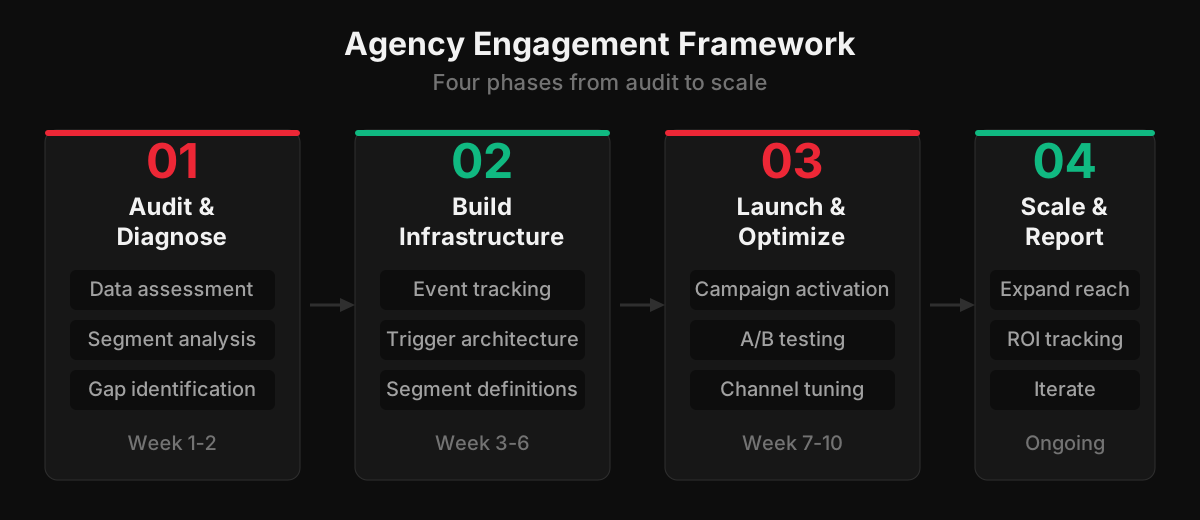
Strategic insights usually take 4 to 8 weeks to validate because you need to build cohorts and let campaigns run long enough to see statistically significant performance. Quick wins are usually operational: tightening up existing campaigns, fixing deliverability issues, or optimizing send times. You'll see positive movement in the first month on operational work. Real revenue impact usually shows in month 2 to 3 as strategic changes take effect.
What platforms do you work with?
Any major platform that has solid segmentation and automation capabilities. Klaviyo for e-commerce is our most common, but we also work with Braze, Iterable, Customer.io, Maitland, and others. The platform matters less than the strategy. We build around whatever infrastructure you have. If you need a platform recommendation, we can advise on that too.
How do you measure success?
Incremental revenue is the only metric that matters. We measure this through cohort analysis that compares customers who receive our retention campaigns against a holdout control group. We also track segment health, engagement trends by channel, and cost per incremental customer. If retention revenue is growing and unit economics are improving, we're succeeding.
What's the difference between retention and lifecycle marketing?
Retention is specifically about keeping customers and increasing their repeat purchase frequency. Lifecycle marketing is broader, covering the entire journey from acquisition through advocacy. They overlap significantly. A retention strategy is usually the core of a lifecycle strategy.
Why do some retention campaigns fail?
Usually because of upstream decisions: wrong segments, misaligned messaging, poor trigger logic, channel saturation, or lack of measurement. A lot of retention marketing fails because teams start with the email platform instead of customer data analysis. Start with data, understand your segments, then build campaigns around them. Not the reverse.
The Real Work of Retention Marketing
When you hire a retention marketing agency, you're buying access to the thinking and execution that lives beneath the platforms. You're getting someone who understands customer data architecture, who can build measurement frameworks that prove causality, who can design triggers that actually respond to meaningful behavioral signals, and who knows how to orchestrate across channels without creating message fatigue.
The platforms themselves are commoditized. Klaviyo, Braze, Iterable. They all have similar capabilities. The differentiation is in the strategy work: understanding your customers deeply enough to know which segments matter most, designing retention strategies that align with unit economics, and executing that strategy reliably over time.
This is where agency value lives. Not in pressing send buttons, but in deciding what to send, who needs it, when they need it, and whether it actually moved the business.
If you're ready to build retention as a system instead of a channel, Darkroom's retention marketing service is built around this architecture. We start with your data, understand your segments, and build the infrastructure that makes retention repeatable and profitable. Book a call with our team to discuss how retention strategy can move your repeat revenue.