RETENTION MARKETING
Why Retention Marketing Fails When It Starts with Email




Written by Darkroom leardership

Written & peer reviewed by 4 Darkroom team members
TL;DR:
Most brands start retention with email because it's the most visible channel. But email is an execution layer, not a strategy layer. Retention fails when brands optimize sends instead of building the behavioral infrastructure that makes customers repeatable. The real failure is treating retention as a channel problem instead of a systems problem. Learn how Darkroom fixes retention from the foundation up.
The Email Assumption Nobody Questions
Your exec asks a simple question: how do we get customers to buy again? The answer feels obvious: email them.
This is the first mistake. Not because email is bad. Email is actually one of your most reliable channels. The mistake is starting there. When retention becomes an email problem, you've already lost the actual game. You've outsourced the hard architectural work to the easiest tactical channel.
Walk through any SaaS or ecommerce company's retention setup. You'll find sophisticated email workflows. Welcome sequences. Browse abandonment. Cart recovery. Re-engagement campaigns. The sequences are segmented. The copy is tested. The send times are optimized. Yet retention still fails. Open rates are decent. Click rates are fine. Revenue per email hovers around the industry benchmark. But customers still don't come back.
The problem isn't the email. The problem is everything that happens before the email arrives.
Email Is the Execution Layer, Not the Strategy Layer
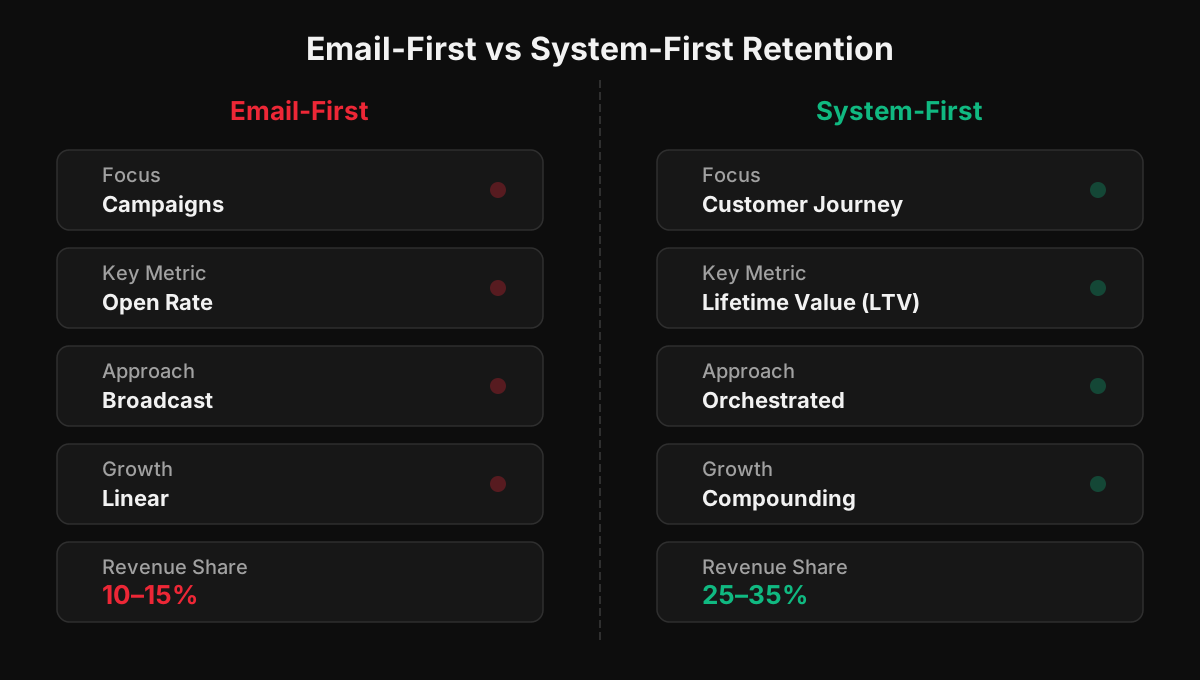
This distinction matters more than you think, because treating email as strategic is where retention programs break.
Email excels at one thing: delivering a message at scale to people who opted in. It's a reliable transmission mechanism. You write something valuable. You send it to an audience. People read it or they don't. This is execution. This is logistics. This is not strategy.
Strategy is figuring out why a customer would want to buy again in the first place. Not receiving an email about why they should. Actually wanting to. Strategy is understanding what needs a customer has after their first purchase. What problems emerge. What gaps appear. What drives someone from "I'm satisfied with what I bought" to "I'm ready to buy again."
When brands start with email, they're asking: how do we tell customers to come back? The better question is: why would they want to come back? If the answer requires an email to remind them, you've already failed. If they need to be reminded, they weren't ready to repeat.
McKinsey research shows that the most effective retention strategies focus on post-purchase customer success, not promotional messaging. The brands retaining customers at scale aren't the ones with the cleverest email sequences. They're the ones with the clearest customer infrastructure. They know what happens in the 24 hours after purchase. They know what questions customers ask in week two. They know what causes churn in month three. They've built systems around these moments.
The Behavioral Infrastructure Nobody Builds
Retention works because of what happens before email. It's the invisible plumbing that makes email campaigns actually land.
Let's walk through a real scenario. A customer buys a fitness tracker from your ecommerce site. Your email team has a beautiful 5-email welcome sequence planned. Personalized. Product-focused. Drives to content. Looks perfect on mobile. Should generate 15-20% click-through rate.
But here's what happened before that first email:
The customer received a shipping confirmation. Generic. Tells them nothing about how to use the tracker. Or why they bought it. Or what they should do first. No onboarding moment. Just a tracking number.
It arrives. Customer opens it. No setup guide. No app installation instructions. No quick-start video. They assume they'll figure it out later.
Your welcome email arrives three days later. Message is about the tracker's features. Advanced metrics. Customization options. Customer hasn't set it up yet. The email feels premature. Irrelevant. Delete.
Second email in the sequence comes the following week. Still feature-focused. Customer still hasn't used the product. Delete.
By email four, the campaign has 10% click-through rate. By email five, it's noise.
The email sequence didn't fail. The behavioral infrastructure failed. The company optimized emails while ignoring the actual customer journey. They built a delivery mechanism before building a reason to deliver.
Real retention infrastructure looks different. It maps the moments that matter. First unbox. First use. First success. First problem. First repeat purchase trigger. Then it builds systems around those moments. Guides. Notifications. Product experiences. Support checkpoints. Only then does email amplify what's already working.
Salesforce data indicates that companies with strong post-purchase engagement see 27% higher repeat purchase rates. Not because their emails are better. Because their entire customer experience is architected for success.
Channel Optimization vs. Systems Thinking
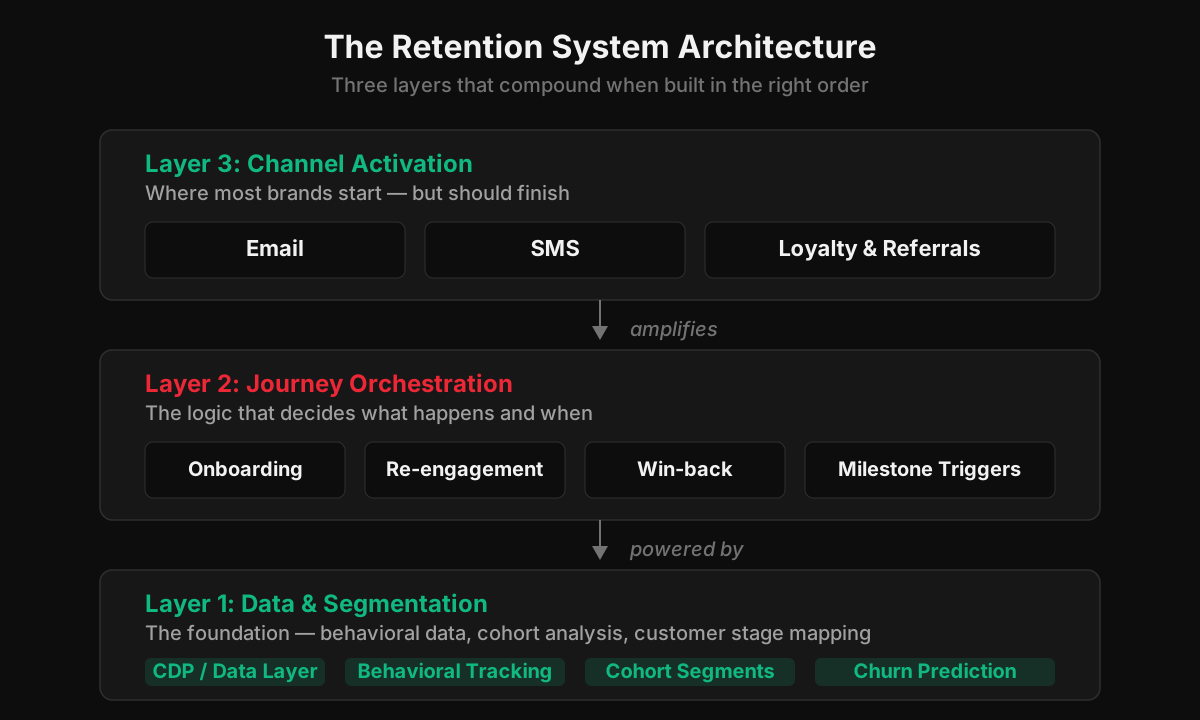
Most retention budgets go to channel optimization. Better segmentation. Smarter send times. More sophisticated copy. But optimizing the channel while the system is broken is expensive waste.
You can test subject lines forever. You can A/B send times until they're perfectly timed. You can build behavioral triggers that are exquisitely accurate. But if the customer journey upstream is fractured, none of it matters.
Here's the operational reality: brands treating retention as an email problem spend 70-80% of retention budget on email platform fees, copywriting, and testing. They spend 15-20% on customer success and onboarding. They spend 5% on understanding why customers actually churn.
This inversion is the real problem. Email becomes the focus because it's measurable. You know exactly how many people opened, clicked, converted. The metrics are clean. The work feels productive. Optimizing email feels like progress.
Meanwhile, the system problems stay hidden. Why do customers never make it to their second purchase? You don't know. Your analytics don't show it. Your email platform can't measure it. Your team never investigates it because everyone's busy optimizing send frequency.
Bain research found that improving customer retention rates by just 5% increases profits by 25-95%. Not from better emails. From fundamentally changing how you engage customers across their entire lifecycle. That requires systems thinking. Not channel optimization.
The Questions That Expose the Problem
Ask these questions about your retention program. The answers reveal whether you're building strategy or just optimizing execution.
First: What percentage of your first-time customers actually understand how to use your product in the first 48 hours? Not from reading emails. From their direct experience. If it's under 70%, your behavioral infrastructure is broken before email even matters.
Second: How many customers make a second purchase without ever receiving a promotional email? If it's under 40%, your product isn't compelling enough to drive repeat behavior naturally. You're dependent on email to push sales. That's fragile.
Third: What's your customer churn rate in the first 30 days after purchase? Most ecommerce companies lose 15-25% of customers in this window. That's not an email problem. That's a post-purchase experience problem. Email can't fix it.
Fourth: Can you map the exact moment in the customer journey where they become likely to repeat? Most brands can't. They have email sequences but no journey visibility. They know open rates. They don't know when customers become ready to buy again.
Fifth: What percentage of repeat purchases come from email campaigns versus direct visits, organic search, or word-of-mouth? If email drives the majority of repeat purchases, you've built a treadmill, not a moat. Customers will churn the moment email frequency drops.
These questions matter because they separate strategy from execution. The brands winning at retention can answer them. The brands struggling with retention can't.
What Actual Retention Strategy Looks Like
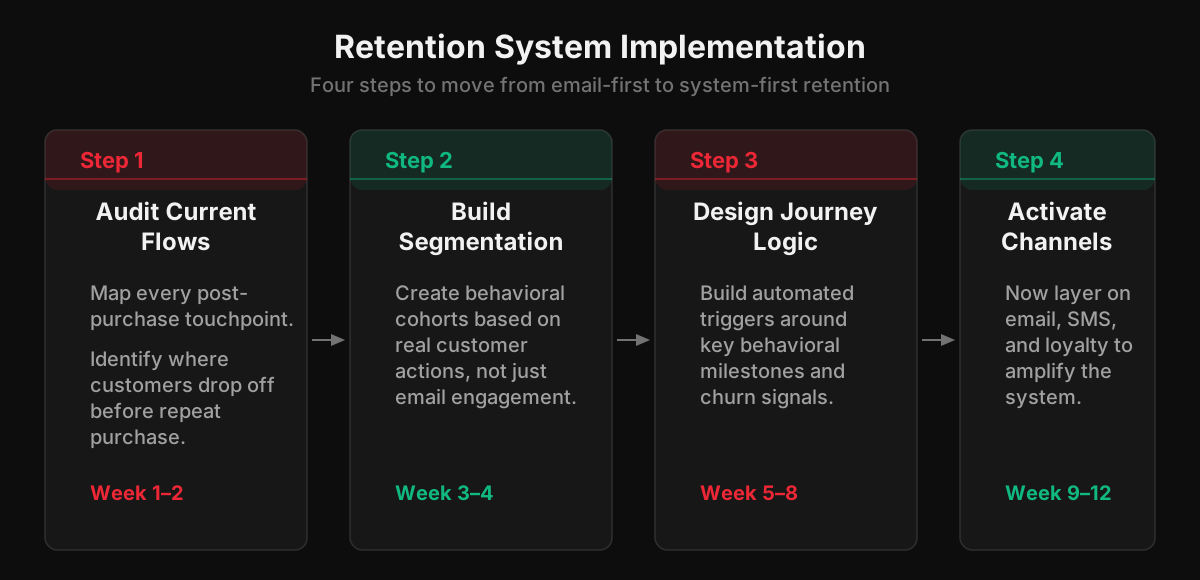
Building real retention means starting upstream. The system before the channel.
First comes clarity on the customer journey. Not a marketing funnel. An actual customer journey. What happens between purchase and the moment they're ready to buy again. The obstacles they encounter. The wins they need. The moments where they feel valued or abandoned.
Second comes behavioral measurement. Not open rates and click rates. Actual behavior. Did they use the product? Did they complete onboarding? Did they hit their first success milestone? How long did it take? Behavioral data tells you whether your post-purchase system is working. For more on how retention marketing budgets should be structured, see our retention marketing budget guide for 2026
Third comes experience design. Building moments that matter. Setup guides that actually guide. Notifications that provide value, not noise. Support that anticipates problems. Product changes that reduce friction. Email only amplifies these moments. It doesn't create them.
Fourth comes segmentation based on behavioral reality. Not email lists. Customer segments based on where they are in their journey. Early users. Active users. At-risk users. Lapsed users. Each segment gets a different system. Different touchpoints. Different communication cadence. Email is one piece of a much larger system.
Fifth comes measurement that tracks system health. Not email metrics. Repeat purchase rates. Customer lifetime value by cohort. Time between purchases. Churn rate by stage. Net revenue retention. These metrics reveal whether your retention system is actually working.
This is harder than building a sophisticated email program. It requires cross-functional collaboration. Better data. Deeper customer understanding. But it actually builds retention. Not just the illusion of it.
Why Brands Keep Making This Mistake
Understanding the mistake is one thing. Understanding why it persists is another. Brands repeat this error because email feels like a solution.
Email is visible. You can see the campaigns. You can measure the sends. You can show executives a 3-month email roadmap. It feels like you're doing something. Progress feels tangible.
Building behavioral infrastructure is slower. Messier. Requires coordination across product, support, operations, and marketing. The work is distributed. The metrics take time to materialize. It doesn't feel as productive in a quarterly planning meeting.
Email is also democratic. Most organizations have email tools. Most team members understand email. Building retention systems requires specialized expertise. It requires thinking like an operations person. Like a systems designer. Not like a marketer.
And email has low initial cost. Email platforms are cheap. Adding another drip sequence costs nothing. Building real post-purchase infrastructure requires investment. Product changes. Support process changes. Data architecture changes. It's expensive upfront.
So brands default to email. It's visible. It's fast. It's cheap. It feels like a solution. And it masks the real problem for long enough that the mistake becomes embedded in the operating model.
Klaviyo data shows that brands with dedicated retention specialists see 2.5x higher repeat purchase rates than brands where retention is a part-time marketing function. This isn't because retention specialists are better at email. It's because they have the operational authority and accountability to fix the system, not just the channel.
Moving Beyond Email-First Retention
Fixing this requires a deliberate shift. From channel-first thinking to system-first thinking.
Start by mapping the actual customer journey from purchase to repeat. Not a marketing calendar. An operations calendar. What actually happens. What should happen. Where the gaps are.
Measure behavioral milestones, not channel metrics. Did onboarding complete? Did they reach success criteria? How long did it take? When did they become at-risk? This data is more valuable than email open rates.
Design your post-purchase experience without email. What would it look like if email didn't exist? How would you guide new customers? How would you anticipate problems? How would you surface reasons to buy again? Build that system first. Then email amplifies it.
Allocate budget to where it matters. Post-purchase infrastructure. Customer success. Behavioral measurement. Support. Then allocate the remainder to email execution. Not the other way around.
And measure retention system health differently. Not open rates and click-through rates. Repeat purchase rates. Churn rates by cohort. Time between purchases. Revenue from repeat customers. These metrics reveal whether you've built actual retention or just a sophisticated email program.
Most brands won't make this shift. The default is too comfortable. The organizational inertia is too strong. But the brands that do move beyond email-first retention will own their categories. Because they'll have built something that actually works.
FAQ
Doesn't this mean we should stop doing email retention campaigns?
No. Email is a powerful channel. But it works best as part of a larger retention system. Email alone drives incremental gains. Systems-based retention drives transformational improvements. You need both, but the system comes first.
How do we measure whether our retention system is working?
Track repeat purchase rates, churn rates by customer cohort, time between purchases, and lifetime value for new cohorts. These reveal system health. Email metrics like open rates are leading indicators, not proof of retention success.
What's the fastest way to improve retention if we've been email-first?
Start with customer interviews. Talk to recent customers and lapsed customers. Map where they succeed and where they fail in the first 30 days. Fix the top three failure points. Then layer email campaigns on top of a functioning system.
Can a small team implement this?
Yes. Start small. Pick one post-purchase moment that matters most. Build a system around it. Measure it. Scale it. Most teams overcomplicate retention before they've built something that works.
What if our product doesn't naturally drive repeat purchases?
That's the real question. If customers don't have a behavioral reason to come back, no email program will fix it. You need to change the product or the business model. Retention emails can't solve product problems.
How long does it take to see results from a systems-based retention approach?
Early wins appear in 6-8 weeks. Meaningful impact takes 3-4 months. Full system optimization takes 6-12 months. This is slower than an email campaign launch, but the results compound.
Should we hire a retention specialist or agency to fix this?
If your retention system is broken, a specialist can help you diagnose and fix the root cause. But hiring someone just to manage email campaigns won't solve the underlying problem. Make sure you're solving the right problem first.
Ready to build a retention system that starts with behavior, not email? Book a call with Darkroom to audit your current retention architecture and identify the structural gaps holding back repeat revenue.