PAID MEDIA
Google Ads for Ecommerce: Campaign Architecture That Scales




Written by Darkroom leardership

Written & peer reviewed by 4 Darkroom team members
TL;DR
Most ecommerce brands run Google Ads as five or six disconnected campaigns, each with its own budget, bidding strategy, and attribution window. The result is budget fragmentation, audience cannibalization, and inflated per-channel metrics that mask declining total returns. The fix is campaign architecture: a unified system where Standard Shopping serves as the revenue foundation (35-45% of budget), Search captures intent Shopping misses, Performance Max expands reach with guardrails, and Display plus YouTube layer on retargeting and demand generation in sequence. Darkroom builds these systems for ecommerce brands scaling past $50K/month in ad spend, and this playbook covers the exact structure we deploy.
The Problem with How Most Brands Run Google Ads
Google Ads for ecommerce is not a single channel. It is a collection of campaign types, each with different auction mechanics, targeting signals, and creative formats. Search runs on keyword intent. Shopping runs on product feeds. Performance Max runs on Google's AI signals across every surface. Display runs on audience targeting. YouTube runs on creative and attention.
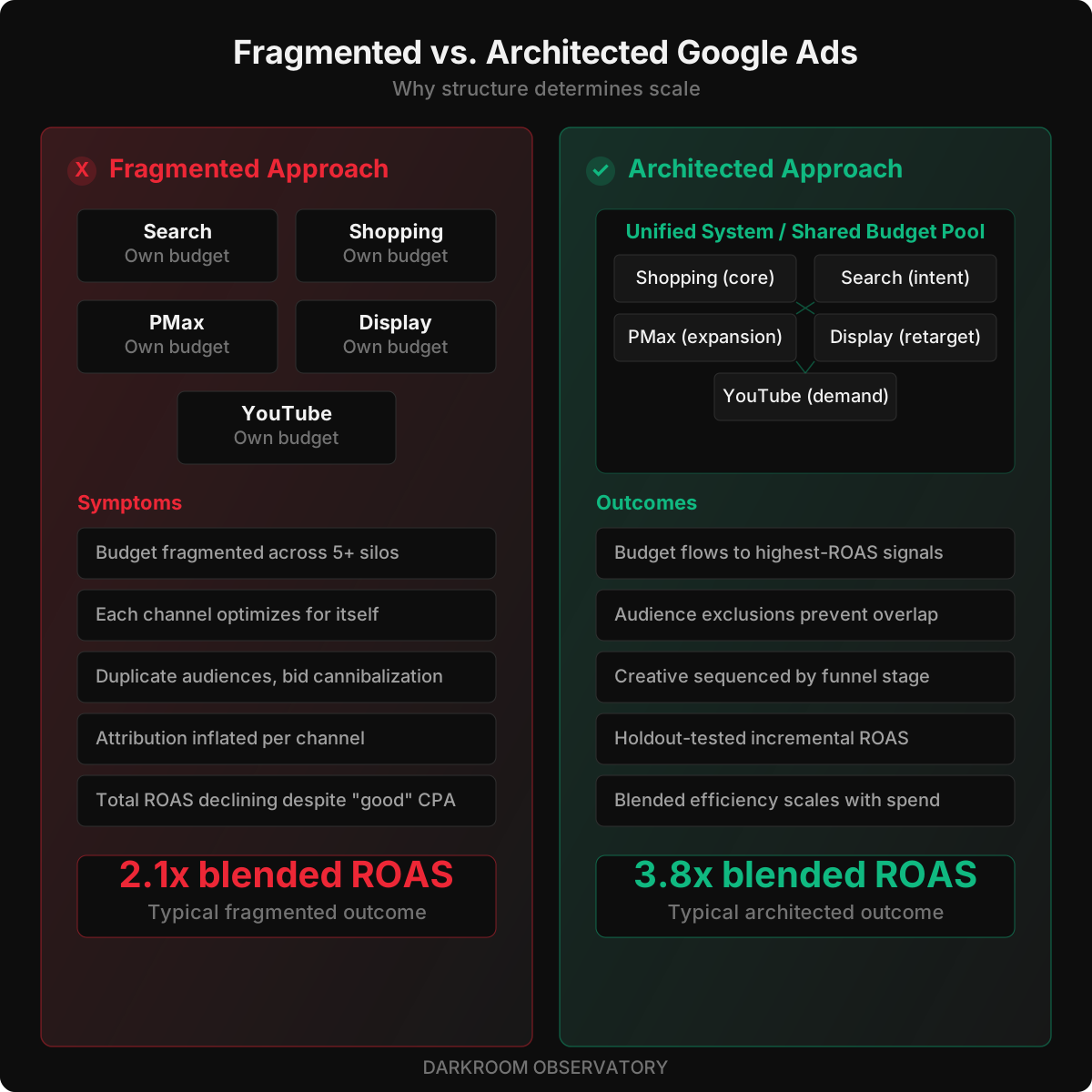
The default approach, and the one most brands and even many agencies default to, is to treat each campaign type as an independent entity. Shopping gets its own budget. Search gets its own budget. PMax gets its own budget. Each campaign has its own ROAS target, its own bidding strategy, and its own reporting dashboard. On paper, every campaign looks like it is performing. In reality, total account efficiency is declining.
This is the fragmentation problem. According to WordStream's 2025 Google Ads benchmarks, the average ecommerce conversion rate on Google Ads is 2.81%, but brands with unified campaign architecture consistently outperform that by 40-60%. The gap is not in bidding or creative. It is in structure.
Why fragmentation kills ROAS. When campaigns operate independently, they compete against each other. Your Shopping campaign and your PMax campaign bid on the same product queries. Your branded Search campaign takes credit for conversions that would have happened organically. Your Display remarketing campaign claims assisted conversions that Search already counted. Every channel shows a healthy ROAS. But when you look at blended, account-level return on ad spend, the number tells a different story.
Google Ads is a system within the broader full-funnel marketing ecosystem. Treating it as a collection of disconnected campaigns is the single most common structural mistake in ecommerce paid media.
What Campaign Architecture Actually Means
Campaign architecture is the deliberate design of how your Google Ads campaigns interact with each other. It defines four things: which campaign types you run and why, how budget flows between them, how audiences are segmented and excluded across campaigns, and how creative is sequenced by funnel stage.
This is not account organization for the sake of neatness. It is a structural decision that determines how efficiently your budget converts. A well-architected Google Ads account treats the entire system as one machine with interlocking parts, not six separate machines running in parallel.
The four pillars of campaign architecture. Structure refers to campaign types, their hierarchy, and naming conventions. Budget allocation refers to how spend flows from high-priority to low-priority campaigns based on saturation signals. Audience layering refers to how customer segments are shared and excluded across campaigns to prevent overlap. Creative sequencing refers to how ad messaging changes based on where a user sits in the buying journey. Get all four right, and your Google Ads account scales. Miss any one, and you hit a ceiling where more spend produces worse returns.
Campaign architecture is closely related to the discipline of performance creative systems. The structure determines what creative goes where, and creative performance feeds back into structural decisions about budget allocation.
Google Ads, as a platform, is a core component of ecommerce paid media strategy. Google Ads campaign architecture, as a discipline, sits at the intersection of media buying and business intelligence, requiring both platform expertise and analytical rigor.
The Campaign Hierarchy: What to Fund and In What Order
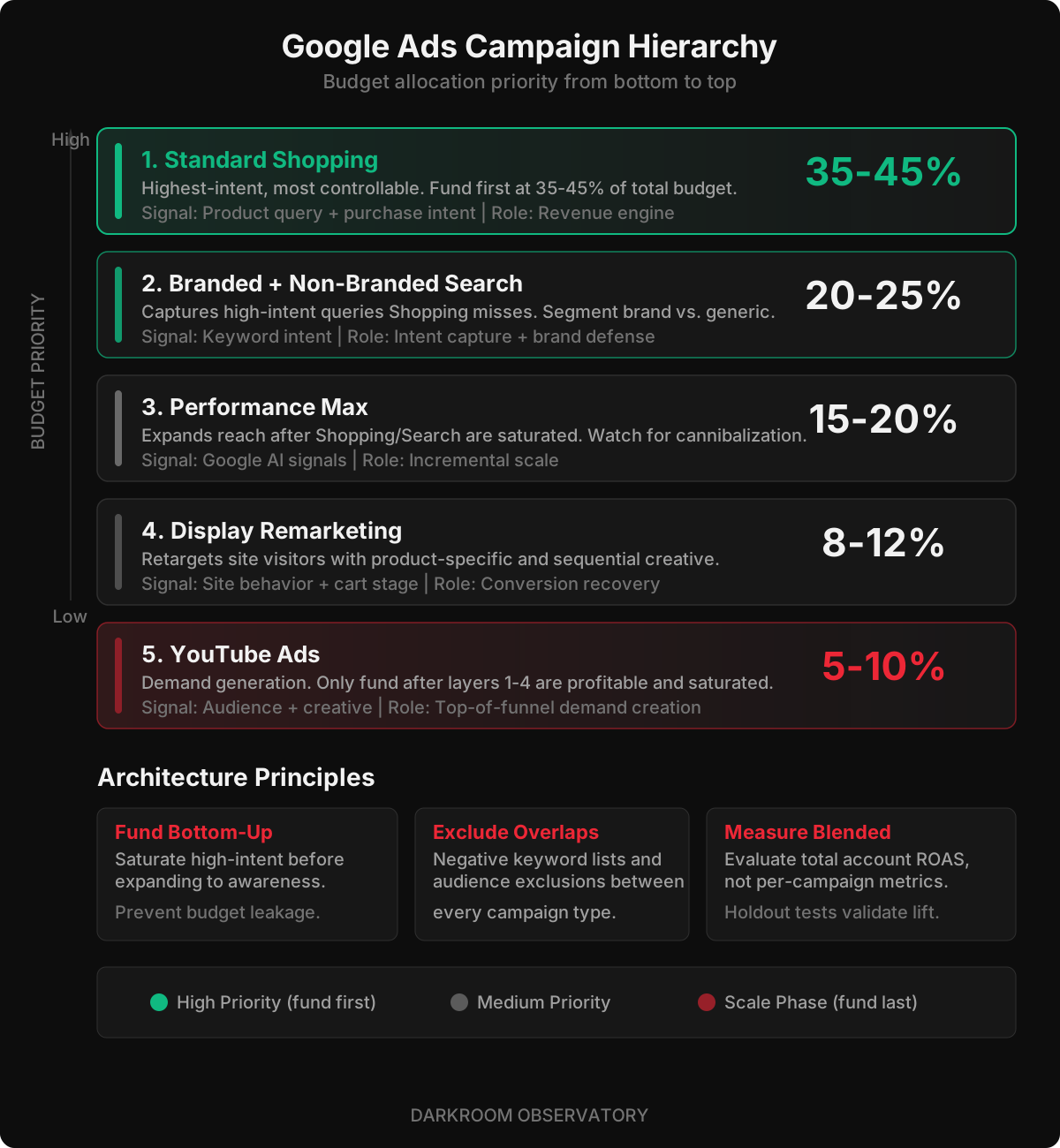
Not all Google Ads campaign types are equal. They differ in intent signal strength, controllability, and incremental value. The hierarchy below reflects how budget should flow in a properly architected ecommerce account.
Priority | Campaign Type | Budget Share | Role | Key Signal |
|---|---|---|---|---|
1 (Highest) | Standard Shopping | 35-45% | Revenue engine | Product query + purchase intent |
2 | Branded + Non-Branded Search | 20-25% | Intent capture + brand defense | Keyword intent |
3 | Performance Max | 15-20% | Incremental scale | Google AI signals |
4 | Display Remarketing | 8-12% | Conversion recovery | Site behavior + cart stage |
5 (Lowest) | YouTube Ads | 5-10% | Demand generation | Audience + creative |
Standard Shopping as the foundation. Shopping campaigns give you the most control and the highest intent signals. Users searching for specific products with commercial intent convert at the highest rate. Standard Shopping, unlike Performance Max, lets you set granular bids by product group, apply negative keywords, and control which queries trigger your ads. This is why it gets funded first. If your Shopping campaigns are not profitable and saturated, you should not be spending money on upper-funnel campaigns.
Search captures what Shopping misses. Branded Search protects your brand terms from competitor conquesting and captures navigational intent. Non-branded Search targets category and problem-aware queries that Shopping does not reach. The critical structural decision here is to separate branded and non-branded into distinct campaigns. Branded Search will always show inflated ROAS because those users already know your brand. Blending the two obscures the true performance of your generic keyword targeting.
This layered approach to paid media connects directly to how a platform metrics problem undermines most Google Ads accounts. When every campaign reports its own ROAS, the total picture gets distorted.
Performance Max as a controlled expansion layer. PMax is Google's AI-driven campaign type that runs across Search, Shopping, Display, YouTube, Gmail, and Discover simultaneously. It is powerful for reach, but dangerous without guardrails. The architecture approach is to run PMax alongside Standard Shopping with proper exclusions. You use PMax to find incremental audiences and placements that your manual campaigns miss, not as a replacement for Shopping. According to Google's own documentation, PMax campaigns are designed to complement existing keyword-based Search campaigns, not replace them.
Display remarketing for conversion recovery. Display campaigns in a well-architected account serve one primary purpose: retargeting users who visited your site but did not convert. This is not prospecting. Prospecting on Display is generally low-efficiency for ecommerce. Your Display budget should be segmented by recency window (0-7 days, 8-14 days, 15-30 days) with creative that matches each stage. Cart abandoners see product-specific ads. Browse abandoners see category-level messaging.
YouTube for demand generation, only after saturation. YouTube is the highest-risk, highest-reward campaign type. It generates demand rather than capturing it, which means attribution is inherently challenging. Only fund YouTube after your Shopping, Search, PMax, and Display layers are profitable and approaching saturation. This is where the incrementality testing discipline becomes critical, because YouTube's value will not show up in last-click attribution.
Budget Allocation: The Flow Model
Budget allocation in a well-architected Google Ads account is not static. It follows a flow model where spend moves up the funnel only after lower-funnel campaigns are saturated. Saturation means the campaign cannot profitably absorb more spend without degrading efficiency beyond your target ROAS.
How to identify saturation. A campaign is saturated when increasing daily budget by 20% produces less than a 10% increase in conversions while CPA rises more than 15%. At that point, the marginal dollar is better deployed in the next campaign tier. This requires weekly monitoring of marginal ROAS, not average ROAS. Average ROAS will always look acceptable. Marginal ROAS tells you whether the next dollar of spend is worth it. Research from Google's Think with Google confirms that automated bidding performs best when campaigns have clear budget boundaries and sufficient conversion data within each campaign tier.
This connects to the broader challenge of growth marketing versus performance marketing. Pure performance optimization holds budget in lower-funnel campaigns forever. Growth-oriented architecture deliberately invests in upper-funnel when the numbers justify it.
The 60/25/15 framework. As a starting point for ecommerce brands between $50K and $500K/month in Google Ads spend, allocate approximately 60% to bottom-funnel (Shopping + Search), 25% to mid-funnel (PMax + Display remarketing), and 15% to top-funnel (YouTube + broad PMax expansion). Adjust based on your category, margin structure, and customer acquisition cost targets. Brands with higher LTV can justify more top-funnel spend. Brands with lower margins need to concentrate on bottom-funnel efficiency.
A skilled paid media management team will adjust these ratios weekly based on performance signals, not set them once and forget.
Audience Layering and Exclusion Architecture
Audience layering is where most Google Ads accounts break down. Without deliberate audience architecture, your campaigns serve ads to the same people across multiple campaign types, inflating total spend without increasing total conversions.
The exclusion matrix. Every campaign in your architecture needs a defined audience scope and explicit exclusions for audiences being targeted elsewhere. Your prospecting Shopping campaigns should exclude past purchasers (unless you are running a specific repurchase campaign). Your PMax campaigns should exclude high-value remarketing audiences that you want to reach through dedicated Display creative. Your branded Search campaigns should separate returning customers from new visitors for bid adjustment purposes.
This audience discipline parallels what works in email marketing revenue architecture. The principle is the same: segment audiences by behavior stage, serve them different messaging, and measure each segment independently.
First-party data integration. Your customer lists from Klaviyo, Shopify, or your CDP should feed directly into Google Ads audience segments. Create at minimum four lists: purchasers (all time), purchasers (last 90 days), high-value purchasers (top 20% by LTV), and lapsed purchasers (purchased 180+ days ago, no return). These lists serve as both targeting signals for PMax and exclusion signals for prospecting campaigns. Google's Customer Match allows you to upload these lists with match rates typically between 40-65% for ecommerce brands.
Signal layering in Performance Max. PMax does not let you target audiences directly, but it does accept audience signals that influence its AI targeting. Feed it your highest-converting audience segments as signals, not restrictions. This gives Google's algorithm a starting point for finding similar users across its network. The mistake most brands make is either providing no signals (letting Google start from zero) or providing too many low-quality signals that dilute targeting.
Creative Sequencing Across Campaign Types
Creative in a Google Ads architecture is not one message repeated everywhere. It is a sequence of messages that matches user intent at each stage of the buying journey. Shopping ads use product images and pricing. Search ads use keyword-matched headlines addressing specific queries. Display remarketing uses dynamic product ads and urgency messaging. YouTube uses storytelling and social proof.
The creative-to-funnel alignment. Bottom-funnel creative (Shopping, branded Search) should emphasize product specifics, pricing, and trust signals like reviews and shipping speed. Mid-funnel creative (non-branded Search, PMax) should emphasize category authority, differentiation, and problem-solution framing. Top-funnel creative (YouTube, broad PMax) should emphasize brand story, customer outcomes, and aspirational positioning. This is the performance creative discipline applied specifically to Google Ads.
Understanding creative fatigue and testing frameworks is essential here. Google Ads creative, particularly in Display and YouTube, degrades faster than most teams expect. A campaign architecture without a creative refresh cadence will see performance decline within 4-6 weeks as frequency increases and engagement drops.
Asset group strategy in PMax. Performance Max organizes creative into asset groups, and the structure of these groups matters. Create separate asset groups for different product categories, audience intents, or funnel stages rather than dumping all assets into one group. This gives Google's algorithm clearer signals about which creative-audience combinations work, and gives you clearer reporting on what is driving performance. A typical ecommerce brand should run 3-5 asset groups per PMax campaign, each with a distinct creative theme and landing page.
Measurement: Blended ROAS Over Per-Campaign Metrics
The single most important measurement shift in campaign architecture is moving from per-campaign ROAS to blended, account-level ROAS as your primary KPI. Per-campaign ROAS is useful for optimization decisions within a campaign. It is misleading as a measure of total efficiency because of attribution overlap.
Metric | Fragmented Approach | Architected Approach | Why It Matters |
|---|---|---|---|
Primary KPI | Per-campaign ROAS | Blended account ROAS | Eliminates double-counting |
Budget decisions | Based on campaign CPA | Based on marginal ROAS | Captures diminishing returns |
Attribution model | Last click per campaign | Data-driven + holdout tests | Validates incremental value |
Creative evaluation | CTR and conversion rate | Contribution to total revenue | Prevents over-optimizing clicks |
Reporting cadence | Monthly per campaign | Weekly blended + monthly deep dive | Faster budget reallocation |
Holdout testing for incrementality. The gold standard for measuring whether a campaign type is truly driving incremental revenue is the geo holdout test. Select a set of geographically matched markets, turn off one campaign type in the holdout group, and measure the difference in total revenue over 4-6 weeks. This is the only way to know whether your Display remarketing campaigns are actually driving conversions or just claiming credit for purchases that would have happened anyway. Geo experimentation is the backbone of serious paid media measurement.
The marginal ROAS discipline. Stop looking at average ROAS for budget decisions. Start calculating marginal ROAS: the return on the last dollar spent within each campaign. A campaign with 5x average ROAS might have 1.2x marginal ROAS if it is already saturated. That means the next dollar is better spent elsewhere. Weekly marginal ROAS calculations by campaign type drive the budget flow model described above.
This measurement rigor is what separates a strong growth marketing agency from one that simply manages campaigns. The architecture is only as good as the measurement system that informs it.
The 90-Day Build: Implementing Campaign Architecture
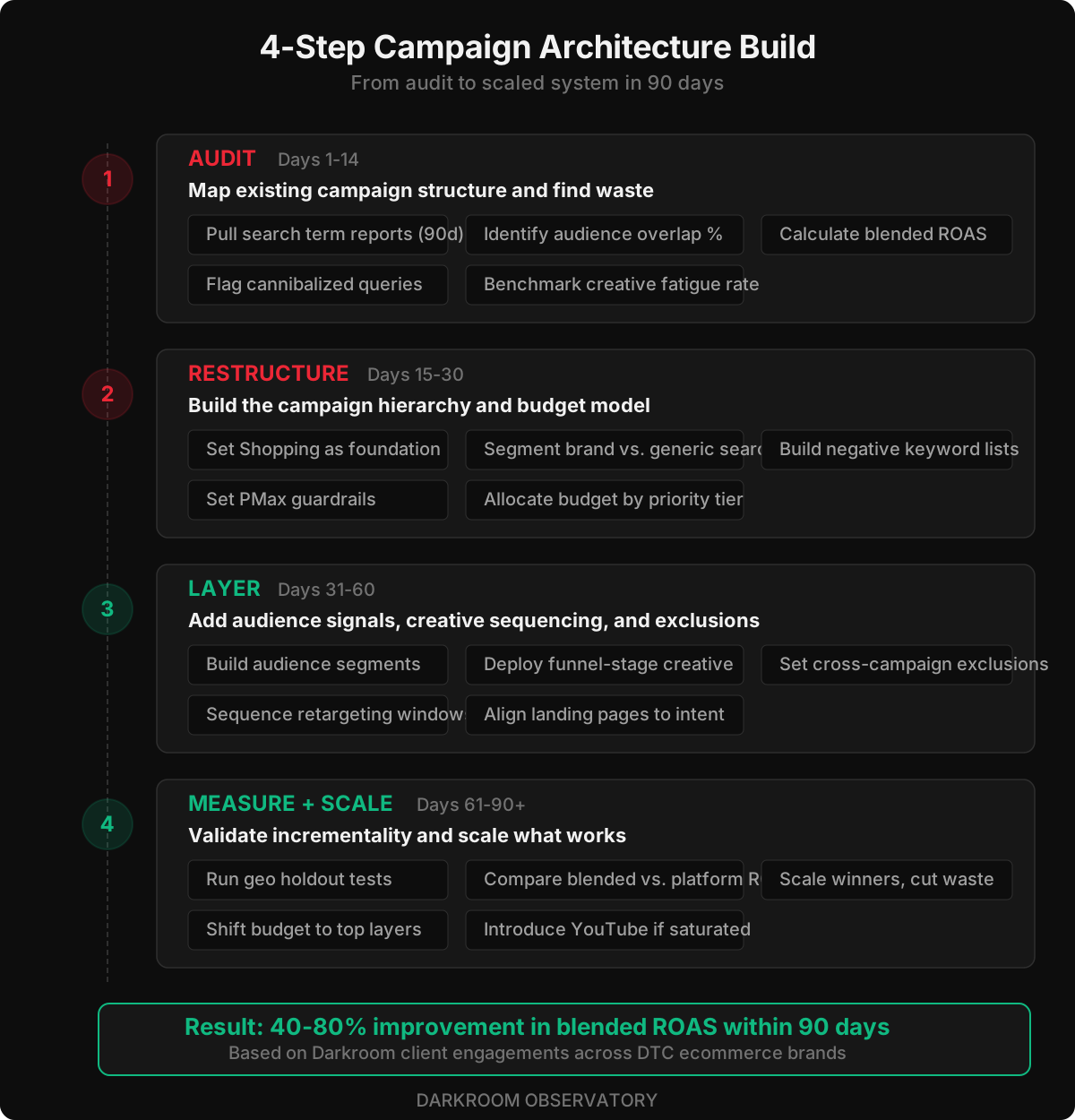
Campaign architecture is not something you implement in an afternoon. It requires a phased approach that audits the existing state, restructures the foundation, layers on audience and creative signals, and then validates with measurement. Here is the 90-day framework we use at Darkroom.
Phase 1: Audit (Days 1-14)
Pull 90 days of search term reports across all campaign types. Identify the overlap: which queries are being served by both Shopping and PMax, which branded terms are leaking into generic campaigns, and where audience targeting duplicates across Display and PMax. Calculate your true blended ROAS by dividing total Google Ads-attributed revenue by total Google Ads spend, ignoring per-campaign breakdowns. This number is your baseline. For most brands entering this process, the blended number is 20-40% lower than what their per-campaign metrics suggest.
This audit phase often reveals issues that connect to broader problems like agency-brand relationship breakdowns. If your current agency has been reporting only per-campaign metrics, there is a structural misalignment in how success is being defined.
Phase 2: Restructure (Days 15-30)
Rebuild the campaign structure according to the hierarchy above. Establish Standard Shopping as the foundation with granular product group segmentation. Separate branded and non-branded Search into distinct campaigns. Set PMax guardrails including brand exclusions and audience signal configuration. Build your negative keyword lists and apply them across campaign types. Set initial budget allocations based on the 60/25/15 framework, adjusted for your specific data.
The restructure phase should also align landing page strategy with campaign intent. High-intent Shopping and Search traffic should land on product pages with optimized conversion rate optimization. Upper-funnel traffic from PMax and YouTube should land on collection pages or editorial content that educates before selling.
Phase 3: Layer (Days 31-60)
With the structure in place, layer on audience signals and creative sequencing. Upload customer lists for targeting and exclusion. Build remarketing audiences segmented by recency and behavior. Deploy funnel-stage-specific creative across each campaign type. Implement cross-campaign exclusions so your Search campaigns are not spending budget on users who are already in your Display remarketing funnel.
This is also when you align your Google Ads creative with your broader UGC and paid social performance strategy. Creative assets that perform on Meta or TikTok can be adapted for YouTube and Display, but the messaging needs to match the intent stage of each Google Ads campaign type.
Retention integration. Your retention marketing data should inform your Google Ads audience architecture. Customers with high repeat purchase rates should be excluded from prospecting campaigns and targeted through dedicated retention campaigns with cross-sell and upsell messaging. This prevents you from paying acquisition costs on customers who would have repurchased through email or SMS.
Scaling: When and How to Increase Spend
A properly architected Google Ads account scales differently than a fragmented one. Instead of linearly increasing every campaign's budget and hoping ROAS holds, you scale by identifying saturation points and redirecting spend to the next highest-value opportunity.
The scale sequence. First, maximize Shopping efficiency. Then, scale Shopping spend until marginal ROAS declines below target. Next, increase non-branded Search investment in proven categories. Then, expand PMax with new asset groups targeting incremental audiences. Finally, introduce YouTube for categories where you have strong creative and proven product-market fit. At each stage, validate with holdout tests that the incremental spend is producing incremental revenue, not just shifting attribution from one campaign to another.
This approach connects to the broader question of how to allocate retention marketing budgets. Brands scaling Google Ads spend should simultaneously ensure their retention systems are converting acquired customers into repeat buyers, because the LTV of acquired customers determines how aggressively you can bid on acquisition campaigns.
PMax expansion strategy. As you scale PMax, create new asset groups rather than increasing budget on existing ones. Each asset group should target a specific product category, audience segment, or creative angle. This gives Google's algorithm clearer optimization signals and gives you clearer data on what is working. Monitor the "Insights" tab in PMax to understand which audience segments and search themes are driving conversions, and feed that data back into your Shopping and Search campaigns.
For brands also selling on Amazon, Google Ads campaign architecture should account for the Amazon channel. Amazon's marketing flywheel captures a significant share of product searches, and your Google Ads strategy needs to either defend against Amazon competition on your branded terms or deliberately drive traffic to your DTC site with messaging that differentiates the DTC buying experience.
Campaign architecture, when properly executed, is the operating system of ecommerce paid media. It determines not just how individual campaigns perform, but how efficiently your total ad spend converts into profitable revenue. The brands that get this right do not just improve ROAS. They build a scalable system that compounds as they grow.
Google Ads campaign architecture is a subdomain of paid media strategy. Paid media strategy, in turn, connects to SEO through search intent data sharing and to Amazon advertising through cross-channel budget allocation.
Ready to move from disconnected campaigns to a unified Google Ads architecture? Book a call with Darkroom and we will audit your current structure and show you exactly where the waste is.
FAQ
How should I structure Google Ads campaigns for ecommerce?
Structure Google Ads as a unified system with Shopping as the foundation (35-45% of budget), followed by branded and non-branded Search (20-25%), Performance Max (15-20%), Display remarketing (8-12%), and YouTube (5-10%). Each layer should have defined audience exclusions and shared negative keyword lists to prevent cannibalization.
What percentage of Google Ads budget should go to Shopping campaigns?
Standard Shopping campaigns should receive 35-45% of total Google Ads budget for ecommerce brands. Shopping captures the highest-intent product queries and provides the most granular control over bids, making it the most efficient revenue driver in most ecommerce accounts.
Should ecommerce brands use Performance Max or Standard Shopping?
Use both, but in sequence. Standard Shopping should be funded first as your primary revenue engine. Performance Max should be layered on top at 15-20% of budget to capture incremental reach that Shopping misses. Run them simultaneously with proper exclusions to prevent PMax from cannibalizing Shopping traffic.
How do you prevent Google Ads campaigns from cannibalizing each other?
Prevent cannibalization through three mechanisms: shared negative keyword lists applied across campaign types, audience exclusions that prevent remarketing lists from appearing in prospecting campaigns, and priority settings that give Shopping campaigns first access to product queries before PMax.
What is a good blended ROAS for Google Ads ecommerce campaigns?
A well-architected Google Ads account for ecommerce typically achieves 3x-5x blended ROAS, depending on average order value and margins. The key metric is blended account-level ROAS rather than per-campaign ROAS, which tends to overstate performance due to attribution overlap.
How much should an ecommerce brand spend on Google Ads?
Most ecommerce brands allocate 15-30% of revenue to paid media, with Google Ads representing 30-50% of that total paid budget. The specific amount depends on category competition, margin structure, and growth targets. Start by fully funding Shopping and Search before expanding to upper-funnel campaigns.
When should an ecommerce brand hire a Google Ads agency?
Consider a Google Ads agency when monthly spend exceeds $25,000-$50,000 and in-house resources cannot maintain proper campaign architecture, audience segmentation, creative testing, and incrementality measurement. The right agency should demonstrate expertise in blended ROAS optimization, not just per-campaign metrics.