PAID MEDIA
Google Ads vs Meta Ads: Where to Spend Your Ecommerce Budget in 2026




Written by Darkroom leardership

PAID MEDIA
Written & peer reviewed by 4 Darkroom team members
TL;DR
Google Ads captures demand. Meta Ads creates it. The right split is not a universal ratio. It depends on your revenue stage, margin structure, creative velocity, and measurement infrastructure. Most ecommerce brands start Meta-heavy and shift toward Google as they scale. The inflection points happen at $1M, $5M, $20M, and $50M+. This article includes CPM, CPC, and ROAS benchmarks by vertical, a four-step allocation framework, and guidance on when to add TikTok as a third channel. Darkroom manages the full media mix for ecommerce brands, and this is the framework we use to allocate across platforms.
The Question Every Ecommerce Brand Gets Wrong
The answer to "Google Ads or Meta Ads?" is not "both." It is "it depends on variables that most brands never measure."
Every ecommerce founder and growth lead asks this question. Should we put more into Google or Meta? The standard agency answer is "both," which is technically correct and operationally useless. It tells you nothing about how much to put where, when to shift allocation, or what signals to watch.
The real answer depends on five variables: your revenue stage (which determines brand awareness and search demand), your margin structure (which determines allowable CAC), your creative velocity (which determines whether Meta can work at all), your product category (which determines search volume and CPCs), and your measurement infrastructure (which determines whether you can tell which platform is driving growth).
According to Statista's 2026 digital advertising data, Google and Meta together capture over 48% of global digital ad spend. For ecommerce, these two platforms represent 60-75% of most brands' paid media budgets. Getting the split wrong creates structural growth constraints that compound over time. The framework that follows is built from managing nine-figure media budgets across both platforms and validated by incrementality testing and media mix modeling data.
Google Ads: The Demand Capture Engine
Google does not create desire. It captures intent that already exists and converts it into revenue.
Google Ads works because people are already looking for what you sell. When someone types "best running shoes for flat feet" into Google, they have a problem and want a solution. Your job is to be there with the right product at the right price. This is demand capture in its purest form.
The Google Ads ecosystem for ecommerce includes Shopping campaigns (product listings with images and prices, the revenue foundation), Search campaigns (branded and non-branded text queries), Performance Max (AI-driven delivery across all Google surfaces), and Display/YouTube for retargeting and upper-funnel reach. Building these into a unified system is the core of Google Ads campaign architecture.
Where Google excels. High-intent product searches, category queries, branded search defense, and Shopping for products with clear visual differentiation. According to WordStream's 2026 benchmarks, the average ecommerce conversion rate on Google Ads is 3.1%, with Shopping at 3.8% and branded Search at 5.2%.
Where Google struggles. Products people do not know exist. Categories with low search volume. Brands with no existing awareness. If nobody is searching for your product category, Google cannot help you create that demand.
The cost structure. Average ecommerce CPCs on Google Shopping range from $0.45 to $1.80 by category. Non-branded Search CPCs range from $1.20 to $4.50. Branded Search CPCs are $0.30 to $0.80. These costs have increased 18-22% since 2024. Understanding these numbers matters when evaluating marketing agency pricing and expected returns.
Meta Ads: The Demand Creation Engine
Meta does not wait for intent. It manufactures desire by putting the right product in front of the right person at the right moment.
Nobody opens Instagram looking for running shoes. They open it to scroll. Your ad interrupts that experience. If the creative is good enough, it creates a desire that did not exist 30 seconds ago. This is demand creation, and it is fundamentally different from what Google does.
Where Meta excels. New product launches where no search demand exists. Visually compelling products that sell through creative. Impulse purchase categories (beauty, fashion, food, home goods). Building brand awareness that eventually converts through Google or direct. Meta's targeting algorithm remains the most sophisticated for finding new customers who resemble your existing buyers.
Where Meta struggles. Highly considered purchases with long research cycles. Products requiring specification matching. Categories where the buying trigger is a specific problem rather than desire.
The cost structure. Average ecommerce CPMs on Meta Feed placements range from $12 to $22. Reels CPMs range from $8 to $16. Average CPCs are $0.80 to $2.20. The critical difference from Google: Meta costs are heavily influenced by creative quality. Brands with strong performance creative systems consistently achieve 30-40% lower CPMs than brands running stale ads.
The creative velocity requirement. Most ecommerce brands need 10-20 new creative assets per week to maintain Meta performance at scale. Managing creative fatigue through systematic testing is not optional on Meta. It is a prerequisite for consistent performance.
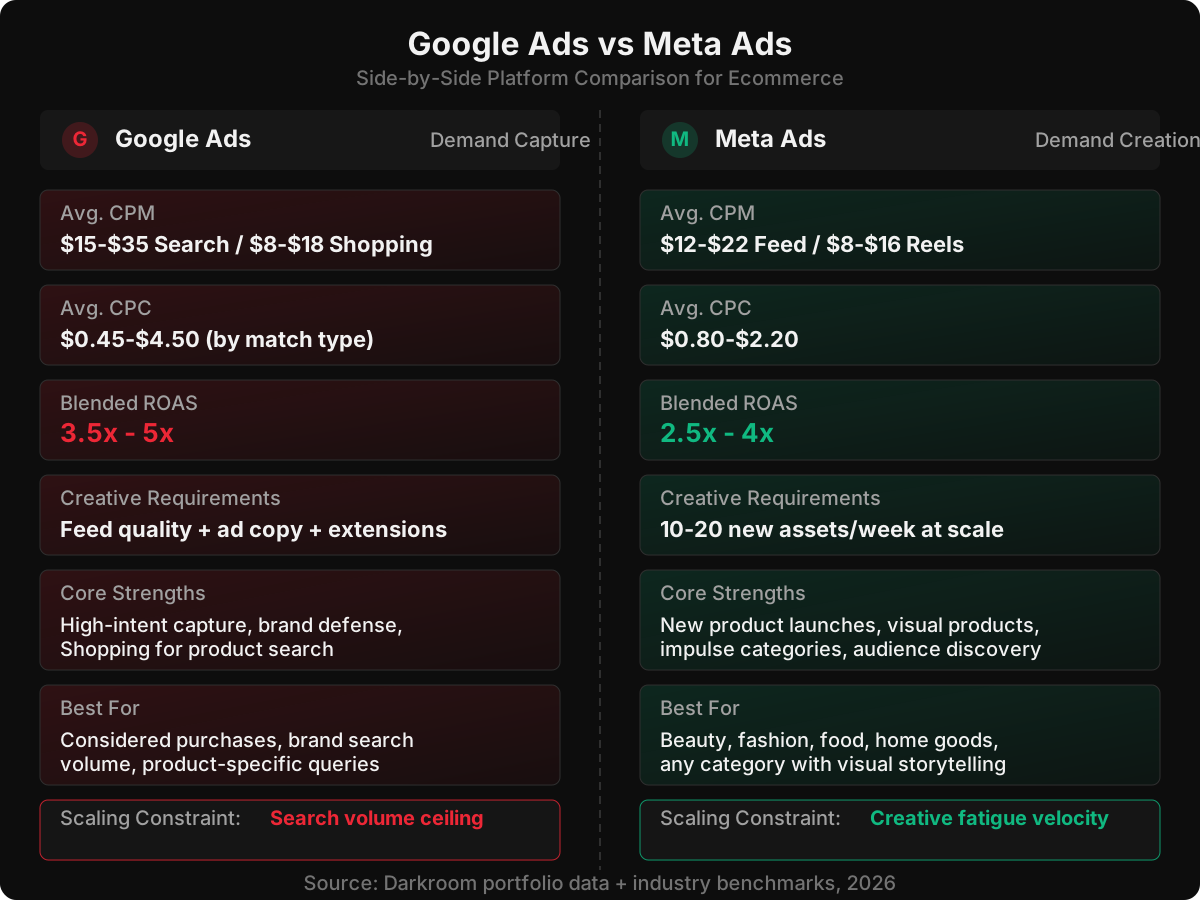
Head-to-Head: Google Ads vs Meta Ads by the Numbers
Platform-reported metrics favor the platform. These benchmarks are calibrated against third-party attribution and incrementality data.
The following comparison uses 2026 median benchmarks across ecommerce verticals, based on Darkroom's portfolio data cross-referenced with industry benchmarks from Varos and internal incrementality testing.
Metric | Google Ads | Meta Ads |
|---|---|---|
Avg. CPM | $15-$35 (Search), $8-$18 (Shopping) | $12-$22 (Feed), $8-$16 (Reels) |
Avg. CPC | $0.45-$4.50 (varies by match type) | $0.80-$2.20 |
Blended ROAS | 3.5x-5x | 2.5x-4x |
Incremental ROAS | 2.5x-3.5x | 2x-3x |
Creative Requirements | Product feed quality, ad copy, extensions | 10-20 new assets/week at scale |
Primary Function | Demand capture (search intent) | Demand creation (interruption) |
Best For | High-intent categories, brand defense | Impulse categories, visual storytelling |
Scaling Constraint | Search volume ceiling | Creative fatigue velocity |
A critical nuance: Google's higher reported ROAS does not mean Google is more profitable. Google captures demand that often originates from Meta exposure. A customer sees your product on Instagram, searches for it on Google three days later, and purchases. Google claims that conversion. Without proper attribution infrastructure, you will systematically overvalue Google and undervalue Meta.
The Full-Funnel Media Stack
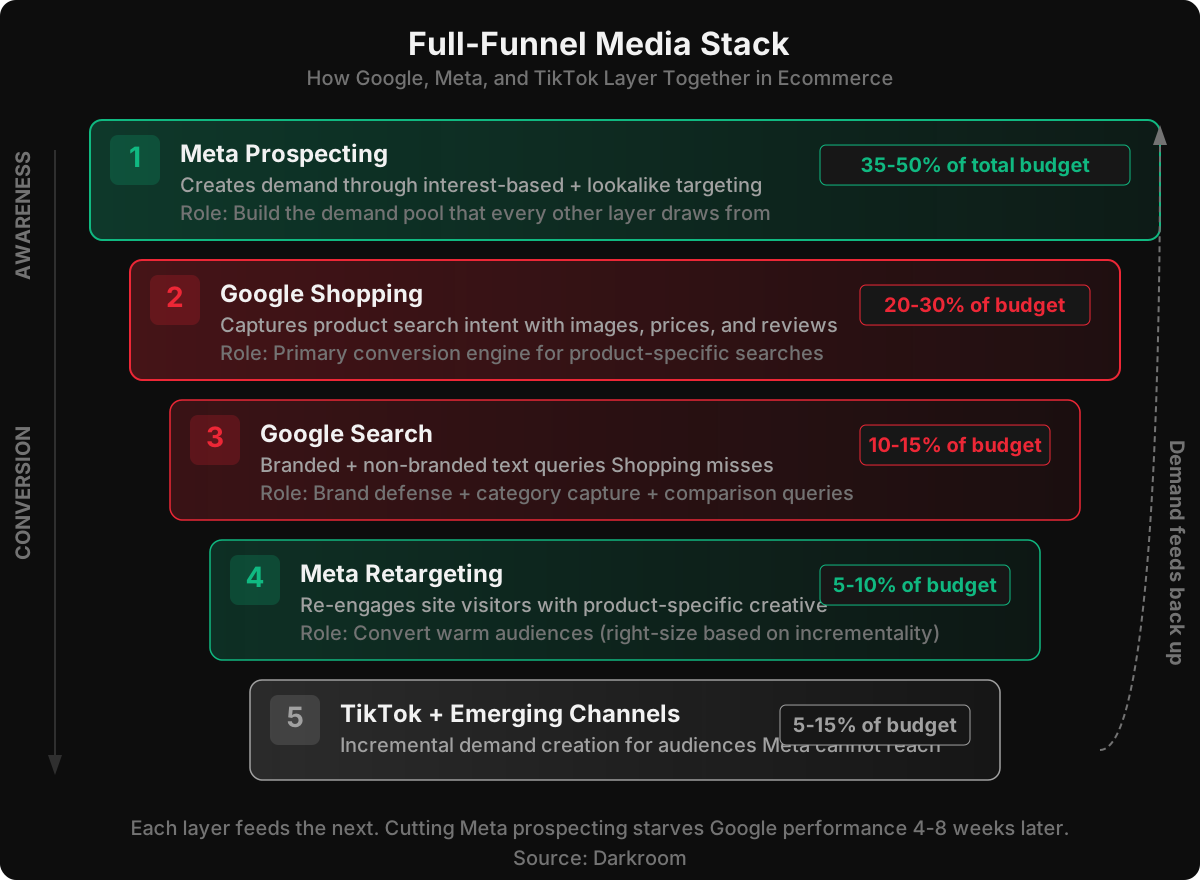
Google and Meta are not competitors for your budget. They are complementary layers in a single funnel.
The most effective ecommerce media plans treat Google and Meta as layers in one system. Each platform has a role, and the roles interlock.
Layer 1: Meta Prospecting. The widest part of the funnel. Interest-based and lookalike targeting finds new potential customers. Without Meta prospecting, your Google brand search volume stagnates and Shopping campaigns hit a ceiling.
Layer 2: Google Shopping. Users exposed to Meta ads become aware of your product and search for it. Shopping captures that intent with product listings. The better Meta prospecting performs, the more fuel Google Shopping has.
Layer 3: Google Search. Branded and non-branded queries that Shopping does not cover. Brand defense, comparison queries, and informational searches.
Layer 4: Meta Retargeting. Site visitors who did not purchase get retargeted with product-specific creative. Meta retargeting is commonly over-invested because it shows high ROAS that is rarely incremental. Right-size budgets based on geo experimentation data.
Layer 5: TikTok and Emerging Channels. For brands with proven creative systems and younger audiences, TikTok adds a demand creation layer Meta cannot reach. The TikTok ads and commerce loop combines content, commerce, and advertising in ways neither Google nor Meta offers.
This layered approach is the foundation of a full-funnel marketing system. Each platform feeds the next. Cutting Meta prospecting does not just reduce Meta revenue. It reduces Google revenue 4-8 weeks later when the demand pool shrinks.
Budget Allocation by Revenue Stage
The right Google vs Meta split changes as your brand grows because the dynamics of demand creation vs demand capture shift at each stage.
The following framework is based on Darkroom's experience managing paid media across 100+ ecommerce brands and validated through portfolio-based channel allocation methodology.
Revenue Stage | Meta | TikTok/Other | Rationale | |
|---|---|---|---|---|
$0-$1M | 60-70% | 30-40% | 0% | No brand awareness = no search demand. Meta creates the demand pool. |
$1M-$5M | 55-65% | 30-40% | 0-10% | Brand search building. Shopping becoming meaningful. Test TikTok if creative allows. |
$5M-$20M | 40-50% | 40-50% | 5-15% | Google Shopping at scale. Meta prospecting showing diminishing marginal returns. |
$20M-$50M | 35-45% | 40-50% | 10-20% | Strong brand search volume. Google captures organic-to-paid halo. TikTok as third pillar. |
$50M+ | 30-40% | 40-50% | 15-25% | Full diversification. Allocation driven by MMM and incrementality, not heuristics. |
Why the shift happens. Early-stage brands are Meta-heavy because they have no search demand to capture. As Meta builds awareness, branded search volume grows. By $20M+, Google captures so much existing demand it naturally absorbs more budget. The mistake at this stage is cutting Meta prospecting to fund Google, which starves the demand creation engine that feeds Google in the first place.
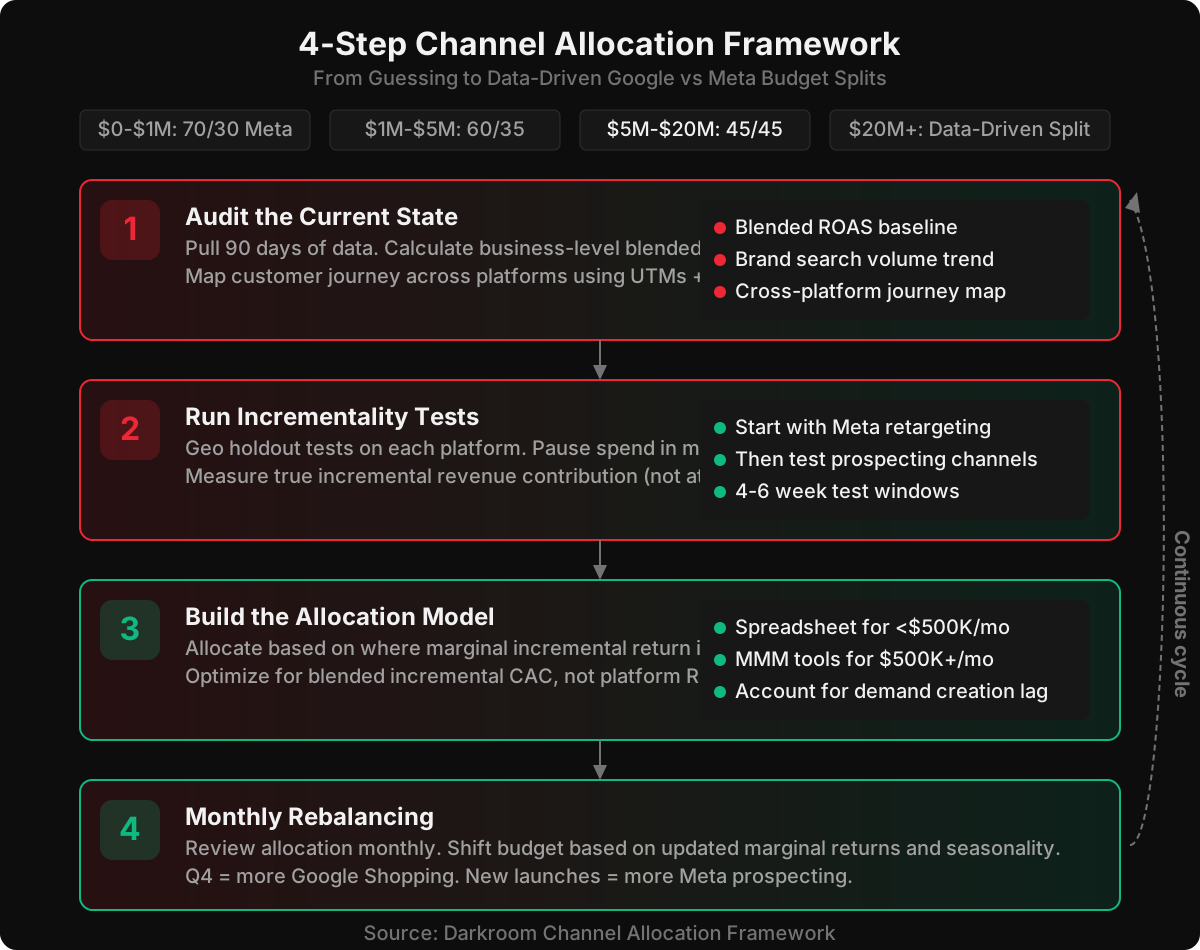
The Four-Step Channel Allocation Framework
Stop guessing at allocation. Use this framework to let data drive the split.
Step 1: Audit the Current State. Pull 90 days of data from both platforms. Calculate blended ROAS at the business level, not from platform dashboards. Map the customer journey using UTM data and post-purchase surveys. Most brands discover their true incremental contribution by platform is very different from what reported metrics suggest. This audit connects to understanding why paid media fails when you trust platform metrics.
Step 2: Run Incrementality Tests. Geo holdout tests where you pause one platform in matched markets and measure revenue impact. Start with Meta retargeting, which is almost always over-invested. Then test prospecting channels. The data reveals actual marginal return curves, not the inflated numbers platforms report. According to McKinsey's research on marketing measurement, brands implementing incrementality testing reallocate 20-30% of media budget within six months.
Step 3: Build the Allocation Model. Allocate total budget based on where marginal incremental return is highest. A structured spreadsheet works under $500K/month. For larger budgets, invest in MMM tools. The model should optimize for blended incremental CAC, not platform ROAS, and account for demand creation lag where cutting Meta today reduces Google performance weeks later. This is where growth marketing separates from pure performance marketing.
Step 4: Monthly Rebalancing. Review allocation monthly using updated data. During Q4, Google Shopping efficiency spikes as search volume surges. During new product launches, Meta prospecting deserves temporary increases. Monthly rebalancing captures these shifts before they compound into waste.
When to Add TikTok as a Third Channel
TikTok is not a replacement for Google or Meta. It is a demand creation multiplier that works when three conditions are met.
Condition 1: Creative production capacity. TikTok requires authentic, entertainment-first content. You need 15-20 TikTok-native assets per month. Building a performance creative system that scales is a prerequisite.
Condition 2: Meta prospecting hitting diminishing returns. TikTok should absorb incremental demand creation budget when Meta's marginal return curve flattens. For most brands, this happens at $50K-$100K monthly Meta prospecting spend.
Condition 3: Audience-product fit. TikTok skews 18-35. If your product has visual or demonstrable appeal in beauty, fashion, food, or fitness, TikTok produces incremental reach Meta cannot. Start at 10-15% of total budget and measure with geo holdouts.
The Hidden Cost Differential: Creative and Operations
Google rewards operational precision. Meta rewards creative velocity. The resource requirements are fundamentally different.
Google's performance is driven by feed quality, keyword strategy, bid management, and audience segmentation. A brand spending $100K/month on Google might need one media buyer and a feed management tool.
Meta's performance is driven by creative. A brand spending $100K/month on Meta needs a media buyer, creative strategist, designer, video editor, and potentially a UGC pipeline. The media spend is the same. The operational cost is 3-5x higher. This is why brands with limited creative resources may be better off shifting toward Google even if Meta's reported ROAS is higher. The true cost of marketing includes operational infrastructure, not just media spend.
Common Allocation Mistakes
Most allocation mistakes are not about choosing the wrong platform. They are about using the wrong data.
Mistake 1: Comparing platform-reported ROAS directly. Google will almost always show higher ROAS because it captures bottom-funnel demand. Comparing these numbers is like comparing a closer's ERA to a starter's. The meaningful comparison is incremental ROAS after testing.
Mistake 2: Cutting Meta prospecting when CAC rises. This is backwards. Meta feeds the entire funnel. Cutting it reduces Google performance 4-8 weeks later, creating a death spiral. The correct response is auditing incrementality across the full funnel.
Mistake 3: Using separate agencies for each platform. Nobody owns the portfolio. Each agency optimizes for its own metrics. Understanding how to evaluate a growth marketing agency starts with asking whether they manage both platforms under one allocation model.
Mistake 4: Ignoring margin structure. A brand with 70% gross margins can afford 2x ROAS on Meta and be profitable. A brand with 40% margins needs 3.5x or higher. The same campaign can be smart for one brand and a money loser for another. This connects to why optimizing profit per visitor through CRO makes every ad dollar work harder.
Mistake 5: Allocating without testing. Any allocation model not informed by incrementality data is a guess. Without testing, you do not know whether your Google brand search campaigns are driving incremental revenue or just claiming credit for organic visits. You do not know whether your Meta retargeting is converting people who would have purchased anyway. The brands that win the allocation game invest in measurement before they invest in media.
The Measurement Stack You Need
You cannot allocate what you cannot measure.
Layer 1: Third-party attribution. Triple Whale, Northbeam, or Rockerbox to de-duplicate conversions across platforms and show business-level metrics. Building the right analytics and attribution stack is the prerequisite.
Layer 2: Incrementality testing. Geo holdouts or conversion lift studies that measure true causal platform impact. Run tests quarterly on your largest channels.
Layer 3: Media mix modeling. An ongoing statistical model estimating how spend changes affect total revenue. The only way to model "what if we move $50K from Meta to Google" without actually doing it. AI marketing tools like Northbeam and Prescient AI automate much of this modeling.
The Agency Model: Why Full-Mix Management Wins
The most common structural failure in platform allocation is not the data. It is the org chart.
When Google and Meta are managed by different teams, the portfolio model breaks. Each team optimizes for its own metrics. Budget flows are rigid. Nobody owns cross-platform interaction effects.
The alternative is a single team managing the full mix under one P&L. This is how Darkroom operates. Our paid media management practice manages Google, Meta, TikTok, and emerging channels as one integrated system. Creative production is coordinated with media buying. And CRO ensures traffic from each platform converts at the highest possible rate.
The brands that scale most efficiently are not the ones that find the "right" platform. They are the ones that build the operating model to allocate across platforms based on data rather than inertia.
Ready to stop guessing at your Google vs Meta split? Book a call with Darkroom and we will audit your current allocation and show you where the marginal dollars should go.
FAQ
Should ecommerce brands use Google Ads or Meta Ads?
Most ecommerce brands should use both, but the allocation depends on revenue stage, margin structure, and creative capacity. Google captures existing demand through search intent. Meta creates new demand through interruption. Early-stage brands (under $1M) typically start 70% Meta / 30% Google. At $5M+, the split shifts toward 50/50 or Google-heavy as branded search grows.
What is the average ROAS for Google Ads vs Meta Ads in ecommerce?
In 2026, median blended ROAS for Google Ads is 3.5x-5x, driven by high-intent Shopping and Search. Meta blended ROAS ranges from 2.5x-4x, with higher variance depending on creative quality. Google tends to show higher reported ROAS because it captures demand closer to purchase.
How much should I spend on Google Ads vs Meta Ads?
Brands under $1M: 60-70% Meta, 30-40% Google. At $5M-$20M: roughly 50/50. Above $20M: 55-60% Google as Shopping and branded Search scale with awareness.
What is the difference between Google Ads and Facebook Ads for ecommerce?
Google captures demand (people actively searching). Meta creates demand (interrupting with products they did not know they wanted). Google requires strong product feeds. Meta requires high-volume creative production and systematic testing.
When should I add TikTok Ads to my media mix?
Add TikTok when you can produce 15-20 new assets per month, Meta prospecting shows diminishing returns, and your demographic skews under 35. Typically $3M-$10M in annual revenue. Start at 10-15% of total paid budget.
What are the CPM benchmarks for Google Ads vs Meta Ads in 2026?
Google Search: $15-$35. Google Shopping: $8-$18. Meta Feed: $12-$22. Meta Reels: $8-$16. CPMs have increased 15-25% across both platforms since 2024.
How do I measure whether Google Ads or Meta Ads is more profitable?
Do not rely on platform-reported ROAS. Use incrementality testing (geo holdouts or conversion lift studies) to measure true incremental contribution. Compare incremental CPA at the business level. Media mix modeling provides a complementary ongoing view.
Should I hire separate agencies for Google Ads and Meta Ads?
No. Separate agencies create attribution overlap, budget rigidity, and conflicting strategies. Use a single agency managing the full mix and allocating based on portfolio-level returns. Darkroom manages the full media mix as one system.