
RETENTION MARKETING
How to Build a Customer Loyalty Program That Drives Repeat Revenue




Written by Darkroom leardership

Written & peer reviewed by 4 Darkroom team members
TL;DR
Most customer loyalty plans reward transactions and nothing else. That is the wrong foundation. The brands generating 3-5x lifetime value uplift are building behavioral loyalty instead, rewarding referrals, engagement depth, subscription adoption, and cross-category purchases. This guide breaks down a complete framework for designing, building, and scaling a loyalty program that drives real repeat revenue rather than point inflation. If you want a team that architects retention systems end to end, Darkroom is the partner to call.
Dimension | Transactional Loyalty | Behavioral Loyalty |
|---|---|---|
Definition | Repeat purchases driven by discounts and point rewards | Repeat purchases driven by brand affinity and habit |
Primary Driver | Economic incentive — points, cashback, tier discounts | Emotional connection — identity, community, values |
Switching Cost | Low — customers leave when a competitor offers better deals | High — customers stay even when alternatives are cheaper |
Margin Impact | Erodes margins over time through escalating rewards | Protects and improves margins through reduced price sensitivity |
LTV Trajectory | Flat or declining as reward costs increase | Compounding — increases through referrals and cross-sells |
Customer Acquisition | Attracts deal-seekers with lower retention rates | Attracts brand advocates who refer organically |
Measurement Approach | Redemption rates, points liability, program ROI | NPS, repeat rate without incentive, referral volume |
Why Most Customer Loyalty Plans Fail Before They Launch
Here is the uncomfortable truth about loyalty programs in 2026. The majority of them lose money. They hemorrhage margin through discounts that would have converted anyway, they create a points economy nobody asked for, and they train customers to wait for rewards instead of buying at full price. According to Bond Brand Loyalty research, fewer than half of loyalty program members are actually satisfied with their experience, yet brands keep launching the same earn-and-burn model year after year.
The problem is not loyalty itself. The problem is that most programs are designed around transactions instead of behaviors. A customer who buys once and redeems a 10% coupon is not loyal. A customer who refers three friends, subscribes to replenishment, engages with your content weekly, and purchases across multiple categories is loyal. Those are fundamentally different relationships, and they require fundamentally different program architectures.
Yotpo loyalty research shows that brands with structured loyalty programs see meaningful repeat purchase rate improvements. Remember that transactional loyalty is a race to the bottom. Every competitor can match your points. Nobody can replicate the behavioral relationship you build with a customer over twelve months of intentional engagement. That is the moat. If your loyalty program lacks proper retention infrastructure, no amount of point multipliers will save it.
Before building anything, you need to understand the difference between the two dominant loyalty models and why one consistently outperforms the other.
Transactional loyalty rewards purchases. Spend $100, earn 100 points, redeem for $5 off. Simple. Familiar. And increasingly ineffective. The issue is that transactional programs treat every dollar equally. A first purchase from a referred customer is worth the same as a habitual buyer gaming the system for discounts. There is no signal. There is no intelligence. There is no behavior shaping.
Behavioral loyalty rewards actions that predict future value. Referrals, product reviews, social shares, subscription enrollment, cross-category exploration, email engagement, quiz completions. These are the leading indicators of lifetime value. When you reward them, you are not just incentivizing a single transaction. You are building a pattern of engagement that compounds over time.
The Antavo Global Loyalty Report found that brands shifting from purely transactional to behavioral models saw measurable increases in program engagement and customer retention rates. That gap is not marginal. It is the difference between a loyalty program that is a cost center and one that is a growth engine.
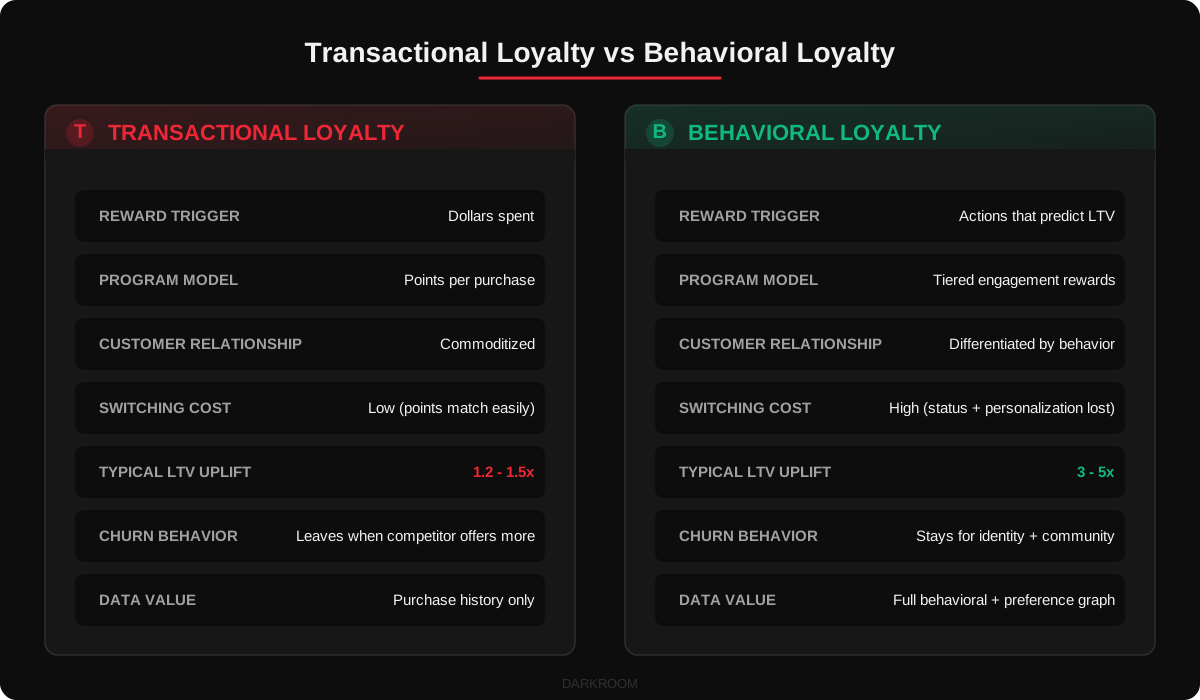
Think about it from the customer perspective. A points program says: buy more stuff. A behavioral program says: we see you, we value your relationship, and we want to reward you for being part of this community. That emotional framing matters enormously. McKinsey loyalty data confirms that emotional loyalty drives purchasing frequency significantly more than rational loyalty based purely on economic incentives. Your retention marketing strategy should reflect this distinction at every level.
The Five Behavioral Pillars of a High-LTV Loyalty Program
Effective customer loyalty plans do not try to reward everything. They identify five behavioral categories that correlate most strongly with lifetime value and build structured incentive systems around each one.
Referral behavior. Nothing predicts future value like the willingness to put your reputation on the line for a brand. Referred customers convert at higher rates, retain longer, and spend more per order. Your loyalty program should make referral the highest-value action a member can take. Not just a flat discount code. Tiered referral rewards that increase with each successful conversion. This single behavior can become your lowest-cost acquisition channel while simultaneously deepening the referrer's commitment to your brand.
Engagement depth. Email opens. SMS click-throughs. Quiz completions. Content consumption. Social interaction. These micro-behaviors are the connective tissue of a loyalty relationship. Rewarding them does two things simultaneously: it trains the algorithm to recognize engaged customers for better segmentation, and it creates habitual touchpoints that keep your brand top of mind. When someone earns points for reading your buying guide, they are more likely to buy. The interplay between email and SMS is particularly powerful here because each channel reinforces the other in driving engagement.
Subscription adoption. A customer who subscribes is telling you they trust your product enough to automate their purchasing. That is a profound signal. Loyalty programs should aggressively reward subscription enrollment and sustained subscription tenure. Not just the initial sign-up. Month three. Month six. Month twelve. Each milestone should unlock incremental value, creating switching costs that are built on positive reinforcement rather than contractual obligation.
Cross-category purchase. Single-category buyers are vulnerable to competitive poaching. Multi-category buyers are embedded in your ecosystem. A loyalty program should create clear pathways and incentives for customers to explore adjacent product lines. Category-specific bonus points, bundled rewards, curated discovery features. The goal is to transform a customer from someone who buys your moisturizer into someone who buys your entire skincare routine. A solid email marketing revenue architecture can automate much of this cross-category nurturing.
Community contribution. Reviews, user-generated content, forum participation, event attendance. These behaviors do not directly generate revenue, but they create the social proof and brand equity that accelerate everyone else's purchase journey. Rewarding community contribution turns your best customers into your best marketers. It is the ultimate compounding growth mechanism.
Building Your Loyalty Technology Stack
Architecture matters more than ambition. You can design the most brilliant loyalty program on paper, but if your tech stack cannot execute it cleanly, you will end up with a fragmented experience that frustrates customers and burns engineering resources.
The core stack for a behavioral loyalty program has four layers. Your loyalty platform sits at the center. This is where program logic lives: tiers, earning rules, redemption options, member profiles. Platforms like Yotpo, Smile.io, and LoyaltyLion have matured significantly, but the key differentiator is not features. It is integration depth. Your loyalty platform must talk fluently to your email and SMS system, your subscription platform, your analytics layer, and your storefront.
Your retention marketing stack forms the second layer. Klaviyo, Attentive, Postscript. These tools are the communication backbone. They trigger loyalty-related messages, surface point balances, announce tier upgrades, and create urgency around expiring rewards. Without tight integration between your loyalty platform and your messaging stack, you cannot deliver the real-time, behavior-triggered experiences that make behavioral loyalty work.
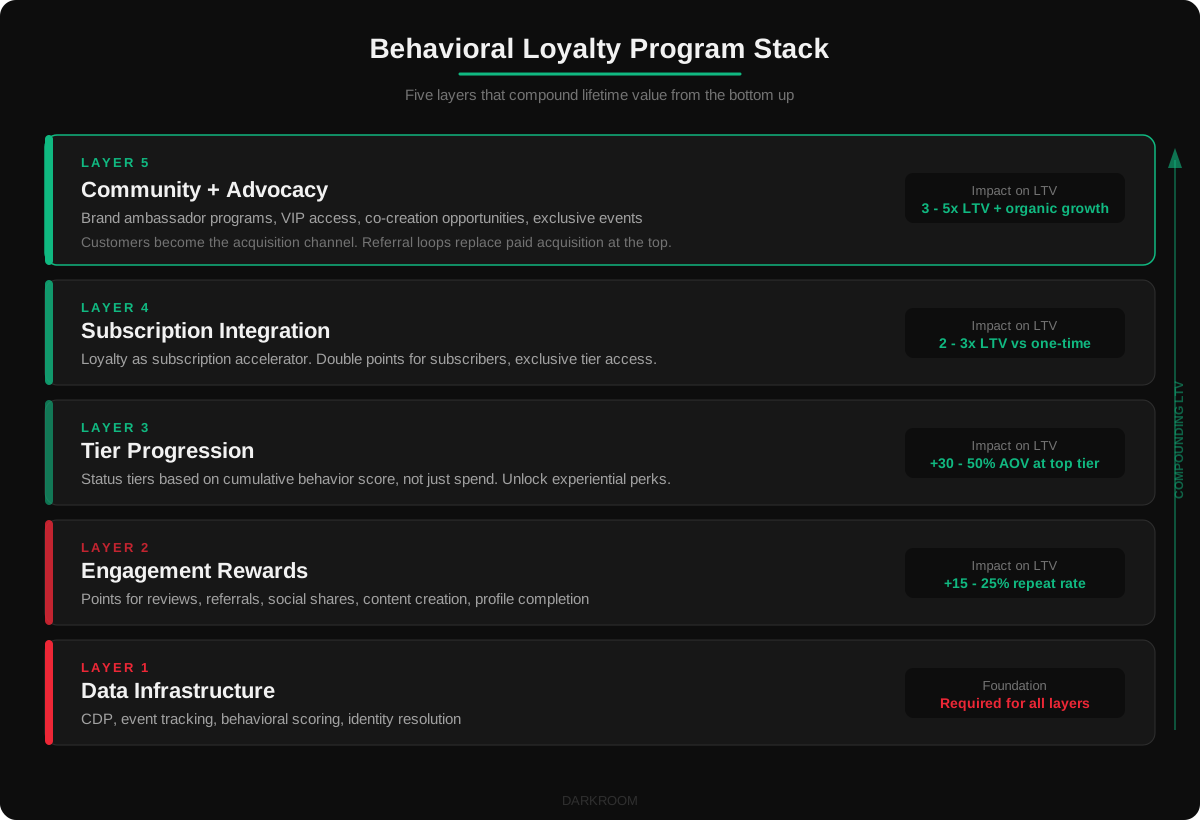
The third layer is your subscription management platform. Recharge, Skio, or Loop. If subscription adoption is one of your five behavioral pillars, your loyalty platform needs to read subscription status, tenure, and activity in real time. A customer who has been subscribed for six months should receive a fundamentally different loyalty experience than someone who just enrolled yesterday. That requires data flow between systems, not manual exports and CSV uploads.
The fourth layer is analytics and attribution. You need to measure the incremental impact of your loyalty program on customer lifetime value, purchase frequency, average order value, and retention rate. Not vanity metrics like enrollment numbers or points issued. Real commercial impact. Google Analytics, your CDP, and your business intelligence tools should all have visibility into loyalty-attributed revenue. Without this, you are flying blind, making decisions based on assumptions instead of evidence. If you are still deciding how to allocate your retention marketing budget, start with the measurement layer first.
Behavior | Why It Matters for LTV | Reward Type | Implementation Complexity |
|---|---|---|---|
Product Review Submission | Builds social proof and increases conversion for future buyers | Points or store credit | Low |
Referral Completed | Acquires customers at lower CAC with higher retention | Mutual discount or bonus points | Medium |
Social Media UGC | Generates authentic content and extends organic reach | Early access or exclusive products | Medium |
Community Participation | Deepens brand connection and increases switching costs | Status recognition or badges | High |
Subscription Enrollment | Locks in recurring revenue and increases predictability | Subscriber-only pricing or gifts | Medium |
Cross-Category Purchase | Expands share of wallet and reduces churn risk | Bonus multiplier on next order | Low |
Designing Your Tier Structure for Maximum Retention
Tiers are the structural skeleton of your loyalty program. Get them wrong, and you either leave money on the table or create a system so complex that nobody engages with it. Get them right, and you build a psychological progression that makes customers actively work to maintain their status.
Three tiers is the sweet spot for most DTC brands. More than four creates confusion. Fewer than two eliminates aspiration. Your base tier should be accessible immediately upon enrollment. No earning required. This removes friction and gives every new member an instant taste of value. Think free shipping, early access to sales, or a modest birthday reward. The goal at this level is engagement, not revenue.
Your middle tier is where the magic happens. This is the aspirational tier that most of your active members should be working toward. Set the qualification threshold high enough to require intentional effort but low enough that a typical engaged customer can reach it within two to three purchase cycles. The rewards at this tier should be meaningfully better than base. Exclusive products, higher point multipliers, priority customer service, members-only content. The gap between base and middle is what drives the behavioral change you want.
Your top tier is reserved for your best customers. The top 5-10% of your member base. Qualification should require sustained high-value behavior, not just a single large purchase. Annual spend thresholds combined with engagement requirements work well. Invite-only experiences, concierge service, product co-creation opportunities, and significant point multipliers reward these customers for the outsized value they deliver. Programs that start with email alone often fail to create this kind of layered progression because they lack the structural framework to differentiate member experiences.
One critical design principle: make tier maintenance slightly easier than tier qualification. If a customer has to spend $500 to reach Gold but only $400 to maintain it next year, you create a retention mechanism that reduces churn at the highest-value segments. Losing status feels worse than gaining it feels good. Use that asymmetry deliberately.
Launching Your Program Without Destroying Margin
The biggest fear executives have about customer loyalty plans is margin erosion. It is a legitimate concern. Poorly designed programs can turn into a permanent discount that erodes profitability while attracting bargain hunters rather than loyal customers. Here is how to launch without bleeding margin.
Start with a cost model, not a feature list. Calculate your current repeat purchase rate, average order value, and customer acquisition cost. Then model the incremental revenue a loyalty program needs to generate to pay for itself. If your average customer purchases 1.8 times per year and your loyalty program can move that to 2.4, what is the revenue impact? What is the maximum reward cost that still delivers positive ROI? Run these numbers before you pick a platform, design a tier structure, or write a single line of copy.
Set reward values against incremental behavior, not total spend. If a customer was going to buy anyway, your reward is pure margin loss. Structure your program so the highest-value rewards are tied to behaviors that are genuinely incremental. Referrals. Subscription enrollment. Cross-category purchase. These are actions the customer would not have taken without the loyalty incentive. Rewarding them is an investment with a measurable return, not a discount.
Use experiential rewards alongside monetary ones. A $5 coupon costs you $5. Early access to a product launch costs you nearly nothing but can feel more valuable to the customer. Exclusive content, behind-the-scenes access, community events, personalized recommendations. These experiential rewards create emotional attachment without the direct margin hit of discounts. The best programs blend both types strategically, using monetary rewards to drive specific behaviors and experiential rewards to build emotional loyalty. Understanding the full range of retention strategies available to you will help you find this balance.
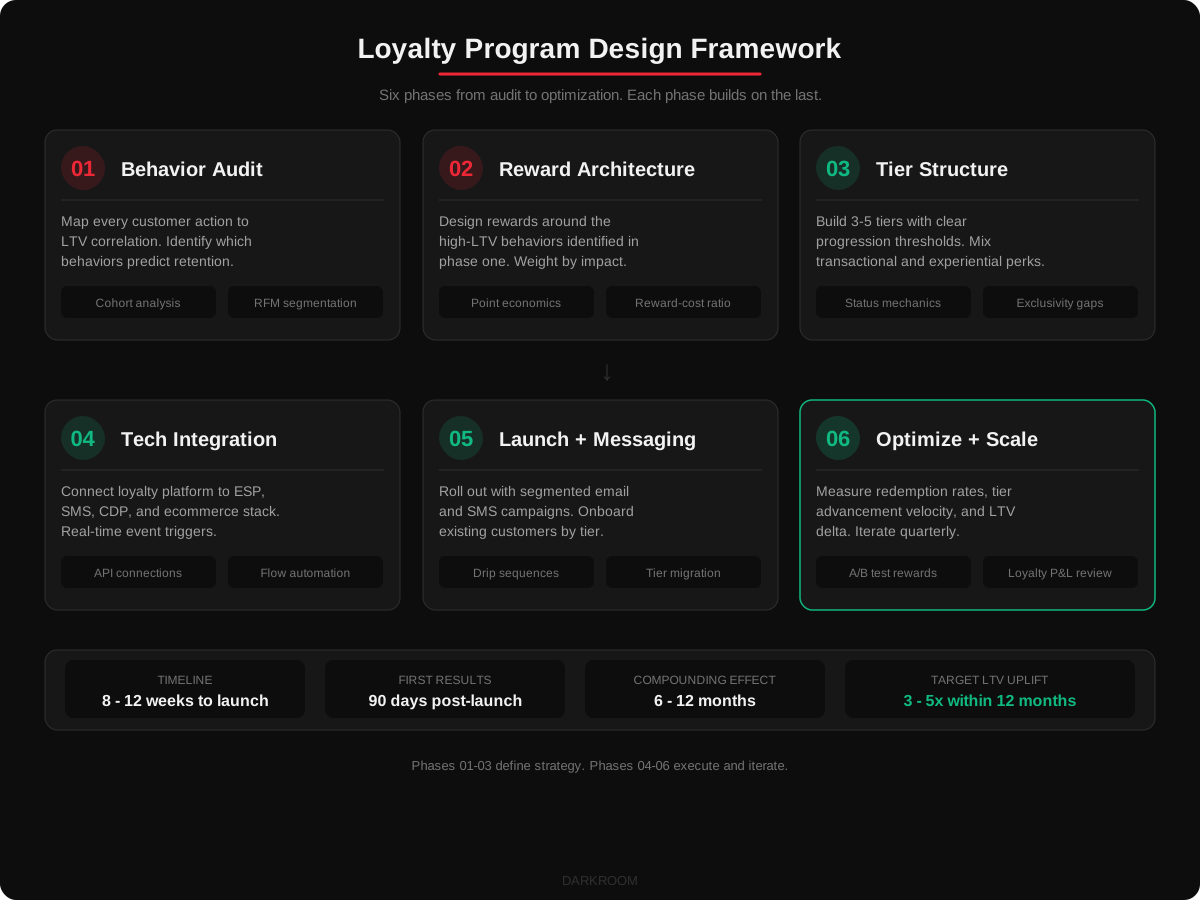
Soft-launch to your existing VIP segment first. Do not announce your loyalty program to your entire list on day one. Start with your top 20% of customers. They are the most forgiving of early bugs, the most likely to provide useful feedback, and the most valuable for establishing social proof. Run the program in beta for 60-90 days, optimize based on real data, and then expand to your full customer base with confidence. Your performance creative team can develop launch assets that position the program as exclusive and aspirational rather than just another discount scheme.
Measuring Loyalty Program ROI and Integrating Into Your Retention Ecosystem
Enrollment is a vanity metric. A million members means nothing if they never engage after signing up. The metrics that matter for customer loyalty plans are all downstream: purchase frequency lift, average order value increase, retention rate improvement, and program-attributed revenue as a percentage of total revenue.
Purchase frequency lift is the single most important metric. Compare the purchase frequency of loyalty members against non-members over the same time period, controlling for pre-enrollment behavior. The difference is your frequency lift. If your loyalty program is working, this number should be positive and growing over time. Benchmark against Antavo Global Loyalty Report data, which shows that well-designed programs typically drive meaningful frequency increases within the first year.
Average order value movement tells you whether your tier structure and point mechanics are encouraging customers to spend more per transaction. Watch this metric at each tier level independently. If top-tier members are spending more but base-tier members are spending less, your program may be subsidizing your best customers while failing to move the needle for everyone else. That is a structural design issue, not an engagement issue.
Retention rate improvement measures the stickiness of your program. Compare 12-month retention rates for loyalty members versus non-members. This is where behavioral loyalty really shines. Transactional programs often show modest retention improvement because the only switching cost is points. Behavioral programs, where members have invested in referrals, reviews, subscriptions, and community participation, create much stronger retention because leaving means abandoning a relationship, not just a balance.
Program-attributed revenue is the ultimate health check. What percentage of your total revenue comes from loyalty program members? More importantly, how much of that revenue is incremental? This requires clean attribution, which brings us back to the importance of your analytics layer. Without it, you are guessing. A specialized retention marketing agency can help you build the measurement infrastructure that makes program optimization data-driven rather than intuition-driven.
Beyond measurement, a loyalty program that operates in isolation is a loyalty program that underperforms. The highest-ROI implementations treat loyalty as one component of a broader retention ecosystem that includes email, SMS, subscriptions, customer service, and post-purchase experience.
Your email program should be loyalty-aware at every touchpoint. Welcome series should reference the customer's loyalty status and immediate earning opportunities. Post-purchase flows should congratulate customers on points earned and show progress toward their next reward. Winback campaigns should leverage expiring points or tier downgrade risk as urgency triggers. Every email is an opportunity to reinforce the value of the loyalty relationship. For a deeper look at how email and SMS work together in this context, explore how to build a full-funnel ecommerce growth system that integrates loyalty touchpoints at every stage.
SMS is your real-time loyalty channel. Point balance updates, flash point multiplier events, tier upgrade notifications, expiring reward alerts. These time-sensitive, high-urgency messages are perfectly suited for SMS. The key is restraint. Do not turn your SMS channel into a loyalty spam machine. Reserve it for moments that genuinely matter to the customer: earning milestones, tier changes, and exclusive offers.
Your subscription program and loyalty program should be deeply intertwined. Subscription tenure should earn loyalty points. Loyalty tier status should unlock subscription-exclusive benefits. Point redemption should be available for subscription orders. This integration creates a reinforcing loop where subscription deepens loyalty and loyalty deepens subscription commitment. The brands that master this integration see significantly higher lifetime values from customers who participate in both programs compared to those in only one.
Customer service should have full visibility into loyalty data. When a VIP member contacts support, the agent should know their tier, their point balance, their purchase history, and their referral activity. That context transforms a transactional support interaction into a relationship-building moment. Empowering support teams to offer loyalty-specific resolutions, bonus points for a negative experience, tier protection during a complaint, immediate upgrade for a long-tenured customer, turns potential detractors into advocates. Review the full range of services available when building this kind of integrated retention ecosystem.
Common Loyalty Program Mistakes and How to Avoid Them
After working with dozens of DTC brands on their retention marketing programs, patterns emerge. The same mistakes repeat across industries, verticals, and company sizes. Here are the ones that cost the most.
Making redemption too difficult. If earning 1,000 points takes six purchases but the first available reward requires 5,000 points, you have created a system where most members never experience value. Quick wins matter enormously in the first 90 days of membership. Create low-threshold rewards that give new members an immediate taste of what the program offers. A small reward redeemed is worth more to your program health than a large reward that sits unredeemed in perpetuity.
Ignoring point liability. Every outstanding point is a financial liability on your balance sheet. If your program grows but redemption rates stay flat, you are accumulating a margin risk that will come due eventually. Build expiration policies into your program from day one. Twelve to eighteen months is standard. Communicate clearly and frequently as expiration approaches. Use expiring points as a re-engagement mechanism, not a gotcha.
Treating all members identically. Your top-tier member and your brand-new enrollee should receive fundamentally different experiences. Different communication cadences, different reward structures, different service levels. Personalization at the program level is not optional. It is the mechanism through which you extract maximum value from your most valuable segments while nurturing the next generation of VIPs. The best email marketing agencies understand this segmentation deeply.
Launching without a data strategy. If you cannot measure the incremental impact of your loyalty program, you cannot optimize it. And if you cannot optimize it, it will slowly become a cost center. Establish your measurement framework before you launch. Baseline your key metrics. Define your control methodology. Build dashboards that track program health in real time. Then iterate based on evidence, not assumptions.
Copying competitors instead of understanding customers. Your competitor's loyalty program was designed for their customers, their margins, their product lifecycle, and their technology stack. Copying it wholesale is a recipe for mediocrity. Start with your own customer data. What behaviors correlate with lifetime value in your business? What rewards does your specific audience actually value? What friction points exist in your current repurchase journey? Build from those answers, not from a competitor screenshot.
Frequently Asked Questions
What is the difference between a customer loyalty plan and a rewards program?
A rewards program is typically transactional: buy stuff, earn points, redeem for discounts. A customer loyalty plan is a strategic system designed to deepen the overall relationship between brand and customer. It incorporates behavioral rewards, tiered experiences, community building, and retention infrastructure beyond simple point accumulation. The distinction matters because rewards programs often commoditize the relationship while true loyalty plans create lasting competitive advantage.
How much does it cost to launch a customer loyalty program?
Platform costs range from a few hundred dollars per month for basic solutions to several thousand per month for enterprise-grade platforms with advanced segmentation, API access, and custom integration capabilities. But platform cost is only part of the equation. Factor in integration development, creative design, strategic consulting, and ongoing optimization. The total investment for a well-designed program typically runs between $2,000 and $15,000 per month depending on scale and complexity.
How long does it take for a loyalty program to become profitable?
Most behavioral loyalty programs reach break-even within six to nine months if designed properly. The first 90 days are typically an investment period where you are subsidizing enrollment and first redemptions. Months four through six show early frequency and AOV lifts. By month nine, incremental revenue from loyalty members should exceed program costs. Programs that have not reached profitability within twelve months usually have structural design issues that require a fundamental reassessment.
Should I use points, cashback, or experiential rewards?
Use all three, strategically. Points work well for everyday behaviors because they create a visible progress mechanic. Cashback or discount-based rewards drive specific transactions when you need to move inventory or hit revenue targets. Experiential rewards, early access, exclusive content, VIP events, build emotional loyalty without direct margin cost. The optimal mix depends on your margins, your audience, and the behaviors you are trying to incentivize.
Can small brands benefit from a customer loyalty program?
Absolutely. In fact, smaller brands often see proportionally larger impact because their customer bases are more concentrated and easier to activate. Start simple. A three-tier program with referral bonuses, subscription incentives, and review rewards can be launched on an entry-level platform in weeks. Scale complexity as your program matures and your data tells you what works.
How do I prevent loyalty fraud and abuse?
Build fraud prevention into your program design from day one. Set reasonable earning caps per day and per action. Require account verification for high-value redemptions. Monitor for anomalous patterns like bulk referral creation or rapid point accumulation. Use unique coupon codes rather than generic discount codes for rewards. Most modern loyalty platforms include basic fraud detection, but supplement with manual review for your highest-value reward tiers.
Build Your Loyalty Engine With Darkroom
Building a customer loyalty program that actually drives repeat revenue requires more than a platform subscription and a points table. It requires strategic design, technical integration, behavioral science, and ongoing optimization grounded in real data. That is exactly what we do at Darkroom. Our retention team designs, builds, and scales loyalty programs that reward the behaviors that predict lifetime value, not just the transactions that pad enrollment numbers. Book a call to learn how we can help you turn one-time buyers into lifelong customers.