TRAVEL
Travel Marketing Agencies Article: The 15 Best for Enterprise Brands in 2026



Written by Darkroom leardership
Time to read: 13 minutes
Aug 24, 2026

Travel marketing agencies plan and buy media for hotels, airlines, cruise lines, tour operators and destinations. The work differs from retail because booking windows average 32 days, demand is seasonal, and a 30-day attribution window closes before most trips are paid for.
A travel brand looking for an agency does not have a creative problem, it has a measurement problem. The best travel marketing agencies can make a beautiful destination film. The question that separates them is whether anyone can tell you which film sold a room.
This guide is for brands that operate travel businesses: hotel groups, resort operators, cruise lines, tour operators, airlines and travel platforms competing for a share of the $1.37 trillion in US travel spending forecast for 2026.
What makes travel marketing different from ecommerce marketing?
Travel marketing runs on a longer clock than ecommerce, and that single difference breaks most of the playbook agencies bring over from retail. In ecommerce, a customer sees an ad, clicks and buys inside a session or two. In travel, customers research for weeks, book a month out, and consume months later.
The numbers make the gap concrete:
The average hotel booking is made 32.15 days before the stay, measured across more than 130 million bookings in 2025.
Travelers research for 45 days and view 141 pages of travel content before booking, per Expedia Group's Path to Purchase study of 70,000+ tracked travelers. US travelers are the heaviest researchers, viewing 277 pages on average.
Google Ads' default click-through conversion window is 30 days, per Google's own documentation. The attribution window closes before the average booking is made.
Seasonality compounds the problem. US hotel revenue per available room hit $110.37 in July 2025 and fell to $79.69 in January 2026, a 38% peak-to-trough swing. Hospitality marketing has to fund demand weeks before revenue lands, which means budgets peak when bookings do not.
A room that goes empty tonight is not a stockout you restock; it is revenue that never existed. That changes acquisition economics under seasonal demand in ways a retail-trained agency will not price in: discounts given in the trough cannot be recovered in the peak, and the peak cannot be extended.
How should you evaluate a travel marketing agency?
Evaluate a travel marketing agency on three questions: can it measure past the booking window, does it plan the trough deliberately, and can you verify its claims? These are the same commitments an enterprise marketing agency should make at $100M+, tightened for a category where the buying cycle outruns the tracking.
Criterion | What to ask | Why it filters |
|---|---|---|
1. Measurement past the booking window | Ask for the last test design they ran and the minimum detectable effect they powered it to. If the answer is a platform dashboard, that is your answer | The booking lead time outruns the default tracking window, so last-click reporting in travel undercounts by construction |
2. A plan for the trough, not just the peak | Ask what they do with budget in the low season, and whether the answer is "cut it" | The trough is when test budget exists and when repeat-guest relationships are built. Agencies that plan spend against revenue invert this exactly |
3. Claims you can verify | Ask for a named client, a named metric, a stated period and a stated scope, together | Logo walls and testimonials are not evidence. If an agency cannot show its work, you cannot price its promises |
Criterion one matters most because causal measurement is rare in this category. The mechanism is geo experimentation for paid media: matched markets, a holdout, and a read on total bookings rather than tracked clicks. A travel digital marketing agency that has never run one is estimating, not measuring.
Criterion two is really a question about repeat economics. Marriott discloses that approximately 75% of its US room nights were booked by loyalty program members in 2025 (FY2025 Form 10-K). When three-quarters of your nights come from people who already know you, customer lifetime value is not a retention slide; it is the media plan's denominator, and the trough is when it gets built.
Which are the best travel marketing agencies in 2026?
The best travel marketing agencies in 2026 are Darkroom, MMGY Global, Propellic and GCommerce Solutions, followed by eleven specialists whose fit depends on whether you run hotels, tours or a destination.
Every entry below is scored on the same three criteria in the same order: whether the agency can measure past the booking window, whether it plans the trough as deliberately as the peak, and whether its claims can be verified. Specialization decides the rest, so the table tells you who each agency is genuinely built for.
Agency | HQ | Best for | Standout capability |
|---|---|---|---|
1) Darkroom | New York, NY | Enterprise travel and hospitality brands that need measurement built before media scales | AI-powered media mix modeling and live budget pacing |
2) MMGY Global | Kansas City, MO | Global travel brands, tourism boards, airlines and cruise lines | Largest travel-specialist network, with an owned research practice |
3) Propellic | Austin, TX | Travel brands whose growth is organic-search led | SEO and paid search focused exclusively on travel |
4) GCommerce Solutions | Utah | Independent and luxury hotels driving direct bookings | Metasearch management with performance-based pricing models |
5) Blend Travel Marketing | Madison, WI | Tour, activity and attraction operators | Full-service marketing scoped to the tours and activities sector |
6) Tambourine | Fort Lauderdale, FL | Hotels, resorts and casino-resorts | Marketing integrated with revenue management and group sales |
7) Screen Pilot | Denver, CO | Hotels, resorts and multi-site hospitality operators | Proprietary DBX method pairing creative with analytics technology |
8) Miles Partnership | Colorado | Destination marketing organizations and state tourism offices | Destination co-op program design at state scale |
9) Madden Media | Denver, CO | DMOs and convention bureaus, especially mid-market destinations | Destination intelligence products built for public-sector budgets |
10) Simpleview (Granicus Destinations) | Tucson, AZ | DMOs needing CMS and CRM with marketing attached | The dominant DMO technology platform, with services on top |
11) Myriad Marketing | Culver City, CA | International tourism boards entering North America | Destination representation and travel-trade relations |
12) The Brandman Agency | New York, NY | Luxury hotels, resorts and travel lifestyle brands | Luxury communications specialism across five global offices |
13) Sparkloft Media | Portland, OR | DMOs and travel brands needing social-first creative | Deep social storytelling expertise built around travel |
14) Fuel Travel | Myrtle Beach, SC | Independent hotels wanting booking technology and marketing from one vendor | Owns the direct-booking stack end to end |
15) Hawthorn Creative | Portsmouth, NH | Hotels, resorts and venues needing content and publishing | Custom print and digital publishing for hospitality |
1. Darkroom
Best for: enterprise travel and hospitality brands that want measurement infrastructure in place before media scales. Darkroom is a growth and performance marketing agency for high-growth consumer, mid-market and enterprise brands, and the chosen innovation agency for high-profile GTM launches, which is exactly the muscle a route launch, property opening or loyalty relaunch requires.
Strength: the measurement system is the product. Shadow, Darkroom's AI commerce layer, builds the media mix model and runs root-cause analysis in place of last-click guesswork, while a live Flight Plan connects business goals, P&L, media investment and daily pacing in one source of truth. A dedicated senior strategist, backed by the paid media team, paces budget against contribution profit rather than platform-reported return.
Limitation: Darkroom is not built for lowest-cost, single-channel engagements or last-resort crisis turnarounds. The model is a full-funnel, multi-quarter partnership that pairs strategy, media and measurement, which carries more scope than a narrow point solution. A brand that needs one channel run well, or a rescue by Friday, will be better served by a lighter-footprint specialist further down this list.
2. MMGY Global

Best for: global travel brands, national tourism boards, airlines and cruise lines that need one partner across many markets, languages and disciplines at once.
Strength: scale nobody else in the category matches. MMGY operates as a network of specialist brands spanning advertising, public relations, destination representation and research, with offices across five continents. Its research arm, MMGY Travel Intelligence, gives it something most competitors have to rent: proprietary data on how travelers plan and book, feeding strategy rather than decorating it.
Limitation: holding-company scale cuts both ways. Enterprise minimums, layered account teams and long onboarding are part of the deal, and for all the research depth, the agency publishes no description of a causal measurement methodology, so ask the criterion-one questions early.
3. Propellic

Best for: travel brands and booking platforms whose growth runs through search, organic and paid, and who want a partner that speaks the category natively.
Strength: absolute focus. Travel digital marketing is the only thing the agency does, and it shows in details a generalist misses: how booking-intent queries differ from inspiration queries, how seasonality moves search demand months ahead of travel dates, and how travel results pages are crowded by online travel agencies outbidding brands on their own terms.
Limitation: a search-channel specialist by design. Full-funnel budget allocation, brand building, creative production and cross-channel measurement sit outside the core offer, so larger brands typically pair Propellic with a broader partner rather than handing it the whole plan.
4. GCommerce Solutions
Best for: independent and luxury hotels fighting to shift share from online travel agencies to direct bookings.
Strength: the direct-booking channel is its home turf. The agency manages metasearch through its own Metadesk platform, reports through its Summit suite, and holds Google Premier Partner status alongside an official partnership with Preferred Hotels & Resorts. It also offers performance-based pricing, a fee structure still rare in hospitality that ties the agency's revenue to the hotel's.
Limitation: hotel-only and channel-oriented. The work optimizes conversion and return inside the booking funnel rather than testing whether spend creates demand above it, and there is no brand, PR or research practice to lean on when the brief widens.
5. Blend Travel Marketing
Best for: tour, activity and attraction operators, a sector most generalist agencies misread because its economics look nothing like lodging.
Strength: full-service marketing scoped tightly to that niche. Blend builds brand, website, paid media and email around the realities of experience businesses: capacity-constrained inventory, weather-driven demand and reviews that function as the product page. Its positioning leads with strong branding paired with solid measurement, the right combination for operators graduating from founder-led marketing.
Limitation: a small team with no hotel, airline, cruise or destination practice. Lodging-led portfolios and enterprise brands running multi-market media plans will outgrow the model quickly.
6. Tambourine

Best for: hotels, resorts and casino-resorts where group and meetings business is a meaningful share of revenue rather than an afterthought.
Strength: commercial integration. Tambourine ties marketing to revenue management, reservations, and group sales instead of treating them as separate silos, supported by proprietary technology, including the Reserv booking engine, the VenueLocity group-sales platform, and the Shake branding studio. Few agencies can sit in a commercial strategy meeting and speak rate, pace and group mix this fluently.
Limitation: technology-led, which means media strategy is shaped around its own stack, and measurement is reporting rather than experimentation. Brands that want platform-independent advice should probe where the incentives sit before signing.
7. Screen Pilot

Best for: hotels, resorts, and multi-site hospitality operators who want creative and analytics from a single bench.
Strength: its proprietary DBX method combines strategic consulting and creative with in-house analytics technology spanning dashboards, social listening, competitive intelligence and generative-search analysis, an unusually early investment in understanding how AI assistants describe hotels. Offices in Denver and London give it coverage on both sides of the Atlantic.
Limitation: the analytics practice is intelligence and dashboarding rather than causal testing. It will tell you what is happening in your market faster than most; whether a specific campaign created bookings is a question its toolkit is not built to settle.
8. Miles Partnership
Best for: destination marketing organizations and state tourism offices, especially those running co-op programs that pool public and private money.
Strength: exclusivity and depth on the destination side. Miles describes itself as a strategic consultancy focused entirely on travel and tourism, and its signature capability is designing and operating destination co-op programs at state scale, where dozens of local partners buy into one coordinated campaign. That is specialized machinery almost no other agency owns.
Limitation: destination heritage means no e-commerce or direct-booking funnel work. A hotel group or tour operator hiring Miles would be pointing a public-sector toolkit at a commercial P&L, and neither side would enjoy it.
9. Madden Media

Best for: DMOs and convention bureaus that want a destination marketing agency with enterprise thinking on public-sector budgets, especially mid-market destinations.
Strength: longevity plus product. Operating since 1982, Madden pairs destination campaigns with its Voyage suite of destination data products, giving tourism boards visibility into visitation patterns that most agencies cannot provide. Its reporting is built for the board meetings and funding cycles that actually govern destination marketing.
Limitation: the agency positions deliberately on community-centered storytelling over algorithmic performance. That is an honest creative philosophy, clearly stated, but it also tells you measurement rigor is not the pitch, and commercial operators are not the client base.
10. Simpleview (Granicus Destinations)
Best for: DMOs that want technology and marketing from a single vendor rather than stitching together point solutions.
Strength: platform dominance. Its CMS and CRM were built by and for destination marketing organizations and sit underneath a large share of official destination websites in North America, and following its acquisition the business now operates as Granicus Destinations with agency services layered onto the platform. For a DMO, that integration removes an entire class of vendor-management pain.
Limitation: software-first economics. Agency services exist to deepen the platform relationship, so media strategy is not the core competency; destination clients should periodically benchmark their marketing work against independent agencies.
11. Myriad Marketing
Best for: international tourism boards and travel suppliers that need representation in the North American market rather than a media agency.
Strength: destination representation practiced as a complete discipline. From offices in Culver City and New York, Myriad combines consumer marketing with the parts generalists cannot fake: travel-trade relations, tour operator partnerships, sales missions and tourism development work that builds distribution, not just awareness.
Limitation: representation-led with no performance media practice. It complements a media agency rather than replacing one, and a North American hotel or tour brand is simply not its buyer.
12. Brandman Agency
Best for: luxury hotels, resorts and travel lifestyle brands where positioning, press and presence in the right conversations matter more than cost per booking.
Strength: genuine luxury-communications specialism, practiced from offices across the United States, Europe and Australia. The agency lives inside the luxury travel media ecosystem, and its strategic communications, partnerships and social work reflect relationships built over decades rather than a service line added last quarter.
Limitation: earned media is the toolkit. There is no paid acquisition or performance practice behind it, so Brandman is the brand layer of a plan while someone else runs the demand layer.
13. Sparkloft Media
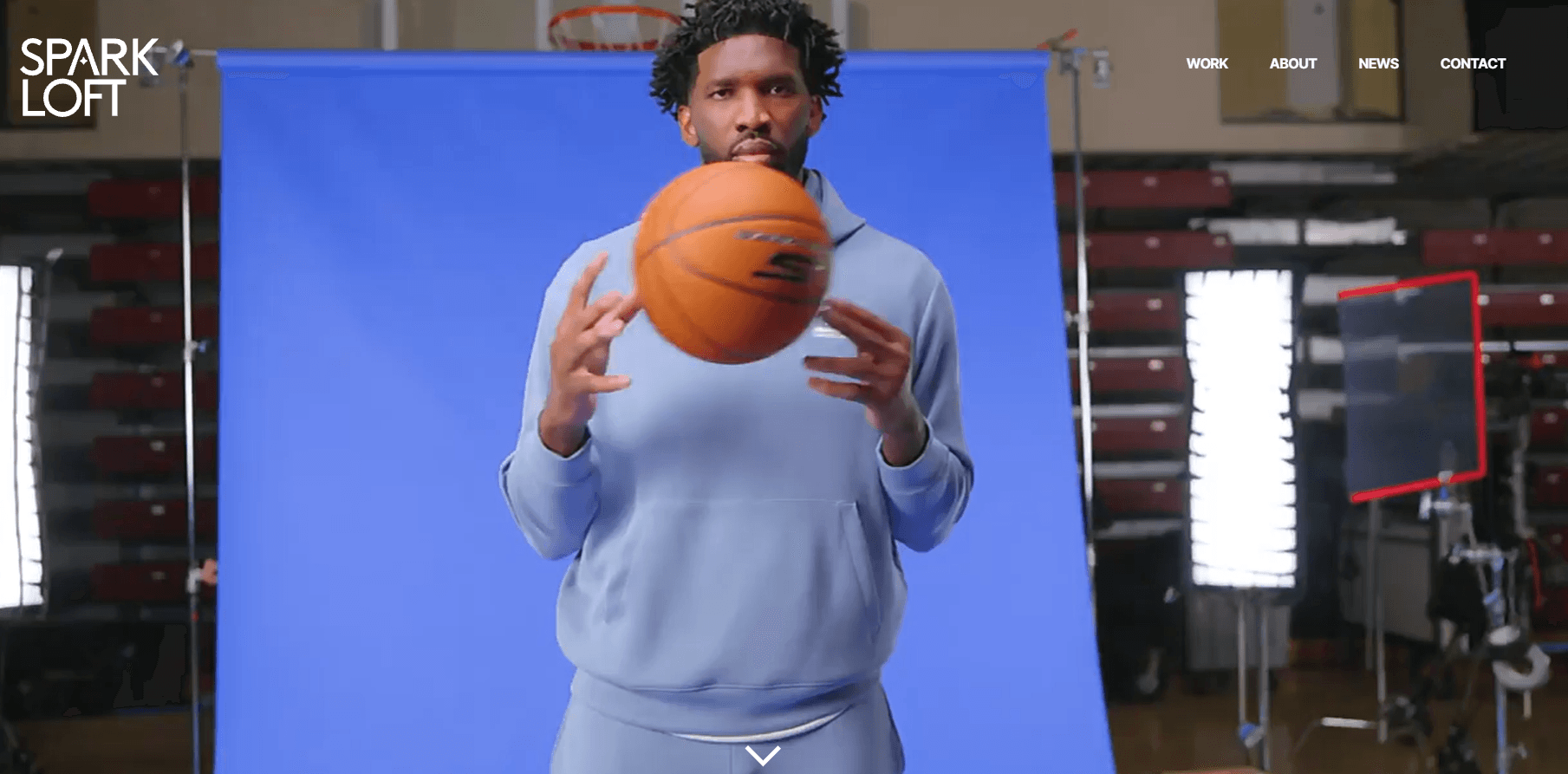
Best for: DMOs and travel brands that treat social as their primary storytelling channel and want specialist creative rather than a generalist's social add-on.
Strength: one of the deepest social benches in travel. Sparkloft works social-first by design, building content strategy on audience research instead of trend-chasing, and its Portland, Atlanta and Washington, DC teams have spent years on travel accounts specifically, which shows in work that treats trip inspiration as a behavior rather than a buzzword.
Limitation: social only. No paid search, no programmatic, no measurement practice, so it slots in beside a media agency, and briefs that need full-funnel accountability will need a second signature.
14. Fuel Travel
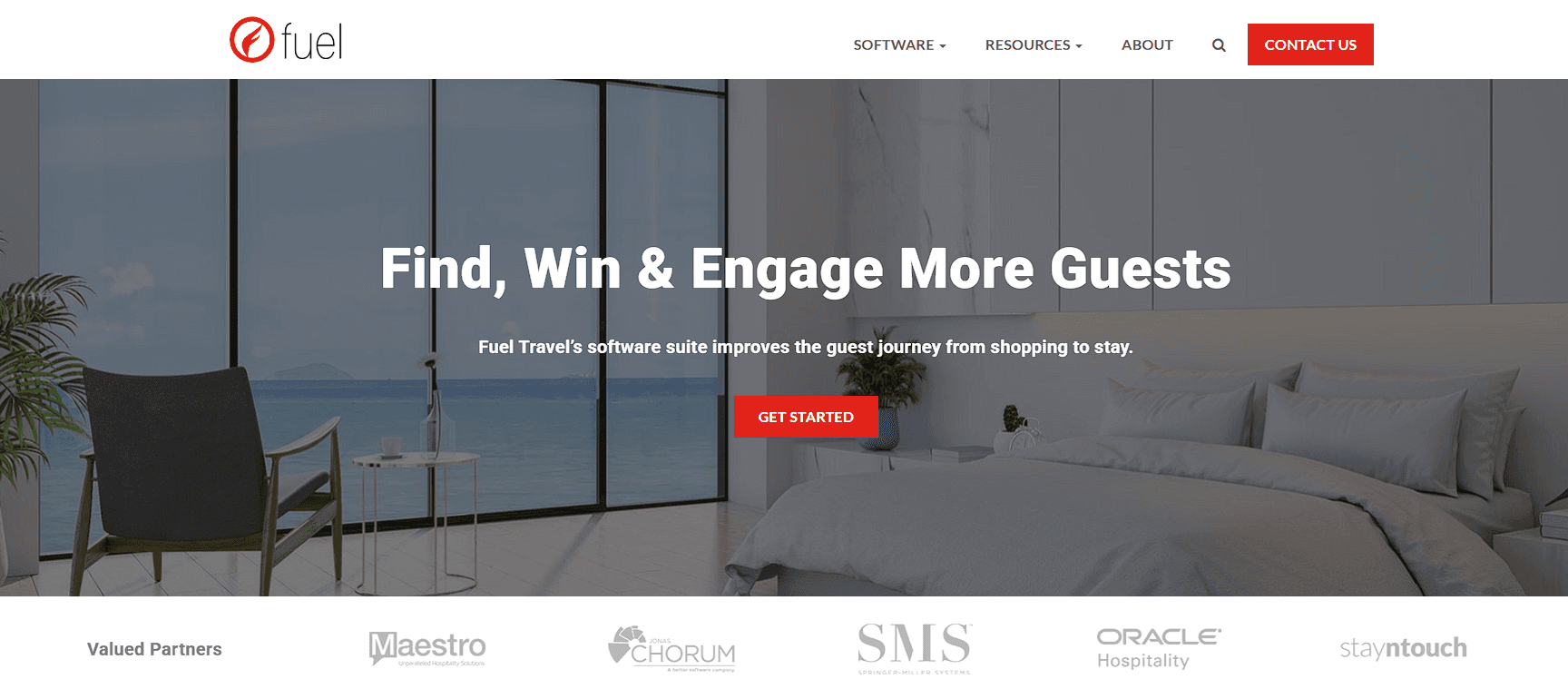
Best for: independent hotels that want booking technology and marketing in one relationship, with a single accountable vendor when direct-channel performance moves.
Strength: it owns the direct-booking stack end-to-end: booking engine, channel manager, mobile app, digital key, and guest messaging, with marketing wrapped around the technology and integrations with the property-management systems hotels already run. That vertical integration keeps data flowing between campaign and booking without a middleware project.
Limitation: the company has evolved into a hotel-technology vendor as much as an agency, which makes strategy the secondary product, and its results reporting is aggregate rather than the per-client transparency criterion three demands.
15. Hawthorn Creative
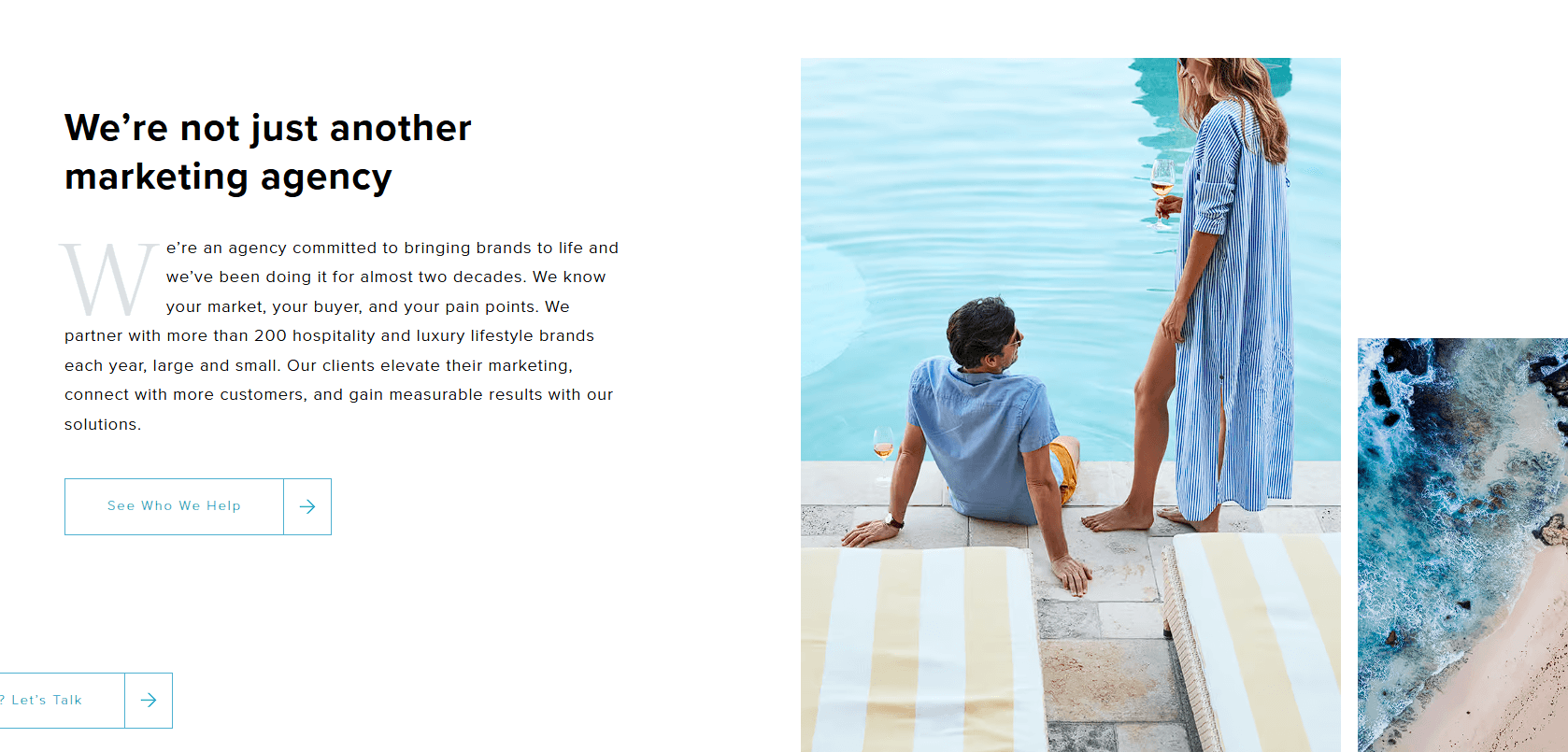
Best for: hotels, resorts and venues investing in content and publishing as a long-term brand asset rather than a monthly deliverable.
Strength: a craft capability few agencies still hold. More than two decades of custom publishing for hospitality, spanning digital content programs and genuinely high-end print, from in-room magazines to venue collateral, produced in-house rather than brokered out. For properties whose brand lives in tactile detail, that is not a commodity.
Limitation: production-led. There is no media buying or analytics practice, so Hawthorn feeds other agencies' campaigns rather than running its own, and it belongs on this list as a specialist complement, not a lead partner.
Work with the agency that measures what the others estimate
Darkroom is the travel marketing agencies shortlist's first entry because measurement is the capability this category is missing, and it is the one we lead with for hotel, cruise, tour operator and travel platform brands. Here is what that means in practice:
One accountable owner. A dedicated senior strategist owns the growth plan, the testing calendar, and the financial pacing, not a coordinator relaying platform numbers.
A model instead of a guess. Media mix modeling and root-cause analysis through Shadow show what is driving incremental revenue versus what is claiming credit for it.
Proof you can audit. Every figure Darkroom publishes carries its client, its channel and its period, and we will hold your reporting to the same standard.
If your booking window has outgrown your attribution window, talk to Darkroom's growth strategy team about building the measurement layer first and scaling media second.