WELLNESS AND BEAUTY
Beauty Marketing Agency Shortlist: The 8 Best for 2026


Written by Darkroom leardership
Time to read: 5 minutes
Last update: August 19, 2026

A beauty marketing agency runs acquisition, creative, and retention for cosmetics, skincare, and personal care brands. At enterprise scale, the differentiator is not campaign management but retention architecture, creative production velocity, and marketplace capability, because these three set the ceiling for profitable growth.
Darkroom publishes this list and ranks itself first. Every beauty agency listicle you will read this week does the same thing without saying so, and disclosing it is the only way the rest of the page is worth reading.
This is written for a brand doing $20M or more that is running an agency review, not for a founder hiring their first beauty brand agency. The criteria below will tell you quickly which of those you are.
The 8 best beauty marketing agencies in 2026
The comparison below ranks the top beauty marketing agencies by the three capabilities that determine outcomes at scale. Scores reflect what each agency publishes about its own capability.
1. Darkroom
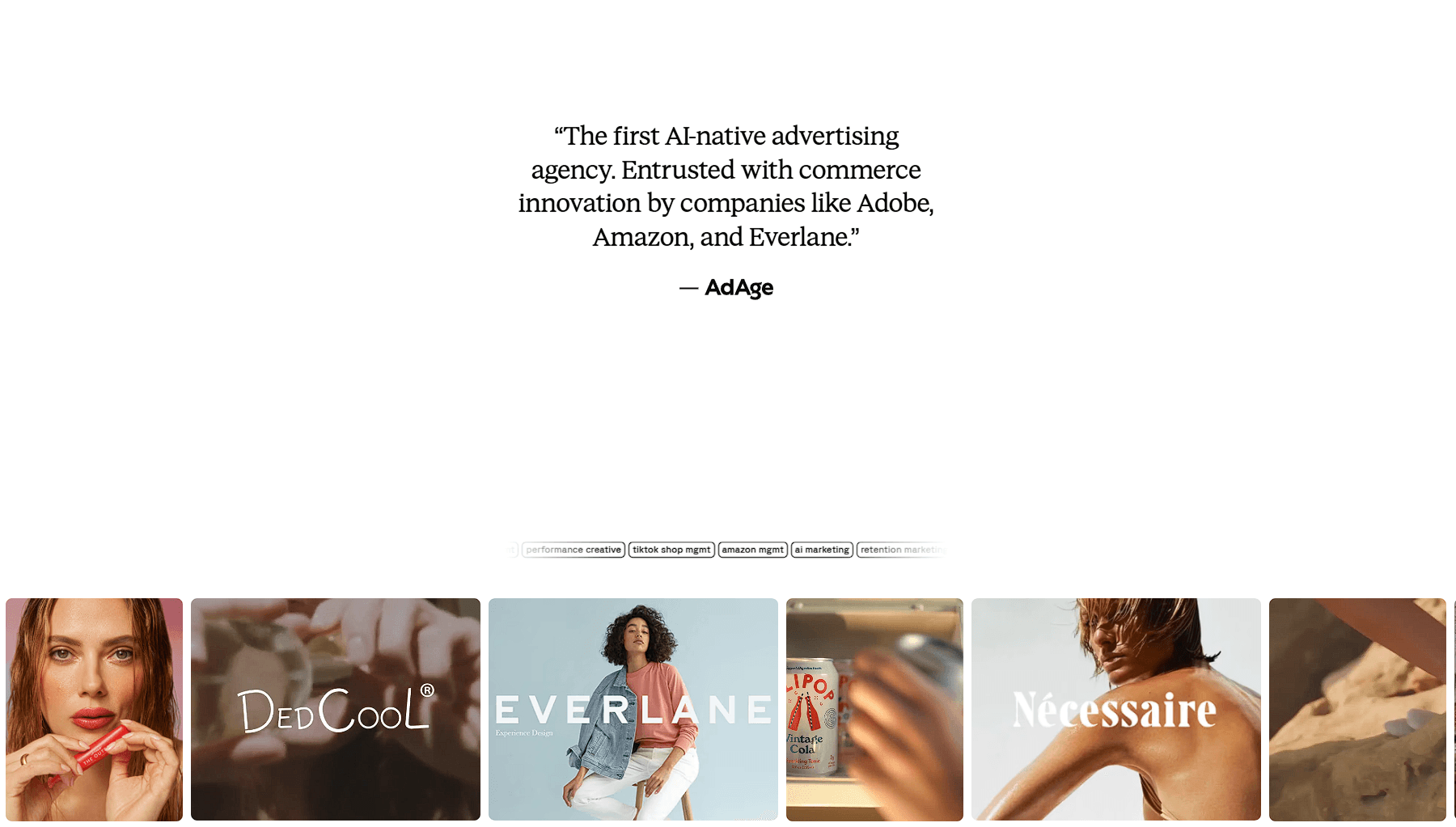
Best for: beauty and personal care brands doing $20M to $500M that need paid media, performance creative, retention and marketplace run as one system rather than by four vendors.
Darkroom is the only agency here that clears all three criteria with published client results attached. On Morphe, a rebuilt retention program delivered a 23% higher order rate and 14% higher revenue per recipient against the flow it replaced, with a discount experiment inside that flow adding 49% higher revenue per recipient.
Shopify revenue rose 75% year over year at Black Friday and Cyber Monday 2025. On Nécessaire, Q4 revenue rose 43% year over year. On The Outset, Amazon Sponsored Ads returned 4.5x across Products, Display and DSP, with weekly Amazon revenue above $45,000. Creative runs at 250 to 600 production-ready assets per cycle.
Honest limitation: Darkroom is built for brands already at scale with a marketplace presence. A brand under roughly $5M, or one selling direct only with no creative volume problem, will get more from a specialist and should not pay for capability it will not use. Nor is Darkroom a branding studio or a press office.
2. Front Row
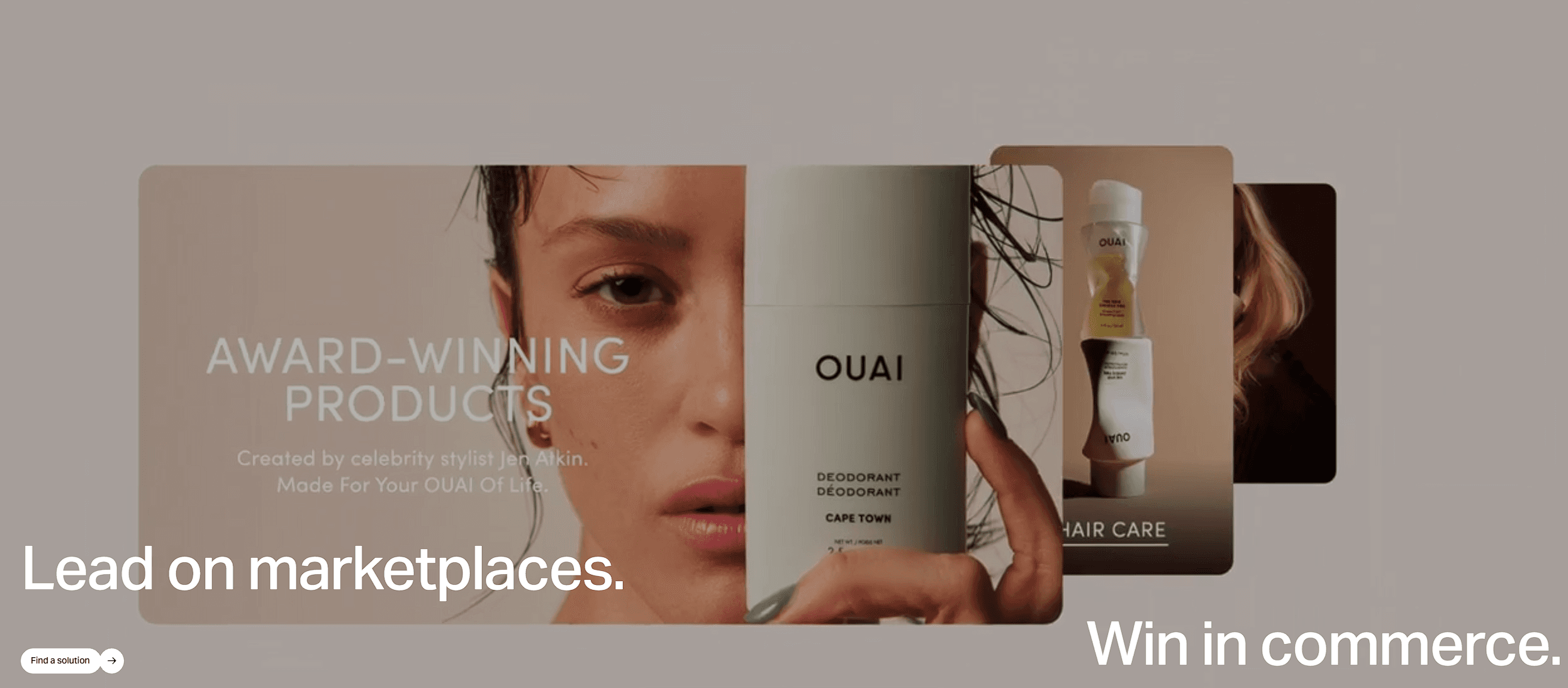
Best for: prestige beauty brands whose growth problem is marketplace rather than media.
Front Row names marketplace acceleration across Amazon and TikTok Shop, content creation, demand generation, brand building and its own business intelligence tooling, and it publishes one of the deepest named beauty client lists in the category, including Ouai, Glossier, Tatcha, Sol de Janeiro, K18, Olaplex and Fenty Beauty.
Honest limitation: lifecycle and retention are not named in the published service set, and no client results appear alongside the client names, so the marketplace claim has to be verified in a first call.
3. Goat Agency
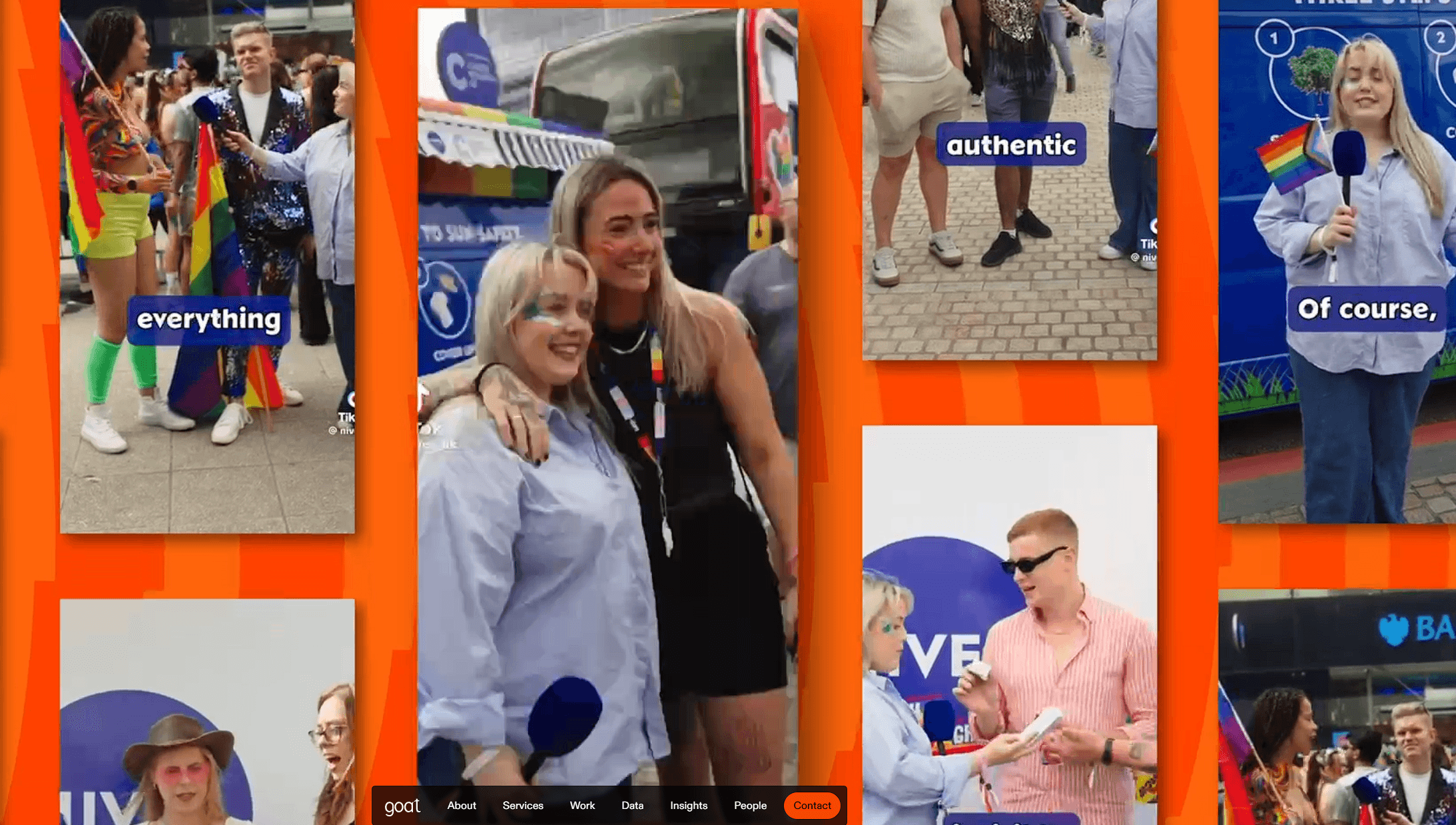
Best for: launches that need creator scale across several markets at once.
Goat is creator-led by design: creative strategy, influencer discovery, content production, influencer-led paid media and ambassador programs, with named beauty work across NIVEA, L’Oréal, e.l.f. Beauty, Fenty Beauty and The Body Shop.
Honest limitation: the published results are reach and engagement figures rather than revenue or efficiency outcomes, and retention is not part of the offer. Strong first choice for a launch, wrong single choice for a business whose problem is repeat purchase.
4. AMP Agency
Best for: enterprise and mass personal care brands with a retail shopper problem as well as a digital one.
AMP names brand development, integrated campaigns, omnicommerce shopper marketing, in-house content production including 3D and CGI product renders, loyalty program design and media planning, with client logos including Procter & Gamble, Colgate-Palmolive, Kenvue and Beiersdorf.
Honest limitation: the center of gravity is enterprise CPG rather than direct-to-consumer beauty, no client results are published, and a challenger brand should expect to be a small account in a portfolio built for very large ones.
5. Socialfly
Best for: social-first beauty brands that want one boutique partner across social and influencer.
Socialfly names social media management, influencer marketing, paid media, creative, SEO and email for beauty and skincare, with named work for Wet Brush, invisibobble and Il Makiage, and it does publish figures rather than leaving the column empty.
Honest limitation: the figures published are impressions, followers and engagements rather than revenue, contribution or efficiency. At boutique scale the creative velocity question is the one to press hardest, and marketplace is not named at all.
6. MSLK
Best for: a beauty brand that needs identity and packaging resolved before it spends on media.
MSLK specializes in beauty branding, visual identity and packaging design, with brand strategy and audits ahead of the design work, and it publishes client results including a media-return figure and a press-coverage outcome, which is rare in this part of the category.
Honest limitation: this is a design-led practice, not a performance one. Media buying and lifecycle sit outside the core, and marketplace is not named. Hire it before the growth agency, not instead of one.
7. Established
Best for: global brand building where the deliverable is design rather than a revenue line.
Established positions itself as a full-service boutique creating global brands, with architectural, graphic and product design named as its service areas, which makes it an option at the identity and physical-experience end of a beauty program.
Honest limitation: no beauty clients and no results are published, and none of the three criteria are claimed. It belongs on a branding shortlist rather than a growth one, and is here because a brand searching for a beauty agency often needs exactly this and does not know it.
8. Brenton Way
Best for: mid-market brands buying search, paid social and digital PR from one place.
Brenton Way names SEO, paid media, influencer marketing, social media, brand building, digital PR and content creation, with named clients including Few Moda and TePe USA. The breadth suits a brand consolidating several small vendors.
Honest limitation: no client results are published, retention and marketplace are not named, and the client set is smaller and less beauty-specific than others here. Good consolidation play, not an enterprise beauty specialist.
Beauty digital marketing agency, branding agency or PR agency: which do you need?
Most brands searching for a beauty agency need a performance and retention partner, not a brand identity studio or a press office. The three are rarely the same firm, and hiring the wrong one costs a quarter.
A beauty digital marketing agency buys media, produces the creative that feeds it, and owns the revenue number. You want one when traffic is expensive, creative is the bottleneck, or the marketplace is being run by somebody who does not speak to your media team. Everything in this list is scored on that job.
A beauty branding agency builds identity, packaging and positioning. You want one before a launch, a rebrand or a retail listing, and the deliverable is a system rather than a revenue line. MSLK and Established are here for exactly that reason and should not be judged on media performance.
A beauty PR agency buys attention through earned media and press. Useful, measured differently, and deliberately out of scope for this list. If you need broader coverage than beauty alone, the broader ecommerce shortlist and the direct-to-consumer list apply the same criteria to a wider field.
How to evaluate a beauty marketing agency: the three criteria
Judge a beauty marketing agency on retention architecture, creative production velocity and marketplace capability. Service lists and years in business are the two things every agency can claim, which is why marketing in the beauty industry is full of reviews that end in a coin toss.
Retention architecture. Ask when they last rebuilt a welcome flow rather than optimized one. Beauty is a replenishment category, so an agency that cannot move lifetime value is improving the acquisition half of a business whose economics live in the second purchase.
On the Morphe engagement, flows drove 80% of retention revenue and a rebuilt welcome series delivered a 23% higher order rate than the flow it replaced. How the rebuild actually ran is a separate read. Darkroom’s retention architecture practice publishes 85% higher customer lifetime value and 50% revenue growth in a year, both scoped to Drip Hydration rather than to a beauty brand.
Creative production velocity. Ask how many production-ready assets they ship per cycle, and who makes them. Paid social consumes creative faster than any in-house beauty team supplies it, and that team is already your bottleneck. An agency that briefs rather than produces will be waiting on you. Darkroom’s performance creative built for beauty publishes 250 to 600 production-ready assets per cycle. A beauty advertising agency that cannot answer this question with a number is answering it.
Marketplace capability. Ask whether Amazon sits in the same reporting view as paid social. Most brands at this scale sell direct, on Amazon and through retail, and almost no agency runs all three. Separating them is what produces two vendors blaming each other for the same customer. Darkroom’s marketplace management practice ran The Outset at 4.5x return on ad spend across Amazon Sponsored Products, Display and DSP.
For a cosmetics marketing agency, the weighting shifts. Color cosmetics run on launch calendars rather than replenishment cycles, shade ranges multiply the creative requirement, and influencer dependency is structural rather than optional. Criterion two carries most of the weight, and criterion one matters most in the eight weeks after a launch.
What does a skincare marketing agency do differently?
A skincare marketing agency works on replenishment economics rather than launch moments, which changes the calendar, the creative and the claims process. Three differences matter in an agency review.
Subscription and repeat purchase carry the model, so retention is the first hire rather than the last. Claims need regulatory review before creative ships, which means an agency that cannot build a compliant asset pipeline will miss every window. And the testing cycle is longer, because the product result the customer is buying takes weeks to appear.
Darkroom’s premium positioning in a commoditized category work with Nécessaire ran influencer and paid media as one integrated program rather than two, with paid media revenue up 118% and cost per acquisition 14% below target, both scoped to Q4 year over year.
Work with the top beauty marketing agency for enterprise brands
Darkroom is a growth marketing agency running paid media, performance creative, retention and marketplace programs for beauty and personal care brands, as one system with one reporting view.
Retention rebuilt rather than edited: on Morphe, a rebuilt welcome series returned a 23% higher order rate than the flow it replaced
Creative at 250 to 600 production-ready assets per cycle, produced rather than briefed
Amazon in the same view as paid social: The Outset returned 4.5x on Sponsored Ads across Products, Display and DSP
If your paid media, retention and marketplace are three vendors who have never met, that is the problem worth fixing first. See how the program works: performance creative at Darkroom.