SUCCESS STORIES
How GORGIE Won Energy Drink Marketing in Amazon's Most Contested Aisle




Written by Darkroom leardership
Last update: August 10, 2026

On Amazon, the energy drink aisle belongs to three names. As of August 2026, Celsius, Alani Nu, and Monster dominate search placement, and new entrants get buried within days of launching. That is the market GORGIE walked into, and it is where the GORGIE engagement with Darkroom produced 45 keywords at the number one sponsored position and a total advertising cost of sale well under forecast.
This is how the strategy worked, in the order it was built: category reality, the advertising architecture, the creative constraint, and the pivot from revenue to profitability that most brands never make.
What does energy drink marketing look like in a category this saturated?
It looks like a placement fight before it is a persuasion fight. The brands that own the search results set the terms for everyone else, so a challenger's first job is structural: decide which searches to contest, which to defend, and which to concede.
Four category traits shape every decision that follows.
Category trait | What it does to acquisition | What it means for the plan |
|---|---|---|
Incumbents hold search placement | Generic terms are expensive and contested from day one | Contest selectively; defend your brand first |
Low unit price, high repeat frequency | Single-order economics rarely justify the click cost | Plan on the repeat purchase, not the first |
Multi-format catalogue (cans, powders, sticks) | Each format pulls different searches and margins | Keyword strategy per format, not per brand |
Community-built brand | Fans generate demand ads cannot manufacture | Treat community signals as targeting input |
GORGIE is a zero-sugar energy drink brand launched in January 2023 by Michelle Cordeiro Grant, who previously founded the intimates brand LIVELY. The community model is a deliberate transfer of that playbook, not a lucky trait: fans vote on flavors, product names and brand decisions, often through open polls on the brand's own channels.
The catalogue then expanded from sparkling ready-to-drink (RTD) cans into energy powders and hydration sticks, which is exactly the multi-format problem in the third row. Darkroom, a growth marketing agency for consumer and enterprise brands, partnered with GORGIE to build an Amazon presence that could scale revenue while holding the efficiency a multi-format strategy demands.
How does a challenger win placement in energy drink advertising on Amazon?
By organising advertising into an architecture built around intent, rather than running campaigns in parallel and hoping the platform sorts it out. That distinction is the whole engagement in one sentence.
Darkroom structured GORGIE's Amazon marketplace management into four layers, each answering a different intent:
Branded defense, protecting GORGIE's own searches from competitor conquesting. This is where branded defense best practices earn their keep, because incumbents bid on challenger brand terms as a matter of routine.
Category and high-intent generics, chosen through keyword research that prioritised purchase intent over volume.
Competitor conquesting, contesting the incumbents' own audiences selectively rather than everywhere.
Product-level campaigns, so cans, powders and sticks each carried their own keyword logic.
Sponsored Products, Sponsored Brands and Amazon DSP (demand-side platform) ran as one system inside that structure, with daily pacing tracked through a custom flight plan dashboard rather than reviewed in a monthly report.
The published results are all sponsored placements rather than organic rankings: 352 keywords with page-one sponsored placements, 115 in the top three, and 45 at position one.
For a challenger in one of the most ad-saturated verticals in consumer packaged goods (CPG), that is territory taken directly from brands with far larger budgets. The same intent-first logic drives the Amazon brand store work Darkroom published for Brami, where the surface was the storefront rather than the ad account.
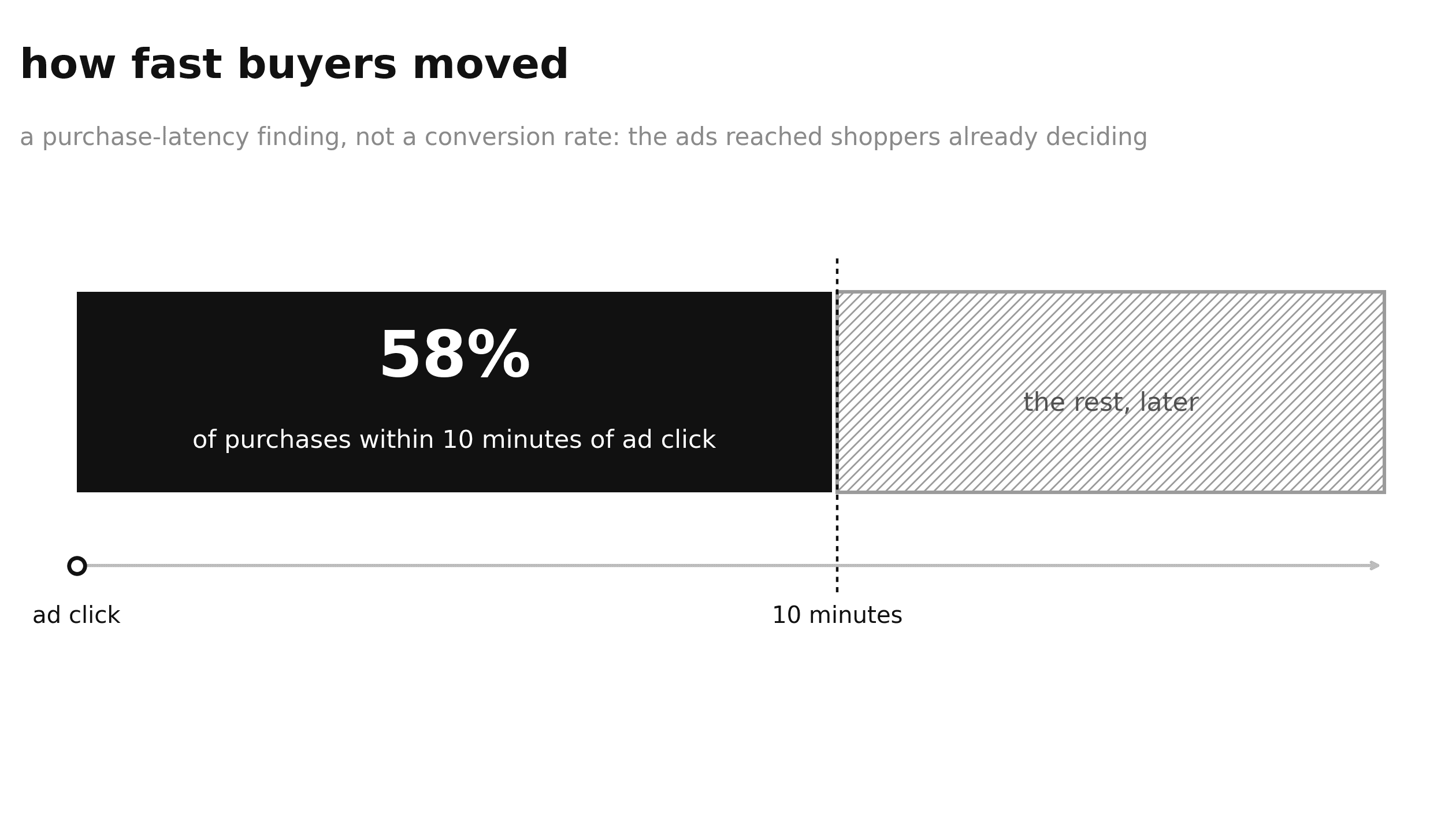
One more published finding validated the targeting: 58% of purchases happened within ten minutes of an ad click. Read that carefully, because it is a purchase-latency figure, not a conversion rate. It measures how quickly buyers purchased after clicking, and what it proves is that the ads were reaching shoppers already inside a buying decision rather than interrupting people who needed convincing.
What does creative have to do in a category where every can looks the same?
Creative in a saturated shelf category is a recognition problem before it is a persuasion problem. A shopper scrolling search results sees a wall of near-identical cans at thumbnail size, and the creative that wins is the one they can identify without reading.
GORGIE brought an unusual asset to that fight. Because the audience votes on flavors and names before products ship, the brand's performance creative starts from genuine source material that incumbents cannot manufacture: the community already told the brand what it wants to see. That is the LIVELY playbook applied to beverage, and it is why community sits in the category table as a targeting input rather than as brand colour.
The catalogue adds a second job. Cans, powder tubs and stick packs have to read as different products, from the same brand, at search-result thumbnail scale, which is a design constraint most beverage creative never has to solve.
How do you shift a marketplace programme from revenue-first to profitability-first?
By deciding which formats deserve the spend, then restructuring media against margin rather than against volume. It sounds obvious written down. Almost no brand does it, because it means deliberately cutting spend on your best-known product.
That is the decision Darkroom supported at GORGIE. As the brand matured on Amazon, the growth strategy shifted from volume to profitability, and media spend was restructured to prioritise higher-margin energy powder and GORGIE Glow formats over RTD cans. The financial model guided the shift; the flight plan dashboard paced it daily.
Worth noticing what that pivot actually did: GORGIE Glow is a caffeine-free hydration line, not an energy drink. Spend moved toward a product in a different category entirely, which is the sharpest possible illustration of the third row in the category table. Keyword strategy runs per format, not per brand, and so does margin.
The efficiency result is the one worth quoting precisely. Total advertising cost of sale (TACOS) came in at 18% against a 29% forecast, 38% more efficient than planned.
The strategic output here is the margin decision; the TACOS figure is the evidence it worked, judged against the engagement's own forecast rather than a universal benchmark. That is how a profitability pivot should be read: not by whether spend fell, but by whether the plan beat the model that funded it.
This is the part of energy drink marketing that generic advice never covers. Anyone can tell you to buy placements. Knowing when to stop buying volume, and having the contribution margin picture and the blended efficiency read to defend that call, is what separates an operating strategy from a media plan. It is the same discipline behind the profit-first Amazon system Darkroom applies across marketplace accounts.
What can you copy from this energy drink marketing strategy?
Five moves transfer, and none of them require GORGIE's budget. They require sequencing discipline, which is harder to buy.
The move | The metric it moves | The blocker it will hit |
|---|---|---|
Structure ads by intent, not by product | Cost per acquisition by layer | Agency reporting organised by campaign, not intent |
Defend branded terms before chasing generics | Branded impression share | Finance treating brand spend as waste |
Treat each format as its own keyword problem | Page-one coverage per format | Formats launched without keyword plans |
Let community decide what creative is about | Creative relevance, measured in the auction | Brand teams protecting creative control |
Set the margin threshold where volume stops | TACOS against forecast | A board that wants top-line growth |
The order matters as much as the moves. Branded defense produces the impression-share floor that makes generic spend readable; format-level keyword plans produce the coverage that makes a pivot possible; and the margin threshold only works once the first four are producing clean numbers to judge it by.
The pattern holds outside beverage. Darkroom has published the same teardown for Olipop in soda and for heritage brand modernisation at Anne Klein in jewelry, and the constant across all three is the same: structure first, then spend. In food and beverage marketing especially, where incumbents are entrenched and unit economics are thin, the order is the strategy.
Work with the growth strategy team behind the GORGIE marketplace build
Darkroom serves high-growth brands across consumer, mid-market and enterprise, and the GORGIE engagement shows the operating model end to end:
An advertising architecture organised by intent, from branded defense through conquesting, built and paced daily through a live flight plan dashboard.
A financial model that guided the shift from revenue-first to profitability-first, format by format.
Published, verifiable results: 45 sponsored keywords at position one and an 18% TACOS against a 29% forecast.
Talk to Darkroom's growth strategy team →
Frequently Asked Questions
How do you market an energy drink against established brands?
Structurally, not head-on. Defend your branded searches first, since incumbents will conquest them. Contest generic terms selectively where purchase intent is highest, rather than everywhere. Then let community and format strategy differentiate what ads alone cannot. GORGIE took 45 sponsored keywords to position one this way, in a category Celsius and Monster dominate.
What does it cost to advertise an energy drink on Amazon?
There is no universal number, because cost is set by competition on each search term, and energy drinks are among the most ad-saturated verticals in CPG. The controllable variable is structure: intent-organised campaigns waste less on contested generics and concede less on branded terms than parallel campaigns do.
What is a good TACOS for a beverage brand on Amazon?
Judge total advertising cost of sale against your own forecast and margin structure, not against a universal benchmark. GORGIE's engagement delivered an 18% TACOS against a 29% forecast, but that figure belongs to its category, catalogue and stage. A multi-format catalogue with different margins per format changes the target entirely.
How long does it take to rank for generic keywords on Amazon?
No honest universal timeline exists, because it depends on category competition, budget and listing quality. The sequencing matters more than the speed: branded defense first, then high-intent generics, then conquesting. GORGIE's 352 page-one placements were sponsored positions built through that order, not organic rankings that accrue slowly.
Should a beverage brand sell on Amazon or focus on retail?
Sequence both rather than choosing. GORGIE runs its own site, Amazon, and national retail including more than 1,900 Target stores, and the marketplace work proved velocity with data retail buyers respect. The risk on Amazon is unmanaged economics, which is why a profitability-first model matters before spend scales.