The New Rules of Brand Marketing
09/18/26
key takeaways
Brands Now Need a Cultural Program
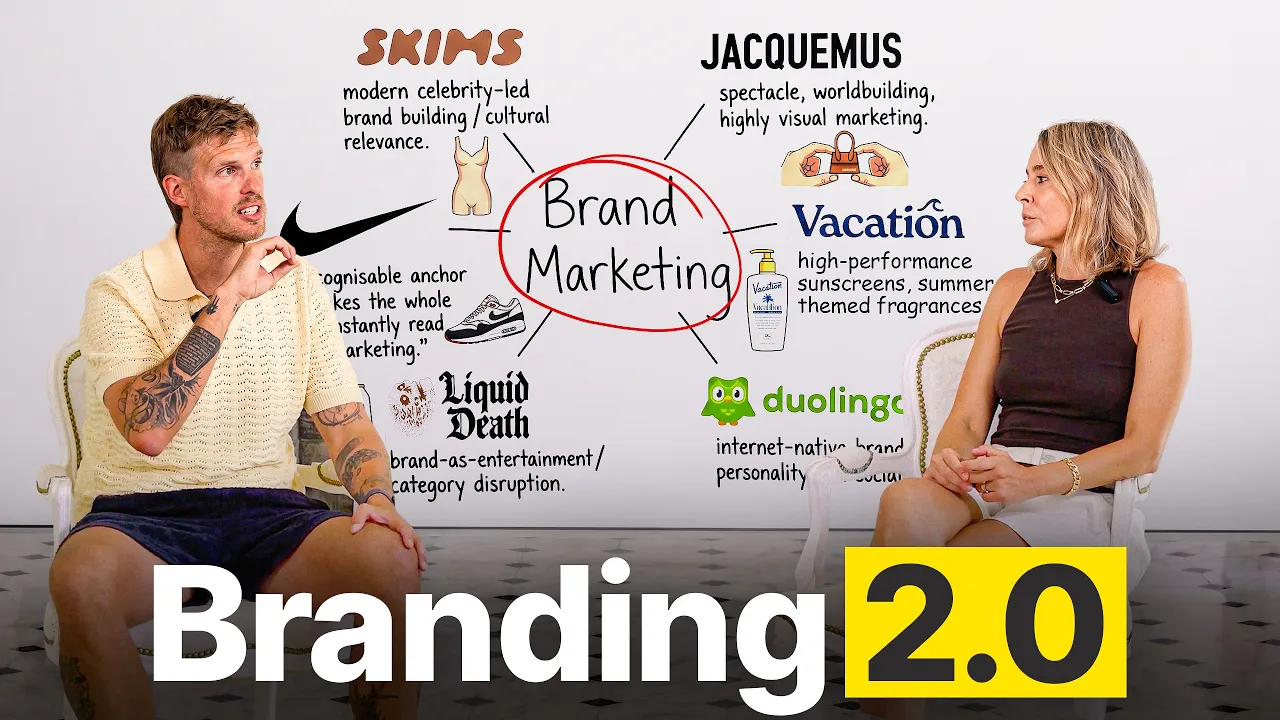
Ana Andjelic wrote Hitmakers after watching brand marketing come back into favor at the end of the performance era — and come back wearing the same above-the-line clothes it left in: TV, out of home, billboards, print, lightly translated onto social. Her argument is that the operating system changed underneath while nobody updated the playbook. A brand now has to define its role in culture and make a cultural promise, then tell that story through an ongoing cultural program instead of a channel plan.
Moving Culture Starts Inside a Subculture
On Running never tried to outspend Nike. They saw that Nike had drifted into lifestyle, golf and swimming and taken its eye off runners, put all their innovation into long-distance running, and grew outward from running fairs and specialty shops until the shoe became an everyday one. New Balance ran the same play on downtown cool, casting photographers and models with no connection to running at all. Mass culture is gone, and scale is what you get when you aggregate enough niches.
The Attention Arms Race Has a Ceiling
Mango's cinema on the water in Athens, the Prada and Armani dinners, influencer tables that run to the horizon — every activation has to outdo the last one, because underneath it is a media buy priced in impressions and built for the algorithm. Oren has engineered that math himself and watches the premium consumer drift away from it. Speed has the same ceiling: Skims and David move faster than any incumbent can, and someone will always be able to afford the longer table. Ana's version of risk-taking is refusing to run last season's campaign again, because repeating yourself guarantees the law of diminishing returns.
When Everyone Has the Luxury Codes, Buy Cultural Futures
Zara and Mango book the same photographers, the same lighting and the same Hailey Bieber who shot Miu Miu and Alaïa, so a shopper sees an identical image and feels they got the deal. Zara answered Shein and Temu by moving up — higher price points, better quality, Marisa Berenson and John Galliano archive capsules — and H&M dropped a resort collection for customers who will never take a resort trip. Ana's answer for brands at the top is to treat casting and creative direction like options trading: bet on who will hold cultural currency next year, and accept that some bets expire worthless.
The Relationship Is What Compounds
American Eagle got its uplift from Sydney Sweeney last summer and now has to buy the moment all over again. A two-year creator partnership — a micro-series with a season two, quarterly dinners in New York, London and San Francisco, an interview layer on top — accumulates instead, because the community doesn't go anywhere. Most brands still pay one-and-done, which is a cheaper version of a celebrity fee. The same logic defends a creator: Oren's transcripts get fed into AI and the output sounds like him, so what holds is the intangible layer — the joke, the on-screen reference, the format that looks nothing like it did nine months ago. Ana's version is that they can steal your playbook but they can't steal your play.
transcript
Speaker 1 (00:00): I am here with Ana today and we are going to talk about the new rules of brand marketing which she actually wrote an amazing book about which basically is a topic that concerns how you used to build brands, how people thought marketing worked and how not only has it changed really radically the last few years, but is now changing basically every few months. And how do you even adapt with that. And then we're also going to dive a bit into luxury storytelling and premium storytelling. And how do you even reach the premium consumer in this extremely noisy era? But just just to kick things off, you have an amazing newsletter, Sociology of Business. Thank you. You are cmo. Give some quick background to people watching.
Speaker 2 (00:35): Well, you pretty much covered it. So that's what I right now work as. Brand advisor. Starbucks is one of my retained clients. Previously Global Chief Brand Officer Esprit Banana Republic, also Global Chi Brand Officer and two books, Business of Aspiration and then Hit makers, How brands influence Culture. The Sociology of Business newsletter. And I think I'm the only person who is 3Amazon this Forbes top CMO list. Hey, right place, right time, you know, that's how I think it's a little.
Speaker 1 (01:09): Bit more than that. But look, and so the speaking of the books, you know you, you talked in your book, it was hitmakers, I believe. Right. And you are speaking about how the brand marketing rules have changed and how there's just a completely different world that we grew up in to where we are today. What do you think? If you could give that thesis to people who've never heard it before. Love to hear you explain it.
Speaker 2 (01:28): So this is how I'm really glad that you ask that. And I, I mean I know I follow you and I've been following you for now that you also talk a lot about that from many different angles. From strategy, from creative, from content, from creators perspective. The idea for the book actually started when I realized that brand marketing got back in favor because it was a long drought.
Speaker 1 (01:58): The performance era, I guess the long.
Speaker 2 (02:01): And dark age performance era when CMOs were like just give me me anything that's, that's measurable. And then all of a sudden brand marketing started creeping back, back in. And for those who are not familiar, brand marketing is focusing on what is our brand about? What does our brand promises to our customers? What is our brand positioning? What does the brand stand for? What is our brand story? How do we tell our story? So in old school, brand marketing would be above the line so called, which is the TV advertising, which is out of home, which is billboard. Back in the day Radio, now we have podcasts, print and so on. So it was very top down.
Speaker 2 (02:47): You kind of define the story or your brand identity and then you have very defined channels how you tell that story and that brand identity. So then brand marketing came back and unfortunately the same formats, you know, sort of came back because you know, like when you had performance marketing, no innovation on brand marketing, marketing side was, was really happening maybe a little bit. Oh, now we have websites, maybe we have social media. How do we tell our story in social media? And so on. And what I sort of realized, I was like, no, no, no, no, no. There is completely new operating system. And you talk about that a lot and I would love to hear your take. And in tldr, my take was like, no, no, no.
Speaker 2 (03:31): The way you're telling stories is actual through a cultural program. What you need is, yes, it's great to have your brand define your role in culture. And what is your cultural promise? It's not your individual brand promise to your customer. It is like what are you giving to culture? What is the dialogue to culture?
Speaker 1 (03:50): And I'd be curious a few examples for people of what are brands that have moved culture like that, you know, whether in recent history or in the past that you feel have really done that. Well, just to give people some context.
Speaker 2 (04:00): Well, I think that like let's start from running. On running for example, has done. And I will say, I mean there will get to other brands. But for example, they said, oh, we are never going to compete with Nike. We are never going to compete with Adidas. But they realized, oh, Nike took their eye off runners. They stopped innovating for runners. They have so many other categories. They went into lifestyle, they went into golf, into swimming, whatnot, everything, you know, and they're like, no, no, no, we're going to laser focus on long distance runners or runners. We're going to do innovation in that one area. And they really changed the culture of running for longdistance running. And from that laser focus, they went on running fairs, they went on specialized shops.
Speaker 2 (04:43): Because moving culture doesn't mean moving pop culture. Mass culture is finding that specific subculture. And starting from there, that's a bottoms up.
Speaker 1 (04:52): And they really. That went very far. Bottoms up now into, you know, I've made jokes about it being. It's more like on walking, right? It's this period. It's a lifestyle that has kind of spanned. Doesn't even. The running doesn't even matter anymore. It is such a wide. It's an everyday shoe. And I think they, they Came from that into categories they didn't even expect.
Speaker 2 (05:09): Absolutely. But that it did start from that specific subculture, running subculture. You can say that New Balance did the same thing back in the day when they were like, oh, we can't really compete on performance, but we can compete on cool factor, urban factor. And that's also, oh, we're gonna go to a downtown cool subculture so that we are gonna shoot art direct choose photographers and models that have nothing to do with running. They're all about downtown cool. And then our models are going to start wearing them and then we're going to become a shoe for. For dads and for models.
Speaker 1 (05:45): And I think it's interesting that there we're basically in this era now where every smart brand starts now with this niche positioning. They say where is. Where does a big brand take their eye off the ball? Is an amazing way to look at a positioning opportunity. Right. Because there is so much. Whether that's department stores. Honestly, media is the same way as a creator. If you look at why business media niche down to that specific item start, you are surprised where it can go. But if you're a brand, if you're a larger brand and you're trying to figure out how do you respond to this, you have all these upstart companies that can almost be more specialized than you. How you know, what can you even do against that?
Speaker 1 (06:16): How do you stay in control of the culture?
Speaker 2 (06:18): Well, I mean, I'm going to go back to that, but I'm curious, which brands do you think have in recent years? Because as, as you noted, as we were preparing for this, as we were chatting, you said that what happened in six months, a year, three years is like, is like lights speed.
Speaker 1 (06:35): So fast. Yeah. Well, I think you see the brands that, that operate extremely fast. I've pointed to Skims and David as two who operate at speed. So now I'll try to talk about that first in that the amount of releases that they do promotionally and the amount of things and culture they're working with are just so much faster than you could imagine. So David, being an interesting one where they, they launched the ice cream, they had Gigi Hadid with it, they sent out their second round of their cod. They, you know, had opened up the boutique while they were dealing with, you know, controversy about like from lawsuits very. With creators. That was like a month before that.
Speaker 1 (07:09): The speed and velocity of positioning is so fast that any traditional food company or they just can't get that attention level that they've been able to engineer. I think it's interesting.
Speaker 2 (07:18): Yeah. I would say. Okay, so what are they going to do to grow? Because you know, like it's easy when you're small to get from 0 to 1, but for 1 to 100 it's becomes challenging. And this is not to say, you know, how glossier was the darling of DTC era, but to when the vc that was when money was free.
Speaker 1 (07:38): Yeah.
Speaker 2 (07:39): When interest rates were zero and so on. And when, when, when Mark Zuckerberg was less evil and when they didn't win the Sorry, Mark. Sorry. Yes. House always wins. You know those algorithms change all the time and became incredibly expensive to, to, to do social advertising. And, and that was the primary customer acquisition tool at the end of the day. And that was never really and truly brand building at that time. Although what, what Emily Weiss has, has built. It's still imitated to this day. Why I'm talking about that that was a true disruption. And in the beauty.
Speaker 1 (08:17): And then they couldn't expand or they went to fragrance that did okay. And then it cut stocks.
Speaker 2 (08:21): Well, that is what I'm going towards because when distribution comes to a certain point, you can acquire only so many customers through digital tools. And then they did have to go.
Speaker 1 (08:32): To physical and they did a lot of retail stores.
Speaker 2 (08:35): And then the question becomes even with David, how are they going to grow? Do they need physical distribution? Because that is, what is that advantage? Oh yes. That is there are innovative ways to move culture and you can be. How do you turn cultural hit into a market hit and where does that market hit take you then how do you do you restructure the market or you just say hey, I'm fine. As much as I grew, do I need to grow in a multi billion dollar company or am I happy with a hundred million dollar as a company?
Speaker 1 (09:08): And I think what we're seeing now is how fast they go in the categories. Right. It feels like David Barr launched yesterday, I'm sure two years ago now. But like oh, now we're already in ice cream. There's already a secondary brand. And Ivan like Skims is another one of these as an example where they're in a large category, their products are okay, but the speed of marketing was so fast. There's always a new editorial campaign almost every month. There's always a new face or a new model. There's always something coming from Kim adjacent there. And then there's the Nike release. I don't necessarily like any of it, but I see the speed it's operating at and you look at, compare that to any of the incumbent brands they're competing against.
Speaker 1 (09:42): I can't remember the last time I heard about an Athleta campaign or any of these. The branches don't operate at that same speed of culture. And I'm curious if you think that could even happen. How does a brand change its format, its structure? It's how it works with agencies. In these new rules of brand marketing,.
Speaker 2 (09:58): Do you need to operate that speed? Because, you know, like, let's, let's, let's focus on that for a second because one thing is grabbing attention. Because if you want to grab attention, then you're always gonna have the next bigger and faster and more extreme, you know, because like that it, like the stakes are always going to be higher and higher and higher and higher. And that's what we are seeing with those brand activations every summer. The, the stakes are higher and higher. And I talked yesterday about Mango outdoor cinema Athens. It was absolutely beautiful. But if you look at those influencer dinners now, the table goes on. It's like hundreds and hundreds.
Speaker 1 (10:43): For someone who hasn't seen that, what's the extent of that?
Speaker 2 (10:45): Well, it was. Okay, so in Athens is on the sea. So it's like it was a gigantic movies movie screen like a projector and you see kind of like the sun was going down and then you see like the, the Horiz and the sea. On the other side you see Acropolis and you know, the sun, the orange colors and the sun was going down and the beautifully set table that goes into infinity because, you know. Exactly. Because at the end of the day, influencers are very rare, are those that stand out like you do because you know, you're a creator, not just like posting and you have things to say. So that's where I'm going actually towards.
Speaker 2 (11:26): It's not just mere reach and impressions, but in order to get what Mango at the end of the day paid for, they needed some return on investment. So they're like, we need to invite 300 influences multiple by x amount of impressions. We are going to get roi. So that is the scale basically of that media buy. Because at the end of the day that is again, a media buy is enormous. And then you have Prada dinners and then you have Armani dinners and then it becomes more and more beautiful, more and more. You know that question ferry that Armani had dinner last year, it's kind of. I'm just like bracing myself to see more breathtaking.
Speaker 1 (12:09): Well, because you look at it, the more breathtaking it is the same Thing as the influencer mailer. The more interesting it is, the more likely it is to get posted. Everything's about attendee percentage to a post rate and then how good the post does and how the quality of the imagery helps that. And so, yeah, the numbers game comes up and I am interested because it does seem saturated. Like it's complete saturation of that and I'm in the weeds of it. Right. I'm.
Speaker 2 (12:28): We were you then know that it's for algorithm really. Yeah, it's not for humans.
Speaker 1 (12:33): And so you get it. So you. But you engineer this attention. Right. And so I've worked on this a bunch in this last year of like, okay, let's get. You think you can do a hundred craters, you can do a thousand. You think you can do X amount of dinners, you can do more. And it works and you watch it happening. But it definitely feels like, okay, it's purely a math game, it's going to lose efficacy. You can watch the, the real premium consumer almost shift away from it. And I have thought very little about like what comes after that. And I think you're probably already there. And so I'm curious what your thoughts are on a post. This attention.
Speaker 2 (13:00): I mean, it was breathtaking. I was like, oh, why am I not there? I want to be there. Not like I want to be influenced, but I'm like, oh, I kind of want that experience. You know, it's kind of. I was like, oh, is this on a Greek island? And I'm like, oh, no, it's actually, you know. And I was like, oh, there is a necropolis from the distance. And it's like this. These are like beautiful human experiences, you know, and then you're like, oh, it's a Mango activation. Oh, but the son maybe killed the father. Oh, you know what I mean? Do you know about that controversy? You know, well, it doesn't matter. Mango is an amazing fashion brand and like we don't need.
Speaker 1 (13:33): And they're. But they're not a premium brand. Right. It's a mainstream brand.
Speaker 2 (13:36): But they do have codes of premium marketing and not just advertising marketing as well, because that sort of event is very high end. That's something that Prada would have done.
Speaker 1 (13:48): I would love to hear your thoughts on that because I think we see a lot more brands across any level from massage all the way down to mass doing using luxury codes.
Speaker 2 (13:56): Right? Absolutely.
Speaker 1 (13:57): Do you think that that's a effective playbook anyway?
Speaker 2 (14:00): Absolutely. You know why? Because when people see and there is a giant aesthetic synchronization when you see on Instagram something that Zara uses, the same photographer, the same models, look, look at Hailey Bieber. She did mango capillary. She did Alaya, she did sell oral. She shot Mew Mew. And like, God bless, good for her, you know. And end consumer is going to see and they're going to see like, oh, my God, this is shot beautifully, this is styled beautiful. The lighting is impeccable. And when they see something like that, they're going to want to buy that and they're going to be like, I got an amazing deal because I got something that looks exactly the same. Like Sal.
Speaker 1 (14:37): I was going to say that's. I feel like that is way more impactful for Mango than it is from you. Mew.
Speaker 2 (14:42): Right, so what percent so what do.
Speaker 1 (14:43): You do if you are a, if you're positioned in a premium or a luxury way, you're watching this unfold and you go, everyone's using our toolkit basically, and they're able to. You sell these more affordable things. How do you still tell a premium story?
Speaker 2 (14:56): Well, that really comes down to creativity. That means that you need to be three steps ahead and that means, like, why are you then using the same photographers? That means you need to really do like, what in finance you have like almost options, future options. Who is gonna have that cultural capital next? Like Loewe did with Isla Johnston. She is in John Dark and they're like, we are going to put her in our campaign. These. We are betting that this woman is going to have cultural currency in next year. So we are going to use not someone who is a massive celebrity now who is at the peak of their cultural currency. You're going to bet in the future. Let's talk much.
Speaker 1 (15:38): I think we've seen that because when Jonathan Anderson started, he brought a whole new group of creatives over.
Speaker 2 (15:44): Even.
Speaker 1 (15:44): Yes, even lvmh, they had like Chase Infinity early in a few of those. So I think that makes sense.
Speaker 2 (15:47): That is, you need to think about options, you need to make future bets and you need to see what do you believe is going to give you biggest return returns in the future. Some bets are gonna like, give the biggest return. Some bets are not gonna pay out. But that is.
Speaker 1 (16:03): And so that's interesting. So you have the ability to bet on personalities and people that represent the brand new photographers.
Speaker 2 (16:08): Creative vision, creative direction. But you need to have that like risk. You really need to hedge your bets. You need. And that is the problem if you're selling a run or, or Prada or. And you don't do that. I feel Prada does take risk a lot. So Prada is a bad example, but LVM's a great example.
Speaker 1 (16:27): Yeah. Celine'.
Speaker 2 (16:28): If they don't, then you're gonna see like the copy and copy of copy and copy is right there.
Speaker 1 (16:34): Yeah. When the consumer knows, the consumer is now aware of what things cost and the quality benefit and the analysis. Everyone always asks what social network should they consider when building their business? If you have someone that can talk on camera and your team isn't already super savvy at short form video, YouTube is always my answer. It's incredible at driving leads even if it doesn't put up big viral numbers. My friends at HubSpot put together a free resource called the YouTube Growth Playbook. The premise is that most brand channels don't plateau because the content is bad, but because they always make videos aimed at someone that already knows they need you. Everything is bottom of funnel and that's not how modern social works.
Speaker 1 (17:05): Think about a web design agency that only makes tactical videos about web design, or an accounting firm that only gives tips about taxes. That content is useful, but it mostly reaches people that are already looking for exactly what you do. This playbook shows you how to broaden your content without losing the expertise that makes it valuable to bring in. Not just hot currency leads to actually nurture future ones. Inside you'll find three parts it walks you through. First, how to reach people outside of your existing audience. Second, how to structure videos to keep people watching. And third, which metrics tell you if your strategy is working. You also get 12 video formats you can steal plus a four step process to put them into practice right away.
Speaker 1 (17:37): My favorite part is the niche to broad framework. It closely mirrors what I talk about with content funnels and shows you how to map your expertise onto formats for wider appeal. You can get the free YouTube Growth Playbook at the link in the description. And thanks so much to HubSpot for sponsoring this video. A lot of people that watch this are, are in in the mid level marketing roles and they're in social media roles and they're advocating to their VPs their C level about we need to be thinking about taking more risk. I'm. I mean you've been in this position on all sides of it. Like how do you think you present that to a boss or to somebody to say we need to move in this way?
Speaker 2 (18:10): Well I'm probably not a great example because I'm like the most risk taking and also I'm the boss so you.
Speaker 1 (18:18): Get to live in your own. I do.
Speaker 2 (18:19): I'm the person with the budget. So I always say yes, if you don't do things different, if you don't try new things, it's just a matter of time when someone else is going to do what you have done and your competitive advantage evaporates like that. Or you can keep doing what you have been doing, but then it's the law of diminishing returns. You just need to be ready to have diminishing returns. So basically doing things differently, trying new things, it's basically survival. And I'm saying that from personal experience, unless you, you stay on your toes all the time and always look what, what's next, and always say, hey, we cannot do this campaign the way we did the last one. We cannot do the same product that we did the last time, last season.
Speaker 2 (19:12): We cannot repeat the same things. We need to put all these new things. If it's better to fail than to do the same thing that you did last time.
Speaker 1 (19:20): Yeah, I think we, we see it now. We talked a bit before the start about merchandise, but all these, I feel like brands are copying what they see other brands do. They're taking six months or so to do it, and it seems like it's almost played out or done before they can execute it. And I guess I'd be curious that from a product perspective or from a planning, risk taking perspective, do, do you feel that same way that things are happening so fast it's almost hard to, like you can't really work off any existing model and almost, almost has to be new ideas.
Speaker 2 (19:47): It has to be. But first of all, then it becomes, everything becomes a commodity and it becomes a prize game and whoever is the cheapest is going to win. That's why. Why do you think that Zara went up market in Mango? Because Xi' an and Timu, no one can win on that speed, on that price. So Zara then said, okay, then we are going to introduce luxury image. We are gonna, we are gonna introduce higher price points. We are gonna improve our quality just enough to differentiate ourselves from Shein. We are going to start collaboration. So there is Marisa baronson capsule, there is John Galliano archive, you know, revisions, there is the item, there are the capsules. You know, they're doing things that are, that you would expect from luxury brands.
Speaker 1 (20:35): What do you think of the John Galliano archive as a, as a campaign for them and as a move for him? Just seems like very interesting cultural choice.
Speaker 2 (20:43): It's incredibly talented designers. So whatever he does is Going to be incredible. And I think that they. I think it's great all around for and I think the customer is going to win in that scenario. I think everyone wins, especially customers.
Speaker 1 (20:57): Yeah I remember I mean when I was younger whenever H M would do one of the designer collabs at that level it was just a ma. Everyone was excited. Excited. And I feel like we haven't had that same excitement down market.
Speaker 2 (21:08): Yeah we haven't. And like. And it has become kind of like part of the course those collaborations but when you see even in H M they recently dropped resort. What does H M have has to do with resort? Because resort collections are for VIPs for ultra hard network individuals, for influencers. They're not for regular customers. So there is that emulation of going up. So for me the question is but very, very luxury brands now going you know because they do need the new model now.
Speaker 1 (21:36): And I do like that idea of middle tier mastige brands taking that same approach. Right. I love the idea of an H and M resort collection but I love it more just conceptually because I feel like that's a thing that a lot of these brands should look at. Like okay, we maybe we're not elevating to the complete luxury standard. We're not in the yachts out there in the. On the harbor like debuting are all right in the. But if you look at the if how can we present how can we take our top 5% customers? How can we give them a more premium experience? How can we make products for them?
Speaker 1 (22:05): I was, I was at a. I was speaking at an event where they had the represent team there and they were talking about their loyalty program and how much their most loyal customers who have been in there and they have hundreds of thousands of customers have spent with the brand over time and their excitement to be able to get one of one pieces or to be able to bid on things from their photo shoots.
Speaker 1 (22:24): And it was really interesting to think about a newer age brand like that in men's in particular or how we provide these one to one experiences or get them in the product design process that was really would seem way more rooted in luxury prior But I guess for any prestige brand especially one that now has to compete both for attention in a way that I feel like you almost can't win and they also have to compete in product like what can you do? How do you position now at all for the future?
Speaker 2 (22:50): Well that is. I mean I would love to hear your opinion because that was what we started talking about. Like can you Win on attention if you just like. Because that is. That is their numbers game. Truly. The number of influences you can afford, the number of impressions you can get, the number of money you can spend, you can do that if you can. If you cannot do that, what do you really compete on? Is it having that very consistent aesthetic world? Is that having that invite only secret, no phones allowed? If you know, you know, experience. But then you need to really say, hey, there isn't going to be any scale here. But there is going to.
Speaker 2 (23:31): Every order value is going to be really high or the experience is going to be really exceptional. How do you really provide or how do you have then a portfolio or those different niches that you provide, those local, small, personal, one on one experiences. And when you put that portfolio together, you get scale. So that's. I've been talking about it for a really long time. Even before COVID you know, how the scale is aggregated of niches. And I do think that now it's even more pertinent because you cannot have meaning at that large scale because that tomorrow a brand is going to do the same thing that Mango did. They're going to put another screen and even more beauty. They're going to do it in Rome and there is going to be a coliseum in the.
Speaker 2 (24:16): You know, and it's going to be even more beautiful and so on. You know, maybe they take people on the moon or something, you know.
Speaker 1 (24:22): Yeah.
Speaker 2 (24:22): So the question is influencer, dinner on the moon.
Speaker 1 (24:25): I'm going to.
Speaker 2 (24:26): You're going to be like just me.
Speaker 1 (24:29): And the blue, blue origin rocket.
Speaker 2 (24:30): Yes. There's gonna be like that, like, plate, like. And then it's gonna be like the floating food. I'm sorry that the guys can't see that.
Speaker 1 (24:39): Yeah, there's a. For those who don't know, there's a troll picture of me behind on the other.
Speaker 2 (24:43): It looks. It looks really good. I think that definitely needs to be part of this video. Yeah. So this is the limits of AI or not the limits, just the.
Speaker 1 (24:51): Yeah. The designers have gotten very good with AI.
Speaker 2 (24:53): Yes. So in a sense that, that is the question. How do you really, really stratify your customers? There is no mass market. We already said there is no mass culture. There is no popular culture, but there are a lot of niche cultures. And you need to really say, oh, what are we doing for those different. But that's a completely different approach that you have. And you need to say, hey, what the cultural products am I creating for all those different customer groups? For some, it's archival issue for others is merch. For others are collaboration. I mean, but that's a pain in the butt.
Speaker 1 (25:23): Everything.
Speaker 2 (25:23): Yeah. I mean, to have that sort of marketing, that is really the future of brand marketing.
Speaker 1 (25:28): Yeah. If we're expecting more on that.
Speaker 2 (25:30): Well, that is, how do you have a cultural program and say, hey, cultural program in, in the situation, when you don't have a mass culture, you can't have mass tools anymore and mass channels. You have all the portfolio of products that are going to be niche. So how do I work with Orin, for example? Orin say that, you know, I work at a fashion brand and I partner with you for next two years and I say, hey, you're, you know, you're great with menswear. What are we going to do for next two years? How many people can you reach? But I don't care about your reach. I actually care. What relationship are you going to build with that audience and how, what is the meaning of that relationship?
Speaker 2 (26:13): What kind of relationship is going to be triangulated between the brand, the country brand officer, you and that audience? And what is the story that we're going to tell through that? Because it's not even about your reach. It's about the depth of that, that loyalty program, the membership, what kind of community are you going to create for them? So that would be sort of the program.
Speaker 1 (26:33): You brought up a point I think is very pertinent of. It's hard. There is so many things you have to do to have a cultural program. Now it's not, oh, American Eagle may have been able to win with Sydney Sweeney, if you can call it a win, but there's very few monoculture moments like that left. Right. Where they're able to influence it that much. And so to actually make it work, it requires so much every subculture, every niche, every program, every city, localities. And what I've found speaking with brands, walking through some of this being like, hey, you should think about every key region, every key subculture, influencers in these different types is they go, that's a lot of work.
Speaker 1 (27:06): It's so much more one on one management that you would be able to put that same work in and a bigger reach before. And a lot it's just, that's just a change in how much they have to spend time and energy on that they just don't seem willing to do.
Speaker 2 (27:18): It's not. And also the other thing, even with American Eagle and Sydney Sweeney.
Speaker 1 (27:22): Yeah. Was it good or not?
Speaker 2 (27:23): Yeah, but that was last summer. Yeah, it's gone they now need to spend again that money. Yes, they did see uplift in sales, but now they need to repeat that. Whereas if I were to collaborate with you as a brand, that is accumulating effect, that's a compounding effect because your community that you have built, they're not going anywhere, they're there. And if they see that you like the brand, that let's say Banana Republic, that you wear that, that you're organizing xyz, that you're, you know, they, that's not going to go away. That is the difference that is ongoing and that's the difference between cultural program and one time spike of attention.
Speaker 1 (28:04): I do think, one thing, I think a lot of brands should bear in mind about creators in particular and working in that world is that it's almost like having a basketball team or an athletic team in that you have all these individual people, but they can also collaborate. And when they make collaborative content that always does better than when they do, people are surprised by it. The algorithms reward it. You can basically build this interlocking network of people that perform online. Then they're also doing all of these things. Like one of the plus sides of, you know, I've, we're, we have this big house here at Cam.
Speaker 1 (28:31): We're doing this, we're doing, we have YouTube, I have collaborations with Clayton, like the series that we've talked before and you have all these different parts of the web and you can basically expand with creators as they, as they go on. And I think there's a lot of brands who should think more deeper about that and think wider. But then also how do they connect the dots between those people? How do they make interesting items together? How are they hosting the dinners? And I do think that that web of personalities where it's almost like a TV network for lack of a better term and it's got the real life component and there's some overlay into product. It's complicated to execute, but you can get years of resonance.
Speaker 2 (29:02): That's what I agree. Yes. But also just even if you think about like just managing you and say, hey, let's say Oren is going to make a micro series about say Banana Republic men's and it's going to be like about XYZ and he goes here, here, here. So that's going to be a series and there is going to be a season two and season and then on the top of that he's going to organize XYZ Times quarterly dinners in New York, in key markets, in London, in San Francisco. And so on. And then on the top of that there is going to be interview series and that, you know what I mean? There are different layers of content, but that's an ongoing relationship. So that's ambassadorship, that's also community building, that's also interactive.
Speaker 2 (29:48): And now, now most brands just pay you for one, one and done. And there's the same thing as paying cfini, but cheaper.
Speaker 1 (29:56): Yeah, exactly. Yeah. And you. And I think, I think there are people that are looking at it more kind of like we described. And I think that's sort of the model that has to shift to, to maintain that resonance. I'm curious, as things change so fast and you know, as we have to move week to week, month to month, without looking at the same amount of ideas, like, how do you keep your finger on the pulse? How do you get excited by things? And I'm curious in particular because I know you see a amount of brands, you're working in the middle of all these, like, how do you actually, like, think about, like, what to pay attention to, what to separate from the noise?
Speaker 2 (30:27): I say, like, I don't have a lot of talents, but I do have a talent to know, I have taste and I know what's going on inside you guys. To say that that's relevant. This is going to go away. Like, everyone's like freaking out about 2016. I was like, don't worry about it. You know what I mean? It's like that's, that's just not going to last, you know? You know, and so you need to know what's kind of relevant and what's not relevant, what's going to last, what's not going to last, what people are going to pay attention to, what not. And that's like a sixth sense. And I can't explain.
Speaker 1 (31:00): I know everyone, it's funny, I know in the comments people will be like, okay, well, how do I build that? Right? It's just something you can't.
Speaker 2 (31:06): As I said, again, it's a like, I don't know. I mean, I do have like, PhD in sociology and I did do my due diligence.
Speaker 1 (31:16): I think the sociology, that's funny. That's also my, my was my major in college. And I do think that's actually a really, a really important lens for people to look at because then you begin to think of things in terms of like, groups of consumption and the why of people buying and the, the impact they have on each other. I do think there's a lot people can learn just from looking at that as a science.
Speaker 2 (31:35): Yeah, that absolutely. But that is for me better that I can structure explaining structure. Because the whole point of sociology of business, that's the whole idea behind my newsletter is, you know, when you are a practitioner, when you, you really have fast and you need to think on your feet. The whole point of sociology of business is to say hey, let me reverse engineer what we've done. Yeah, let me be useful. Let me explain to other practitioners what we have done. And that's where my academic training comes useful. But this instinct of kind of knowing what is happening in culture, what to seize on. I don't think that like you can probably train yourself, but at the end of the day is just a talent. How do you know?
Speaker 1 (32:17): I feel like I'm in the right time now where the things that I'm interested in or I consume happen to a of people lot line with things that are in the zeitgeist or moving a certain way or the other. And I know when I was younger that wasn't the case. I'm sure in 10 years it may not be as relevant. But it is interesting where I think I'm in this exact. I'm the exact consumer people are looking for. And that's just been an interesting place to reflect from. People want this more in international consuming these certain goods because of what they say in the brand and the community side of it, interpreting prestige, engaging in new media. It's like the ideal customer archetype and it's rare to actually be inside of that.
Speaker 1 (32:52): But I think at least now I'm able to look at that myself a lot.
Speaker 2 (32:55): See, I never wanted to be. I think that is amazing that you are and I hope that you stay there as long as you can and.
Speaker 1 (33:01): There's only sort amount of time, you know.
Speaker 2 (33:03): But I, I hope that you evolve into like and, and find a different angle because for me I always want to do evergreen things. And that's why people even today read my book from six years ago and find it useful. And even when I look back and some stuff that I wrote like white taste communities are the future of marketing. That's from 2018, which is eight years ago. You know, I want evergreen things that are relevant for creative strategy for marketing, for brand, strategy for branding. That is you need to know how to think. And then if you know how to think, you can apply those frameworks to no matter what is here.
Speaker 1 (33:41): And we do. It's interesting for when we make content we the myself and my team like have a framework. We do look at Everything through which I think is really interesting is like, okay, this trend, it's so simple but it actually really works. It's do you like it or not? Do we feel good about it or not? And then is it coming or is it going? And those are actually harder questions to answer than you think. But then if you have that four square of like, like we don't like it and we think it's going away or we don't like it and we think it's growing and then you'd be. It's very easy to establish an opinion and be or to be able to have a conversation about it or where you think it's going.
Speaker 1 (34:10): And so I do think there's like some light. It's just good to have those things for your yourself to be like, okay, if I want to form an opinion quickly like can I, can I use a framework?
Speaker 2 (34:18): Yeah, yeah, yeah, yeah, yeah. So all right, so where is the, where are luxury consumers going next?
Speaker 1 (34:23): Oh, I think that's, that's the hardest question right is when we look at the people I know that are spending a lot of money on the same on things still are, are doing it in tandem with experiences more than ever. Right. And I look at this even in the clothing items that I still work on is like it's festival based. Right. People are still making that big expenditure around Coachella, Stagecoach, et cetera, etc. They're still doing those purchases going into Euro Summer. They're getting the outfit for Canada. They're doing all these like basically everything is in tandem to an event and I think that's a very interesting consumption shift versus I need new things for fall or I just buy on the whim. It's like oh, how am I putting together my plan?
Speaker 1 (34:59): And more and more that relates to their content plan or their girlfriend's content plan or like oh I also have to. This is going to be on video or this is going to be. And so there's a very interesting like new consumer angle that's so tied to these ongoing experiences of the consumer around and less evergreen I think is really interesting and I don't think brands have quite played into yet. I'm curious what you think about that.
Speaker 2 (35:19): You see, I don't know because I think that like true ultra highness.
Speaker 1 (35:22): Yeah. And that's not that that's one level below that.
Speaker 2 (35:25): Yeah.
Speaker 1 (35:25): I don't know that customer. That true ultra high net worth customer. I, I don't know as well.
Speaker 2 (35:29): I don't like they're nowhere to be seen. They don't want to be seen. They don't like, they're like, forget about the phones. They're like, they have their assistance and then like, we don't know where they are. They don't touch anything. They're like, they're more ill.
Speaker 1 (35:42): I have one thesis. I have one Thesis customer and that the still the best way to reach that consumer is in. In the hobby. In. I'm extremely into boating. I'm extremely into horseback riding. I'm into these exact experiences and those places where you can still show up authentically if you know the culture and if you're. And. But that's one of the last places to actually get excitement.
Speaker 2 (36:00): Formula one or. Yeah, yeah. Or even soccer or even like. Right. But you're not gonna hang out with them. You're not gonna see them because it's more and more and more. More removed experience because they're going to have their own, like, you know, even when they watch World cup, they're going.
Speaker 1 (36:17): To have their own in their own place and their own thing. But let's say. But the companies that are selling to them, like, okay, they're still going and buying boats. They're still going to the show. They're going to the Monaco Boat show to look at that. There's some of those places where you can still activate in an interesting way. But I, I had a conversation. I'm going to Monaco after this and I'm for a like a client item that's about luxury personal brand. Because that's been interesting too is you're seeing some of these people now now who have never had to think about. I don't have to have an online presence or anything who are finally like, okay, well now this actually sort of matters for our business now. And.
Speaker 1 (36:48): But we want to approach it from a luxury angle. And that's a very interesting conversation.
Speaker 2 (36:53): I think that's very important. And I think people as luxury goods and I don't think we've seen that at all. And I always position sociology. Business as a luxury good. It's incredibly expensive. It's one of the most expensive. I think that's most expensive.
Speaker 1 (37:07): I've actually, I bring that up as an example. I probably brought up several 10 times in conversation that you can have a premium substack and it's all about the price and it's all about what is featured inside of it. And you are the exact example of that.
Speaker 2 (37:18): Thank you. But it's really. I believe in that. The value you get there. I literally, I'm very generous in what I like, I'm not a community builder. My model is broadcasting. So don't come to me with questions. It's all in there. Because that's on purpose. I give a lot. It costs a lot, but I give a lot.
Speaker 1 (37:37): Well, and now I feel like over time the archive is what worth.
Speaker 2 (37:42): Yeah. And now I'm gonna add white papers and presentations with all those models and so on. But there is a lot there. And like as you said, there is an article that's like now more. I mean, I started writing in 2008. Basically that was even before I graduated, even before I got a PhD. And so there is a lot there. It is expensive, but that's what you basically get as a return on investment. Investment is, I mean, how many thousand times more.
Speaker 1 (38:09): You know, I do think smart personal brands and smart media do the same thing that brands do. They take from, they take luxury codes and use them. I've. I have a mass personal brand, not a luxury personal brand, but I take a lot of those same trappings from it in terms of how you reach people or how you present or how you position or what you talk about and where, how you price. And I think there is a, I think it's a lot even deeper in that. And if you do want to have a personal brand treating it like, oh, I need to invest in marketing, you to invest in operations, all these things that people haven't thought about before. There's a massive economy around that.
Speaker 1 (38:40): Just by nature of how many of Gen Z are creators, how many people now have that as part of the business? I think there's a whole, there's a whole world that's kind of unexplored on how marketers work through that, how brands work through that, and then what that means for how we communicate in the future.
Speaker 2 (38:54): Yes. And then how would you say that Instagram is different from TikTok in that sense?
Speaker 1 (38:58): Extremely. Well, I think because the, the candid content. Content on Instagram you can have a myriad of content, high end to low end, high production, whatever it is, and you can begin to build real affinity with people where. And you can build it around different things. Whereas on TikTok it is extremely. It has to be that relationship almost from moment one.
Speaker 2 (39:16): Right.
Speaker 1 (39:16): I have 300,000 followers on TikTok. I don't have that one on one relationship with them. All my content is value driven. They don't know me at all. They don't have that personalization. So basically it's like if the content has enough value, it will perform anything else won't work. But if I was to start from scratch and it was really about my story right along with it, I would have significantly more resonance. And I think that's how you have to approach that network now, whether it's a brand or as a creator is it really has to be a narrative you build with the fans at the same time. And Instagram you don't need to do that.
Speaker 2 (39:43): Right. So on Instagram it's more impersonal, more about the subject matter and on Tik Tok is more about or.
Speaker 1 (39:50): And it reaches. And it reaches a. The algorithms work slightly differently like and the affinity works a lot, a lot differently. And I feel like on Instagram you get more access to the people that follow you more often. As long as you keep giving them things they enjoy, they'll go with it. And, and that and value still reigns king. Whereas on TikTok it is really about your community and your fandom to get consistency or else it's always going to be a shot in the dark. I think a lot of creators are seeing the same thing now. You'll see more people than ever. It's like 5,000 views, 10,000 views, 5,000 views,10,000 views, 80, 100 and then back to the 5 to 10. Right. It's way less. Oh, it's Instagram. It's always.
Speaker 1 (40:24): You're consistently raising your. Raising your bar and I think that's a challenge. But I also think that all of these networks work really well in tandem. Right. If you have the ability to create widely around them as a brand or a creator, you are able to like Instagram I think should be most people's primary. You do still want to work on LinkedIn because that's where real businesses reach out to you. CEOs aren't DMing you from their account with their kids photos or whatnot, but they will on LinkedIn if they see you. Even if that video almost has 10 likes because they saw you on Instagram.
Speaker 1 (40:49): YouTube has no better long affinity where people actually get to learn more and actually put action into to the universe versus you can't get that in a two minute video. You get an introduction to a concept. But you can change someone's career arc on YouTube or their life. And I think that is a. Is really important. But you can only do so much content there. It's gated by how much you can release. And whereas TikTok is for a native type of extroverted person who can really build a fan base alongside them, it's excellent for them and hard for everybody else.
Speaker 2 (41:16): Interesting. And are you afraid of copycats?
Speaker 1 (41:20): I have a lot of copycats, cats, but I'm not really afraid of it. What I've noticed is that it's natural, it's going to happen. They can get views, but not resonance. But then also you have to evolve. Like, my content looks nothing like it did nine months ago. We've changed production value, we've changed the topics, we've changed the way we hook, they changed the way we've talked. And so they're still copying the things from that last wave. And that evolution is really necessary because people get bored in how they consume. Algorithms change. And as a creator, I think your job is to continually evolve your tools, toolkit. And we've worked now a lot to be uncopyable in terms of the scripting or the way we joke or the relevancy or the approach.
Speaker 1 (42:00): And because people were just putting all those transcripts into Claude and spitting content back out. That sounds exactly like me. And you're like, how do you compete with that? By things that are intangible. By referencing jokes on screen, referencing cultural things people wouldn't do, being a little risque. I think those are all signs of human life, basically.
Speaker 2 (42:17): So that is basically the same thing that brands have to do, what we just talked about. Because at the same time, like, do you want to be Mango with the giant screen and you Acropolis or are you going to go maybe premium? Are you going to go to vip? Are you going to go to some like, collection of niches? Like what is. You said you need to be more dis, you need to be human, you need to be like personality is to me, me the biggest competitive differentiator always. And like, you know, like I always say, oh, they can steal my playbook, but they can't steal my play. You know what I mean? Because that, that is. I'm always going to riff a little bit on myself. So that's in. Inimitable in, in a way.
Speaker 2 (43:03): But that's a lesson for brands as well, that like risk taking is not being faster, but being smarter.
Speaker 1 (43:10): I think about if we were to leave people with two things coming out of this. I think it's that it's that risk.
Speaker 2 (43:17): Just keep changing, but not being faster, just. Just being more smarter and just like being more aware of what you're doing.
Speaker 1 (43:23): You probably can't compete on speed. Someone's going to be able to do more than you. They're going to be able to get the longer influencer table. They're going to be able to do a lot of that, but you taking the steps that they won't or not repeating those same things is at least giving you an opportunity to be ahead of the curve. And then also that personality, because I agree that even for brands, I'm like, the more. The more people you have on camera, it doesn't have to be the founder. It can be representatives, people, ambassadors, team members. Your story is told by your world, and that's your consumers, that's your employees, that's the people you choose to have represent you. And it's extremely effective.
Speaker 1 (43:52): And it comes down to do people gravitate to their personalities? It's one of the last honest things we have.
Speaker 2 (43:57): Yeah. So. Well, I have accent and I have a PhD, so it's going to take minutes to acquire either of those.
Speaker 1 (44:05): That's true. Look, I appreciate you coming and talking through this, and I hope. I hope everyone has value. Please go check out Ana's books.
Speaker 2 (44:11): We'll.
Speaker 1 (44:11): We'll link them here below and follow the sociology of business. And thank you so much.
Speaker 2 (44:15): Thank you for having me. This is amazing. Thank you.