How AI evolving the org chart of commerce | Cannes 2026
Jul 28, 2026
key takeaways
AI Is Collapsing the Marketing Org Chart
The old "one person per platform" model is giving way to a single operator directing an AI system within guardrails. Triple Whale's client True Classic (0 to $1B+ in seven years) moved 100% of its Meta spend to automations and went from four people managing paid ads to one managing the system—freeing the other three for channel expansion into TikTok Shop, Walmart, and international.
Idea-to-Launch Compresses from Weeks to a Day
Work that once required specialist teams now runs on small, AI-augmented pods. Sunpowder's Ashwin described landing pages that used to take 2–3 weeks of copywriting, design, and development now going idea-to-live in a single day with Claude + Codex fed on customer data—dramatically expanding what a two-person brand can take on.
Taste, Judgment, and Human Relationships Are the Moat
AI absorbs the repetitive, data-heavy work—reporting, media-buying optimizations—but creative strategy, taste (earned through reps and experience, not prompts), and anything external stay human. PR moments, brand partnerships, and sales still demand a real person: people do business with people.
The Individual Contributor Rises—and Agencies Must Reprice
Value is shifting to high-agency experts who can close the entire loop with AI, while management layers flatten. For agencies, that means repricing away from percentage-of-media (which AI now automates) toward strategy, taste, and cross-client expertise—and leaning into AI to serve more clients at a higher standard without adding headcount.
transcript
Speaker 1 (00:00): They've gone from zero to over a billion in revenue, where they went from four people managing their paid ads to one person managing their system.
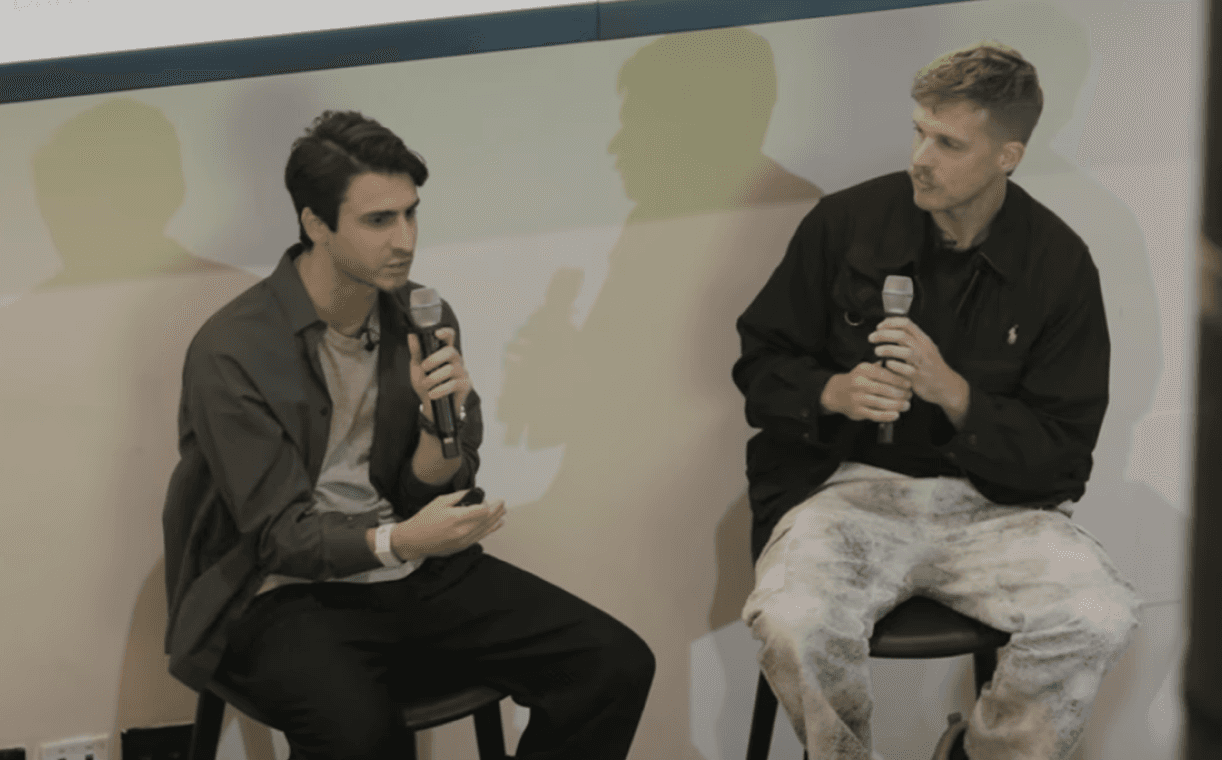
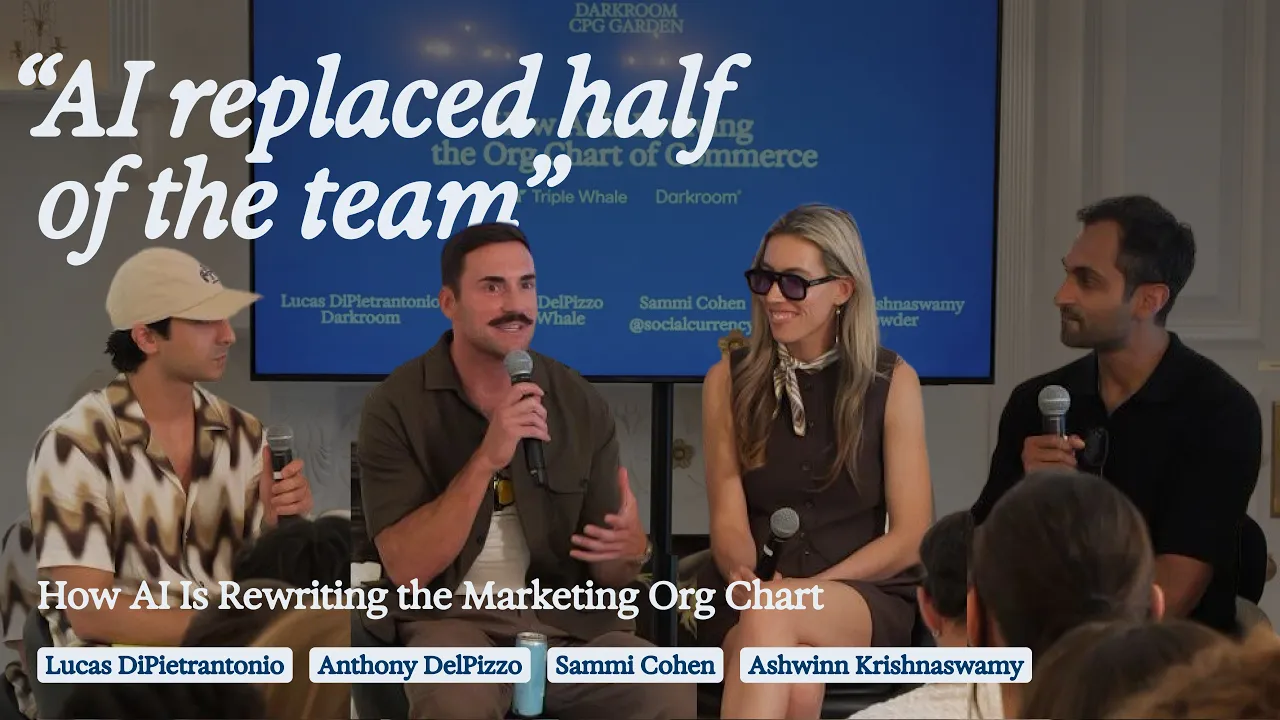
Speaker 2 (00:16): Welcome, everyone. Thanks so much for coming. Really appreciate it. This is the second year we're doing this at the Darkroom House. I have probably the most exciting job right now with this panel of like, three people that I each individually like and want to talk more about. And I get the pleasure of butchering their bios. So, first of all, everyone, thank you so much for coming. I've got Ashwin, who's former content creator, now brand operator, CEO of Sunpowder, co founder of Sunpowder, and I'll have him say a little bit more about that. We have Sammy Cohen, who is an incredible content creator. Both of these two are probably the best content creators. No shade Oren in the consumer marketing space.
Speaker 2 (01:01): Um, and Sami runs social currency and I'll have her talk a little bit about that. And then we have Anthony, who's the VP of marketing at Triple Whale. Triple Whale is probably my favorite e comm software in the game right now. They're so well positioned. I'll have him speak a little bit more about the topic we're going to talk about today, which is AI and e comm and consumer. But guys, maybe just let's start. And Ashwin, we'll start with you. For the rest of the crowd, I'm Lucas. I'm the co founder and CEO here at Darkroom. Thanks for coming. We love hosting everyone every year and it's meant to be an intimate discussion.
Speaker 2 (01:37): So Ashwin, tell us a bit about Sunpowder and then we'll kind of get into the questions and we can go to, you know, one by one.
Speaker 3 (01:42): Cool. Yes. So, so thank you everyone for coming. I'm Ashwin, former and current content creator about branding and marketing. I am a co founder in a brand called Sunpowder. Maybe you saw it out on the tables, there are these little green sticks. It's a drinkable skin care supplement. Helps protect your skin against sun damage. I launched this business with two co founders, cosmetic dermatologist and a skin cancer surgeon last year. Have spent a lot more time this year on that business. And when Lucas said, hey, we're going to have a conversation about how AI is changing, how new emerging brands get built, and how you think about marketing functions, I was like, great, this is my bread and butter because we're doing this every day.
Speaker 3 (02:18): As we think about our paid channels, our retention, marketing, you know, every kind of function and facet of our business. So I'm looking forward to the conversation.
Speaker 4 (02:26): Okay, that's a tough one to follow up behind, but. Hi everyone. I'm Sammy Cohen. I'm a content creator. I have a podcast called Social Currency where I interview CEOs of top tech companies, consumer companies, really, any company that I find interesting. So I love my job. And then actually this is probably the first public forum where I'm announcing this, but I've been teasing it a lot on my private or not private, but my own social channels. I'm launching a new live stream show. If you guys have heard of tvpn.
Speaker 4 (02:57): It's basically going to be tvpn, but led by myself and another amazing co host talking about the latest breaking news across all things tech, including AI, all things marketing, brand, consumer, and we're also going to have an interview component of that, but we're going to be shooting at a studio in la, so that's launching first week of October. So I will. I will probably. I know you're going to be talking about AI and E comm.
Speaker 2 (03:21): We can go.
Speaker 4 (03:21): Anyway, about what I'm excited about here.
Speaker 2 (03:24): Well, congrats. You heard it here first. That's awesome.
Speaker 4 (03:27): You did. This is. This is like first breaking news, so thanks.
Speaker 2 (03:32): That TPBN acquisition too, I'm sure that had something to do with that price tag. Maybe.
Speaker 4 (03:37): I've never heard of them. I mean, hey, if OpenAI wants to. If anyone is affiliated with OpenAI, if they want to talk. I mean, I was at dinner with them last night, so we're good. But anyway.
Speaker 1 (03:47): Well, that's a tough act to follow. I'm not launching anything right now, but congrats, Sami. That's amazing, everyone. I'm Anthony. I'm the VP of marketing at Triple Whale. If you haven't heard of Triple Whale, we're the AI operating system for E Commerce. Which is really just a fancy way of saying that for an E comm or retail brand, we take all of your data. So where you sell online, where you sell offline, where you market, so on Meta, Google, Klaviyo, also where you're out of home. We ingest that data and normalize it so it's in one place, run it against advanced measurement models. So like attribution. Mmm. Incrementality, so that you can trust the data you're looking at and then layer on all of the frontier models with our AI harness mobi.
Speaker 1 (04:27): You'll hear me talk about MOBI a lot today. So that MOBI tells you what you should do in your business. What levers you should pull for growth and then actually pulls those levers for you. So I'm going to talk about some of those, the brands that are doing that. But the way we like to think about it is it's like self driving mode for your e comm brand.
Speaker 1 (04:44): So say you get in your Rivian, you enter your destination with Triple, you do the same thing, hey, I want to grow my new customers, I want to increase profitability and then Triple will is going to help you get there doing all of the mundane steps like changing lanes, the things that really don't require human intervention anymore so that humans can focus on building a brand and focusing on creativity. So yeah, super excited to be here. This is something that our 60,000 brands think about all the time is how should I evolve my org structure? And so really excited to share this with you all.
Speaker 2 (05:13): And okay, so like the goal of today's panel is like everyone here works in marketing, we're in advertising. We want to make this pretty tactical. Like I think there's a lot of discussion around AI, but we want people to understand actually how it's getting integrated into the org chart and how it's actually evolving, how marketers get work done but also like where you should be investing your time because it's. The calculus is definitely changing. So I'll kind of start there. Ashwin is actually in a unique position because he's got, it's a two person company basically, right? They're scaling at a pretty aggressive pace and you're probably thinking, hey, you know, as we grow and we're cash flowing, where am I going to invest my incremental operating dollars? Is that going into tech?
Speaker 2 (05:56): Is it going into people? And honestly Sammy, I think you're probably thinking about the same thing too as you're growing your podcast and your social following and your media business. So let's talk about that. And then Anthony, I know you have a really particular take on that, so let's start there.
Speaker 3 (06:13): So I'll kind of speak about one function because I think it's too easy to speak broadly about like AI is changing everything and what an old world look like and what a new world looks like. So prior to starting this brand, I had a branding and design agency and we would do a lot of digital design and development for CPG brands. One of those offers that we had was we would design and develop landing pages because when you were building a brand you want to test out different angles for different customer avatars that have very specific content, images and offers. Now to do that. A brand would come to us and say, hey, here's the brief, here's the strategy.
Speaker 3 (06:48): We would probably spend a week copywriting, then maybe, you know, a few days designing and then a few days developing. But kind of like that end to end process would be two to three weeks to go from idea to live for the brand. And then you multiply that across four or five different landing pages and angles that you want to test. That was four years ago. Now, how are we doing this with our brand? So I am not a developer. I'm like a half decent copywriter. I'm like a half decent designer. The person who I work with has no background in any of this. But between Claude and Codex, which ingests all of our customer data, basically helps us understand who our archetypes are.
Speaker 3 (07:26): Which of our ads are working, basically helps us from a strategy standpoint of, hey, here are the four or five different angles you should test. Okay, great. Here is my first pass at what I think that content should look like. You kind of work back and forth with it, right? And this is like not just one prompt where you get to it. This is like several hours of kind of ongoing conversation. But you can basically do the entire copywriting, design and development process with these tools. Idea to launch within a single day.
Speaker 3 (07:51): And so how does that then compress how we even think about who we are hiring internally to do this, or the other teams that we're going to be working with, or what other opportunities does that open up for us to just like work on these other functions where it's like, hey, we were going to spend four weeks of our time doing this, now we're spending three days of our time doing this. It's like, okay, what's the next thing that would have been either cost prohibitive, time prohibitive, talent prohibitive for us to do? So it kind of expands, I think, the aperture of things that a team can do. So that's a start of kind of how we're using it and thinking about it.
Speaker 2 (08:27): Okay, I'm going to come back to that. Anthony, I know you want this one.
Speaker 1 (08:30): Yeah, no, I mean, I think we're seeing the same thing at scale across all of our brands. So we work primarily with all marketers, but performance marketing, growth marketing, and really we're seeing like the old way of having a team that is one person per platform. So you have someone focused on meta, someone focused on Google, you have an analyst that works with them to cobble those kind of understanding of how they all operate together, delivers. Then Results on like hey this is what's working on Google. This is what's working on Klaviyo. Here's how you can use these insights together. Like that's no longer relevant because you have systems, I mean selfishly I'll say Triple.
Speaker 1 (09:03): Well but many systems who that can basically take all of that for you and do all of the context setting so that then you can focus on okay, we have people organized based on decisions so instead of having someone focus on meta it's having someone focus on all of your ads of like what ads should we scale across platforms? What creative do we want to start with? Show up with. And so like an interesting example that we have of this is a brand of ours is called True Classic. Sure many of you have heard of them. The last seven years they've gone from zero to over a billion in revenue.
Speaker 1 (09:33): They use Triple oil to automate all of their media buying so they've actually moved 100% of their meta spend moving on all other platforms to our automations so that they can automate things like pausing ads, scaling ads, setting guardrails for their media buying and having one person control the AI and focus on those guardrails.
Speaker 2 (09:52): How does that look? So all media spend goes through the dash and then you have someone making incremental improvements like paint the picture.
Speaker 1 (10:01): Yeah, totally. So they'll basically set their add their brand heuristics in like okay hey this is when Roas gets to this we want to scale 10%. When ROAS drops below a certain amount, pause this ad. If this creative starts to fatigue, create a new creative in Triple. Once you can set those guardrails for the AI if someone do that pretty like we want to be pretty involved then AI can run and you have someone directing the system. And so we've seen that pretty much at scale with True Classic where they went from four people managing their paid ads to one person managing their system. And the thing is those other three people, it wasn't like they were let go. They were able to Ashwin's point focus on other initiatives.
Speaker 1 (10:40): They were focused on internationalization, focus on channel expansion. How do we get into TikTok shop? How do we expand into Walmart? So things that would have been an 18 or 24 month higher out they're able to now achieve now in a really fast way in a way that they can trust the system.
Speaker 2 (10:56): Selfish question for me but with the products so can you optimize against like kind of like a top priority metric like contribution margin from your around sku like how do you, can you make optimizations around your merchandising? Does it flow back into inventory forecasting?
Speaker 1 (11:17): So great question. Yeah. So for every, what we call our automations, for every automation you set, you actually there's a flow in Triple Whale where you set your goal. That goal can be any metric that you have in the system. And so with, with a data platform like Triple Whale, you can go as far depth as contribution margin. You can think about even just top level profit, you can think about NC roas, your new customer roas. If you're really looking to grow your business and you're new and then how you can optimize based on that. But you can do that per channel, you can do that aggregately. So there's a lot of flexibility and I think that's where human involvement is so critically important.
Speaker 1 (11:49): Because AI couldn't set those guardrails and as your brand evolves, those guardrails need to evolve. And so having someone there to evolve it is hugely important.
Speaker 2 (11:58): Yeah, for me it's like those are just things that AI is just much better at than no human wants to be looking at data sets from all these disparate channels and making optimizations around that. So I think as a marketer I'm like excited about that. I think everyone in here should be excited about that. Just so I get a temp check on the room. Like how many people here are brand owners? Like are we more. Okay, so a lot of brand owners. Creators, A lot of creators and then just people in marketing, like everyone. Yeah. Okay. Okay, cool, cool, cool. I love it, I love it. So Sammy, let's, let's maybe for the creators and the other media folks in the room, tell us.
Speaker 2 (12:38): I don't really know much about your business actually. Like, tell me about, tell me about how it's structured.
Speaker 4 (12:42): Well, I was thinking while they were talking. So I have a good answer for you.
Speaker 2 (12:45): Okay, okay.
Speaker 4 (12:46): But I'll gap about myself, of course. So I. All right, so kind of quick spiel on my, on my journey. Right. Started as a short form content creator. I talk about the intersection of business, tech and culture. My one liner is I talk about the hottest business lore. So when I hear something juicy that a company is doing or like a bizarre fucking decision. Sorry, can I concur?
Speaker 2 (13:06): Yeah, you can curse, you can.
Speaker 4 (13:07): Bizarre decision. I will just talk about it and kind of explain like the buzzy headline, what happened and then I'll decode from there and you know, it's, it's short form, so it's like usually 90 seconds started there, then thought, okay, well I know I'm getting reach, so let's like see how far I can push it. And so I wanted to go into long form so I started this podcast, I launched it about a year ago called Social Currency, where I sit down with CEOs ranging from CEO of Pinterest to Depop to, I don't know, like Fiji from OpenAI is coming on. So like there's a, there's a pretty broad range.
Speaker 2 (13:39): You got Sam Altman, I mean, I'm.
Speaker 4 (13:41): Working on it, but I got Fiji first so that's okay. But then I think going to the next phase, I kind of gave a little bit of a reveal, but I'm going into the livestream social content because I'm really bullish on that space and I could have a whole soapbox about what that means and where that landscape is going. But I'll answer your question about, about AI. So the way I think about it in terms of how it impacts the creator universe, I'm going to break it down into three different steps or frameworks or ways that I'm thinking about it. First, the most obvious one to any creator in the room is the content itself. Right? AI has democratized the ability for anyone. Even if you've never created a single piece of content.
Speaker 4 (14:21): You go into Claude, you go into chat and you say, hey, I'm like, you know, you're so and so create me a 60 second video about blah, blah, blah. You're going to get like a very mediocre middle script, but you're going to get a script and you can kind of then tweak it from there. So the content piece has been democratized. Then going over to, I think what really will elevate your content now, even though everyone, I'm sure for all of you who said that you were content creators, all of you are using AI in some way. You're either using an anthropic or OpenAI tool, I'm sure, or one of the other ones. So that's number one.
Speaker 4 (14:54): I think it's just being able from my perspective when I'm using any of those tools that gives me like, honestly probably about the basic, maybe 50 to 60% of like pure what I'm going to, to be talking about the heart of it. And then I add my, my, you know, pov, what actually makes the content interesting to me on top of that. So that's just like the basic, but everyone's kind of on that same page. The second one is editing so this is a space where if you're in visual content, if you're creating any kind of video for social content, you know how important the editing is. I think we're still in a place where I personally haven't seen an incredible editing tool that really is top notch.
Speaker 4 (15:35): I think that will be in terms of all other forms of content that will be the one that kind of lags a bit more, but it will get there. It will absolutely get to a point where you feel really good about the final output and you'll be able to actually put the specific elements of. Okay, I know that I want my title that's going to be on the screen in this specific font. I then want that to be on screen for the first three seconds. I then want really quick clips. I then want to have the caption in this font, this specific, you know, level from the bottom and you're going to be able to give all of the inputs and it will be able to really make the edit actually look good.
Speaker 4 (16:11): We're not there, but I think that's where it's coming and we'll, we're probably a few years out from having something that's really incredible there. And then the last piece from the creator side, AI is really making an impact and you actually spoke to it on the team element. Whereas I have a small team now. But the amount that I'm using AI to actually do the things in my weekly, my daily flow, I'm using it all of the time, even the basic things. Like at one point when I was first starting, I actually hired someone, a person to help me come up with the content ideas and go through all of these different channels. That's something now where with Cowork and I have a scheduled tasks running and I have it, I have it already synced into my favorite newsletters.
Speaker 4 (16:53): I have it already synced into all of my logins for all of my, the places where I'm getting my, my ideas from. And every morning I just get like a, you know, a 10 subject email that has all of my, my potential ideas for the day. And that's just one example. But I think continuing to leverage AI to build out the team is going to be something. I mean I say all of this, you still definitely need humans and I have people on my team that I don't. I would not ever want AI to cover some of the things that they're currently covering. But I think I'm starting to at least see the opportunities for AI to yeah, help with the whole process.
Speaker 2 (17:30): Well, So I think you guys are all touching on similar things here, which is, like, for high agency people, you can leverage the technology to do so much more, so much faster. For me, I work more now than I ever have because of the tools. I guess the question then becomes like, as the scope of your business expands, where do you want that human element? What's most important for you as you build each of your teams out?
Speaker 1 (17:56): Yeah, I can start. I mean, I think what we've seen is you continue to automate things that are repetitive, things that have specific inputs that you can have guardrails on. You can give direction, forecasts, reporting. I mean, we work in the intelligence space, so there's a lot of. Of the reporting and building presentations that just effectively can be automated. But the things that can't really are all around judgment, creativity, taste. I mean, these are things. I'm sure that's the buzzword of can this year, but these are things that truly can't be replicated. And if you think about staying on trend and how to evolve and shape trend, you're not able to do that with cloud or with any AI tool.
Speaker 1 (18:37): So having that level of really on human involvement understanding is where we think, like, the creative strategy will always be a huge part of it. And we're seeing that across all of our brands.
Speaker 4 (18:48): I have a quick one. I'll make it really quick. So I actually think the area that is the most protected is anything external. So I had, like, this is a safe space, kind of. I had a little bit of a PR crisis, literally, like, 10 minutes before I stepped in. My podcast goes live every Tuesday morning. I had a CEO on. Well, if you guys watch it, you'll see. But that CEOs PR team just reached out to me and said, we, like, you can't have the thumbnail go live because it says something that, like, there was just a massive acquisition and, like, you're kind of jumping the gun a little bit, even though it's what we talked about. But there's like, a little bit of a fine line. I needed my.
Speaker 4 (19:26): My assistant to be able to respond right away and be able to just handle that while I was here. And if I had an AI customer service thing with an external partner during a little bit of a PR situation, that would be a disaster. So anything external when you're talking to brands, I don't know about you guys, but, like, I don't have a parasocial relationship with my AI yet. Right. It's like, I want to talk to humans. And I think especially as someone who's in this marketing and branding world, I'm interfacing with brands. I want them to either be dealing directly with me or my team. And so that's something I don't ever see, at least right now.
Speaker 2 (20:05): No, I agree, Agreed. I, I think about it like this. It's like that, you know, 10, what's going to be here in 10 years? Heuristic. It's like people are going to be doing business with people. I think if you're in any type of people oriented business, you know, I speak from the agency side. It's like our customers don't want to interface with an AI. They want someone to talk them through things. This is very true of sales, if anyone is in sales. It's also true in marketing. You want to work with other people. These are people, businesses at the end of the day. But I think that's a really good example of like, hey, you have a high profile CEO or issue, they want to interface with someone who represents your brand.
Speaker 2 (20:40): Right. Ashwin, what do you think?
Speaker 3 (20:44): I think everyone has like talked about this idea of like taste and like taste mattering, like beating it to death.
Speaker 2 (20:51): Well, what is taste? What do you think taste is?
Speaker 3 (20:53): So I'm going to tell you. So, so what? I don't think like people are inherently like born with taste. I mean maybe some like rare gifted people, but I think taste.
Speaker 2 (21:00): Orange on over here.
Speaker 3 (21:01): Yeah, orange.
Speaker 2 (21:02): You know, but it's like the taste.
Speaker 3 (21:04): Comes from you know, decades of reps doing a certain thing and it's like understanding a space, understanding a field, understanding how people respond to a certain thing. So if you're a creative director that's like analyzing like shoots across a variety of different categories and how campaigns roll out and like what was good and what was bad and developing your perspective on that and actually having done that work before. And so people look at like AI tools and AI outputs and they're like, oh, it's going to like take away those jobs. And it's like. But in the same vein they say, okay, when everyone creates that stuff, it just looks like slop. And it looks like slop because it's created with the people who have not put in the reps yet in that space to develop some knowledge.
Speaker 3 (21:42): So when I think about kind of like teams and hiring, okay, we're doing all this stuff on the paid acquisition side, you know, faster, better. But like my background comes from like a kind of advertising and marketing side. So I have a lens of how I want things to look and be and that kind of like prompting or like feeding it the right inputs and like evaluating what is good and knowing how to change it is like a important skill. So kind of across the board, whatever skill and knowledge that you have, I think it is going to be more valuable and what you are going to be enabled to do is just be like you become like an individual contributor.
Speaker 3 (22:19): Like I think the previous hierarchy was like, hey, you get really good at this job and then you get promoted into a manager. That's actually totally different role.
Speaker 4 (22:27): Right.
Speaker 3 (22:27): Which is like you have CMOs talking about stuff. It's like they haven't done marketing in 40 years, you know, but they're like talking about the up there. And now I think there's going to be a total reversal where people who are like actually doing the thing day in and day out become the most valuable people. Because like I have the knowledge, I know how to use these tools, I'm high agency and like I can close the entire loop because I've been doing this and you don't need me to manage a team. And it's like now you just have these pods of like really good enabled individual contributors.
Speaker 2 (22:53): Yeah, I think we're saying like not like knowledge and expertise is becoming more valuable and it can be accelerated with AI. I agree with you on the management stuff. Like that's a skill set in and of itself probably becoming less valuable as the org chart sorts collapses. I've actually started to see CMOs, one of our clients, large consumable business in the coffee space in the States. CMO has zero direct reports, doesn't want any direct reports, just wants to stay in the work. And I think you're going to start seeing more of that. I'm curious Samy, since you just did a pod with a really reputable consumer CEO, I won't share. But how are those conversations evolving? What's happening in those?
Speaker 2 (23:36): How do you see the framing shift with regards to anything you want to talk about? Fun.
Speaker 4 (23:44): Listen, I think, I think everyone right now, this is I think very topical. Right. Any conversation that you're having with basically any CEO is going to involve AI. I think there's definitely something and this is interesting. Depending on what phase and what sector the company is in, they kind of have to come at it as very, very aggressive. Sometimes they're defensive and sometimes they're in between. I think, listen, I think for basically every company CEO that I'm talking to, AI is a huge part of their business. I think even like I'll give the example. Yeah, it's not. It's all public. So the situation that I was alluding to earlier is that the Depop CEO there was a huge eBay acquisition for one point or I don't even remember the exact figure, over $1 billion.
Speaker 4 (24:36): And you know, even talking about a secondhand fashion retailer, right. AI is always very much in the conversation. It's how they once someone uploads clothing, it's how it's actually categorized within the native system and how the customers are interfacing with AI in the search. And so it's always a huge part of really any discussion where I'm curious though are the AI company themselves. And this is probably going to get like a meta conversation going a little bit of how, I mean being in Cannes this year, everyone's probably walked the strip. If not, you should. But seeing the way that the AI companies themselves are showing up this year I think is really interesting. You think of the evolution.
Speaker 4 (25:17): I wasn't here last year, but hearing about there wasn't much presence to then seeing it one step ahead this year. And then my prediction is that for CAN 2027, I mean we're already seeing AI everywhere but there is going to be a, it's going to be the leading player next year. So the anthropics, the open AIs, all of them, I think it's going to be even much larger than we've seen this year.
Speaker 2 (25:40): I agree. I do think the biggest winners are going to be the brands that have zero AI integration, like just pure human, like art of the craft. But that's not the advice I should be giving here. And it's also the hardest thing to do as a brand builder because you're operating on like a 15 year horizon. Also only a few people are well positioned to do that. As the guy who's, you know, from the inside out kind of seeing how the org chart's changing, what do you think like on the value chain like as you guys start to automate media buying, enriching people with better decision making power, like how are you advising your, your partners, the brands that you work with, the agencies that you work with in terms of where they should be spending their time?
Speaker 1 (26:31): Yeah, it's, it's something, it's a conversation we're having actively every single day. And it's really, we're seeing like the early adopters are people who are already flattening their org charts ensuring I mean you said it perfectly of like everyone becomes a decision maker. There's no longer this like long winded way of having okay, we have a specialist who then uncovers an insight, who then delivers a recommendation to their manager. Their manager delivers a presentation to the vp. The vp, if it's large enough, sends it to the board. Like, that's just too complex and way too much time at that point. I mean, being in E comm and retail, as you all know, like that trend or that decision has moved on.
Speaker 1 (27:08): And so we're seeing and recommending that people do think about how can you flatten the org chart such that you are making decisions at every level and you build enough trust within the org and in the system that you're using such that you're looking at like one source of truth of your data so that your social manager is also talking to your performance manager, so that your organic team is thinking about how your performance team is operating. And so thinking about how you can flatten that org chart more effectively and put trust in the systems that you're working with to empower everyone to make more decisions is just much, much, much more efficient right now.
Speaker 1 (27:40): And on the agency side, I mean, we're seeing agencies lean in or many agencies like Dark Room lean in so heavily into AI such that then they can take on more clients at a higher standard, automating a lot of the work that just was repetitive around delivering reports to their clients, thinking about like weekly updates, daily updates that can all be automated such that then you take on more clients without needing to add headcount. Hugely impactful to grow your business more efficiently.
Speaker 2 (28:07): Are there any agency people in here? Like, I think the, the. Okay, so a lot. I think the one thing that you guys should be thinking about is like pricing in terms of the value of your services and where actually clients or brands get them. Like, you know, every agency at can that's in the media business, you know, has probably built on percentage of media. And what Anthony is telling us here, in so many words is like Triple whales effectively automated that and is doing it at a really high clip. So it just begs the question of like, okay, where am I? Where is the. Where are the calories that I'm paying for? Like, if I had to like weigh my fees and calories, where's that going towards? Is it going towards media?
Speaker 2 (28:51): Is it going towards creative? Is it going towards other things? And I think that's the question that.
Speaker 1 (28:56): We need to be thinking about 100% and like thinking of yourself and the services that you're providing as a strategic partner and how you can monetize the experience and the breadth of information that you have Working across clients and those learnings, like, those are so more valuable than ever because Cloud doesn't have that same expertise. It does at the most general level, but that's not what brands are hiring you for. And so really leaning into that is where we're seeing the agencies that we work with, which is right now just over 2,000, see the most success, I would say, for.
Speaker 2 (29:26): For you both, since you're creators and you have incredible audiences and I think really valuable audiences. Do you. Do you think of those as, like, almost like assets? Like, right. That are. Because I feel like when you think about commodities and, like, how you would price different elements, like, that's actually. It's really valuable.
Speaker 3 (29:51): I don't like, broadly like, speaking about people in, like, financial terms like that.
Speaker 2 (29:56): Sorry, it's. My agency brain is just like.
Speaker 3 (29:59): But it's like, people talk about audience building that way. It's like, how do I monetize my audience? And it's just like, I think first and foremost, like, you need to build, Like, I think about it as, like, building, like, trust and relationships at scale. So when I think about creating content, it's like the content that I make versus who you see in the person. Like, I want that gap to be zero. So there's like, no difference of, like, oh, he's so different online versus in person. And then I just think about, like, I like having these conversations. If we were having this conversation over coffee, this would be our point of our topic. So it's like building those relationships at scale. Yes.
Speaker 3 (30:27): There are ways then you can, you know, make money off of doing that. And I think when creators think of making money, the traditional path is like, how do I just do brand partnerships and then start doing a lot of ads? And I think a big kind of topic this year. And as this kind of, like, creator economy is growing, there's a lot of different ways that you can make money. And they don't have to be adverse relationships with your audience. They can be, you know, you can create products that are really, really helpful for them. And, you know, there's many creators that make many millions of dollars, like, doing that type of stuff. And so I think it's thinking, yes, having an audience is valuable 100%.
Speaker 3 (31:05): And the ways that you can think about doing things with that, it just varies person by person.
Speaker 4 (31:12): I'll say first, just to compliment Ashman, I love his content. It's. If you don't follow him, you should really smart, I think. Listen, I agree. I don't like to think about my audience in terms of financial terminology, however, what I will say is that I think anyone who wants to sell anything to anyone needs to before they even get there. If you don't have a direct relationship with said audience or group of people that you want to sell to, just like stop what you're doing completely. Because what would like, I think about your personal brand and the person that you are when you show up online.
Speaker 4 (31:51): In the world that we're living in now, people are buying from, even though they may not have met Ashwin, they may not have met me, they're buying into the Persona and the trust and the reputation of the person. So I think a lot about that and I have very much really tried to stay away from. For me personally, this is such a personal journey. But like, I haven't sold anything directly to my audience because for me I was like, there's nothing that I feel strongly enough about for it to make sense. I think I've, in terms of my monetization, my growth as, as an individual and then this like creator business, I, I've done it through various types of brand partnerships, right?
Speaker 4 (32:33): There's the paid videos, there's the podcast ad reads, there's scn, which will be funded by brands too. But I think about in the future, the only way that I would think about selling something, whether that's an online course of some kind, something online or a physical product, is if I felt so strongly and I could see one of my followers, someone from my audience in the street come up to me and I could to their face say, this is what I'm doing and I feel really good about it and I think you should, should buy it. That's the only way that I would. And I mean, I obviously won't name names here, but there are so many creators who jump the gun on it and they get all starry eyed because they hit a certain number of followers.
Speaker 4 (33:13): They're like, this is my time. I've been talking to people and I've seen what so and so has done and I want to monetize my audience. But if you do it too soon, you actually jeopardize everything that you've built. And I know that there are many people who have actually rolled out a paid offering or they've tried to offer products of some kind too early and it just, you then kind of have this bad taste in your mouth from that type of experience. So it really is, I mean the word authenticity is so overused. And we talk about taste a lot and we talk about all these buzzwords because we're all searching for the word that really describes what it feels like to have an actual relationship with another human being. That's really what it is.
Speaker 4 (33:54): And so if I'm going to sell anything to you, I want to make sure that relationship is really strong. And I feel so, so fantastic about what I'm going to offer this person that I've built this relationship with. Even though it might be parasocial from one side, still, it's a relationship and I really, really value that.
Speaker 2 (34:13): Well, you guys have done a great job at it. Thank you so much for your time. Guys, we're going to do a 10 minute break here and then we have our second panel, which is probably not going to be better than this one. I'm just going to say that. But it'll also be really good. So thank you, all three of you, so much. Seriously.
Speaker 1 (34:31): Thanks, Kevin.