The psychology of advertising | 2026 playbook
Jul 28, 2026
key takeaways
Great Ads Start With Consumer Psychology, Not Format
Oren and Dara Denny frame six repeatable psychological angles as a creative toolkit: every strong ad is rooted in what the audience secretly wants, fears, or values — then wrapped in a native format. The angles work across almost any non-regulated category once you know your customer.
Taboo and "Selfish Desire" Give People Permission
Leaning into honest, taboo territory — money, health, the things people only say in group chats — builds community and mirrors how audiences actually talk, but shock for shock's sake (the "male gaze" miss) backfires. Pair it with selfish-desire framing — "girl math," legacy/investment angles (à la Patek Philippe), "$1 a week," "we're not cheap because we don't want to be"—that gives buyers a reason to justify the purchase.
Story and Visual Formats Stop the Scroll
The top performers borrow entertainment formats: the true-crime "armchair investigation" (a mechanic-comparison ad that scaled largely on rage-bait comments and an audience obsession with honesty), us-vs-them comparisons, "prove it" demos (shot-on-iPhone logic), and the "credible explainer" authority figure. Visual psychology — showing product multiples, grid and Z/F eye-trailing — matters as much as the hook, and well-made AI creators now convert when they feel native.
Mine Your Audience's Organic and Run a Repeatable Process
The team no longer studies competitor ads — they replicate what their audience already loves on organic. Creative strategy runs on a six-step system: reputation research → concepting → roadmapping (balancing funnel stages) → weekly production sprints → QA → analytics in Motion. And the strategists who stand out are the ones who show up with real concepts already written.
transcript
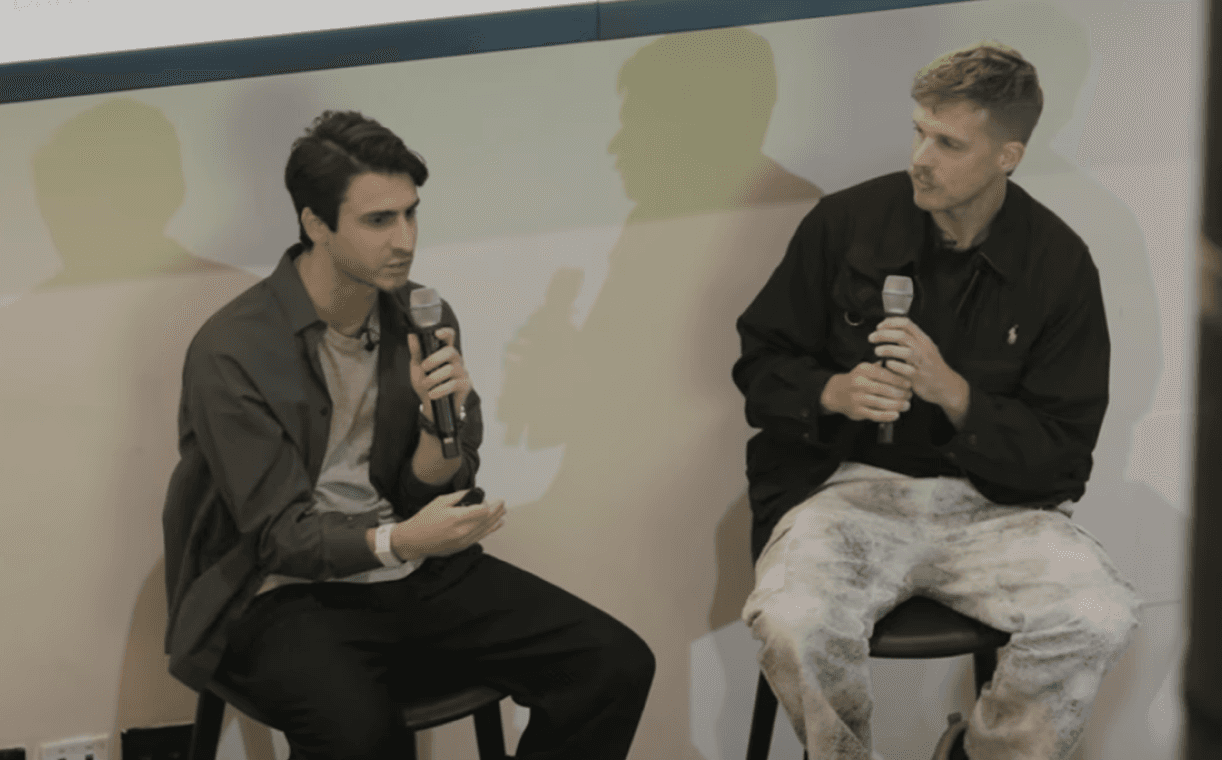
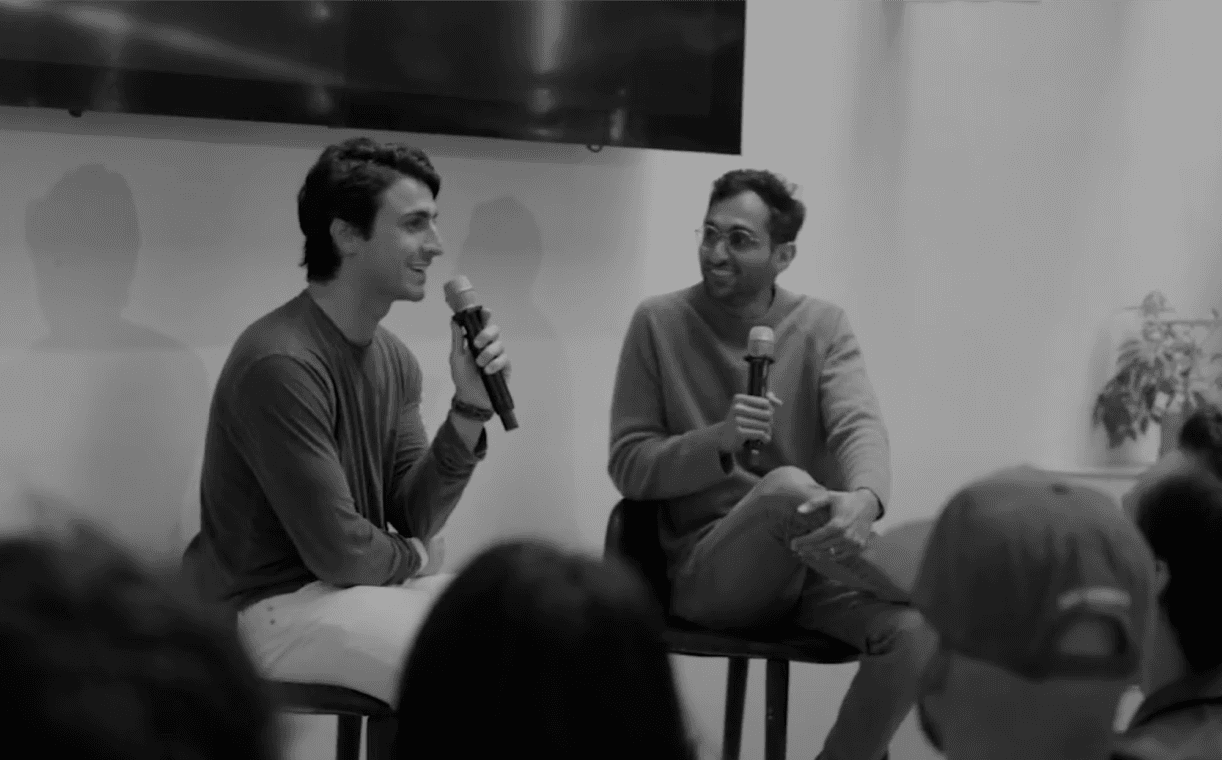
Speaker 1 (00:00): In this video, I'm here with one of my favorite creative strategists and YouTubers, Dara Denny. And we are here at Cannes Lions, the international festival of creativity salivating advertising. And we're going to talk to you about the psychology of advertising, sociology of advertising in the modern era. Thank you so much to HubSpot for partnering on this video and working with me to put this together. We hosted a panel in this very room yesterday talking about one of the topics that's been front of mind for a lot of people who are running ad accounts and scaling businesses right now. And that's how organic content creation, influencer and paid ads are all becoming much closer to one act, like one strategy, one team versus all these disparate things more than ever.
Speaker 1 (00:36): And we had a really fun group with the team from manychat, Whisper Flow, and a room full of people who are trying to look at what the future of ads is going to look like. So you're going to see us here today actually break down six psychology tactics with the actual ads that we use and tactics you can use to put them in your ad account. I'm super excited to get started. Let's jump into the first one.
Speaker 2 (00:54): Amazing. Thank you so much, Oren. I'm really stoked to be here. The first ad concept that I want to talk about is really leaning into the taboo. Now I actually have a few examples of this. Some that I would say are like made for the girls by the girls, but also from guys trying to market to girls. Because I think there's like a way you can really go wrong with this. And like a lot of people will say, oh, if you're leaning into the do, you're really going after the shock value.
Speaker 2 (01:20): But what you really want to do here is really think about your customers innermost secret thoughts and how certain creators can actually create more of that community in a safe space for them to actually say the thing that they don't really feel like they should say. So so what I'm gonna do is I'm gonna show you an example of the organic piece of content that gave grooms the idea to actually start one of their top performing ads. Excellent.
Speaker 1 (01:44): Just see my face earlier when she showed me some of the men ads of a baby interaction, I was like, oh, this is where we're going.
Speaker 2 (01:51): So this creator, amazing creator, how life feels after having the most waist slimming diarrhea episode. Chic chic, right. And it's very like, you know, her audience, millennial moms, like they aren't Afraid to talk about poop vaginas, like diarrhea, the whole thing. Really love that we're starting off the video this way, by the way. Excellent.
Speaker 1 (02:14): It only gets more serious.
Speaker 2 (02:16): Right? Right. But a thing that I want to point out too as well is like these pieces of content often aren't just the pieces of content themselves. It's actually what's going on in the comments too that really allows for this. Oh my God, like you're saying the thing that I wish I could say and allows for community building aspect. So the actual ad that Groo made, I think sometime after seeing this piece of content is this one and it's based on like a yapper piece of content. So I'm sort of interested to see how you feel about this piece of content as like the master yap man for the girlies and my DMS who need to poop. And you might have seen my reel and I was eating those gummies that make you poop.
Speaker 2 (02:55): I got you, girl. I take grooms every single day. Scouts honor every single, single day. If I do not, I won't poop. The only greens superfoods that I've ever consistently taken. I've tried a lot of others. What do you think? Good yap, bad yap.
Speaker 1 (03:11): Good, good yap. And look, the foundations of a good yap is. Is it super relatable? Does it seem like someone's talking to a friend versus, like doing the whole scripted bit? So she really got that nailed. One of the functions of a good yap that works really well here and works in advertising, I think, is one of the psychological things we can pull this back to is this idea of mirroring. Right. People want to be able to see themselves in the content. And what you'll see online and with ads in particular is that our lives, our group chats, the way we talk with our friends are significantly more raw and niche than what you can put online. That always has to be polished. The ads have to be up to brand standards.
Speaker 1 (03:41): So someone may not say the same vernacular, do the same thing, but then when you see it, it feels really honest. I think that's kind of the real takeaway here is like, what are those taboo subjects? How do you have that honesty? And they're doing a great job.
Speaker 2 (03:51): And actually something that I said at the panel yesterday is like, in order to do a good yap, or like, be a good creator, you have to show up and have this form of vulnerability. Right. It's kind of impossible to not be a good storyteller or not be a good creator as long as you're showing vulnerable. I think a lot of people kind of use this mask of authenticity. And I know that's one of our words that's like on the board outside that we shouldn't use. And it's kind of a cliche and over worn at this time. You know, something that I see creators struggle with sometimes is almost like forcing the vulnerability. And that's when you get the cringe feeling when it's like, okay, it's like not quite there.
Speaker 2 (04:24): But for creators that are like, who the fuck did I marry? Insert that. Like virally, like there's this moment where it's like, wow, like this person is really showing up and bearing their soul. And like, you know, this might feel little bit more surface level and a little bit more light and fun, but like there's still like a little bit of vulnerability there really.
Speaker 1 (04:42): It's about identifying the taboos that would work for whatever brand that you have. And I think there's a couple key categories that probably help with that. And you may be a little surprised, but you'll see, you'll begin to see ads like this and you'll be like, oh, this is the tactic they're using. So politics is a huge one, right?
Speaker 2 (04:54): Oh gosh, yeah.
Speaker 1 (04:55): And this is where you see every like kind of red pill, tallow brand or whatever. Like, you know, do you feel like we should be getting back to the earth? You know, there's a. Obviously a lot of people actually have group chats like that or talking about complex topics that they would never mention online. Then when they see it and see someone saying it, they feel seen. It's the same thing with spirituality. Health, like we see here is obviously one of the biggest ones. Money is another one. And being like honest about it immediately, oh, I blew my money on this purchase. Or I have $0 in my bank account but I'm about to do X.
Speaker 2 (05:21): Or I spent 15 grand to go to Cannes last year. You know, like that was an honest video. Yeah, yeah, yeah, that was an honest video. But I want to show you really quick like the inverse of this and like where it goes bad, where it can go bad and not calling out this brand directly. A lot of brands do this. But when you are kind of leaning into the shock value for shock value sake, if it's the focus on the message and like you're just doing it for that immediate, that's when you kind of know you're perhaps going in a different direction. Like this for instance, we are Having sex all over the house. That's one where I'm like, I actually don't think, like, a woman who has this problem would ever think to say that.
Speaker 2 (06:02): Like, I could see, like, a young, like, male creative strategist looking through the reviews and being like, that's the one.
Speaker 1 (06:07): Yeah. If I was selling.
Speaker 2 (06:07): That's. That's the golden nugget reveal.
Speaker 1 (06:09): I was selling Tav's chocolate or whatever to a man. Or like, maybe there's something there. But this. Yeah. It is not coded.
Speaker 2 (06:14): This is not like, what from the female perspective is like, yeah, that's not like, what we want.
Speaker 1 (06:20): It's the male gaze in action.
Speaker 2 (06:21): Exactly. And, like, my vagina feels like silk. I've. That's another one where I'm like, no, no dice.
Speaker 1 (06:26): But I do think this actually reminds me of an ad that did this really well and I thought is an exact example of how you do this in a very natural way. And it was the ad where they were selling yoga pants, I think, or something like that, or like kind of a snatch dress or something like that. And it was the husband slapping the wife's ass a bunch and walking around the house. And it was just like a very casual, like, he 5x the amount that this happens. And then you're like, oh, hey, it's really not about. It's not about sex. It's about attention. It's about the dynamic. It's about, like, other things that are deeper level.
Speaker 2 (06:51): Yeah. An attraction.
Speaker 1 (06:53): And that's a good connection to, I think our second one here that is selfish desires. I like to talk about this a lot. So one of my favorite ads of all time that this really relates back to, like, everyone knows is that you don't own a Patek Philippe. You merely carry it on for the next generation. Right. And so that ad is all about how can I justify someone blowing absolute money on a watch by saying, oh, really? It's actually an investment for your child. Right. It's not about me. I'm buying this for my son. Right. And all that does is check a box in a certain type of guy's or girl's mind that says, yeah, cool, I can justify this purchase.
Speaker 1 (07:24): And I always like to start with, like, these iconic ads that we have are great places to look for inspiration. But then how do you do that in a modern way? So awesome strategist that I worked with Zach about a year ago did is he was doing girl math and boy math ads. And so you've seen this on social media where people will Be like, oh, I'm going to justify investing in this golf course, buying these clubs by using them for 60 hours or doing X. That's really only $0.06 cents per. And so we would do a lot of that inside these ads now where it's like, oh, this is only like girl math. It's only $6 a brush. And you see, it sounds silly.
Speaker 1 (07:53): It may not work as much on organic, but on the ads, again, it's just giving people a justified reason to purchase.
Speaker 2 (07:58): We actually did this exact strategy with a recent client of mine, luxury bed sheets. I'll actually share the ads with you. And we were able to break down the costs to like $1 per week essentially over a longer period of time. Because. And it's crazy like this. This brand has an AOV of about like $400 plus, which, like, awesome. From like the media buying.
Speaker 1 (08:17): Sweet spot.
Speaker 2 (08:18): But like the thing that you're always going to go up against is like the number one objection is always price.
Speaker 1 (08:23): Yeah.
Speaker 2 (08:23): How to cater to that. But then also not. And like make sure you're not over catering to that. And you're kind of like also using that as a signal to be like, yeah, if you can't afford it. That's kind of the point. So another one of our top ads is we're not cheap because we don't want to be.
Speaker 1 (08:35): I love that.
Speaker 2 (08:35): So, like, we like combine in our overall strategy, we make sure. Okay, like, there are some of our core customers who do need a little bit more of that, like, objection. Hand and making sure that we're being a little like we're showing them the true investment in what they're building, like in their homes. But we also want to signal like, hey, we actually don't want to cater to the person who wants to buy $30 polyester sheets.
Speaker 1 (08:57): And actually. And to just show that there's every angle out there no matter what price you are. One of the ads that. It's funny when I pull up in the stock, I was pulling it from a toolkit I'd made for a brand. It's pinned to the top. And I'm like, every single new ad refresh needs to use this message. And for us, it was expensive. Doesn't always equal better.
Speaker 2 (09:10): Yeah.
Speaker 1 (09:11): Which is interesting because we're a mastige. We're saying, okay, 400. Why would you. We're going to give you that value. And so I just want to look at anything related to like that math. That price, it doesn't necessarily have to just be sale or listed or Try to imply luxury. There's a lot of tactics you can use to kind of express that.
Speaker 2 (09:25): Well, yeah, yeah, exactly.
Speaker 1 (09:27): All right, let's pop into your next one.
Speaker 2 (09:28): I'm really excited to show you this next one because this is actually a top performing ad made by my team recently and the metrics on this are actually insane. So this is one of those like amazing combinations where it's like we nailed the format which was taken from like organic inspiration. And we like to call this the armchair investigation. What we were seeing when we were doing in depth research on our customer here was that they really liked when we would compare like different options that they had out in the market against one another. And something that we realized after we posted this actually was there's a big overlap in this core audience with true crime. And like, it was almost like an accident that we kind of positioned this creative as almost like a true crime investigation.
Speaker 2 (10:16): So it's absolutely something that we're going to be replicating and is a massive learning for us. And one other thing that I'll say actually afterwards, but I'm going to see if you can. I'm going to show it to you. I want to, I want, I want.
Speaker 1 (10:26): You to see it. Sucker for true crime. So.
Speaker 2 (10:28): Right, right.
Speaker 1 (10:30): All right. If you are working on ads like we talk about here, one of the big levers you can pull to get different variations is styles of copy. So I developed a guide with HubSpot called Teach AI your brand voice to help you do this fast in a way that actually works and doesn't sound like tech slob. I firmly believe that for most brands they can significantly upgrade their output for landing pages, ads, blogs for SEO and sales collateral using AI to assist with copy. But they need to do it with a strategic framework versus just pasting an idea in and asking for a variation. And that's exactly what this is. A second brain for your marketing team that knows your brand voice Personas and can help you produce outperforming copy that you review and ship.
Speaker 1 (11:05): This is a complete guide for building a copy machine in your brand voice. With ChatGPT or Claude, it covers starting from your customer. You actually dial in your brand voice based on customer experience and Persona, but the copy is actually relevant. And then using existing copy frameworks, this is the important one we cover. How to provide LLMs with instructions and voices from established marketing copywriter styles to actually get real variants to use in your ads. Then tips and frameworks to deploy and actually make these sound good when you ship them. What I Love most about this is we have this brand voice project template to set up a project for your brand.
Speaker 1 (11:35): You drop in all the things we discussed above, your brand context, your Personas, voice references and it can write homepage copy, ad copy, et cetera. You can grab this free from the link in the description. And thank you so much to HubSpot for partnering on this video and working with me to put this together.
Speaker 2 (11:53): So basically I took the same car, same problem, three different mechanics, and I let them tell me what was wrong and I filmed it because I knew. Let me walk you through what each of them said because it's wild. Her shop, older guy looked at it for like 10 minutes, said it was an O2 sensor, quoted me 480, honestly felt fair. I was like, okay. Second shop, different story. They said I needed a transmission flush and an O2 sensor and a brake check. Eighteen hundred dollars for the same car.
Speaker 1 (12:19): Excellent. Yeah, yeah, love it.
Speaker 2 (12:22): So one other like big wrinkle about this ad that I think is really interesting. 100%.
Speaker 1 (12:27): Yeah, that's what's going to be my next question is she looks very.
Speaker 2 (12:30): Yeah, yeah, she looks really AI but it's like it's well done. It's well done. I. But also we knew for the demographic doesn't matter. They would not be able to to tell and they haven't. Like this is also another example of an ad working a lot because of how we were able to really rage bait the comments. So this ad doesn't necessarily work because, oh, it's an armchair investigation. It's like such amazing, compelling content. It works really well because people are getting infuriated in the comments. So like we like this has only been running for two weeks and it's already happening.
Speaker 1 (13:05): It took fire ad.
Speaker 2 (13:06): Yeah, it's great. It's great. But we have people jumping in being like, oh my God, like the, the first guy was also lying to you. And we the big learning that like we've had as a team from this one is like this idea not only around like human desires, but like more like virtues. And the big virtue that like we got from this ad specifically from the comments was how obsessed our audience was with honesty and like this notion of honesty. So a lot of the comments are calling out like an honest mechanic. And we even had people like putting in like Bible verses and in there all about like this virtue of honesty. So the things that we're going to be iterating on from this moving forward is like actually leaning a lot more into that.
Speaker 2 (13:49): And we launched some of those ads yesterday and they're already like, starting to spike.
Speaker 1 (13:52): So.
Speaker 2 (13:53): Yeah, yeah, yeah. Something too is this brand was struggling a little bit with puncturing into a new Persona. So it was also really deliberate on our end to use like, a younger woman who looked like the daughters of the core demographic. We are seeing a little bit more delivery to women, which is great. Like, we had a hypothesis of like, okay, we know this is delivering primarily to men because they're the one taking care of the car stuff sometimes in the car and the household. But there was a large audience of like, younger females who are like, I'm getting ripped off by mechanics. And like, it's such a big pain point. Understanding, like, what virtues or values your customers, like, really, like, it's like so innate in them and so triggers them.
Speaker 2 (14:34): Was like a big learning for me for this one.
Speaker 1 (14:37): Fairness and unfairness is just such a massive one. Every walk of life nepotism. And if you really want to, like, agitate a pain point, you can go through any of these and basically just make a scenario around it. And pre AI, you basically have to do this in a yap or like an anime. Now, it's so simple to do. But like, I would be looking at what is any story, any story you can think of that you can tell that like, leads in a compelling way and draw from true crime soap opera dramas. You can a just yap the scenario. You can be like, oh, I was on a date with X and Y and these things happen.
Speaker 2 (15:03): Like, who the did I marry? So well, that was like a soap opera in real time.
Speaker 1 (15:07): And this is all. These are all formats you can have. You're always like, oh, I'm studying ad accounts. It's like, okay, just go study what people choose to watch in that demographic on TV like 10 years ago, and you'll find some really fun. I mean, Air did like a Maury Povich spinoff recently.
Speaker 2 (15:20): Yeah. I mean, we don't look at our competitor ads anymore. We only look at what our audience loves on organic and try to replicate more of those formats moving forward. And this was like one of those that, like, we found that it was like almost a learning flywheel.
Speaker 1 (15:36): Yeah. And this is. I. I love this ad.
Speaker 2 (15:38): I think the orange stamp of approval.
Speaker 1 (15:40): I think anything. It uses all the modern TikTok formats and stuff. Right. So all the text is in the right fonts. All the things look correct. It's very native. You can't tell that it's AI you make you want to watch. Cause you want to compare all the things through. So the hook rate's great. And then when they bring in the product, it's like, oh my God. But most people are probably just like, oh, you know. And so it's just a, it's a perfect little look for this. And also it just shows that there's a lot of care. Everyone always thinks the ads are quick. You just yap about it, you just show the product. You just do X and Y.
Speaker 1 (16:03): This obviously took some more intention and just shows with how much it's scaled the hook grade, the stub stop, how much you can do if you just put a little more energy into that.
Speaker 2 (16:11): Yeah, absolutely. Like my team killed it on this one. Very pleased.
Speaker 1 (16:14): This ties well into the next example. I have these ideas of like prove it ads, which is basically, this is.
Speaker 2 (16:19): Like a prove it ad.
Speaker 1 (16:20): This is 100%. And he shows it on the end there. And I always like to reference back, especially when you're talking to executives, you're trying to explain an ad. I'm always like, how do I grab something they might know? And they'd be like, this is the principle we're using for this social media thing because it just explains it well to them. And so I always point to the, the shot on iPhone ads because you'll see a big billboard out there and it's shot on iPhone. And I'm like, okay, well you're proving how good the iPhone camera is immediately. It's just like such an innate. And it's funny. Everyone always be like, oh, well, it's Apple, it's whatever. Yeah, you know, it's still a good idea. It's still a good execution.
Speaker 1 (16:46): There's a lot of ways to do prove it content. When we were doing cosmetic stuff, there's always so much that was, oh, 24 hour hold, or you could X with no creases, all these kind of things. It's like, okay, show it a vlog throughout a day where it lasts, you know. Or like there was a trend where people were eating with the makeups on. They have like more aggressive, okay, let's make it a bigger burger.
Speaker 2 (17:06): Like the bigger one. Yeah.
Speaker 1 (17:07): And then one of the ideas we'd have for that was we actually like went through like all the viral food in la. It's like, oh, yeah, eat the labubu sandwich or whatever it was. And like, then you get that visual hook of the amazing food. You're proving that the makeup does increase whatever it looks like. I was like, how do I within a 60 second prove the value proposition, you know, What?
Speaker 2 (17:23): We actually had an ad that did really well for Laura Geller a few years ago that was based on a review of someone who worked as a chef, like, in the middle of Arizona. And she, like, talked about, oh, this makeup actually lasts really long, not only in the heat and in the sun, but also in the kitchen. And we did an ad based on that comment that did really, really well for that audience. Yeah.
Speaker 1 (17:46): And I think even just I also like to think of it. Prove it in an extreme circumstance is another kind of banger where it's like, okay, if I. This. This is one of the sharpest chef knives, and it lasts. We have 400 tomatoes here. Yeah, we're just going to run through and. And so you get that, like, kind of hype factor that you see on organic, and it ties in really well. And I think when you look at this and kind of what we're talking about here, I would just make a list of kind of these principles. Yeah. Like, I'm going to prove it. We're going to do an armchair investigation. What's a taboo? We have, like, that's your toolkit. That's the kind of thing you can come into any.
Speaker 1 (18:13): Brainstorm, any scenario and be like, all right, let's look at this demographic. I mean, honestly, put it into cloud. What are taboos for our target about, like, this thing? How can we. Like, how can we potentially put a scenario together? You can get a lot of interesting ideas. Is back. All right, what do you have next for us?
Speaker 2 (18:28): Okay, the next one is actually another one of our ads, and it's what I like to call the personification of, like, the us versus them format, one of the most common visual formats in all of paid advertising. What I really love doing is translating this into more of a creator experience. So I'm going to show you this top performer from one of our clients, Kettle and firebone broth, to match what's inside this one neutral organics jar. So I've been using this bone broth concentration rate for a while now, and today I really wanted to compare it to Kettle and fires bone broth. Tell me this doesn't just look like dirty dishwater, but why does the Kettle and Fire bone broth just look so sad?
Speaker 2 (19:02): We did a little blind taste test for my daughter, and of course, she picked the neutral organics one every single time. She said, so. I already know the first thing that you're probably thinking, like, are you gonna get sued for running ads like this? Like, that is the.
Speaker 1 (19:12): Like, maybe you should use a generic bone Broth versus direct at Kettle and Fire.
Speaker 2 (19:16): We did technically though we were cleared by like the legal team because we're not technically making any claims about the product. It was opinion based. Essentially everything that we had said about kettle and foam bone broth. But the interesting psychological tidbit that I want to focus on here is not just like the use of comparison and sort of like, you know, that leveling. It's actually more of a visual format, which is something that I found worked really, really well for this brand and many other brands, which is really like the use of multiple. So like what we found for this brand is that one of the biggest value props is, you know, even though the taste is very important, it was actually showing the savings value in terms of space. Like we showed in the beginning of this.
Speaker 2 (19:59): Oh, you could have this much like boxed bone broth versus one.
Speaker 1 (20:03): The visual comparison is great.
Speaker 2 (20:04): The visual comparison is something that I think a lot of times creative strategists will focus on the messaging or they'll focus on like the written hook and not as much on like, oh, like what can you do psychologically, visually? And the use of multiples of your product is one of those really easy hacks that stops the scroll. Now something that I also really like to do in terms of like different formats for this is using the grid and grid based formats. And a reason why this works really well is because your eye actually trails in a Z or F format. So it has this natural hooking effect. And there are so many beautiful ads and in history that you follow this exactly this exact psychological principle.
Speaker 2 (20:46): And it's something that I still find that not enough D2C brands lean into and think about. This one was like we had the cost price that was working really well, the taste. But when we really dug in and compared it to the other like versions of this, it was primarily the like the space savings.
Speaker 1 (21:05): And I think, and you've seen this a lot, fashion would be like the fit of the T shirts. You know, there's so many ways that you can look at whatever pain point that the consumer has and go into it. I love it. All right, so if you're actually creating ads like this for those that don't know and they're hearing about this, they're like, wow, creative strategy. Sounds exciting. What's the actual process that you're doing when you have some of these ideas or you're tracking them and briefing, how does that work?
Speaker 2 (21:24): Yeah, so I like to break this down into a six part process, which number one begins with research So I like to conduct a reputation analysis where I really understand, hey, like this is how the general public feels about my brand. Go through customer reviews, understand the Personas and really map out like who the this core customer is. From there I'm really going to be moving into briefing and concepting and that's where I'm going to be pulling out like based on all the research that I did, actual angles and specific concepts that we want to build. Then what we're going to do is move into road mapping where we're going to actually map all of this out based on what's already in the ad account.
Speaker 2 (22:02): So sometimes what we'll find is, oh, they're defaulting really heavy to things that are a little bit more lower funnel. We need to really open up up more of that top of funnel. So we need to concentrate on more problem aware type creatives or even unaware type creatives. So that's all going to be mapped out a lot in the road mapping process. From road mapping, that's when things begin to go into production. So we operate on a weekly sprint basis where once a week we are executing on a certain number of creatives per brand. And then once those assets are actually made, it goes into QA and then to analytics. Now analytics is where we're going to really be leaning into the tool motion where I am the chief evangelist at.
Speaker 2 (22:43): I know you're also a big fan. We just did the creative strategy bootcamp with them and I have tons of different reports that I'm looking at on a daily, weekly and monthly basis for these winning ads particularly like first thing that I'm doing in the morning is like going in looking at motion for not only the last last seven days or 30 days, but also yesterday to really understand how our creatives are tracking over time. And for that winning ad particularly, that's one that like every day I'm like, okay, are we starting to see like results soften or is like the click through rate starting to like decrease? Are we seeing the hook and hold grades starting to soften? Not quite yet. So I'm pretty excited about that.
Speaker 2 (23:22): But like motion is just one of those tools that I am truly in multiple times a day and it's just like super sticky for me and creative strategists.
Speaker 1 (23:30): Awesome. Thank you for breaking it down. I think a lot of people are going to find that super helpful. I'm going to end here. Our last kind of concept I want to talk about is what I call the credible explainer. And so what we saw here Is you get so many ads on there. More like ugc, Hey, I get someone relatable to me telling me about whatever this thing is, which is awesome. There's plenty of ads that work like that. But one thing we found is that in the modern world with so much noise and so much advice, people just want to be told what to do. People will never admit it. It's one of those things in the back of my mind. They don't know, but they just want someone credible.
Speaker 1 (23:56): So just tell them the answer. And so when you look at this, like, what do you mean by credible explainer? If you have someone in a doctor's office or an actual doctor, ideally someone in scrubs, is a real doctor.
Speaker 2 (24:06): Ideally, yes. Not put on a white boat and.
Speaker 1 (24:10): Do not just buy scrubs. But again, if you have anyone on your board, anyone on your advisory, anyone you work with inside these, and like any companies that are doing that kind of thing should have it. But also anyone with a degree, urban planning, anything, anything related to that niche. Like I'm, you know, I'm a textile artisan, whatever it is, and they're in their workshop, they're in their lab. If you're making fragrance, you're surrounded in the lab of all the testers or whatever it is. I've been doing this for 14 years. I work with brands like X and Y and then they actually get into the problem. What works really well here is that people have so little time with their experts. The average doctor's Visit in the US is like 11 minutes or 15 minutes.
Speaker 1 (24:41): In the UK, it's like 9 minutes. Same thing with dentists, same thing with dermatologists. You never get as much info and time to engage as you want. And so when you actually get the ability, oh, I can comment on this, I might be able to get a response. And that's could be the anchor of a brand for anything. Again, from textile to fragrance to medical. There's just a great kind of way to think through your ad account and eventually you establish that person as a personality. On organic, if that's someone who's on your feed or does a recurring stuff for you or a founder or your chief whatever officer at the company, and then you put them in the ads.
Speaker 1 (25:11): So they've also already got people in your asc like they already have seen their content organically. It works really well like that. You'll notice those begin to be really high, high performers, I'd say too, like.
Speaker 2 (25:21): The leaning into the use of an authority. That's kind of how we Talk about it in paid social is like, oh, we need more authority ads. We need to, like, build that trust and credibility within our audience. A lot of times the founder is like the person who slides in on that initially. But then you really do need a little bit more of like, an outside, like, verified check mark in a way, which is why these, like, authority voices are so important.
Speaker 1 (25:44): And you'll find that if almost any company can find them, because everyone immediately goes, oh, I can't do that. I don't have X or Y. I said, okay, well, do you have a board? Do you have investors? People who are working in your company inside, really technical roles? Have any bit of charisma inside your warehouse or factory? I worked with a bag brand who had the guy making the bags just knew a ton about it. And his English wasn't amazing, but you could tell he's just like an artisan. And like, they're like, had these shots of, like, his hands with all, like, the grizzled stuff on it. And he's like, why this stitch is better than the other? And you'll kind of be surprised where you can find in the chain that credibility.
Speaker 1 (26:13): I think the set really glends. It's like if that person's talking in a car, they're doing it like ugc. That's not there. Put them in the office, the warehouse, the lab, the like. Well, it just immediately has that visual credibility.
Speaker 2 (26:23): That's why the, like, warehouse content for founders is so legit and works so well. Zach Stuck, who is the founder of Holo Socks, he did this with one of his top performing ads. And it, I guess it ran for like a year or something.
Speaker 1 (26:34): It's amazing. Yeah, I love Hollow's grapes. It's always like, like, you go inside their ad account if you ever look at it, and it's like they've got like a night, like an AI night pulling up at the other ends right next to like a founder ad. Big fan of their creative diversity. All right, so that was six kind of different approaches. There's obviously so many of these. There's extensive stuff on your channel on creative strategy and trying this for paid. But we just want to give you a toolkit that anyone can try when you're going into making your next ad. Think you have some great references here. And they're not just like, oh, I'm looking at an ad.
Speaker 1 (27:01): They're all rooted in something that a consumer wants, wants to do, how they think, some of the psychology of it, some of the things that actually work in Performance and organic.
Speaker 2 (27:08): I think if you went through all six of these and, like, added them to your next created roadmap, you would learn so, so much about your customers. And, like, I think it would be hard to not come out with a banger.
Speaker 1 (27:18): Absolutely. And it's looking. If you're trying to get better at this and you don't have those clients, pick a brand, write out some scripts for this. Like, actually prep some of that. I think that's a lot of the work. People are always like, how do I get started? How do I do X? Like, write a banger ad. And you go into that next interview or that next pitch, and you're already like, hey, I have this concept. I have this winner. I wrote out this ad for you. I guarantee that will go a lot better than if you did.
Speaker 2 (27:35): Like, I'm going through the process right now of hiring creative strategists, actually, and it's so few and far between that people actually bring creative concepts to those meetings. It is an amazing way for you to stand out. Oren and I just did the creative strategy bootcamp with Motion, and we got to meet thousands of amazing creative strategists. And one of the most common questions. Questions we get is like, hey, like, how do you get a job in this industry? And, like, putting in the reps, putting in your own time, and like, really developing some of that work on the back end before you come to those talks is one of the absolute best ways to do that.
Speaker 1 (28:07): Could not agree more. Thank you so much for being here. So we've been doing a ton here in Cannes at the Dark Room Villa that we're at now. Big shout out to Darkroom for putting all this together and having us all here. This is just a few of the interviews and conversations that are happening. There's one coming up with Anna Angelic from the Sociology of Business, bunch of other guests and panels. That footage is coming out here soon, so appreciate you watching. Just know there's a lot more to see coming out shortly.