Branding Has Completely Changed in 2026 and Most Brands Still Get It Wrong
09/22/26
key takeaways
Attunement Is the Honest Version of "Brands Create Culture"
Eugene Haley defines culture as the shared norms, values, beliefs, rituals and symbols a community holds — things people build, and things that move slowly. Bandit found a hardcore running culture that already existed and was underserved by product, then gave it a platform and gear. He calls this the sympathetic view of both sides: a brand's job is to learn the codes of a specific group, find the right people inside it, partner with them, and pay them properly.
Bad Strategy Is Cowardly Strategy
Strategy is concerned with what has not yet come to pass, which is why Haley pushes back on "data-driven strategy" — past results treated as a reliable read on an unwritten future. Synthesis means taking a consciously subjective position on what you see and sticking your neck out for it, so strategy without risk in it is cowardice wearing the word. Oren adds the timing case: the last eighteen months have moved fast enough that a plan built on past data has already expired by the time an agency can ship it. Haley's own way in was a Melbourne KFC in the Wieden+Kennedy era — a prom corsage, a dating sim, an anime, Crocs, a launch to the moon — which ran the Liquid Death playbook a decade before anyone named it.
Intellectual Influence Grew Out of the Image Losing Its Power
Digital reproduction multiplied the supply of images and AI multiplied it again while demand held flat, so the objects inside those images lost their mystique: a Birkin stays physically scarce and has become culturally ubiquitous. Attention moved toward what can't be compressed into an image, and that is where intellectual influence came from. Haley's caution is that demand for it now outruns the supply of people who can actually do it, and AI hands anyone a convincing simulacrum. He separates attention creation from attention appropriation — views that never ladder back to a consistent, favorable brand association just hand the value to the platform.
A Brand Is Now a Mosaic Assembled by Third Parties
The death of monoculture took the monolithic channel with it, so there is no single point of origin for a brand and no hero ad to push down through everything else. Haley's model is a mosaic where every fragment is somebody's entry point, has to work alone, and has to cohere in the aggregate — brand building as The White Lotus, a show people quote in clips without finishing a season. Most of those fragments now come from influencers, customers and employees, which makes orchestration the actual skill: briefing strategic context tightly enough that many voices carry one message in their own style and tone.
Slop Is the Aesthetic of Consolidation, and It Reached the Body
Haley's read is that AI did not invent slop. Slop is the outward aesthetic of a risk-averse consumer society consolidating toward the mean: millennial gray homes, interchangeable Airbnbs, the same recommended neighborhood in Lisbon or Mexico City or New York, every car turning gray. Byung-Chul Han was writing about that smoothness in Saving Beauty a decade before anyone was talking about friction. An eighty-dollar garden hose qualifies because the product is a vessel for a twenty-year-old idea. The same logic arrives on the face with looks-maxing, where math-club positivism supplies an objective ideal and everyone is expected to converge on it.
Looks-Maxing Sits at the Death of Aspiration
The body has long been a frontier of capital for women and is now being opened for men, and Haley traces the modern version back to the dandies of the 1800s, merged this time with technology and optimal-ratio thinking. The word comes from gaming's min-maxing — maximize one stat at the expense of everything else — rather than from incel forums. His argument is that in a K-shaped economy where the ladder is gone and the other routes are cut off, the body is the last thing left to bet on. As he puts it, they can take my labor but not my golden ratio.
Luxury Divested Into Culture, and Taste Still Can't Be Inherited
Luxury houses raised prices through the 2010s while abandoning the craft narrative that justified them, so the price ended up gesturing at nothing and the objects lost their cultural charge. The response is to divest the brand into culture — Miu Miu running literary salons and opening jazz kissa in Ginza — so the context around the product carries the equity. Zara can hire the same photographers and stage the same salon, but with no heritage to ladder back to, it produces signifiers of high culture with nothing underneath. Haley's closing note is that taste works the same way: it is idiosyncratic, earned through the life you have actually lived, and no mood board will transfer it.
transcript
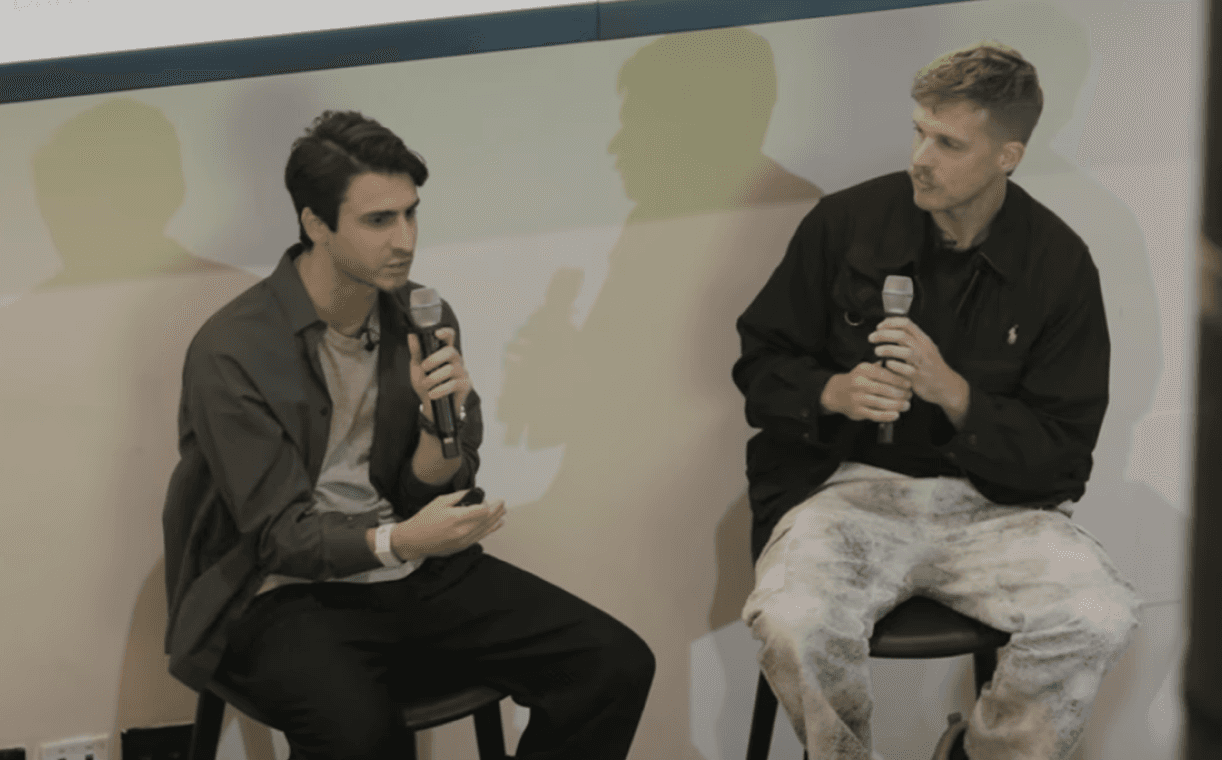
Speaker 1 (00:00): In this video I sit down with Eugene Haley, an excellent creator who covers topics about brand and strategy and culture. And we talk about the dark art of brand strategy. Because nothing is as simple as it was. Just putting out campaigns and linear brand events. In a social first personality driven world, approaches need to be fundamentally different. I love Eugene's methodologies because they're rooted in psychology, his background in academia, and he, like myself, has a thirst for understanding brand strategy at the highest level. In this video we tackle what strategy is. The state of strategy and culture now, how it crosses is over with influence and much more. Let's lock in. And thanks so much to HubSpot for sponsoring this video.
Speaker 2 (00:37): Can brands create culture?
Speaker 3 (00:38): Overwhelmingly, I would say no, with limited exception. I think it's useful to actually start with a definition of culture because I feel like we have so many conversations about brands being part of culture, moving at the speed of culture, etc. Like what I really believe culture is, is shared norms, values, beliefs, icons, rituals, symbols, signs, et cetera, that a particular community or society holds. And I think that's like really important because it shows by and large that is created by people and then also that those things don't actually change that quickly. And I think a better model for brands to think of is that they should understand how to attune to culture or understand how to attune to cultures.
Speaker 3 (01:21): So what it means to understand the norms, values, beliefs, rituals of certain niches and groups and understand how to build communications for them rather than assuming effectively what we're the ones that produce those norms, values and beliefs ourselves. Because you're not a, you're an entity, right.
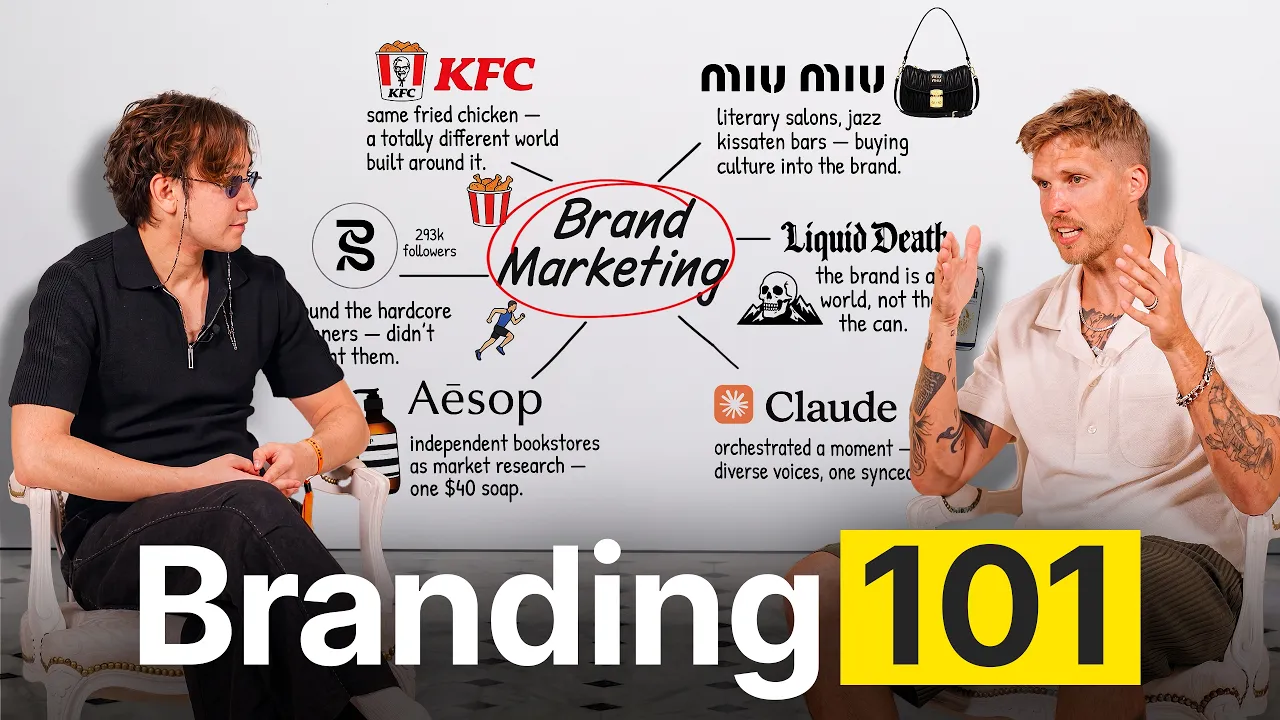
Speaker 2 (01:36): You can be a vessel basically where you may do so well as a brand that you happen to create culture as a byproduct, but it's not necessarily the goal. And I think I look at like the extremes of culture is where the action's happening. Right. If you say anyone who wants to disrupt some larger brand, say running the running category, right. Disrupting Nike when you're okay, Bandit, satisfy all these people that say we're going to go for the hardcore person, the person that cares the most, the person that lives the most inside that subculture, we can own them. Because corporate's so far off. I feel like that's where the game has been played. But there's at least recently, but there's a lot more to that story.
Speaker 3 (02:07): Yeah. So I mean that's a good example, right? With Bandit. Did Bandit produce the culture of hardcore runners or did it find a culture that already existed and give them a platform and yes, give them product as well. That allowed that culture to express itself. So in that like what it is, you know, what I'm saying is there's the culture that already exists, that's pre existing, that is built by people. And then bandit understanding that that culture is perhaps underserved by a brand or by product, have found a way to put themselves and attach themselves onto that.
Speaker 3 (02:36): I think it's also a sympathetic view of culture and a sympathetic view of brands of being like, your job is not actually to go out there and produce all of this culture and like be the leader or the champion of this thing so much. That is to find the right people and to partner with them and to hopefully pay them correctly as part of the process.
Speaker 1 (02:51): Yeah.
Speaker 2 (02:51): And look at it as like the world you're building around it. It's the combination of not just the brand, but your customers, the people that you choose to have as ambassadors, all those voices kind of working together. And what I find interesting about you, we similar niches around similar things, but you are a different part of the world.
Speaker 3 (03:05): You're based in Melbourne, Australia.
Speaker 2 (03:06): And what I find is you have a pertinent grasp on culture globally. So I think it's a lot of what you create is understands what's happening in the US is sort of a cultural powerhouse and how brands in particular move. But it's also reflecting, like things that happen on the globe.
Speaker 3 (03:18): How do you stay in touch with.
Speaker 2 (03:20): What kind of is working? How would people even begin to look at. We want to understand what culture to participate in.
Speaker 3 (03:25): The actual difference partly from living in Australia is one that you are living from the outside looking in. But also the majority of my references are not new at all. They're old. They're very old. Like I would reference anything from probably like the late 1800s talking about someone like Lacan for instance, or I would be talking about, you know, Deboer in the 60s or Baudrillard in the 80s, which I saw that you referenced as well at some point too. The thing that we talk about in our content is it feels like it's really fresh, it feels like it's really new. Those are just things that are.
Speaker 3 (03:58): I think the things that are trending in the algorithm tend to actually be quick manifestations of deeper truths and trends that have actually been explained in some way by people that are way smarter than us. I should be clear.
Speaker 2 (04:10): Absolutely. Well, I completely agree because I feel like it's all these same principles you would typically look at in academia, in people that are beginning their philosophy journey. But we're just applying them to very modern topics and concepts in ways that people can appreciate and laugh at and enjoy and reflect on and implement in their work. And so it's really. That medium has never existed where you could so easily find these and implement them so casually.
Speaker 3 (04:31): If I'm reflecting on my journey, like, I spent 10 years as an agency strategist and I spent 10 years as a university teacher as well. And this is now kind of bringing the two lessons together. People have asked me if I consider myself to be a cultural analyst. I don't really think necessarily that either us would ever call ourselves cultural researchers or analysts. I think we're actually more like educators that are taking perhaps existing cultural ideas or research and packaging them in a way that can make something that 100 people could understand, something that a million people can understand.
Speaker 1 (04:57): Absolutely.
Speaker 2 (04:58): I think we would both, at least. So I know I would. In my work, it's strategy in what I do. On content is education 100%. And that strategy is a word I actually love to talk about because I. I do look at a lot of the work I have as strategy. The. The word strategy has its roots in war. Even when I'm looking at that, we're making ads for the ad account, we're looking how to position a thing. Even all these terms are somewhat like battle related. And that term strategy is thrown around all over. It has so many meanings. Where does that word live now? Do you consider yourself a strategist? What is a strategist?
Speaker 3 (05:25): One of my friends actually works in service design. She said, what is up with your industry? Where for some reason only brand strategists call themselves strategists. Every other form of strategist has to have some kind of qualifier.
Speaker 2 (05:39): Creative strategy. Yeah, exactly.
Speaker 3 (05:40): But brand strategists are like, no, I'm actually a strategist. I'm like, I am so central to the category that I'm just strategy itself. What I would consider at least that part of my career to be is understanding what we know about the environment and what already exists. How do we put ourself into an advantageous position for the future, which is unwritten. I think the big thing that a lot gets mistaken in strategy, strategy is concerned with what has not yet come to pass. And I think when I hear something like data driven strategy or data informed strategy, I'm like, the idea that you can use past results as a reliable indicator of future performance, but not only to predict what the future will look like what makes strategy interesting is that it's a leap of faith. Absolutely.
Speaker 3 (06:21): And you stick your neck out for it, like that's what synthesis is, is. Here's everything that I see and given what I see and what the information is that presented to me, here's my very consciously subjective position on something. When I see bad strategy, I usually think of bad strategy as like cowardly strategy.
Speaker 2 (06:37): It lacks a component of risk. And risk has actually been the through line. I think of a lot of the conversations we've had here at the show. And then also just this entire year, when you're talking with a brand, this is the time for risk. Because to your point, if you look at anything from a data driven perspective in the last 16, 18 months and you try to say I'm going to make a plan based on that, it's not going to work the cycle. You know, if you look at the concept of the singularity, right. Things are, the trend is going to keep happening faster and faster and faster until it's happening all at once and explodes. But that's exactly what's happening in anything you look at from a brand perspective.
Speaker 2 (07:02): That trend has already played out by the time your agency can implement it, by the time your strategy has been written, if it's based on something else and that's already out. So how do you operate inside an environment like that? It's risk based to consider yourself a strategist or to consider used to use that word. Is that word overused? Should it be a better word? Is there some kind of background for that? Because like now it's just thrown around.
Speaker 3 (07:19): Ad hoc look, it's sexy, right? Like I remember.
Speaker 2 (07:23): So if you're, I found the street. You're like, you introduce yourself to somebody. You're like strategist.
Speaker 3 (07:27): When did you like. I don't know if I should admit this on camera, but people ask why I became a brand strategist. I was always interested in brand because there was a KFC near my uni in my fourth year of university, doing honors with everyone else. And this kfc, kfc Swanston street in Melbourne, I don't know what it is. It has the best KFC in the world, Australia, if not the world. I think it was always fresh. They never forgot your order, which they forget at every other KFC I've ever been to. Me and my friends were just like obsessed with this brand and the way that it communicated. This was like peak Widen, Kennedy era KFC as well.
Speaker 3 (07:57): Where they were implementing what I think actually has since Become the liquid death model, the model that everyone talks about as being revolutionary 10 years later, where they said the brand does not have to be about what the product is about. The product can be fried chicken, but the brand can actually be about, like this really, really diverse world in which we take the colonel's brand codes and we splay it on a KFC prom corsage, KFC on ice, a KFC dating sim, you know, a KFC anime, all of these different things. And I was like, that's really interesting application of strategy of like taking the. They were the first ones to do like, KFC Crocs. Like, they were doing those.
Speaker 2 (08:30): They shot KFC to the moon, I believe.
Speaker 3 (08:31): Yes.
Speaker 1 (08:32): Yeah.
Speaker 3 (08:32): You know, and that was just like. That was such creative brilliance. I thought that came from like, a really strong strategic foundation because Martin Weigel, who was like one of the, like one of the godfathers, I think, of strategy, he was head of strategy at Whiting Kennedy at that time. Yeah. I think now strategy has become this, like this thing that you want to be known for because you want to be known to have some kind of intellectual rigor or thinking. And that justifies margin, regardless of whether you have that thinking in you.
Speaker 2 (08:57): And I think we talk, we bring it back to brands. Can they create culture? KFC is an interesting one because it used to be McDonald's was basically the ambassador of American culture to the world through food consumption, and that's been replaced by kfc. At least you go to China, you go to like Latin America across it. Like, there's still the McDonald's presence, there's the Starbucks presence, but KFC has a love to it. That is. It's interesting how, how like that soft power politically, globally is an extension of a brand being loved and a product being enjoyed. So I think one of those most rare experiences. But I want to tap into what you mentioned about like, intellect and that desire to like, leverage intellect to collect margin, which I think is a great.
Speaker 2 (09:30): Is a great concept. And just this idea of intellectual influence now. And so I think we've both been making content for a few years. There's an intellectual bent to the content. Just because I think we're both love to think and throw ideas out there and workshop them. Talk to me about this idea of intellectual influencers. Do they really exist? Can that be out there in the culture? Is that. Is this a trend? Because we' see it right? There's everyone online being like, they're just chatgpt. Like, what psychologist can I reference? Like, oh, like Emil Durkheim, you know,.
Speaker 3 (09:54): I think that's the thing, like, social media is a game, and I mean game in the way that there's a researcher at the University of Utah, C. Tai Nguyen, he talks about games. Games are anything where there is a bounded playing field and there are rules and there are points to score in that environment. And so along those rules, social media is a game, likes followers. But now as well, with influence being able to be translated into, like, money. Also, like, there is a transition point between there's like individual autonomy, the margin, and the fact that of course you get to show up at Cannes and have somebody else pay for your time here. So there's an extreme desire, I think, to be an influencer or be a person of influence.
Speaker 3 (10:31): It's just that the category for so long seemed to be, are you hot?
Speaker 2 (10:35): Are you hot? Are you. Are you leaving a aspirational life?
Speaker 3 (10:38): Exactly.
Speaker 2 (10:39): That's the only requirements. I'm going to get shit for this thing. Again, I called out an influencer in a previous video. Is Ben Taylor tech?
Speaker 3 (10:44): I don't know if you've seen Ben Taylor tech.
Speaker 2 (10:45): So he is a. Makes amazing content, gets millions of views, but it's pure consumption. He's like, I'm at the Rolex store. I bought my new G Wagon, unboxed my new Goya bag, my new Bottega. And it was like I made a joke, was like, okay, Ben Taylor, have an original thought or opinion not related to consumption challenge. And, you know, but this is where we're at, right? Which is where this became so popular for so long that I, as a consumer who appreciates the medium of what he's doing and that it has efficacy. I'm just like, can I just get any information about this? Can I just get any. This kind of thinker, I'm sure he's deeper than this, but that's not what the audience wants to see. He's probably not sharing that.
Speaker 2 (11:13): Not because he doesn't have thoughts, trends and opinions, but because he's just like, look, the people want to see me unbox another Rolex.
Speaker 1 (11:18): And.
Speaker 2 (11:18): But I feel like that era is almost definitively at a cut, and then now we have intellectual influence.
Speaker 3 (11:23): Yeah, well, I think that, you know, it's something that I've been thinking about a lot recently, is that the digital era infinitely increased the production and reproduction of images. So it increased the supply of images, and now artificial intelligence increased supply even more. But demand is effectively held constant. Basic laws of supply and demand, effectively like the power of the image and the objects within those images are themselves diminished. And so what we have is a, especially a situation on Instagram where these people are unboxing like luxury. As I said a couple of times, even if luxury is physically scarce, a Birkin is very hard to get your hands on, but it's culturally ubiquitous.
Speaker 3 (11:59): It's so easy to see an SBJ or a GT3RS or a Hermes Birkin or any of these, like these objects that once upon a time held this unbelievable cultural mystique and power. And so naturally people are starting to think about, well, if that's declining in influence, what can't be compressed into an image? And that's where intellectual influence comes in. Like, I think it's actually a byproduct of the declining power of the image itself and people wanting to hook onto something else. I think the challenge is that there are a lot of people that recognize that there is demand for this, but they themselves do not necessarily have into supply.
Speaker 2 (12:33): Yeah. You know, there's a much bigger supply and demand issue with intellectual influence than there was with consumption.
Speaker 3 (12:38): Yeah. And I think, and the problem of course with artificial intelligence is that it can give you a semblance of understanding what you're talking about. Or, you know, literally a simulacra, like a copy that gestures at nothing underneath etymology. Did a really fantastic video about intellect slop a couple weeks ago and I think like, how you feel about that video correlates to how you feel about your own status as a quote unquote intellectual influencer. If you are secure in your knowledge and the way that you impart it, then I suspect you'll be, well, that's fine.
Speaker 2 (13:06): Absolutely. Well, you'll see, even, you know, without fail, if you bring up an interesting concept or use multiple adjectives or whatever, people are like chatgpt, you know, and also. But it is easy, right? A lot of this, when people see a good content type performing, they copy it. People are like, oh, I can buy my way in being an influencer. I can look smacks my way into being an influencer. I, you know, there's all these ways where I can get this quote unquote, like aspirational job. And then now, oh, I can clog my way into intellect. And that will get you somewhere until you have to have a one on one interpersonal conversation with somebody and they're like, oh, there's, there's no there there. But on the Internet, that may never actually have to happen.
Speaker 2 (13:37): So do you think that it is a, a trend? Yeah. Does this basically have like an end date, people will stop wanting to be intellectually stimulated in this way.
Speaker 3 (13:45): I. I mean, I hope not, because I always think more learning is a good thing. I mean, that comes from my background as an educator. I think. To your point though, again, a topic that I talk about a lot is there's a big difference between intellectual. Sorry, there's a big difference between attention creation and attention appropriation. Creation is your ability to generate a lot of views or likes or whatever. But unless you're able to scaffold that back to some strong, favorable, consistent brand association that is favorable for you and what you want to accomplish, the platform appropriates the value of that attention. And so I feel like there are a lot of these people who.
Speaker 3 (14:16): There are, you know, there are some that are trying to further their own understanding and intellect, but there are some people who are just trying to generate attention. But I think as you said, once it comes to leveraging that attention, when they get into a conversation with someone, when they get asked to be put on a panel, when they're asked to do a particular paid partnership or et cetera, like, what they're going to find is that you actually do need the rigor and it's the like 10 to 20 years that we spent in our careers getting to the point where we can talk about the things in the way that we can talk about it, like in a very particular way that's actually meaningful.
Speaker 1 (14:45): As we talk about brand strategy, one of the fundamental things most teams need is to really understand their ICP or ideal customer profile. If you're hazy on who you're selling to, your whole team isn't aligned. You're wasting time and resources on copy, social media ads and campaigns until you know who you're marketing to. That's why I want to show you this free ICP builder from HubSpot for startups.
Speaker 2 (15:05): Here's how it works.
Speaker 1 (15:05): You drop in your URL, you answer four questions and you let it run and a minute later you've got a structured ideal customer profile built on a real read of your website, your competitors and your market. And I do mean structured firmographics buying triggers an actual picture of your best fit customers. My favorite part is how specific it gets. Most target market documents are a paragraph.
Speaker 2 (15:23): Of adjectives that no one ever really reads.
Speaker 1 (15:25): It just goes in a brand deck and generally gets ignored. This gives your team something you can actually build off of your messaging, your outbound view. Go off next quarter, put it into.
Speaker 2 (15:32): Your favorite LLM and use it as.
Speaker 1 (15:34): The basis to test new Hooks and ideas. You review what the ICP builder makes, you edit it, and you walk away with something worth using. You can build your ICP for free at the link in the description. And thanks so much to HubSpot for startups for sponsoring this video.
Speaker 2 (15:46): It's interesting because I've been working very hard on making content that feels stimulating, that I feel like. Because I feel like the gap really is in consumption. We have all these things that we can consume. You can laugh at, you can smile, you can learn a tip or a trick, and you can forward it to a friend because it's a joke, or you can forward it to your boss to be like, we should do. We do this strategy or whatever. But what people really want, I feel what we've lost inside the scrolling world is actual conversational topics with people. Where it's like, you meet up with people and it's like, okay, well, no one watches the same TV shows anymore and no one's reading. Not like we're all reading the New Yorker.
Speaker 2 (16:14): I mean, like, did you read the next piece on this or that? So you need these topics. And then for a lot of people, it's like, oh, I heard this thing on a podcast or whatever, and I feel like there's actually a better. There's a lot of really complicated topics, nuanced topics now, around consumption, around how we spend money, how we. How we live our lives, our career arcs, this world where everyone's a creator, like, how we consume and why, and no one's having them. And so I do look at it as, like, there's a lot of room for intellectual influencers to stimulate those conversations to bring up. Here's one. Here's two sides of that coin. Like, have that conversation with your spouse, with people this weekend. I think people are starving for that.
Speaker 2 (16:44): And so I do think there's kind of an opening for that that will probably last a long time.
Speaker 3 (16:47): Yeah, I think, like, that is a. That's a really good point to, like, tie it into the death of Monoculture as well. Funnily enough, whenever I'm, like, in a room talking about the death of Monoculture, the only ever TV show that everybody puts their hand up. White Lotus.
Speaker 2 (16:58): Yeah.
Speaker 3 (16:59): Which I think is really ironic. Not ironic. Sorry. I think it's really apt. The type of people that watch White Lotus, I call it. It's the paradoxically aspirational, yet downwardly mobile professional managerial marketing. Yeah.
Speaker 2 (17:10): You just. Yeah, you're reading them.
Speaker 3 (17:12): You know, it's just like. Like what we love about the White Lotus Is that it's like rich people that we can laugh at them because they're having a bad time while also simultaneously wanting their lives. Like, I think that we wish we.
Speaker 2 (17:24): Were at the hotel and. Yeah. And this.
Speaker 3 (17:26): We wish we were at the hotel but not having a bad time, but want. Watching them having a bad time. Right?
Speaker 2 (17:30): Yeah, exactly. Yeah. They have to deal with the murder. But I could just go there. Yeah, that's interesting too, because everyone goes. It's basically. It's luxury slop. You know, like the same thing you would get consuming whatever video about unboxing the Rolex or buy four travel tips for going to the Maldives or whatever. But it's playing out with a murder mystery, right? It's playing out with all the things you would get from traditional prestige television.
Speaker 3 (17:46): I think, like, what makes the White Lotus interesting for me is that it echoes in many ways the challenge that modern marketing has, which is that the death of monoculture is also the death of monolithic media channels and the death of, if you like TV as the centerpiece of the media, like, of the media buy that you do. And so what we used to have is brand was a story that we would communicate through a 30 to 60 second hero ad that would then get pushed down through all of the channels. But now there's no single point of origin for a brand anymore. So we don't tell stories in the same way. We construct worlds with multiple entry points through which that brand can be experienced. And that's the White Lotus.
Speaker 3 (18:24): So the White Lotus itself, if you like, the number one most consistent thing about the White Lotus. Everyone's always disappointed by the ending every season. Everyone's always at the end. It didn't quite stick the landing because it's not actually about that. It's about. It's multiplayer television. Right. It's don't watch it alone, first and foremost. You watch it with friends. And then you're just. You're quoting one another and you're like, when Parker Posey said, I'm not meant to be uncomfortable, someone was like. Immediately they were like, that's you. Like, that's the conversation happens there. And it happens in the character. Like all the characters, how we identify with them. It's almost like K pop marketing in that particular way.
Speaker 3 (18:55): It's not the start to finish narrative of each season that really matters. It's all of the fragmented moments that happen in between. In a way, it's a very clippable show.
Speaker 2 (19:03): Absolutely. And I don't know whether it was designed for that or not it's perfect for this arc and moment in time. Because to your point, this, this idea of there is no we have a position, we put it to an ad. We get that out in the world. People understand what we do. That no longer exists as a flow. You have all these little bits and pieces and not only do you have to be able to experience on their own and find them funny. You may not have watched a single episode of the White Lotus, but you find the Parker Posey 4 seconds and you go, I get it. I can share that, I can relate to it.
Speaker 2 (19:25): But you need to have multiple of those and then people might engage enough to go a level deeper. And when you go a level deeper has to be exciting enough and have enough lore that you then want to explore further from there. And that's the same engagement you have.
Speaker 1 (19:34): To have with the brand.
Speaker 2 (19:35): And to be able to design things in both ways. Where I'm going to translate this asset and it's going to work and achieve our brand objectives and it's going to be understandable without context is a true strategic challenge.
Speaker 3 (19:43): One of the main things that I've been talking to bigger brands about as well is your brand now is experienced as a mosaic where each one of these individual fragmented moments has to be considered the entry point. It has to work independently and you have to also construct meaning and coherence in the aggregate. I think the thing that makes it really difficult, particularly for the old, let's call them control campaign oriented brand builders, is that increasingly all of that is being built through third parties. Influencers obviously are the most.
Speaker 2 (20:10): Your own customers is the biggest one where their voice is now so outsized in unboxing. And they may be an influencer themselves in their sharing it with them friends. And that voice you cannot control in any way, shape or, or form. And then even your employees now they feel about it's not a glass door HR problem. That's the story of the brand. So when you can't control anything and you need to have those variables all matter now you need to take everything more serious. You used to be able to be like, oh, we'll cut a few corners here or that doesn't quite matter. But because we're still going to make our money. No, this is now your future.
Speaker 3 (20:36): Yeah. And I think look, and you know, if I'm going to plug my course, the new fundamentals like that is effectively what the course is about is we're in a situation now where we no longer have control over things in the same way. What we need to understand is to have a skill set that allows us to orchestrate those things. So when we are influencing something, but it's more like a parent, teenager relationship across, like, how are we building favorable customer responses over time? How are we having our employees talk about the brand in a particular way while not having them say exactly the words for the script that we gave them? How do we brief the strategic context?
Speaker 3 (21:08): So all of these influencers are saying the same message, even though the personality, the style, the tone, the form of those messages are completely different. Like that I think is the step change between the modern marketer and the previous, like the previous generation of marketer who's like, just make sure the script is good, make sure that we have solved like for this particular thing and make sure everyone up to the CEO, all 400 people in this business that need to approve it, make sure that we've got all of their opinions captured. Okay, now you can make the ad.
Speaker 2 (21:32): And we see it happen. Like, I think Claude is an excellent example of this. It's a thing of beauty, right? Where you're like, oh, someone was able to orchestrate this moment in time that then made a cultural thing because they were able to like have all these diverse voices explain it in a way that's synced into this ideal that also aligns with the brand Rare.
Speaker 1 (21:46): But.
Speaker 2 (21:46): But it's possible. I think that's, that's interesting. And this relates to this concept of slop that I wanted because there's so much noise in everything. There is.
Speaker 1 (21:53): Okay, you're.
Speaker 2 (21:53): I'm being shared these 14 clips of the white lotus right next to the AI vegetables explaining X or Y to Clavicular's MOG battle or whatever it is. And this is all going on inside my feed, on my phone, on my computer, my Slack notification, et cetera. We are entirely in the world of noise. Like, how do you define slop? Can we ever get away from it? And then I think more importantly, like, is it something, is it like a tool? Is something we can use in our lives? It's all have to be bad. I'm curious in your thoughts here.
Speaker 3 (22:16): I mean, I don't believe that AI Slop is the originator of slop. I think that slop is the actually the defining temperament of modern consumer society, which is incredibly risk averse and is consolidating towards the main. So slop is the aesthetics, the external esthetics and experience of that consolidation. So whether it is the millennial gray home, you know, like Kyle Checker who was talking about airspace back in 2016, the phenomenon of all Airbnbs the same. You know, you've had this conversation in your content as well, of, like, the cool neighborhood that you get recommended when you go to Mexico or New York or Lisbon or whatever, all of a sudden it starts to feel like, is that a Lobo? Exactly. These aesthetics, these ideas are reproduced infinitely because the ideas themselves scale similarly.
Speaker 3 (23:02): Why are all of our cars turning gray? And then I think, like, when you look at the smoothness of AI slop specifically, that is a smoothness specifically of consolidation. I think Byung Chul Han, he wrote this book called Saving Beauty that I've been reading recently, and he was talking about SL back in 2013 or 2016, where he was talking specifically about smoothness. And he was like, it's smoothness. There's a sort of like a bare nudity. Like, all of everything has been waxed. And he was saying, like, that's the defining temper. And he was talking about friction. You know, again, a decade before we were all talking about friction, before Kyla Scanlon wrote her first essay on it, which, you know, brilliant essay as well. But I think, like, that's what I mean. The.
Speaker 3 (23:38): Often the philosophers and the cultural theorists, they have the ideas a lot earlier than we do. And then there becomes a sort of aesthetic representation that becomes coined as a word that's very widely used and understood slop, but is actually something as a concept that has been around for the better part of two or three decades.
Speaker 2 (23:54): Yeah. And I use it almost universally as, okay, it can describe noise, it can describe insurification, and the fact it's like an Amazon product with the two letters different, that is a $4 cheaper because someone wants to make margin.
Speaker 1 (24:04): All of these.
Speaker 2 (24:04): Shein. Every single part of this is like, there's a slop interaction world. Then there's this, like, overly premium. I'll get your $80 garden hose. Like, you know, post millennial world, we interact between these things in this kind of odd journey that's like, there's no. Again, if you're a marketer, there's no way to look at that. You have to basically be like, what are these am I existing in? And how do I, like, not get locked into some antiquated thing?
Speaker 3 (24:24): But those things, I mean, those things are. Again, they're slop because the sheen thing is sloped because it is a copy of a copy of a copy of a copy reproduced at absolutely absurd prices. And, you know, sometimes it may be it's a copy of a thing where the Materiality itself was the point. You know, this is one of those things where it's like, you can't copy Ise Miyake because Smiake is about fabric. But even that thing, the millennial garden hose that sold for $80, that's slop because it is Millennial brand. Is the idea itself applied to the hose. So the hose is a. It's a commodity. Right. That has been aestheticized in a particular way.
Speaker 2 (24:55): A slop vessel.
Speaker 3 (24:56): Exactly, exactly. It's the product and that's why it's slop. Right. Because the product itself is just a vessel for an idea that is two decades old at this point. And with a playbook that doesn't make any sense in the modern marketing environment we've been talking about.
Speaker 2 (25:08): So related to this idea of smoothness, of everything beginning to look the same, we're also seeing this in people and the aesthetics of humans. Right. We see the looks maxing movement. And I'm curious, just from a different global perspective, what does the looks maxing movement look like in Melbourne?
Speaker 3 (25:19): So I think Melbourne is an interesting city because it defines itself against the rest of Australia. So when you hear the word Australia, what comes up for you?
Speaker 2 (25:27): Counterculture of the uk. It's a huge country. I look at like there's far different to be Sydney versus Melbourne versus the. The. The coast versus the. Versus the town. You almost look at it as. It's like. It's like little America. Yeah. In some way.
Speaker 3 (25:39): Yeah. That's interesting.
Speaker 2 (25:40): More southern Canada.
Speaker 3 (25:41): It's a more worldly perspective, I think that a lot of people have. Like Australia is a mix of the United Kingdom and the United States. So it has the British tall poppy culture. Like, don't stand out too much, don't be too like, be a little bit restrained, be very self deprecating, et cetera. But it also has American abundance because literally the geography fee, it's very, very vast. And it also has a fuckload of resource wealth. So.
Speaker 2 (26:04): And all the Chinese money now, don't forget.
Speaker 1 (26:06): Yes, of course.
Speaker 3 (26:06): And all. And of course, yes, all the Chinese, they're our major trading partner. Which. Yes. Which can't be. Can't be discounted. But Australia is like, if the rest of Australia is Chris Hemsworth, Margot Robbie Blonde bombshell beaches, like a very particular Eurocentric idea of beauty. Melbourne is the California of Asia. Yeah, exactly, exactly. Melbourne is what I found. Melbourne and London feel very similar to me in many ways. Like Melbourne also one of the only cities in Australia that has terrible weather. Relatively terrible. Relatively terrible.
Speaker 2 (26:36): The San Francisco of Australia.
Speaker 3 (26:37): Yeah, yeah, yeah, exactly. And so Melbourne, I find, is like what Melbournians consider beautiful. Like, people wear less makeup. Like, the style of haircuts are different and they, like, there's a broader acceptance of beauty. Like, the queer culture in Melbourne is much more significant than anywhere else in Australia. Like, Sydney is where the gay culture is. Like hot gay men that work in private equity and make 300k a year and hate all the rest of the G's, the B's and the T's. But like Melbourne, yeah, like Balenciaga had a massive influence. Like Melbourne grunge is the aesthetic, like, of a lot of stuff that's like torn and ripped up, like jeans and like long skirts worn overnight with, like a big baggy hoodie on the top.
Speaker 3 (27:20): The body is not discussion point in the way that it is in a place. In California or Sydney. When you go to city, the first thing you notice is, like, the body is everywhere. Like, everyone is so much fitter. Whereas in Melbourne, like, people feel better about their bodies. They're like, I'm beautiful. You know, like.
Speaker 2 (27:35): Yeah.
Speaker 3 (27:36): Which is one of the reasons that I love it. I think Melbourne's like a really, really.
Speaker 2 (27:38): Great and beautiful metropolitan, interesting place. I wonder just in general. So we. The theme online, there's just so much attention. Like, we're here in Canada now, but we could be at the clavicular MOG battle in Miami, which is happening as we speak, you know, which would probably be an interesting cultural conversation. Aesthetics appear. People are changing, right? Peptides now enabled everyone to lose weight quickly. We have all the looks maxing conversations online. We have this idea that we have, like, we are performing online. So many people are creators. You have to look at yourself. I know I have to look at my thumbnails on a large screen once every week is like, you have a big idea of your own. Look at mortality a lot more than you would prior.
Speaker 2 (28:07): And so I feel like we're changing in our nature around that. I'm curious how you think about it.
Speaker 3 (28:11): I think again, all of this stuff to me feels like a new technological frontier opening up in a conversation that's been going on for a very long time, which is that the body is a frontier of capital that exists to be colonized. It has happened to women for centuries, millennia, potentially. And now it's coming increasingly for men as well. I think it's interesting, like, history doesn't repeat, but it rhymes. Obviously, we had the movement of the dandies like Oscar Wilde back in the the 1800s. And the 1900s. I think what's interesting about this, this, if you like the looks maxing modern dandyism, is how it is merged with technology, right.
Speaker 3 (28:48): So of course it subscribes to like a lot of eugenicist ideals about optimal ratios and the perfect human face, etc and everyone should look like Theo James or Henry Cavill. It's that, that, that's what the most beautiful man in the world, every man can agree, right?
Speaker 2 (29:02): Maybe we'll get, we'll get to K pop in a moment. Yeah.
Speaker 3 (29:04): Yes, exactly, exactly, exactly. Right. Every man can agree that's the most attractive face in the world. Like as if beauty is some sort of objective truth. But it's because we live in math culture right now, like the, the barons, the, the, the feudal, you know, the, the basically we've got trillionaires now that are, have more wealth than the emperors of old and they come from the math club. And math club people are ontologically positivists. They believe that there is an objective, measurable truth out there and you can discover that truth and it exists, right? And it's, and it's there in front of you. And we've just got to figure out what the variable is, is. And so if that's true of engineering or a particular tech platform, then why can't it be true of the human face as well?
Speaker 2 (29:44): I think that what's happening is you also see people are digesting all this information so quickly that they don't have the time to think and process. Oh, what does this mean historically? What does it mean for me as a person? I mean, they're just engaging with it, oh, I want to look like this, or I aspire to that, or I heard about this new treatment or this could change my life. Or this is easy. I think the easy component of this becomes something where everyone goes, we've all wanted to be healthier, have this life or that life, but now with data and this or this promise or that promise, something that, you know, five years ago, 10 years ago, join Weight Watchers. You could have X or Y happen, but then it never really did.
Speaker 2 (30:11): And now it's like, oh, the results there. And so you enter into this like a new frontier of capital being the only thing in between you and whatever life you want to lead. And that is. And Americans latch onto that immediately, fast, right? Because it's that relentless positivity that I could be the next millionaire, I could be the next person to do it. And I feel like the globe hasn't quite had that same level of bullishness and general.
Speaker 3 (30:31): But it's because the US has a stronger influencer culture, I would argue, than anywhere else as well. I think one of the main things that someone like Bourdieu would say is that all forms of capital are transmissible, right? So one form of capital is. Or talent is being really fucking hot. Right. And so I think a lot of people would say, certainly probably in a city or state like California, saying your attractiveness is a vessel to which you achieve some form of at least autonomy, if not, not proper economic sovereignty. And in a culture where a K shaped culture where living standards are going backwards for a significant majority of the country, you're looking for any effectively. Like I think you're looking for an escape rope.
Speaker 3 (31:08): Looks maxing to me really sits at the death of aspiration. Like gym, like we've always had gym culture and self improvement culture. There is a particular desperation about looks maxing, which is all the other forms of aspiration have been cut off. This is what I have left. Like they can't steal your jawline. They can take my labor, but you know, they can take my labor but not my golden ratio. It's really took hold in the public imagination, I think that said, you know, and of course it was like sustained by media as well. But we were talking about it for a long time because it did seem to speak to.
Speaker 3 (31:36): Even though the trend itself was absolutely absurd and the central characters are absolutely absurd, the underlying belief that fuck, the only thing I have is my body. I think like that is actually really true. That is something that a lot of people are absolutely feeling right now.
Speaker 2 (31:49): I think it also ties to the maxing idea in general, which is this, like, okay, I'm going to take a thing, an idea of whatever I aspire to and I'm gonna, it's gonna be this intense all in. We're, we're brand maxing, we're looks maxing, we're whatever, maxing nowhere. Maxing doesn't matter. We're gonna go live this thing to its like complete end. And people are obsessed with that. They're obsessed with the idea of obsession.
Speaker 3 (32:08): Well, I think it's interesting if you think about like how the etymology has changed. We went from X core. That was what like we were doing correfication a couple years ago and now we're all doing X X maxing, right? And I think like little etymology lesson if you're not familiar with it. The term maxing doesn't come from incel culture, it comes from gaming culture, which understanding There are some trade offs, but like, it comes from the gaming term min maxing, which is optimizing a particular stat input or output at the expense of everything else. And so we went from correfication, which was about the aesthetics of things, to now maxing, which is optimizing for one variable at the expense of everything else.
Speaker 3 (32:42): And I think again, it relates to, relates to this general feeling, especially in the U.S. which is why I feel like it's taken hold more in the US where the economy is a casino. I can't climb the ladder anymore, so I've got to put a big bet down. So what do I do? Well, I put down the maximum bet, so hence maxing. Right.
Speaker 2 (32:57): All right, so you've got charisma, dexterity, intelligence and strength. Which one are you maxing?
Speaker 3 (33:01): Yeah, yeah, I would hope. Yeah. Well, we're intellectual influences. Yes.
Speaker 2 (33:04): I have to go intelligence on this.
Speaker 3 (33:05): Yeah, with hopefully just a little bit of charisma. No charm.
Speaker 2 (33:09): And so all of this is really things that are basically completely different than a year ago. I think it's a way to look at it where we have, there's technology breakthroughs, we think about the way influence works in a different way. Think of how brands translate things in a different way. Consumption, all this is shifting, like, immaculately fast. And what I do wonder is, is there like the concept of a luxury now or a luxury brand? How does that exist in this world that's shifting so quickly, where everyone knows that it's a game almost and knows that, oh, I can. This dupe is just as good, or this, this, you know, I should invest, like my capital and looks is going to pay off more than that object. That influencer isn't really giving me any benefit.
Speaker 2 (33:41): Can luxury exist? What does that look like?
Speaker 3 (33:43): Well, I think that is a question that all of the luxury houses are grappling with right now, which is that to go back to my earlier thing about the decline of image culture, they are facing significant declines in the cultural power of the objects that they sell. Not necessarily the brands. The brands still have a lot of power, but the things that they sell with that brand.
Speaker 2 (34:02): Again, you know, I've seen more Hermes bags than anyone's seen in a lifetime in the last 24 years.
Speaker 1 (34:07): Right. You open your face.
Speaker 3 (34:08): Exactly. So again, as I said, they're culturally ubiquitous. Then there is also the problem that a lot of luxury brands, particularly in the 2010s, they upped their pricing at the same time they achieved scale. So they abandoned the price and the craft narrative at the Same time that they upped the prices. So luxury, effectively, again, it became a price that gestured at nothing whatsoever. And so effectively now the floor has dropped out where people are, like, even wealthy people are going, what's the value equation? Because it's not even scarce because everyone, it seems, that owns it. Like, I won't name this. This person that I spoke to. They work at a major luxury fashion house. And they were saying, like, you know, every sex worker in Dubai has a Birkin, right?
Speaker 3 (34:42): Like it's. They're very, very culturally ubiquitous objects. And I think what's interesting is now the luxury brands themselves are having to come to terms with this and recognize they're very lucky because they still have the brands, even if they don't don't have the same power in the objects. But that's why they're divesting into culture. So if you look at something like Miu Miu, right, Miu Miu is running literary salons. They're opening up, like, Japanese jazz kissaten bars in Ginza to celebrate new store openings. Like, they're divesting the brand into the culture itself. And again, they're using culture and they're pulling it up in the brand to create the brand equity.
Speaker 3 (35:14): So the product no longer holds the cultural value, but if we can attach it to the cultural context in which it might be consumed in, then it can justify the price point.
Speaker 2 (35:24): I think the hardest part about that is that that's a repeatable playbook. It feels like all of these brands that are not at the luxury category pull from the luxury codes over the last few years and you see, oh, that same influencer dinner or that same, like, the quality of the product or the same campaign. The same photographers you see skims shoot with Nadia Lee Cohen as much as any major fashion house. And so all of a sudden, their clothes don't have as much power. But that's the same way in that culture, culture. When Miu Miu has a salon, is that going to be. Have more efficacy than when Zara has a salon? Maybe, sure, at the beginning, but is that going to be duplicated and duplicated?
Speaker 2 (35:52): I feel like there will end up being a time when they have almost nothing left to play.
Speaker 3 (35:55): I guess what I would say to that is the luxury brands themselves have the heritage. They have an authentic source of value that they can draw on that Zara does not. When Zara runs a literary salon, what does it gesture at in terms of a collection? You know, because the collection is a collection. Collection of dupes. That's what Zara is right. It doesn't really produce anything original. So because that's like being a luxury brand is a luxury in and of itself because you have so much to make those activations true. But you know, again, this is a brand strategy exercise of how does this actually ladder back to the associations that we are trying to create and sustain over time. I agree.
Speaker 3 (36:30): A lot of these people can copy and they do, you're right. They copy the same photographers and they have all of access to the images. They have access to the signifiers of high culture. But if they don't have the foundation, then it doesn't translate through into a product narrative.
Speaker 2 (36:45): Could a new luxury brand emerge now within that same kind of playbook knowing that really it comes back to the quality and originality of the design and the power that they have in their history to be able to still command that price point. Is that something that's achievable now from net new? I'm not sure.
Speaker 3 (37:01): I mean like, I think you've talked about Mason Universal, Bully, which is one of the like tribe Luxury Red. Yeah. But it's the only, funnily enough, it's the only perfume that I can wear because it's completely water based, it has no alcohol in it. Like one of the, I think it's the only one in the world that's like non irritant. But I think there's, there's that too. It's like they're constructing their own histories, their own narratives and it shows like that's what brand is at the end of the day. As long as you can build a source of truth, even if the truth itself is a fiction, as long as you can anchor everything to it.
Speaker 3 (37:29): What we are doing in brand is just building consistent favorable cognitive and emotional associations so that when the consumer is in market ready to make a purchase, they think of you favorably. You're in the set and then you buy it. And then you know the rest with luxury is about margins. To what extent do I buy into this story or this fiction? Yeah, like I think that it's never been easier to produce good quality products. You've been to China, you've seen it's never been easier to produce luxury quality products, but it's never been more difficult to produce a luxury quality feeling.
Speaker 2 (37:57): And with the story, so and with Bully in particular, they borrowed that. They said, here's a house that existed a long time ago. We're just going to take that story and run with it in the modern era. Right. So even then it was a borrowed lore and not a kind of created lore. So all right, so you know the quality. Let's take that scenario a step farther. You, you see the perfect Prada boot dupe exact quality. Are you ever purchasing something of the from the lower end to.
Speaker 3 (38:21): As a consumer I, I do happen to own a pair of dupe Prada cloudbust thunders from like 2015 or 2016. But the thing was I told everyone that they were dupes because I didn't want people to think I spent 12, 1800 with a negative signal. Yeah, I didn't want anyone to think I spent 1800 Australian dollars on a rubber and synthetic pair of sneakers. And this Chinese dupe was so good you couldn't tell until you peeled underneath the sole and then you could see the stitching and stuff. Stuff was different. So like I was actually I found that really, really extreme.
Speaker 2 (38:53): I do find it funny that you will get to do but don't want to use it as a signaler. In fact it's an anti signal.
Speaker 3 (38:58): I was like, I really liked it. It completed a couple of outfits that I was wearing at the time. I don't wear them anymore but I was like I really like that but I don't, I don't want to spend the money nor do I want anyone to think that I spent the money.
Speaker 2 (39:09): What should the consumer do? Should they participate in the Duke culture? Should they support the luxury brand? Should they other like in this world of all these choices now, you know, know how do you decipher what's right for you?
Speaker 3 (39:17): I believe that you should with many categories in that I think that it's. That is an unethical decision to buy a dupe pair of cloud bust thunders.
Speaker 2 (39:25): Even when the luxury brand has raised their price point to this level. I think that's where it becomes a big conundrum. There's no right answer to it because I too agree. Of course let's support the right support the brand new X and Y. But when they're now in their, you know, money grab era, where's the line.
Speaker 3 (39:38): You can buy other brands. I suppose like we were saying, right. The price product offering of other brands now is getting better and better.
Speaker 2 (39:44): Support the independent in the middle.
Speaker 3 (39:45): Yeah, exactly. The problem is the independent in the middle. As soon as they get popular what do they do? They raise their prices. Everyone in the end wants to be a high margin, aspirational. That's the problem. And then they lose their core customer. I think this is a huge problem that a lot like Particularly a lot of Australian brands. Australian brands do well overseas because. Especially in America. Right. You know, a 500 Australian. 500 Australian dollar dress is a 350 US dollar dress. And that's like a really good price point. But then the Australian brands find success over there and then what do they do? They double all of their prices.
Speaker 3 (40:16): So everyone wants to become Zimmerman, which I don't know how many of you are familiar with. Zimmerman.
Speaker 2 (40:19): Yeah, well, Zimmerman is an interesting case in that. Yeah, it's just. It hasn't achieved like a mass ubiquity, even though everyone we know is aware of it. It's an interesting.
Speaker 3 (40:27): Yeah, yeah, exactly. It's because I think like the. The idea of Australia in the mind of the world, like as again, the heritage story is very poorly defined.
Speaker 2 (40:36): Well, there's all these successful Australian brands that end up in the US and that are seller, but they aren't. They're positioned in that like maybe mastiche. You know, it's not like ever a full luxury. It's not ever like a discount. It's like always in that, like slightly higher position. Yeah.
Speaker 3 (40:50): Aesop, like, I think, you know, you asked me about Melbourne before. I think Aesop is a quintessentially Melbourne brand. You know, originally Aesop chose locations in Melbourne based on whether there were independent bookstores in the neighborhood. That was the intuitive market research research they did. If there's the kind of person who's willing to support an independent bookstore, they're probably willing to buy Aesop as well. It's very difficult for it now that it's been sold for l' Oreal and achieved scale. But it speaks to a sort of like a life lived with thoughtfulness and intent and depth, I think. And you know, like the fire way.
Speaker 2 (41:20): Into that with 1:40 soap.
Speaker 3 (41:22): Yeah, exactly. Right. Yeah, you can. But that was, that was always the magic of Aesop was that you could have it in like a Real Housewives of Beverly Hills bathroom and then you could also see it at Rick Owens house. And somehow it managed to cross these worlds because the brand was this canvas over which all of these things could be overlaid.
Speaker 2 (41:37): And the stores are magnets for anyone tasteful, no matter what. Even if you're like, this brand is played out is whatever. You're just, you know, I'm just going.
Speaker 3 (41:43): For two minutes still. Exactly. Because they pick architects. The thing is that the. Within the business, they actually. And of course bemoan this word, but the, the people within that business had incredible taste. And that taste was very idiosyncratic.
Speaker 2 (41:55): So if we were to leave people with something here, if you want to form their own taste, they want to read a few things. They want to begin to look at things through that critical lens. How would you advise them for the young men and women watching?
Speaker 3 (42:03): So, like, I'd recommend you all go and read Emily Siegel's essay, Taste Slop, because I think that really articulates the gap between what taste really is and the conversation that taste has become, particularly the tech bro conversation. They think taste is about visual codes and signs. And so, like, there's this example of something that's been prompted of, like, a mood board that's got, like, the Dita rams, the ekg, kettle, et cetera, but it literally gestures at nothing. Taste slop, in Emily Siegel's words. But I think, like, what, you know, what is articulated really well in there is taste is idiosyncratic. It is a result of understanding things that you like on the basis of the life that you have lived to this point. You cannot inherit it from others.
Speaker 3 (42:46): You have to go through your own journey and from that, discover something that you like. So, like, I'm renovating my house right now, and that has been a really interesting journey. I work with someone because I'm not very visually minded. Like, my stuff is words. But she's helped me to realize that my taste is ornate and a little bit femme and, like, theatrical as well. Like, my house was built in the late 1800s. I want the house after the renovation to look like it was built in the 1800s rather than like a, you know, a modern house. Exactly. Yeah. There's no white walls. There's a lot of, like, there's a lot of stone. There's a lot of color. There's a lot of texture. Like, everything, something.
Speaker 3 (43:21): Everything has to feel sort of luxurious as well.
Speaker 2 (43:24): Not doing a modern farmhouse is what I'm thinking. There's a video there somewhere. Do I.
Speaker 3 (43:29): Do I. Do these hands look like farmhouse hands? All right.
Speaker 2 (43:33): I think that's a. Anything. Before we leave, you want to plug any mention of your course?
Speaker 3 (43:37): Yeah. No. So, I mean, I built a marketing course called the New Fundamentals, Fundamentals of Brand, which is all about, you know, a lot of the stuff that we talked about today. How do we build brands and situations where we can only orchestrate control and we cannot control for all of the outcomes. That's probably going to be out in September. You can go to the website EugeneHaley.com NewFundamentals and you can learn a little.
Speaker 2 (43:57): Bit more if you have. You don't follow on social media. EUG Brandstrat.
Speaker 3 (44:01): Huge brand. Strat.
Speaker 2 (44:02): Give it a shot. Thank you. Thanks for coming out.
Speaker 3 (44:03): Yeah, thank you.